
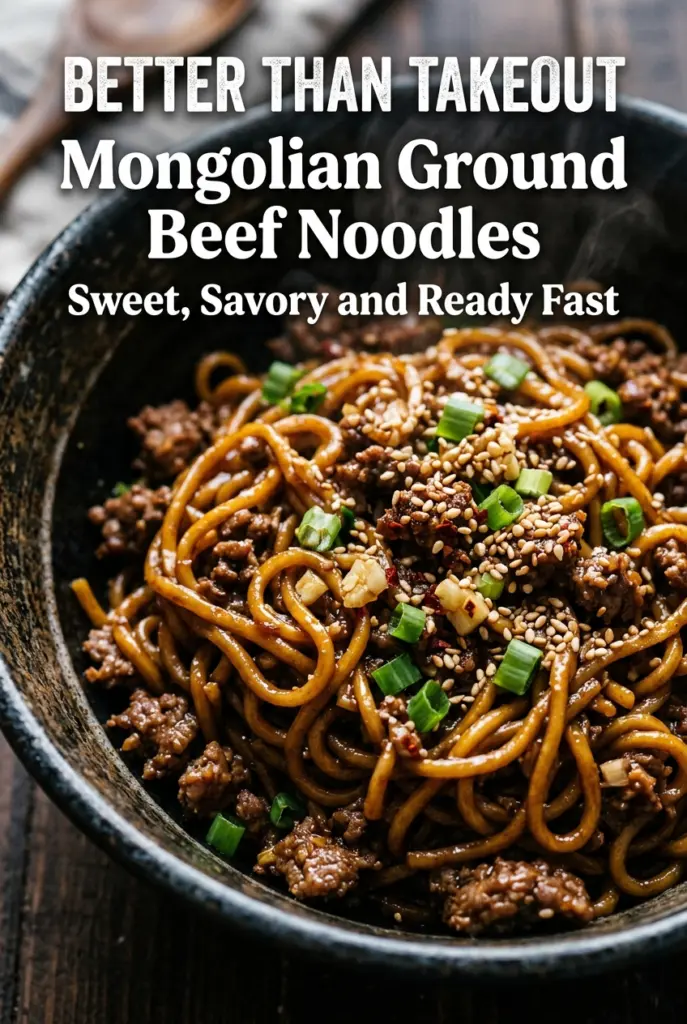
Mongolian Ground Beef Noodles
Sweet, savory Mongolian Ground Beef Noodles hit the table with glossy noodles, tender beef, and a sauce that clings instead of pooling at the bottom of the pan. The whole…
Tip: save now, cook later.Sweet, savory Mongolian Ground Beef Noodles hit the table with glossy noodles, tender beef, and a sauce that clings instead of pooling at the bottom of the pan. The whole dish tastes like a takeout favorite, but it comes together fast enough for a weeknight when you want something bold without babysitting a stovetop for an hour.
What makes this version work is the balance in the sauce and the order you build it. Brown sugar gives that classic Mongolian-style sweetness, soy sauce brings the salt, and beef broth keeps everything from tasting flat or sticky. The cornstarch slurry goes in at the end, after the sauce has had a minute to simmer, which is what turns it from thin and sharp into something silky enough to coat every strand.
Keep reading for the one step that keeps the noodles from clumping, a couple of smart swaps, and the reheating trick that brings the sauce back to life instead of drying it out.
The sauce thickened up perfectly and coated the noodles instead of sliding off, and the ginger-garlic flavor tasted just like our favorite takeout spot.
Save these Mongolian Ground Beef Noodles for the nights when you want glossy noodles, savory beef, and a fast sauce that tastes like takeout.
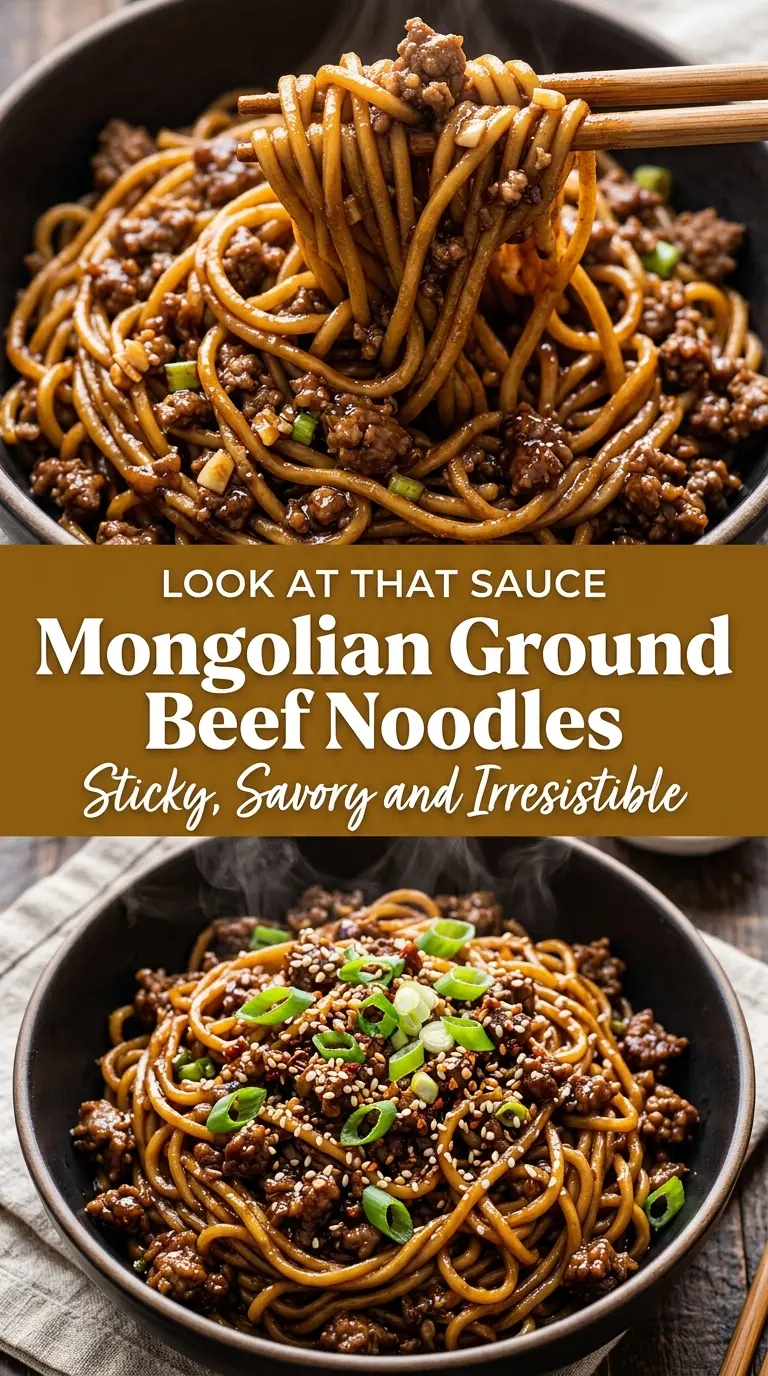
The Trick to Keeping the Sauce Glossy Instead of Gummy
The most common mistake with noodle bowls like this is rushing the thickener. If the cornstarch goes in too early, or the sauce never gets a quick simmer before you thicken it, you end up with a paste that tastes flat and coats the pan more than the noodles. Here, the sauce gets a minute or two to heat through first, then the slurry goes in just long enough to turn it shiny and spoonable.
The other thing that matters is heat. Ground beef throws off some fat and moisture, and the sauce needs a chance to reduce before the noodles go in. If you dump everything together while the pan is still watery, the noodles absorb too much sauce and the whole dish turns sloppy instead of lacquered.
- Lean ground beef — Lean beef gives you the right amount of richness without flooding the pan with grease. If yours is fattier, drain off most of the excess after browning so the sauce can thicken properly.
- Low-sodium soy sauce — This is the backbone of the sauce, so quality matters more than it does in a lot of recipes. Low-sodium keeps the final dish from tasting harsh once the brown sugar and hoisin go in.
- Brown sugar — This is what gives the sauce that signature Mongolian-style sweetness and helps it glaze the noodles. Dark brown sugar adds a deeper molasses note, while light brown sugar keeps it cleaner and brighter.
- Fresh ginger and garlic — Don’t swap both for powders unless you have to. Fresh ginger and garlic give the sauce the sharp, fragrant hit that makes it taste lively instead of bottled.
- Sesame oil — Tossing the cooked noodles with sesame oil keeps them from sticking before they hit the skillet. That small step also adds a nutty base note that makes the dish taste finished.
- Cornstarch slurry — Cornstarch is what turns the sauce from thin and brothy into glossy and clingy. Stir it in with water first; adding dry cornstarch straight to the pan usually leaves little stubborn lumps.
Building the Beef and Noodles in the Right Order
Cook the noodles first and keep them slippery
Boil the noodles until they’re just tender, then drain them and toss them with sesame oil while they’re still warm. That coating matters because these noodles are going back into a hot skillet, and plain noodles tend to seize up and form clumps. If they sit together in a sticky nest, they won’t pick up the sauce evenly later.
Brown the beef before the sauce goes in
Cook the ground beef in a large skillet over medium-high heat until it’s browned and no longer pink, breaking it into small pieces as it cooks. You want some caramelized edges, not pale steamed crumbles. If there’s a lot of grease in the pan, spoon off the excess so the sauce doesn’t turn oily.
Let the sauce simmer before you thicken it
Whisk the soy sauce, brown sugar, broth, hoisin, ginger, and garlic together, then pour it over the beef and let it bubble for a few minutes. That brief simmer softens the raw edge of the garlic and ginger and gives the sugar time to dissolve fully. Add the cornstarch slurry only after the sauce is hot and moving; if the pan is too cool, the thickener can turn streaky instead of smooth.
Finish with the noodles and stop when they’re coated
Add the cooked noodles to the skillet and toss until every strand is glossy and evenly covered. The sauce should cling to the noodles in a thin sheen, not sit in a puddle at the bottom. If the pan looks dry, splash in a tablespoon or two of broth to loosen it. Top with green onions and sesame seeds right away so the noodles stay lively and don’t sit and steam.
How to Adapt This for Different Nights and Different Pan Sizes
Make it gluten-free
Use gluten-free noodles and swap the soy sauce for tamari or a certified gluten-free soy sauce. Check the hoisin too, since some brands contain wheat. The flavor stays close, but gluten-free noodles soften fast, so pull them the moment they’re tender and toss them with the sauce right away.
Make it dairy-free without changing a thing
This recipe is naturally dairy-free as written, which is one reason it’s such an easy weeknight win. Keep the ingredient list as-is and you still get a rich, glossy sauce with no extra substitutions needed.
Swap in ground turkey or chicken
Ground turkey or chicken works if you want something lighter, but you’ll lose a little of the beefy depth that makes the sauce taste so bold. Add a teaspoon of oil to the pan before browning and keep the soy sauce and hoisin measured carefully so the leaner meat doesn’t taste flat.
Stretch it with vegetables
Bell peppers, shredded carrots, snow peas, or broccoli all fit cleanly here. Add firmer vegetables after the beef browns so they can cook in the sauce without turning mushy. The noodles still carry the dish, but the extra vegetables add crunch and make the pan go further.
Storage and Reheating
- Refrigerator: Store leftovers in an airtight container for up to 4 days. The noodles will absorb some sauce, so expect a slightly thicker texture after chilling.
- Freezer: It freezes, but the noodles soften a little after thawing. If you want to freeze it, cool it completely first and use a freezer-safe container for up to 2 months.
- Reheating: Warm it in a skillet over medium-low heat with a splash of broth or water. Microwave reheating works in a pinch, but it can dry out the noodles fast, so stop and stir every 30 seconds.
Answers to the Questions Worth Asking
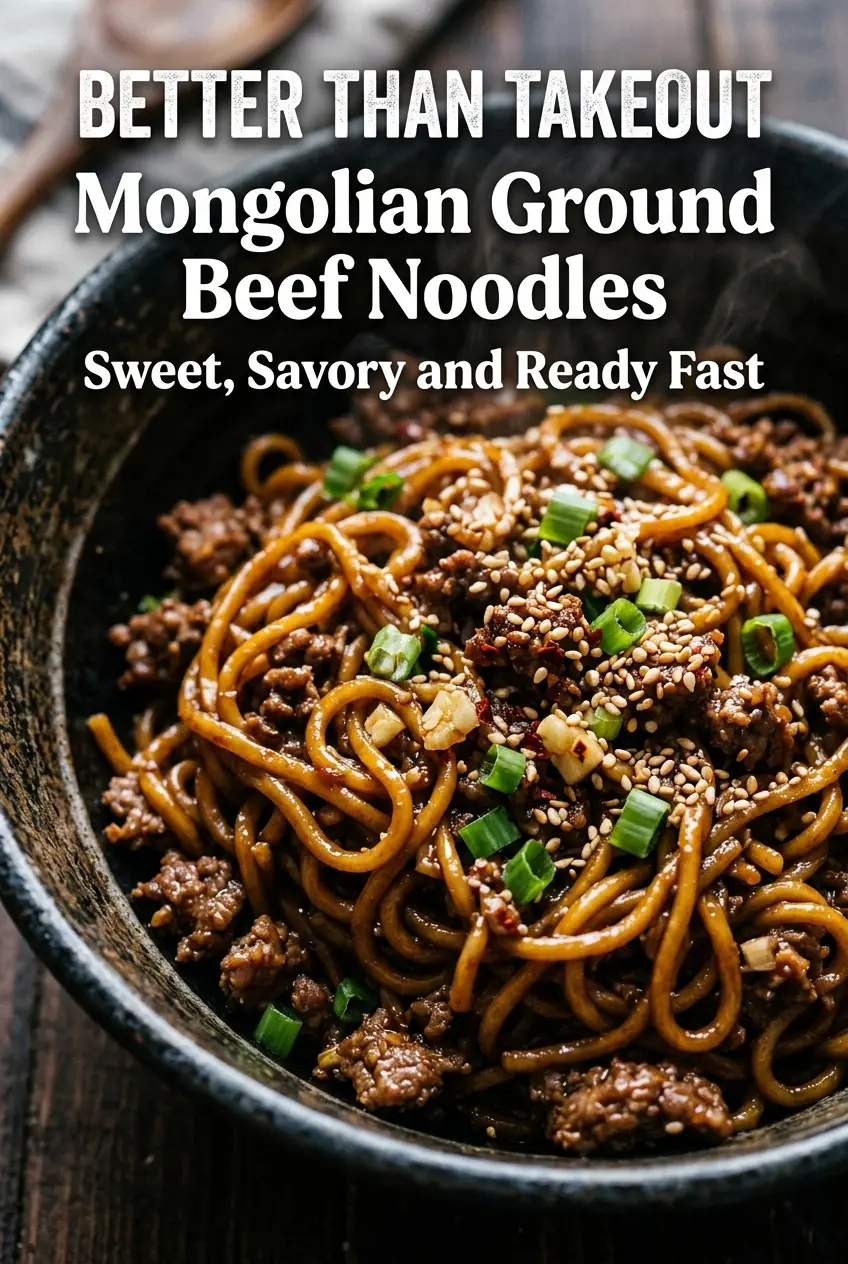
Mongolian Ground Beef Noodles
Ingredients
Equipment
Method
- Cook linguine or lo mein noodles according to package directions, until tender but not mushy, and drain well. Keep the noodles warm while you prepare the sauce.
- Toss drained noodles with sesame oil in a bowl until glossy and evenly coated. Set aside while you brown the beef.
- Brown lean ground beef in a large skillet over medium-high heat until no longer pink, stirring as needed, about 6–8 minutes. Keep the heat at medium-high so the beef browns instead of steams.
- Season the ground beef with garlic powder and black pepper, stirring to distribute, for about 30–60 seconds. You should see fragrant steam rising from the skillet.
- Whisk low-sodium soy sauce, brown sugar, beef broth, hoisin sauce, fresh ginger, and garlic in a bowl until smooth. Pour the mixture into the skillet with the beef.
- Simmer the sauce with the beef for 3–4 minutes, stirring occasionally, until it looks slightly reduced. It should bubble across the surface, indicating it’s actively simmering.
- Mix cornstarch and water together in a small bowl until smooth, then stir it into the skillet. Continue cooking until thickened, about 1–2 minutes, until the sauce coats the back of a spoon.
- Add the cooked noodles to the skillet and toss until fully coated in the Mongolian sauce. Toss until the noodles look evenly glazed, with no dry patches.
- Garnish with green onions and sesame seeds, then serve immediately. The noodles are best right after tossing when the sauce is still glossy.
