
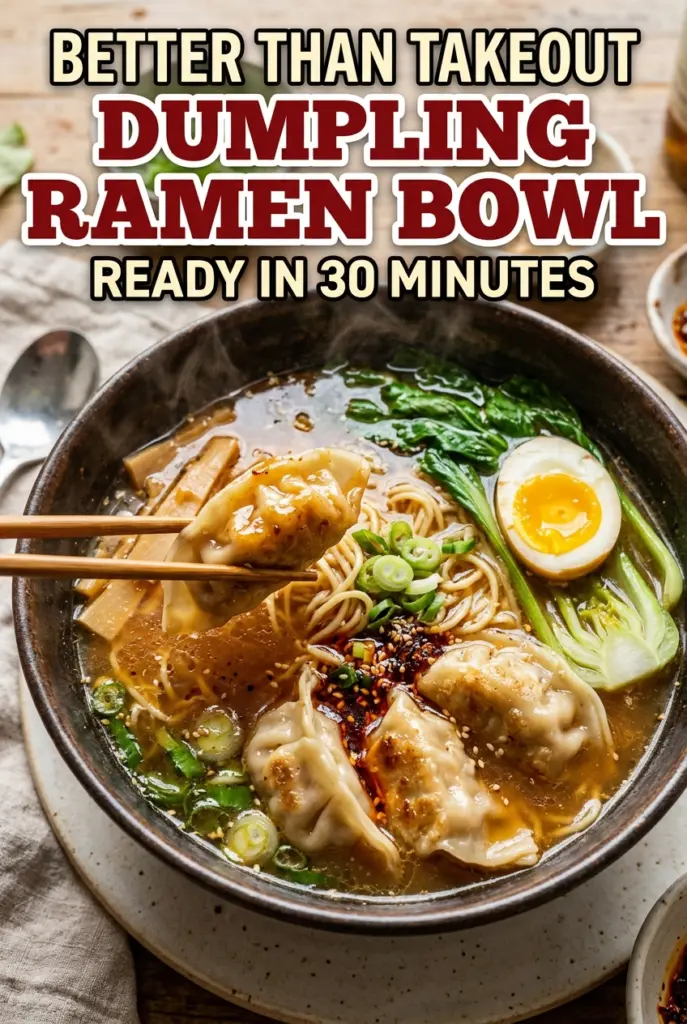
Dumpling Ramen Bowl
Pillowy dumplings, springy noodles, and a broth that tastes like it simmered all afternoon come together in one bowl that disappears fast. The best part is how the frozen dumplings…
Tip: save now, cook later.Pillowy dumplings, springy noodles, and a broth that tastes like it simmered all afternoon come together in one bowl that disappears fast. The best part is how the frozen dumplings do half the work for you: they cook right in the broth, release a little richness, and turn a simple noodle soup into something that feels layered and complete.
The broth matters here, even though it starts with pantry ingredients. Garlic and ginger need just a minute in the hot liquid to wake up, then soy sauce, rice vinegar, sesame oil, and white pepper build the savory base. Cooking the mushrooms in the broth before the dumplings gives the soup more body, and adding the bok choy at the end keeps it crisp-tender instead of limp.
Below, I’ll walk through the small choices that make this bowl taste like takeout in the best way: when to add each ingredient, how to keep the noodles from going soft, and the easiest swaps if you want to change up the protein or make it meatless.
The broth tasted like it had been simmering for hours, and the frozen dumplings stayed tender instead of falling apart. I loved that the bok choy stayed crisp and the noodles didn’t get mushy even after I added the chili oil and ate slowly.
Save this dumpling ramen bowl for the nights when you want a rich noodle soup, soft-boiled eggs, and almost no prep work.
The Reason the Dumplings Go in Before the Noodles
The biggest mistake in a bowl like this is treating every component the same. Noodles cook fast and turn soft quickly, but frozen dumplings need a little more time to heat through and finish cooking safely. If you throw everything in at once, the noodles usually lose their bite before the dumplings are ready.
Cooking the dumplings directly in the broth does two good things at once: it saves a pot and gives the soup a little extra body as the filling seasons the liquid. The mushrooms also benefit from that short simmer because they soak up the broth instead of tasting like a separate garnish. Keep the boil gentle. A hard boil can split delicate dumpling wrappers and make the broth cloudy in a messy way instead of a good one.
What Each Ingredient Is Doing in This Bowl
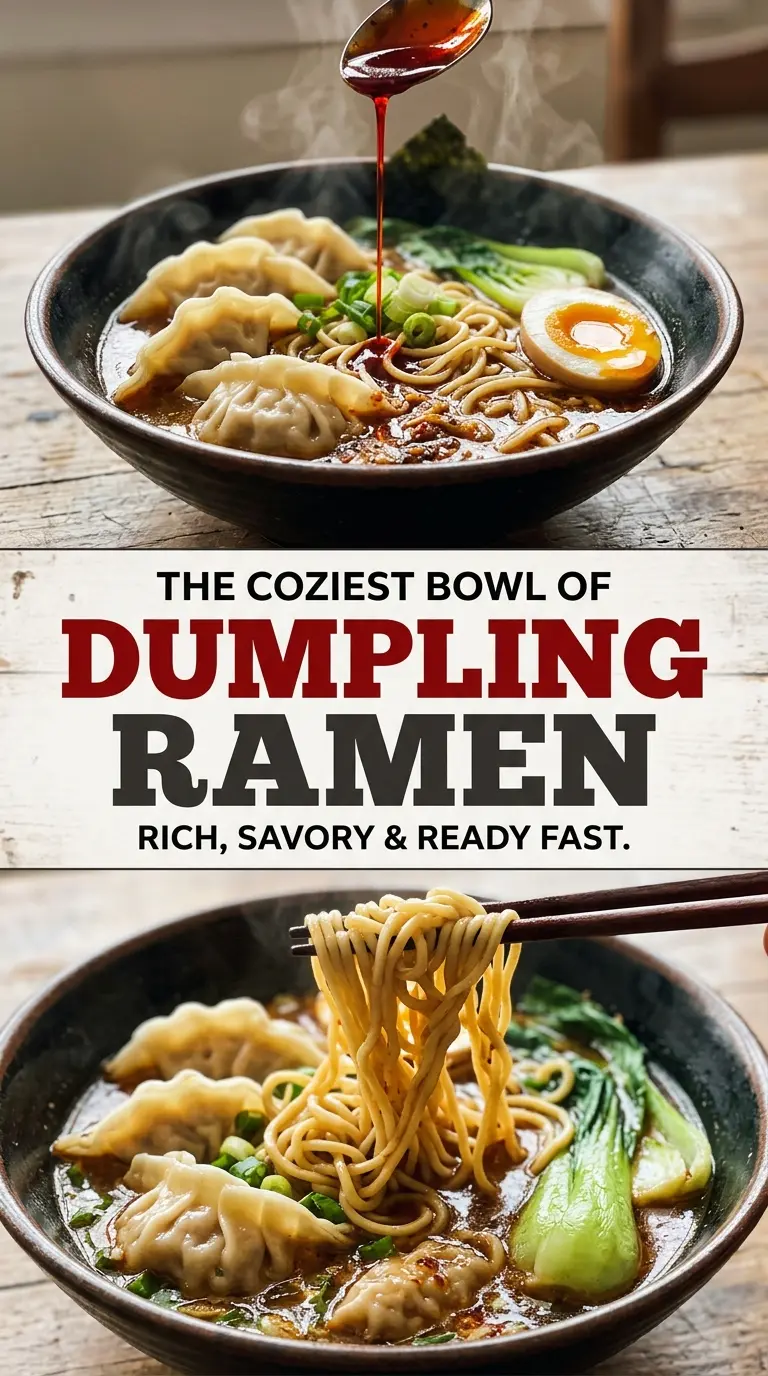
- Chicken broth — This is the backbone of the soup, so a decent store-bought broth matters here. If yours tastes flat, the soy sauce and white pepper will cover some of that, but they won’t fix weak broth completely. Use low-sodium if possible so the soy sauce doesn’t push the bowl into salty territory.
- Fresh ginger and garlic — These need to go into hot broth early so they can perfume the liquid. Minced fine is best; big chunks read as harsh instead of aromatic. If you only have paste, use it, but the flavor will be a little less bright.
- Frozen dumplings — Frozen is the point of the recipe. Don’t thaw them first or the wrappers can get sticky and tear once they hit the broth. Pork gives the richest bowl, but chicken works well and cooks the same way.
- Ramen noodles — Use the noodles, not the seasoning packet. Cooking them separately keeps the broth clean and keeps the noodles from absorbing too much liquid while they sit. If you use fresh ramen, cut the cook time down and drain them promptly.
- Bok choy and shiitake mushrooms — Mushrooms add depth and bok choy adds freshness, which keeps the bowl from feeling heavy. Baby bok choy is ideal because it wilts quickly and stays tender at the stems. Regular bok choy works too if you slice the stalks thinner so they cook at the same pace as the leaves.
- Soft-boiled eggs, chili oil, and sesame seeds — These are the finishing touches that make the bowl feel complete. The egg yolk enriches the broth, chili oil adds heat and sheen, and sesame seeds bring a little nutty crunch. Skip the egg if you want, but the bowl feels more balanced with it.
The 20 Minutes That Matter Most
Building the Broth First
Bring the broth to a gentle simmer with the garlic, ginger, soy sauce, rice vinegar, sesame oil, and white pepper. You’re looking for a few lazy bubbles, not a rolling boil. That gentler heat keeps the garlic from turning sharp and the sesame oil from tasting dull. Once the broth smells round and savory, the base is ready.
Softening the Mushrooms
Add the sliced shiitakes and let them simmer for about five minutes. They should soften and darken slightly, but they shouldn’t collapse. If they’re still firm, they haven’t had time to release enough flavor into the broth. This is where the soup gets a deeper, woodsy note instead of tasting one-dimensional.
Cooking the Dumplings Without Ruining the Wrappers
Drop the frozen dumplings straight into the simmering broth and cook them until they float and the filling is hot all the way through, usually 6 to 8 minutes. Stir gently once or twice so they don’t stick to the bottom, but don’t agitate the pot. Rough stirring can split the wrappers, and that’s the fastest way to end up with torn dumplings and cloudy broth.
Finishing the Bowl Assembly
Cook the ramen noodles separately, drain them, and divide them into serving bowls. Add the bok choy to the broth during the last 2 minutes so it stays bright and crisp at the stem. Ladle the broth, dumplings, mushrooms, and bok choy over the noodles, then finish with halved eggs, green onions, chili oil, and sesame seeds. Serve it right away so the noodles keep their spring.
Three Ways to Adapt This Bowl Without Losing What Makes It Good
Make It Dairy-Free and Still Keep It Rich
This bowl is naturally dairy-free as written, so the main job is keeping the broth flavorful enough to stand on its own. Don’t skip the sesame oil or white pepper, because those two ingredients give the soup its finishing depth. If you want a little more body, add a splash of unsalted chicken stock concentrate or a spoonful of miso to the broth.
Swap in Vegetarian Dumplings
Vegetable dumplings work well here, but the broth benefits from a little extra seasoning because you lose the savory pork or chicken filling. Add a teaspoon of miso or a small splash more soy sauce if the soup tastes thin after the dumplings go in. The texture stays the same, but the flavor lands a little lighter and cleaner.
Make It Gluten-Free
Use gluten-free dumplings and gluten-free ramen noodles, then swap in tamari for the soy sauce. The broth will still taste savory and balanced, but tamari usually reads a touch rounder and less sharp than standard soy sauce. Check the dumpling wrappers carefully, since that’s usually where the hidden gluten lives.
Turn It Into a Bigger Dinner
Double the broth and vegetables before you double the noodles, or the bowl can turn starchy and heavy. Extra broth gives you room to reheat leftovers later without the soup becoming too concentrated. If you’re feeding a crowd, keep the noodles separate and ladle the broth over each bowl at the table.
Storage and Reheating
- Refrigerator: Store the broth, dumplings, vegetables, and noodles separately for up to 3 days. The noodles soften in the broth, so keeping them apart matters.
- Freezer: Freeze the broth and dumplings together or separately for up to 2 months. Don’t freeze the noodles; they go mushy when thawed.
- Reheating: Warm the broth gently on the stove until steaming, then add the dumplings and vegetables just long enough to heat through. Reheat noodles with a splash of hot water or broth, not in a hard boil, or they’ll turn gummy.
Answers to the Questions Worth Asking
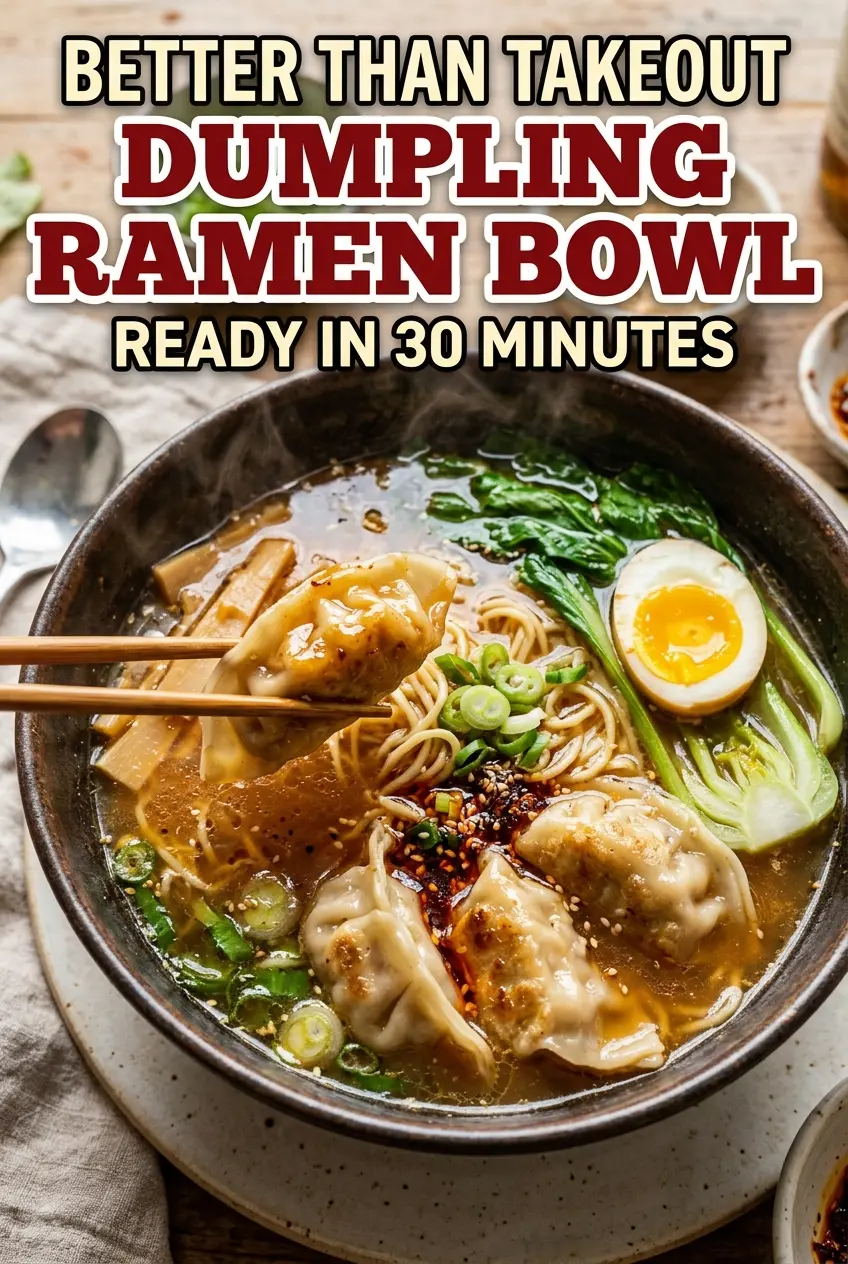
Dumpling Ramen Bowl
Ingredients
Equipment
Method
- In a large pot, bring the chicken broth to a simmer over medium-high heat, then stir in minced garlic, minced ginger, soy sauce, rice vinegar, sesame oil, and white pepper for 30 seconds until fragrant.
- Add sliced shiitake mushrooms to the simmering broth and cook for 5 minutes, stirring once or twice, until softened and glossy.
- Add the frozen pork or chicken dumplings directly to the simmering broth and cook for 6–8 minutes, stirring gently once, until the dumplings float and are cooked through.
- Add halved baby bok choy for the last 2 minutes of cooking so it wilts and brightens without overcooking.
- In a separate pot, cook the ramen noodles according to package directions, then drain and divide them among 4 serving bowls.
- Ladle the broth, dumplings, mushrooms, and bok choy over the noodles in each bowl.
- Add a halved soft-boiled egg to each bowl.
- Finish each bowl with sliced green onions, a drizzle of chili oil, and a sprinkle of sesame seeds, then serve hot.
