
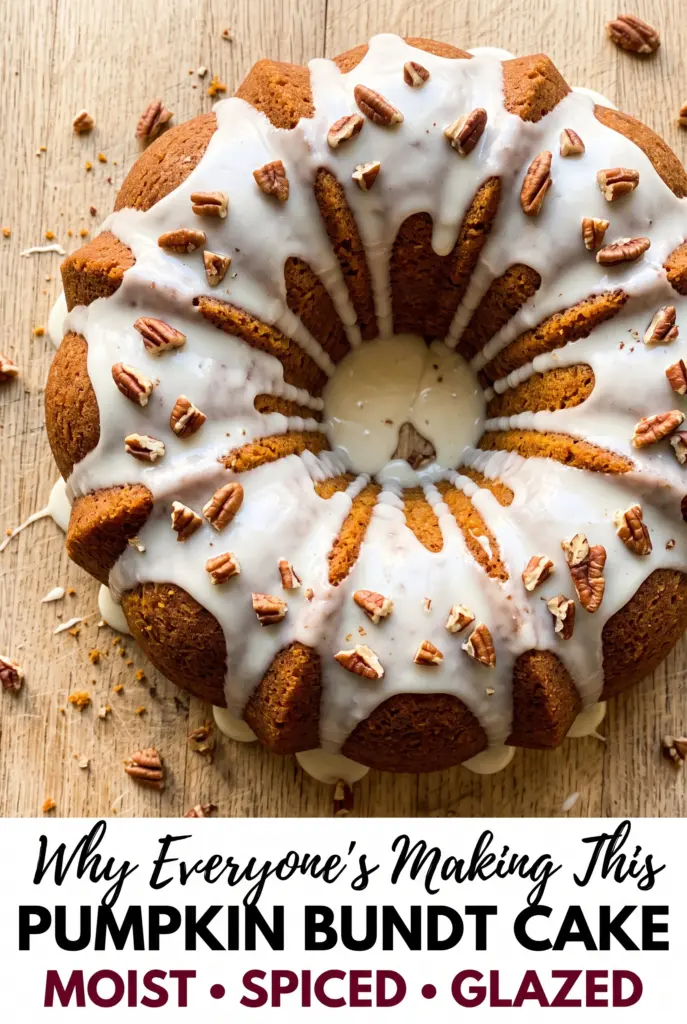
Pumpkin Bundt Cake
A pumpkin bundt cake earns its place on the table when the crumb stays tender for days and the glaze slides into every ridge without burying the spice. This one…
Tip: save now, cook later.A pumpkin bundt cake earns its place on the table when the crumb stays tender for days and the glaze slides into every ridge without burying the spice. This one does both. The batter is rich from oil and pumpkin puree, which keeps the cake moist without turning it heavy, and the spice blend lands in that warm, familiar range that tastes like the cake version of a good sweater.
The part that matters most is how the batter comes together. Pumpkin cake can go dense if it gets overmixed or dry if the flour ratio is off, so this version leans on a simple whisk-and-fold method and a balanced amount of sugar. The cream cheese glaze stays soft enough to pour, but thick enough to cling, which means every slice gets a little tangy finish instead of a sugary shell.
Below, you’ll find the small details that keep a bundt cake from sticking, the cues that tell you it’s baked through, and a few smart swaps if you need to adjust the recipe for a different pan or pantry.
The cake came out incredibly moist, and the glaze dripped right into the grooves without running off. I also loved that the spices were balanced and not overpowering.
Save this pumpkin bundt cake for the kind of dessert that looks bakery-made with almost no decorating.
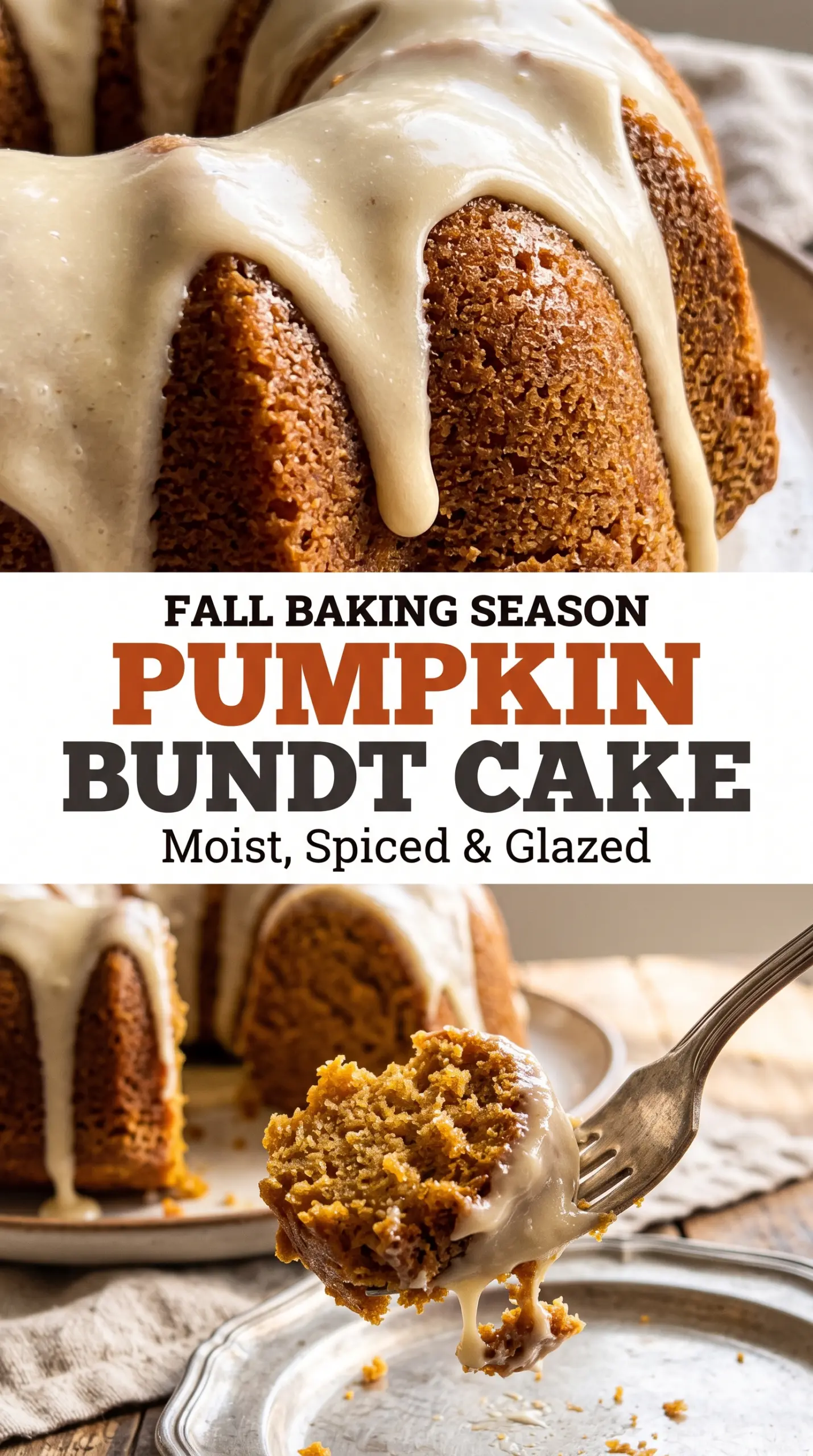
The Reason Pumpkin Cakes Turn Dense in a Bundt Pan
Bundt cakes fail in a couple of predictable ways: the batter gets overworked, the pan isn’t greased well enough, or the bake time runs long and dries out the center before the outside is done. Pumpkin batter is especially prone to this because it looks thick and forgiving, which tempts people to stir past the point where the flour is blended. Stop as soon as the dry streaks disappear. The cake keeps developing in the oven.
The other issue is the pan itself. A bundt pan hides problems until you flip it, and by then it’s too late to rescue a stuck cake. A generous coat of grease in every groove matters more here than it does in a standard layer cake pan, and letting the cake rest for about 15 minutes before turning it out gives the structure enough time to set without welding itself to the pan.
- Pumpkin puree — Use plain canned pumpkin puree, not pumpkin pie filling. Pie filling already has sugar and spices mixed in, which throws off both the flavor and the texture.
- Vegetable oil — Oil keeps the crumb moist even after the cake cools. Melted butter can work, but the cake won’t stay as soft for as long.
- Brown sugar — This deepens the flavor and adds a little extra tenderness. If you only have granulated sugar, the cake will still work, but it loses some of that soft, caramel note.
- Cream cheese — The glaze needs cream cheese for tang and body. A milk-only glaze turns thin and sweet instead of creamy and balanced.
Building the Batter Without Deflating the Crumb
Mix the Dry Ingredients First
Whisk the flour, leaveners, salt, and spices together until the cinnamon and cloves are evenly distributed. That keeps the spice flavor from clumping in one bite and gives the cake a more even rise. If your baking powder or baking soda has been sitting around for ages, the cake may bake up flat, so use fresh leavening if the box has been open forever.
Whisk the Wet Ingredients Until Smooth
Eggs and sugar should look glossy before the oil and pumpkin go in. That little bit of extra whisking helps dissolve the sugar and gives the batter a smoother texture. Once the pumpkin puree is added, the mixture will look thick and orange, and that’s exactly what you want.
Fold, Don’t Beat
Add the dry ingredients in batches and fold just until the flour disappears. A few small streaks are better than overmixing, because beating the batter after the flour goes in builds too much gluten and turns the crumb tight. The finished batter should be thick, spoonable, and evenly speckled with spice.
Bake Until the Center Springs Back
Pour the batter into the prepared bundt pan and smooth the top so it bakes evenly. Start checking around the 55-minute mark, but trust the cake more than the clock: a toothpick should come out clean or with a few moist crumbs, and the top should spring back when pressed lightly. If the cake looks browned but still jiggles in the middle, give it a few more minutes before pulling it out.
Make It Dairy-Free
The cake itself is already dairy-free, so the only swap you need is for the glaze. Use a dairy-free cream cheese that softens well and thin it with a little plant milk until it pours. The glaze will be slightly less tangy, but the texture stays close to the original.
Use a Different Pan Size
If you don’t have a bundt pan, divide the batter between two loaf pans or bake it in a 9×13-inch pan. Loaf pans need a little more time, while a sheet-style pan will bake faster and give you less dramatic height. The flavor stays the same, but the presentation changes from showy slices to a more casual cake.
Glaze It Less Sweet
If you want the cake to taste more balanced, whisk in a little extra cream cheese and reduce the powdered sugar slightly. You’ll get a thicker, tangier glaze that clings instead of running freely. That’s the better route if you’re serving it after a rich meal.
Storage and Reheating
- Refrigerator: Store covered for up to 5 days. The glaze firms up in the fridge, but the cake stays moist.
- Freezer: Freeze the unglazed cake tightly wrapped for up to 2 months. Thaw overnight in the refrigerator, then glaze after it comes to room temperature.
- Reheating: Warm individual slices for 10 to 15 seconds in the microwave. Too much heat makes the glaze melt off and can dry the crumb at the edges.
The Things That Trip People Up With This Pumpkin Bundt Cake
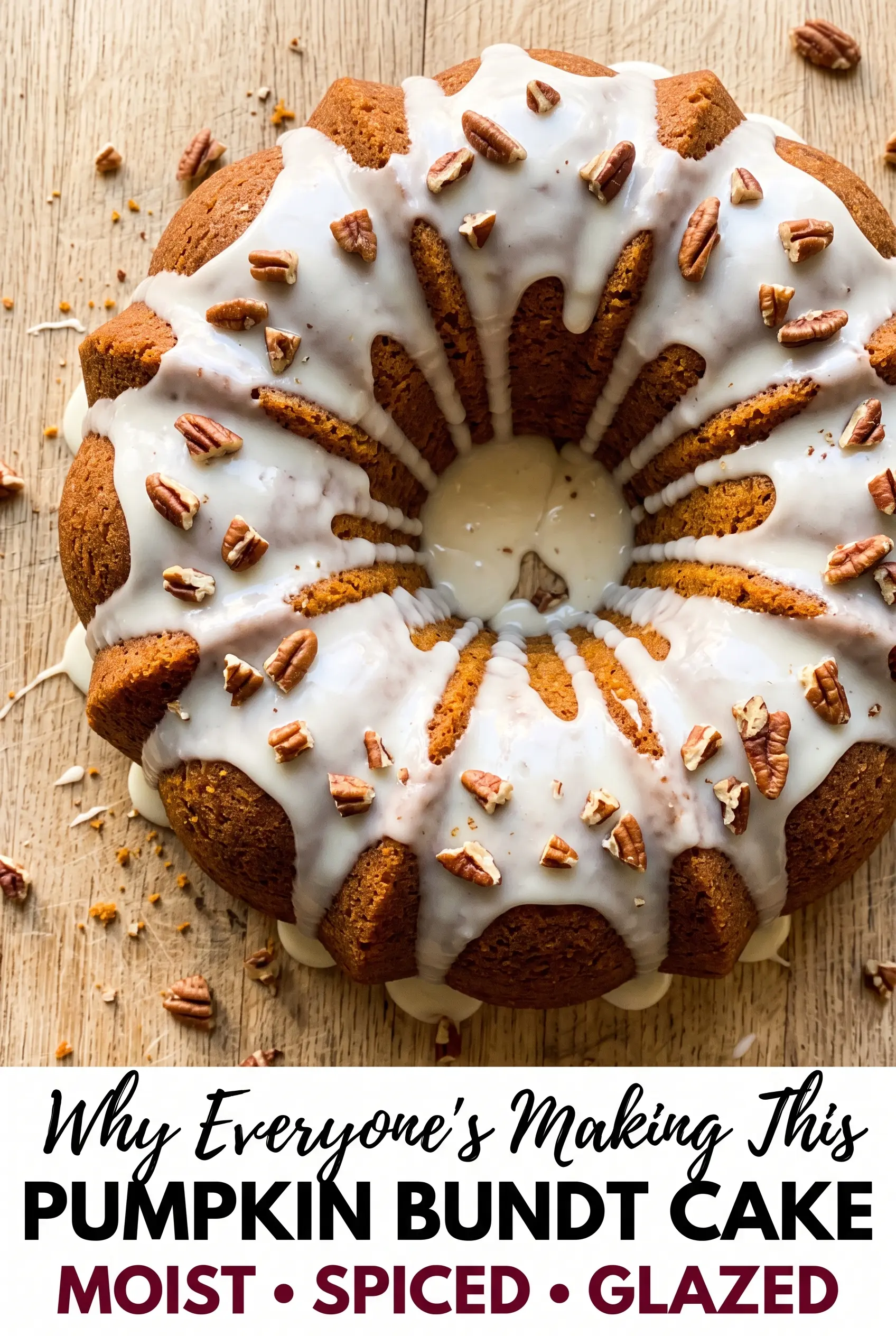
Pumpkin Bundt Cake
Ingredients
Equipment
Method
- Preheat oven to 350°F and generously grease a 10-cup bundt pan so the cake releases cleanly from the ridges.
- Whisk together all-purpose flour, baking soda, baking powder, salt, ground cinnamon, ground nutmeg, and ground cloves until evenly combined with no visible spice streaks.
- In a separate bowl, whisk eggs, granulated sugar, and brown sugar until smooth, then whisk in vegetable oil, canned pumpkin puree, and vanilla extract until glossy.
- Fold the dry ingredients into the wet ingredients until just combined, stopping as soon as no flour pockets remain to avoid a tough crumb.
- Pour the batter into the prepared bundt pan and smooth the top with a gentle leveling motion so it bakes evenly.
- Bake at 350°F for 55–65 minutes, until a toothpick inserted in the center comes out clean.
- Cool in the pan for 15 minutes so the cake firms up and the ridges hold shape before unmolding.
- Invert onto a wire rack and cool completely so the glaze won’t melt or run off too quickly.
- Whisk cream cheese, powdered sugar, milk, and vanilla extract until smooth and pourable, adjusting with more milk if needed for a thick-but-drizzling texture.
- Pour and drizzle the glaze over the cooled cake so it sinks into every ridge and forms a lightly set sheen.
