
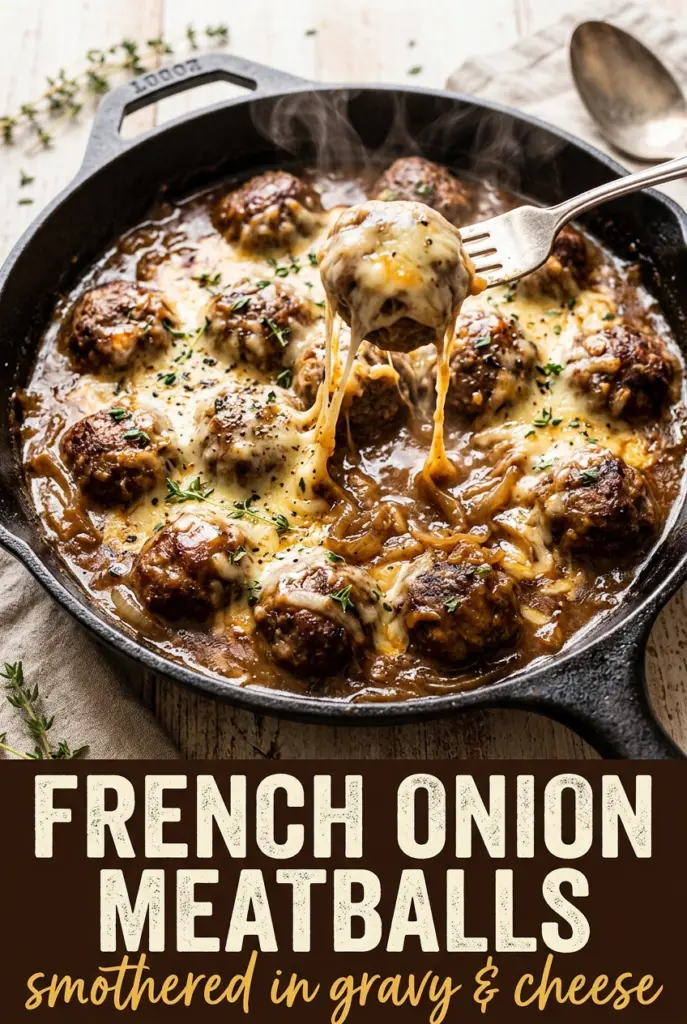
French Onion Meatballs
Juicy meatballs tucked into a deep, oniony gravy and finished with a layer of bubbling gruyère hit all the right notes in one skillet. The onions cook long enough to…
Tip: save now, cook later.Juicy meatballs tucked into a deep, oniony gravy and finished with a layer of bubbling gruyère hit all the right notes in one skillet. The onions cook long enough to turn sweet and jammy, which keeps the gravy from tasting flat or one-dimensional. When the cheese goes under the broiler, it melts into the sauce instead of sitting on top like an afterthought.
The key is treating the onions like the main event, not a quick add-in. Let them take their time until they’re a dark amber color and soft enough to collapse against the spoon. That slow caramelization gives the gravy the same savory-sweet backbone you’d expect from French onion soup, but with enough body to coat every meatball.
Below, I’ve included the little details that keep the sauce smooth, the meatballs tender, and the cheese from turning greasy. If you’ve ever had onion gravy taste thin or meatballs turn dry in the oven, this version solves both problems.
The onions turned into this rich, sweet gravy and the meatballs stayed tender all the way through. I served it over mashed potatoes and my husband went back for seconds before I even sat down.
Save these French Onion Meatballs for a cozy skillet dinner with caramelized onions, gruyère, and gravy worth mopping up.

The Secret to French Onion Flavor Without Watery Meatballs
The biggest mistake with French onion meatballs is trying to do everything too fast. If the onions never get past pale and soft, the gravy tastes thin and sharp instead of deep and savory. If the meatballs simmer too aggressively, they lose their tenderness before the cheese even goes on.
This recipe works because the meatballs are seared first, which gives them structure and a little crust before they go back into the sauce. The onions cook separately until they’re properly caramelized, and that sweetness balances the beef broth and Worcestershire sauce. The result is a gravy that tastes slow-cooked even though the whole dish stays weeknight-friendly.
- Yellow onions — These are the backbone of the dish. Their natural sweetness comes out as they cook, and that sweetness is what gives the gravy its French onion character. White onions work in a pinch, but they’re sharper and less round in flavor.
- Gruyère — Gruyère melts smoothly and gives you that nutty, savory finish you want here. Swiss cheese works if that’s what you have, but avoid pre-shredded blends if you can; they don’t melt as cleanly.
- Beef broth — Use a broth you’d actually drink. This is the liquid that carries the onion flavor, so a weak or overly salty broth will show. If you only have stock, reduce the Worcestershire slightly and season at the end.
- Breadcrumbs and milk — Together they keep the meatballs tender. The breadcrumbs soak up the milk and help the beef stay soft instead of tight and dense. If you need a gluten-free swap, use gluten-free breadcrumbs with the same measurement.
Why the Onions Need 30 Minutes Before Anything Else
Mixing the Meatballs Gently
Combine the beef, breadcrumbs, egg, milk, garlic, thyme, salt, and pepper just until the mixture holds together. Overmixing compresses the meat and gives you firm, springy meatballs instead of tender ones. Shape them into even portions so they cook at the same rate, and stop as soon as they look cohesive.
Searing for Structure
Brown the meatballs in a hot oven-safe skillet until they pick up color on several sides. You’re not cooking them through yet; you’re building a crust that helps them keep their shape while they finish in the gravy. If the pan is crowded, the meatballs steam instead of sear, so work in batches if needed.
Caramelizing the Onions Slowly
Melt the butter, add the onions and sugar, then cook over medium-low heat until they turn deep golden brown and collapse into a jammy mass. Stir often enough to keep the fond from burning, but not so much that the onions never get a chance to brown. If they look dry before they color, add a splash of broth and keep going.
Building the Gravy and Finishing Under the Broiler
Sprinkle the flour over the onions and cook it briefly so the gravy won’t taste pasty. Whisk in the broth slowly, then simmer until the sauce lightly coats a spoon before the meatballs go back in. Add the gruyère only at the end and broil just until it melts and turns spotty and golden; any longer and the cheese can separate and turn oily.
Three Ways to Make These Meatballs Work for Your Table
Gluten-Free Version
Swap in gluten-free breadcrumbs and use a gluten-free flour blend for the gravy. The texture stays close to the original, but the gravy may need an extra minute or two to thicken fully. Keep the simmer gentle so the sauce doesn’t break while it reduces.
Turkey Meatballs
Ground turkey works if you want something a little lighter, but it needs the sear even more because it doesn’t have as much built-in fat. Add a touch more salt and keep an eye on the skillet so the meatballs don’t dry out before they go back into the gravy.
Dairy-Free Version
Use a plant-based butter and skip the cheese topping, or finish with a dairy-free meltable cheese if you have one that browns well under the broiler. The gravy still has plenty of depth from the onions and broth, so the dish doesn’t lose its character even without the gruyère.
Making It Ahead
Cook the meatballs and gravy, then stop before the broiler step. Chill them together, rewarm gently, and add the cheese right before serving so the top melts instead of disappearing into the sauce. That last-minute broil keeps the finished dish looking and tasting fresh.
Storage and Reheating
- Refrigerator: Store leftovers in an airtight container for up to 4 days. The gravy thickens as it chills, which is normal.
- Freezer: This freezes well without the cheese topping. Freeze the meatballs and gravy together for up to 2 months, then thaw overnight before reheating.
- Reheating: Warm gently on the stovetop over low heat with a splash of broth to loosen the sauce. High heat can make the meatballs tough and cause the gravy to separate.
Answers to the Questions Worth Asking
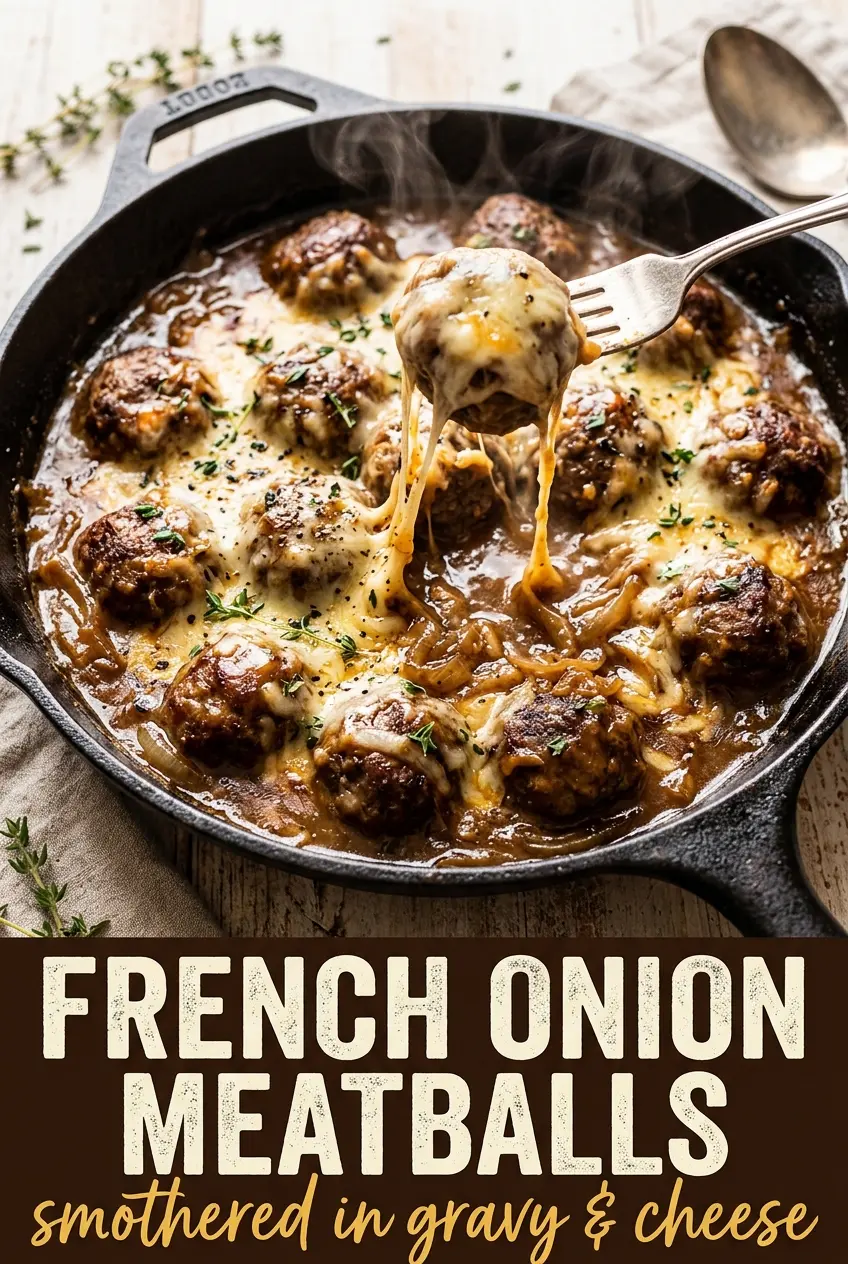
French Onion Meatballs
Ingredients
Equipment
Method
- In a bowl, combine ground beef, breadcrumbs, large egg, milk, garlic, minced, dried thyme, Salt and black pepper, to taste. Mix gently and form into 16–18 meatballs.
- Heat a large oven-safe cast iron skillet over medium-high heat and sear the meatballs on all sides until browned. Remove and set aside.
- In the same skillet, melt butter and add sliced large yellow onions with sugar. Cook over medium-low heat, stirring often, for 25–30 minutes until deeply caramelized.
- Sprinkle all-purpose flour over the onions and stir to coat, cooking 1 minute.
- Slowly whisk in beef broth and Worcestershire sauce, then bring to a simmer until slightly thickened.
- Return the meatballs to the skillet, nestle them into the gravy, and simmer for 10 minutes.
- Sprinkle shredded gruyère cheese generously over the top and broil for 3–4 minutes until melted and golden.
- Garnish with fresh parsley and serve hot.
