
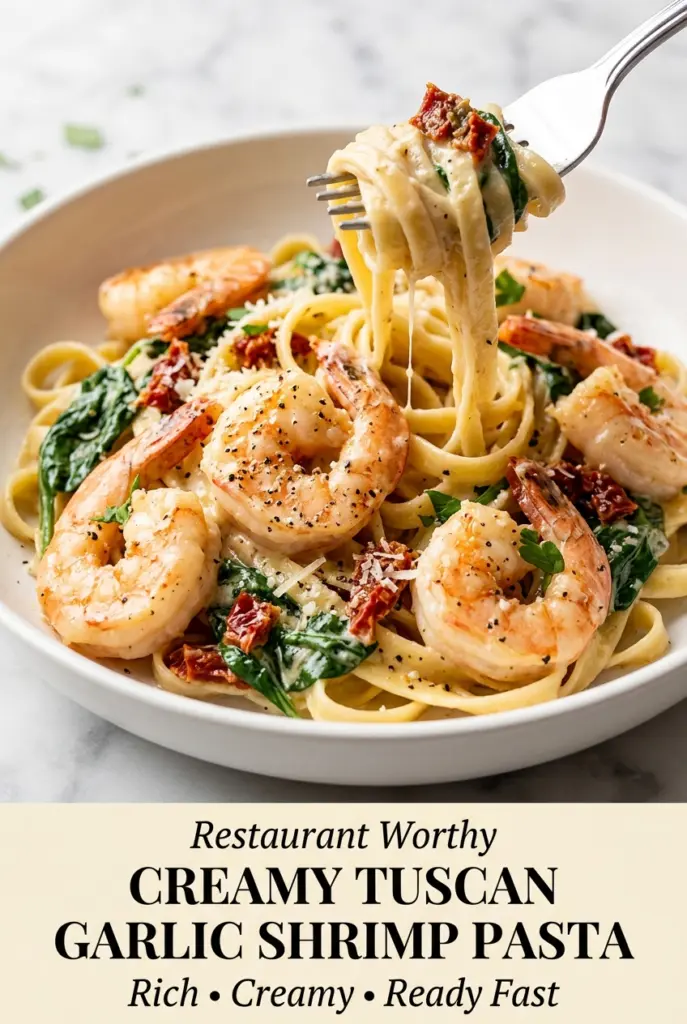
Creamy Tuscan Garlic Shrimp Pasta
Creamy Tuscan garlic shrimp pasta lands on the table with glossy noodles, tender shrimp, and a sauce that clings instead of pooling at the bottom of the bowl. The sun-dried…
Tip: save now, cook later.Creamy Tuscan garlic shrimp pasta lands on the table with glossy noodles, tender shrimp, and a sauce that clings instead of pooling at the bottom of the bowl. The sun-dried tomatoes bring a little sweetness and chew, the spinach softens into the cream, and the garlic gives the whole dish that savory backbone that keeps you going back for one more forkful. It tastes like the kind of pasta you’d order out, but it comes together fast enough for an ordinary night.
What makes this version work is the way the sauce is built. The shrimp cook first and come out before they tighten up, then the garlic and tomatoes go into the same pan so every bit of flavor stays in play. Parmesan melts into the cream over gentle heat, and a splash of pasta water at the end helps the sauce wrap around the pasta instead of turning heavy.
Below, I’ll walk you through the timing that keeps the shrimp juicy, the small ingredient choices that matter, and a few swaps that still give you a rich, balanced dinner.
The shrimp stayed juicy, and the sauce turned out silky instead of greasy. I added a little pasta water like you said and it coated the noodles perfectly.
Save this creamy Tuscan garlic shrimp pasta for the nights when you want a fast skillet dinner with a silky Parmesan sauce and bright lemon finish.
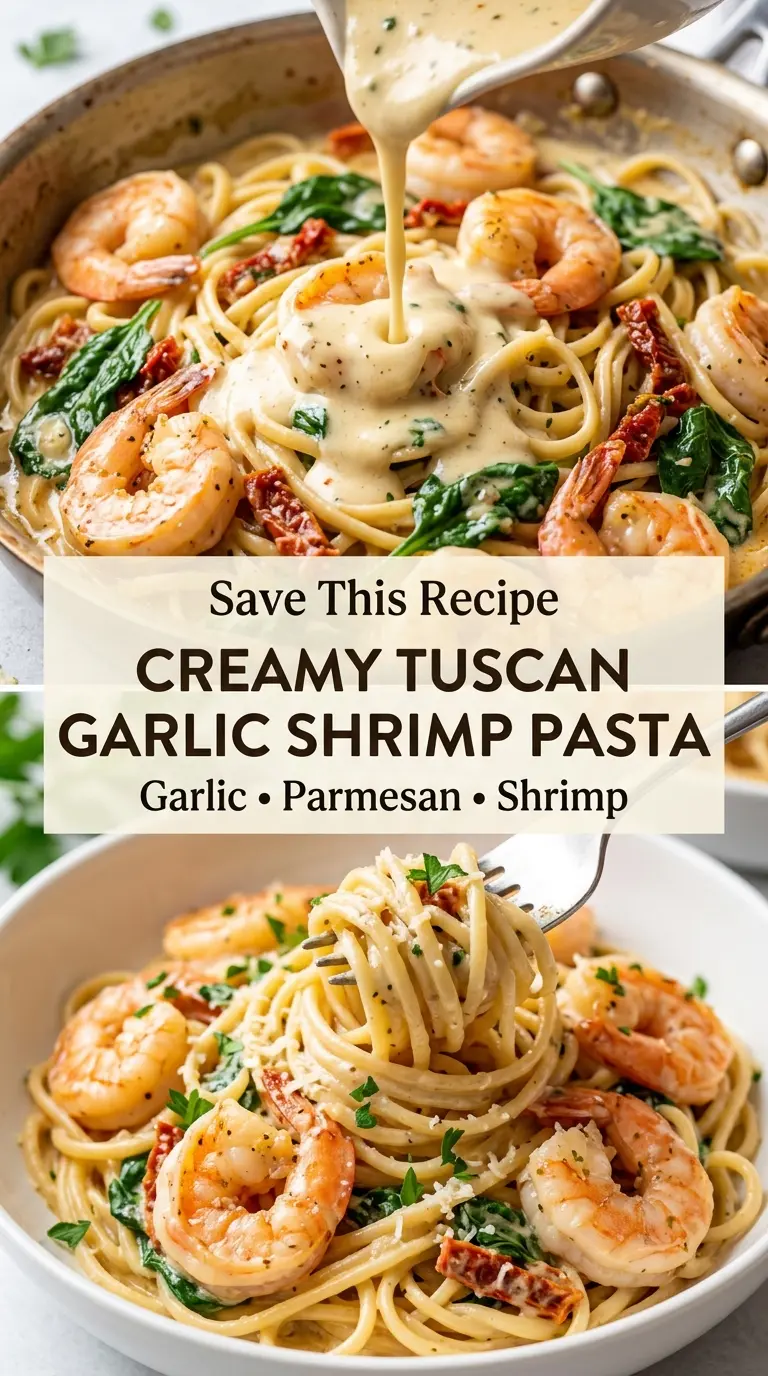
The Part That Keeps the Shrimp Tender Instead of Rubbery
Shrimp cook faster than almost anything else in the skillet, which is why they get tough when they sit around too long in hot sauce. The safest move is to cook them first, pull them out, and bring them back only at the end. That keeps the shrimp plump and juicy while the sauce does its thing without you having to hover over the pan.
The other place people lose this dish is the cream sauce itself. Parmesan wants gentle heat, not a hard boil. If the sauce ever turns grainy, it usually means the cheese went in too fast or the heat was too high. Lower the burner before the cream goes in, then let the sauce thicken slowly until it lightly coats the spoon.
- Shrimp — Large shrimp hold their bite better here than small ones. Pat them dry before seasoning so they sear instead of steam.
- Heavy cream — This gives the sauce enough body to stay smooth. Half-and-half can work in a pinch, but the sauce will be thinner and a little less stable.
- Freshly grated Parmesan — Pre-grated cheese often melts less smoothly because of the anti-caking starches. Grate it yourself if you want a sauce that turns silky instead of sandy.
- Sun-dried tomatoes — Drain them well if they’re packed in oil, but don’t rinse away all the seasoning. They add concentrated tomato flavor that balances the richness of the cream.
- Spinach — Baby spinach wilts fast and disappears into the sauce without getting stringy. If you use mature spinach, chop it first and give it a little extra time to soften.
Building the Sauce in the Right Order
Boiling the Pasta First
Start the pasta in well-salted water and cook it to al dente, not soft. It needs enough structure to finish in the sauce without turning mushy. Save a little pasta water before draining; that starchy water is what helps the sauce loosen and cling at the same time.
Cooking the Shrimp Fast and Pulling Them Early
Heat the oil and butter until the butter foams, then add the shrimp in a single layer. They only need a minute or two per side, just until they turn pink and opaque with curled edges. If they form tight little rings, they’ve gone too far, so get them off the heat as soon as they’re done.
Letting the Garlic and Tomatoes Carry the Base
Once the shrimp are out, drop the heat to medium and stir in the garlic, seasoning, and red pepper flakes. The garlic should smell fragrant within about 30 seconds, not brown. Add the sun-dried tomatoes next so they warm through and release their flavor into the pan instead of sitting on top as a separate bite.
Finishing the Cream Sauce Without Breaking It
Pour in the cream and keep it at a gentle simmer. Stir in the Parmesan little by little until it melts smoothly and the sauce starts to thicken enough to coat the back of a spoon. Add the spinach, then the shrimp and pasta, and finish with lemon juice and parsley right before serving so the sauce stays bright and the shrimp stay tender.
How to Adapt This for Lighter, Bolder, or Dairy-Free Eating
Make It Dairy-Free
Use full-fat coconut cream or an unsweetened oat cream plus a dairy-free Parmesan-style cheese. Coconut cream gives the richest texture, though it adds a subtle sweetness, while oat cream stays more neutral but slightly thinner.
Make It Gluten-Free
Swap in a good gluten-free pasta and cook it just to al dente, since it can go soft quickly once it hits the sauce. Save extra pasta water because gluten-free pasta often needs a little more loosening to help the sauce cling.
Turn Up the Heat
Add more crushed red pepper flakes or a pinch of Calabrian chili paste with the garlic. That gives the creamy sauce a sharper edge without muddying the Parmesan or overpowering the shrimp.
Store and Reheat Without Ruining the Sauce
- Refrigerator: Store leftovers in an airtight container for up to 3 days. The sauce will thicken as it chills.
- Freezer: I don’t recommend freezing this dish. Cream sauces can separate after thawing, and shrimp get mealy.
- Reheating: Warm it gently in a skillet over low heat with a splash of cream or milk to loosen the sauce. High heat is what turns the shrimp rubbery and makes the sauce split.
Answers to the Questions Worth Asking
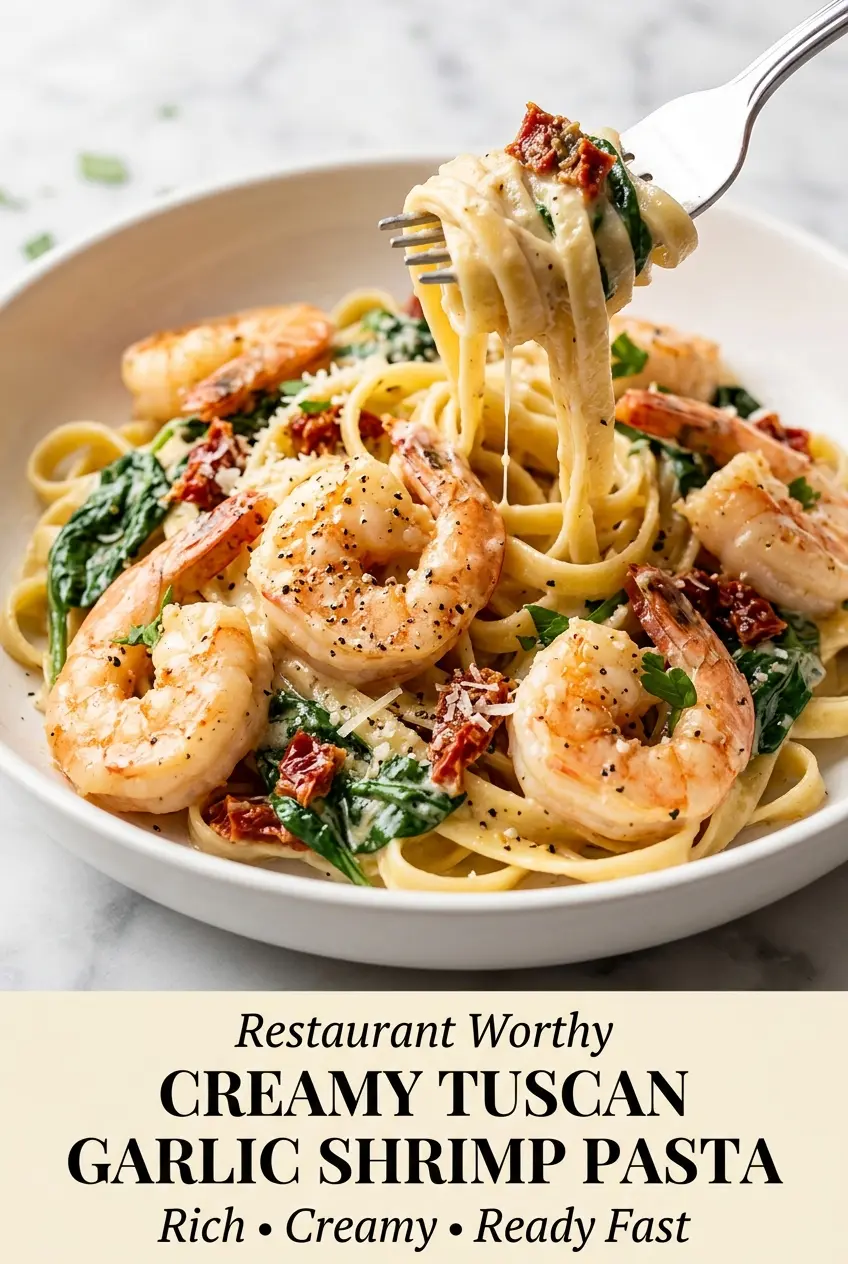
Creamy Tuscan Garlic Shrimp Pasta
Ingredients
Equipment
Method
- Bring a large pot of salted water to a boil. Cook the pasta according to package directions until al dente, then reserve 1/2 cup pasta water and drain.
- Pat the shrimp dry, then season with the kosher salt and black pepper.
- Heat the olive oil and butter in a large skillet over medium-high heat. Cook the shrimp for 1–2 minutes per side until pink and opaque, then transfer to a plate.
- Reduce to medium heat. Add the garlic, Italian seasoning, and crushed red pepper flakes, then sauté for about 30 seconds until fragrant.
- Stir in the sun-dried tomatoes and cook for 1 minute.
- Pour in the heavy cream and bring to a gentle simmer. Stir in the Parmesan cheese until melted and the sauce becomes smooth and slightly thickened, about 3–4 minutes.
- Add the baby spinach and cook for 1–2 minutes until wilted.
- Return the shrimp to the skillet. Add the cooked pasta and toss until evenly coated, stirring in a splash of reserved pasta water if needed to loosen the sauce.
- Finish with the lemon juice and fresh parsley. Serve immediately with additional Parmesan cheese if desired.
