
Gooey Cinnamon Roll Peach Cobbler Bars
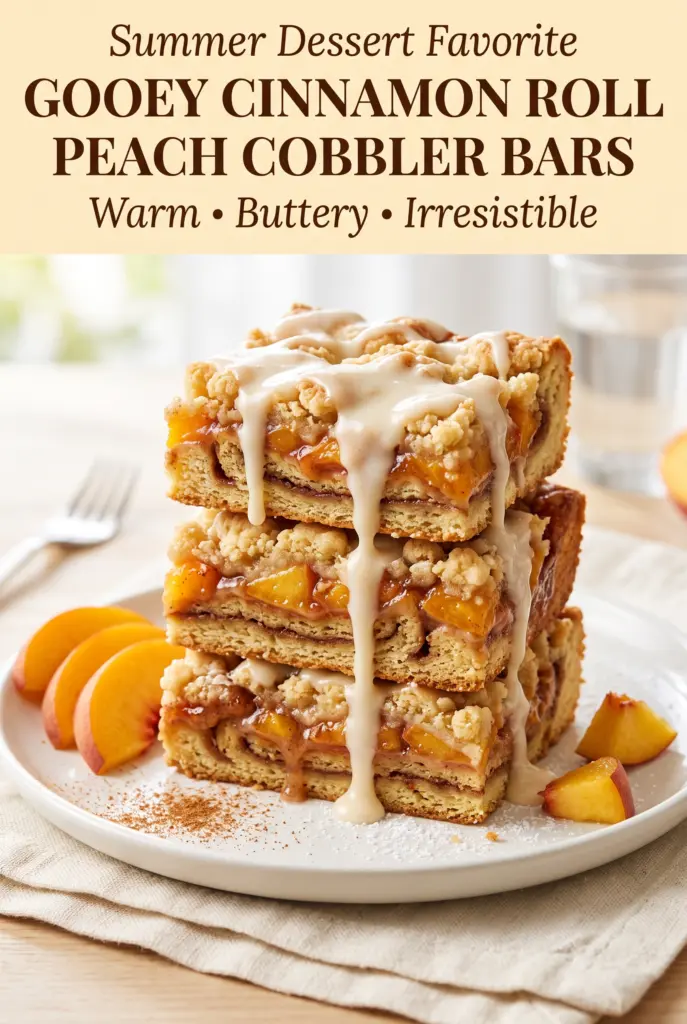
Gooey cinnamon roll peach cobbler bars hit that rare sweet spot where the bottom bakes up soft and buttery, the peaches turn jammy without losing their shape, and the crumble…
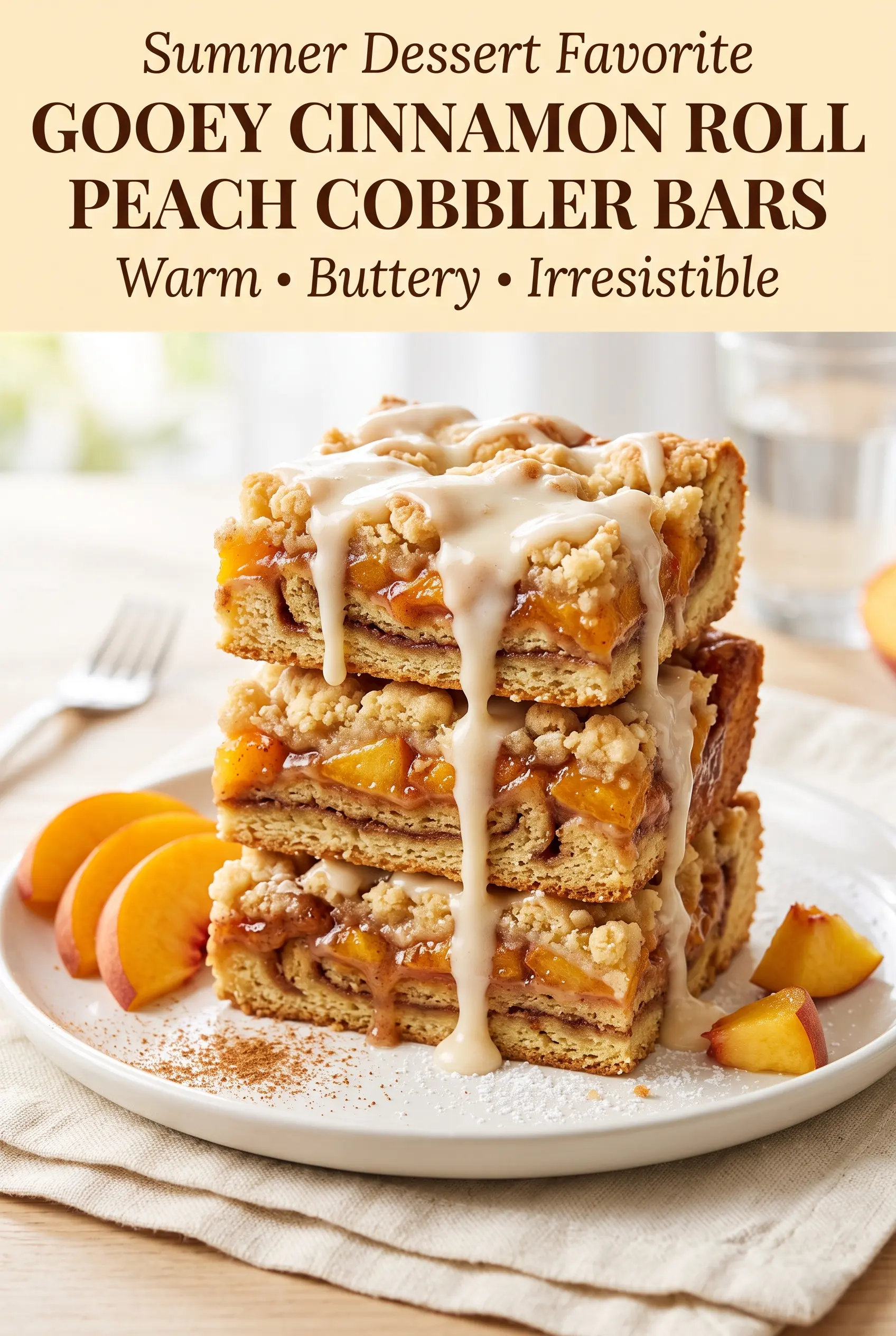
Tip: save now, cook later.Gooey cinnamon roll peach cobbler bars hit that rare sweet spot where the bottom bakes up soft and buttery, the peaches turn jammy without losing their shape, and the crumble on top gives you a little bite instead of just another slab of sweetness. The cinnamon roll base brings instant richness and a tender chew that plain bar crusts can’t match, and the peach filling tastes like cobbler without needing a separate biscuit topping.
The trick is giving the cinnamon roll layer a short head start in the oven before the peaches go on. That keeps the base from turning doughy under the fruit, and it lets the cornstarch-thickened filling sit on top instead of sinking through. A quick cook on the peaches also pulls out their juices early, which means you’re baking a filling, not a watery pan of fruit.
Below, I’ll walk through the part that matters most: how to keep the bars gooey without making them soggy, how to judge when the peach filling is thick enough, and what to swap if your peaches are a little shy on flavor.
The peach filling thickened up perfectly and the cinnamon roll bottom stayed soft instead of soggy. I brought these to brunch and people kept asking if I had made them from scratch.
Save these gooey cinnamon roll peach cobbler bars for the kind of dessert that tastes like peach cobbler and cinnamon rolls baked into one pan.

The Part That Keeps the Bottom From Going Soggy
The mistake with fruit bars like this is piling wet filling onto raw dough and hoping the oven sorts it out. It usually doesn’t. The cinnamon roll layer needs a brief bake first so the dough sets enough to hold the peach mixture, and the peaches need to be cooked until their juices thicken before they hit the pan.
That extra few minutes on the stove is doing real work. Cornstarch only thickens once the filling reaches a simmer, and the butter helps the peaches taste rounded instead of sharp. If you spread loose fruit straight from the bowl, the bars can end up watery in the center even when the top looks done.
- Cinnamon roll dough — Refrigerated dough gives you the soft, sweet base and that signature pull-apart texture. Homemade dough won’t behave the same here unless it’s enriched and fairly sticky, so the canned version is the right call.
- Peaches — Fresh peaches bring the best texture and the cleanest flavor. If yours are a little firm, cook them a minute or two longer; if they’re very ripe, the filling may need a touch more cornstarch.
- Cornstarch — This is what turns peach juices into a spoon-coating filling instead of a puddle. Arrowroot works in a pinch, but it can set a little glossier and softer.
- Cold butter for the crumble — Cold butter gives you distinct crumbs instead of a sandy topping. If it softens too much before baking, the topping bakes up dense instead of crisp.
Building the Layers So the Filling Stays Thick and the Top Stays Crumbly
Pressing the Cinnamon Roll Base
Cut the rolls into quarters and press them into an even layer across the pan, then brush the whole surface with melted butter. You’re not trying to flatten every piece into a perfect sheet; a little texture helps the base bake up tender. The short pre-bake is what keeps it from collapsing under the peaches, so pull it from the oven as soon as the surface looks set at the edges.
Cooking the Peaches Until They Gloss
Warm the peaches with the sugars, spices, lemon juice, and cornstarch until the mixture looks glossy and just slightly thickened. The filling should coat a spoon and leave a brief trail when stirred. If it still looks loose and juicy, it needs a few more minutes; if it starts turning paste-like, the heat is too high and the fruit is cooking down too far.
Making the Crumble by Hand
Cut the cold butter into the flour and sugar until the mixture looks like damp crumbs with some pea-sized bits left in it. Those larger pieces bake into little crunchy pockets on top. If you work it until it looks uniform and sandy, the topping loses its texture and bakes into a heavy cap instead of a crumble.
Baking Until the Center Sets
Once the peach filling and crumble are in the pan, bake until the top is golden and the center no longer sloshes when you gently nudge the pan. The bars will still look soft, and that’s fine; they firm up as they cool. Cut too early and the filling runs. Wait the full cooling time and you’ll get clean squares with a gooey middle.
How to Adapt These Bars Without Losing the Gooey Center
Use canned peaches when fresh ones aren’t worth buying
Drain them well before cooking, then reduce the sugar a little because canned peaches are usually sweeter. The flavor won’t be as bright as fresh fruit, but the bars still bake up soft and thick if you simmer the filling long enough to cook off extra liquid.
Make them gluten-free with a trusted 1:1 flour blend
A good cup-for-cup gluten-free flour blend works in the crumble, and the cinnamon roll base can be swapped for a gluten-free refrigerated dough if you can find one. The texture gets a little more delicate, but the peach layer and icing still carry the whole dessert.
Skip the pecans for a nut-free pan
The bars don’t need the nuts to work, so leave them off if you’re serving a crowd with allergies or you want a smoother finish. You still get plenty of contrast from the crumb topping and the drizzle of icing.
Lean into brunch with extra cinnamon and a thinner glaze
Add a little extra cinnamon to the crumble and warm the icing with a teaspoon of milk so it drizzles more lightly. That gives you a softer finish and keeps the bars from feeling too dessert-heavy if you’re serving them alongside coffee.
Storage and Reheating
- Refrigerator: Store covered for up to 4 days. The base stays soft, and the crumble will lose some crispness.
- Freezer: Freeze cut bars tightly wrapped for up to 2 months. Thaw in the refrigerator so the filling doesn’t weep.
- Reheating: Warm individual bars in the microwave for 15 to 20 seconds or in a 300°F oven until just warmed through. Reheat gently so the icing doesn’t melt off and the peaches don’t turn watery.
Answers to the Questions Worth Asking
Gooey Cinnamon Roll Peach Cobbler Bars
Ingredients
Equipment
Method
- Preheat the oven to 350°F (175°C). Grease a 9×13-inch baking pan and line with parchment paper if desired, then set aside.
- Cut each cinnamon roll into quarters and gently press them into the prepared pan to form an even base. Brush the top with the melted butter.
- Bake the crust for 8 minutes, until it is just beginning to set, then remove the pan.
- Melt 1 tablespoon butter in a skillet over medium heat. Add peaches, light brown sugar, granulated sugar, ground cinnamon, ground nutmeg, vanilla extract, fresh lemon juice, and cornstarch, then cook for 5–7 minutes until the peaches soften and the filling thickens slightly.
- Remove the skillet from the heat. Keep the peach filling warm while you prepare the crumble.
- In a bowl, combine all-purpose flour, light brown sugar, ground cinnamon, and salt. Cut in cold cubed unsalted butter until coarse crumbs form.
- Spread the warm peach filling evenly over the partially baked cinnamon roll base. Sprinkle the crumble topping evenly over the peaches.
- Bake for 28–35 minutes at 350°F (175°C), until the crumble is golden and the cinnamon roll layer is fully cooked.
- Cool the bars for at least 20 minutes. This helps the filling set for cleaner slices.
- Warm the reserved cinnamon roll icing for a few seconds in the microwave, then drizzle generously over the bars. Sprinkle with chopped pecans and a light dusting of cinnamon if desired.
- Slice into bars and serve warm or at room temperature.
