
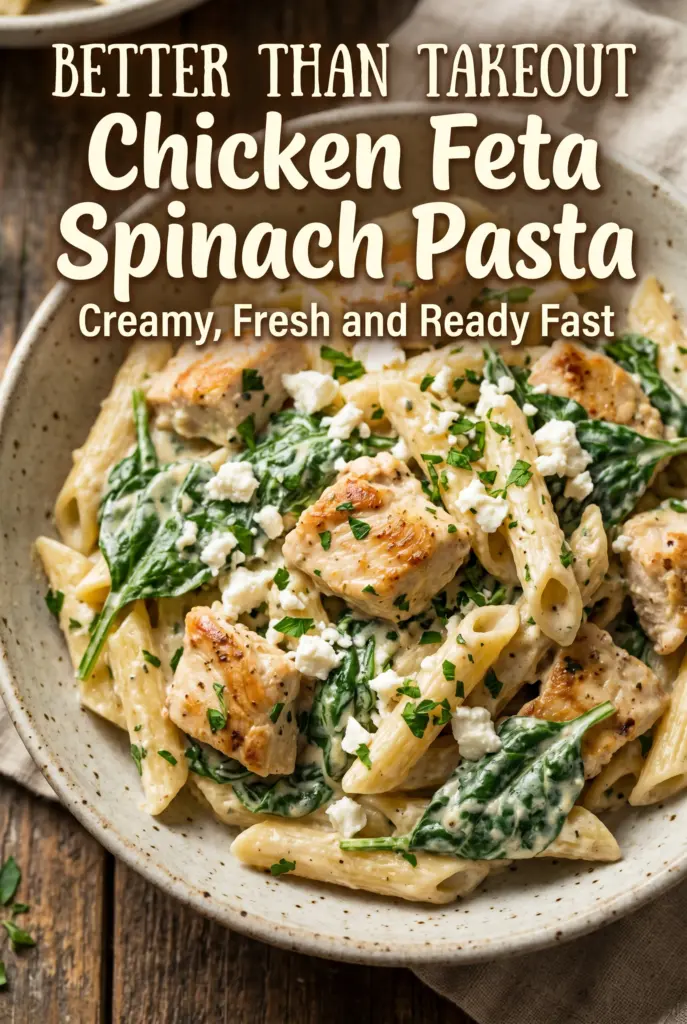
Creamy Chicken Feta Spinach Pasta
Chicken feta spinach pasta lands on the table with that rare combination of creamy, tangy, and comforting that keeps people coming back for another forkful. The sauce clings to the…
Tip: save now, cook later.Chicken feta spinach pasta lands on the table with that rare combination of creamy, tangy, and comforting that keeps people coming back for another forkful. The sauce clings to the penne instead of sliding off, the spinach softens into the cream without disappearing completely, and the feta gives the whole dish a sharp, salty edge that keeps it from tasting flat.
The trick is treating the feta like part of the sauce instead of a garnish. It melts best when the heat is kept moderate and the cream has a chance to loosen the cheese gradually. The lemon juice goes in at the end for brightness, which matters here because heavy cream, Parmesan, and feta can all pull the dish toward rich and heavy if you don’t give it something to lift the flavor.
Below you’ll find the exact texture cues I watch for, the swaps that still keep the sauce creamy, and the storage note that helps this pasta hold up for leftovers without turning dry.
The feta melted into the cream instead of turning grainy, and the lemon at the end kept the sauce from feeling heavy. My pasta came out glossy and the chicken stayed juicy.
Creamy chicken feta spinach pasta is the kind of skillet dinner worth pinning for nights when you want a tangy, saucy pasta that comes together fast.
The Reason the Feta Stays Creamy Instead of Turning Grainy
Feta can go chalky fast if it hits a pan that’s too hot, especially once you add Parmesan on top of it. The goal here isn’t to melt it into a perfectly smooth cheese sauce like mozzarella. You want it to soften into the cream and break down just enough to turn the sauce salty, tangy, and thick. That happens when the heat is low enough for the dairy to stay stable.
The second thing people miss is pasta timing. If the pasta sits too long after draining, it starts absorbing the sauce unevenly and can make the finished dish look tight instead of glossy. I like to have the pasta ready before the sauce is fully finished, then toss it in while the sauce still has a little looseness.
- Low heat matters. Once the cream and cheese go in, keep the skillet at a gentle simmer or even lower. A hard boil is what makes dairy separate.
- Reserve a little pasta moisture. If the sauce feels too thick at the end, a splash of starchy pasta water loosens it without thinning the flavor.
- Don’t overcook the spinach. It only needs a minute or two to wilt. If it cooks down to nothing, you lose the fresh contrast that keeps the pasta lively.
What Each Ingredient Is Actually Doing in This Dish
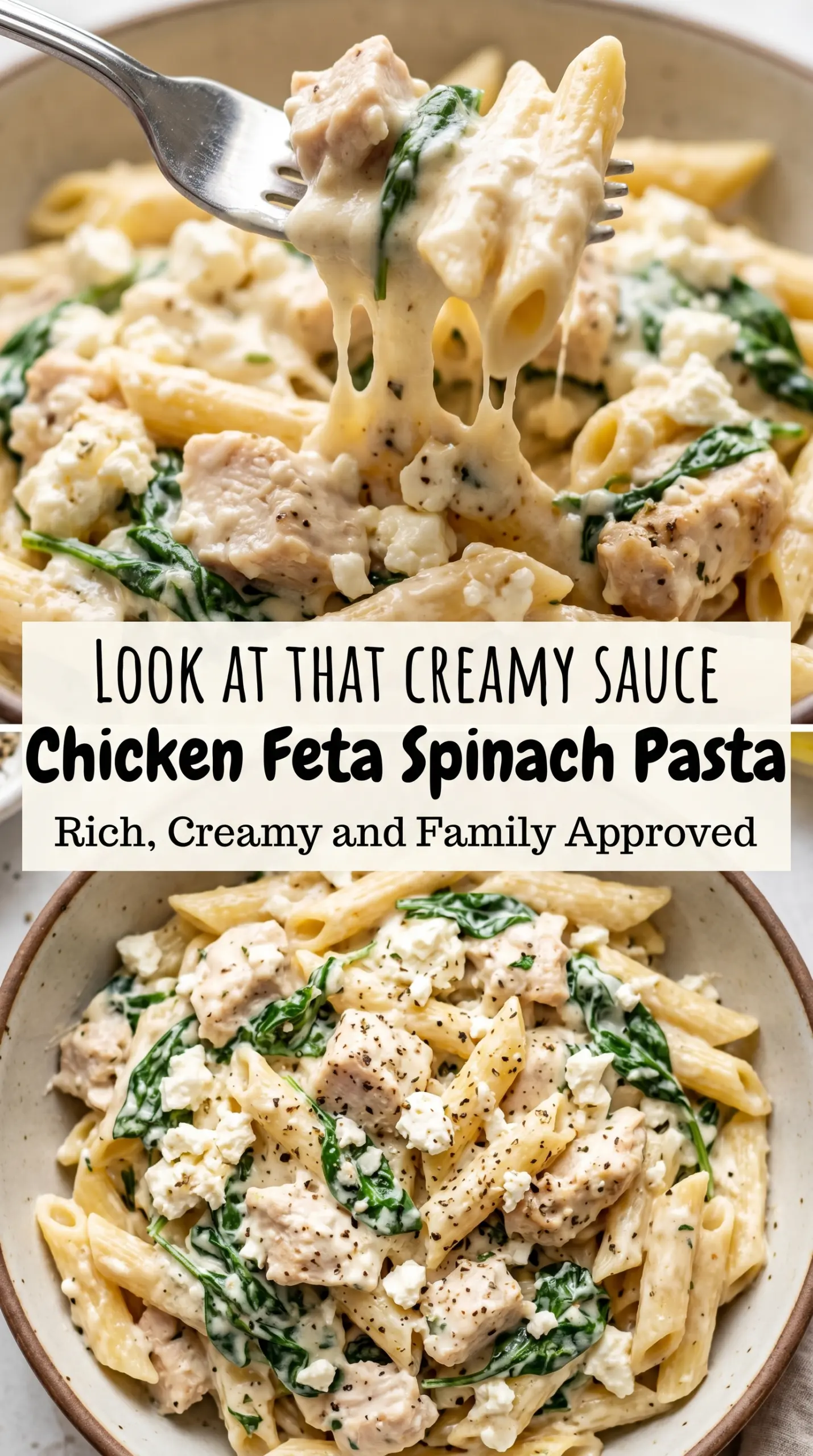
- Chicken breast — Diced chicken breast cooks quickly and gives you plenty of browned edges. Thighs also work if you want more richness and a little extra forgiveness on the cook time.
- Feta cheese — This is the flavor anchor. Crumbled feta from a block has a cleaner tang and melts better than very dry pre-crumbled feta, which can stay sandy in the sauce.
- Heavy cream — It gives the sauce body and keeps the feta from clumping. Half-and-half can work in a pinch, but the sauce will be thinner and needs a little more simmer time.
- Parmesan — Parmesan deepens the savory base and helps the sauce feel more rounded. Grate it yourself if you can, because the pre-shredded kind doesn’t melt as smoothly.
- Lemon juice — Don’t skip it. The acid brightens the cream and makes the feta taste sharper instead of just salty.
- Spinach — Fresh spinach is the right choice here because it wilts fast and adds a clean green note. Frozen spinach brings too much water unless it’s squeezed very dry.
Building the Sauce in the Right Order
Brown the Chicken First
Start with the chicken in a hot skillet and let it sit long enough to pick up color before you move it around. That browned surface gives the sauce more depth later. If the pan is crowded, the chicken steams instead of searing, so work in batches if your skillet looks full.
Wake Up the Garlic Without Burning It
Garlic only needs about 30 seconds after the chicken is cooked. Stir it into the hot oil and the browned bits in the pan, just until it smells fragrant. If it turns dark, it goes bitter fast and the whole sauce tastes harsh.
Let the Cream and Feta Mingle Slowly
Add the broth and cream, then lower the heat before the cheese goes in. Stir in the feta and Parmesan gradually so they melt into the liquid instead of clumping on contact. If the sauce looks broken, the heat is usually too high — pull the skillet off the burner and stir until it comes back together.
Finish With Pasta and Lemon
Add the pasta while the sauce is still loose enough to coat every piece. The sauce tightens as it cools, so stop cooking when it still looks slightly fluid. Stir in the lemon juice at the very end so the acid stays bright and doesn’t cook off.
How to Adapt This for a Bigger Crowd, a Lighter Plate, or a Different Pantry
Make It Gluten-Free
Use your favorite gluten-free penne and cook it just to al dente. Gluten-free pasta softens faster once it hits the sauce, so toss and serve it promptly instead of letting it sit in the pan. The sauce itself already works without flour, so this swap changes texture more than flavor.
Use Chicken Thighs for a Richer Result
Boneless thighs give you a juicier bite and a deeper flavor, especially if you like the chicken to stand out against the tangy feta. They take a little longer to cook through, but they stay tender even if you leave them in the pan an extra minute. This swap is the one I reach for when I want the pasta to feel a little more substantial.
Make It Lighter With Half-and-Half
Half-and-half cuts the richness, but the sauce won’t coat quite as heavily and it needs gentler heat to stay smooth. If you use it, keep the skillet at a low simmer and let the sauce reduce a bit before tossing in the pasta. The result tastes brighter and a little less lush.
Storage and Reheating
- Refrigerator: Store leftovers in an airtight container for up to 3 days. The sauce thickens as it chills, so the pasta will look tighter the next day.
- Freezer: I don’t recommend freezing this one. Cream sauces with feta can turn grainy after thawing, and the spinach loses its texture.
- Reheating: Warm it gently in a skillet over low heat with a splash of broth or cream. Microwave reheating works, but short bursts are better than one long blast, which can split the sauce and dry out the chicken.
Questions I Get Asked About This Recipe
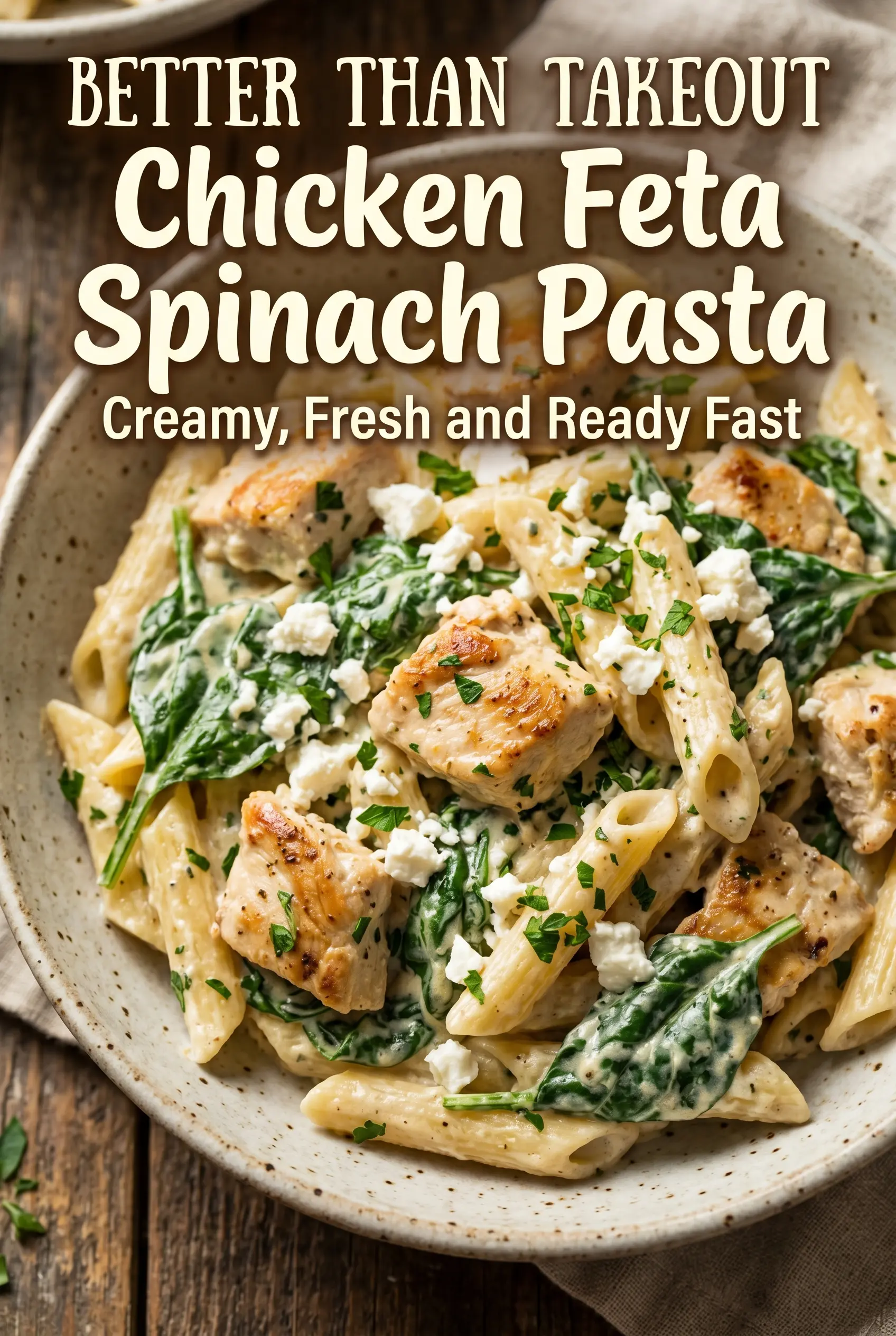
Creamy Chicken Feta Spinach Pasta
Ingredients
Equipment
Method
- Cook the penne pasta according to package directions, until tender. Drain and set aside.
- Heat the olive oil in a large skillet over medium-high heat until shimmering. Season the chicken with salt, black pepper, paprika, and Italian seasoning.
- Add the seasoned chicken to the skillet and cook for 6–7 minutes, stirring occasionally, until golden and fully cooked. Transfer or keep in the skillet as needed so the sauce can coat it later.
- Stir in the minced garlic and cook for 30 seconds, until fragrant. Keep stirring so it doesn’t brown.
- Add the chicken broth and heavy cream, stirring well to combine. Bring to a gentle simmer for a cohesive base.
- Mix in the crumbled feta cheese and grated Parmesan cheese until melted and creamy. Stir until the sauce looks smooth and cohesive.
- Add the fresh spinach and cook until wilted. Stir frequently so it softens evenly.
- Add the cooked penne pasta and lemon juice, then toss until everything is coated in the creamy sauce. Mix thoroughly so pasta gets covered.
- Garnish with chopped parsley and extra feta before serving. Serve hot while the sauce is creamy.
