
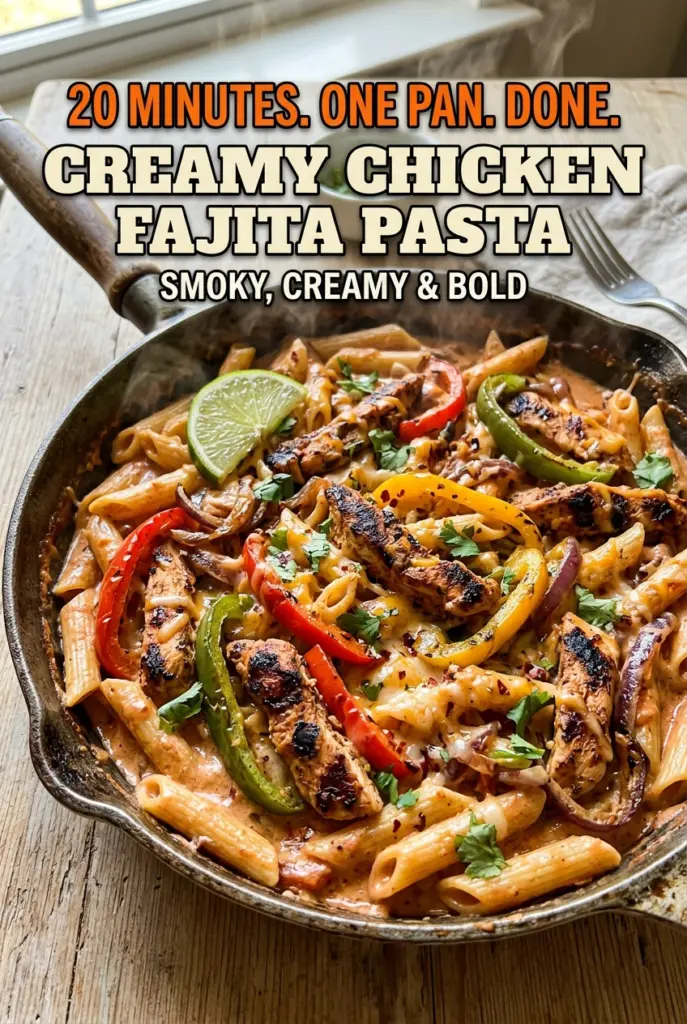
Creamy Chicken Fajita Pasta
Juicy chicken, charred peppers, and a cream sauce that clings to every piece of pasta make this skillet dinner hit harder than most weeknight pastas. The fajita seasoning brings smoke…
Tip: save now, cook later.Juicy chicken, charred peppers, and a cream sauce that clings to every piece of pasta make this skillet dinner hit harder than most weeknight pastas. The fajita seasoning brings smoke and warmth, the tomatoes with green chiles keep the sauce from tasting flat, and the cheese melts into a silky finish instead of turning heavy. It’s the kind of dinner that tastes like it took more effort than it did.
What makes this version work is the order. The chicken gets its own quick sear first, then the peppers and onion pick up color in the same pan, and the sauce builds right on top of those browned bits. That’s where the flavor lives. The cream and cheese go in after the broth and tomatoes have had a chance to simmer together, which keeps the sauce smooth instead of grainy or greasy.
Below you’ll find the small details that matter here: how to keep the chicken juicy, when the peppers should stop cooking, and what to do if your sauce tightens up before the pasta is coated. It’s a straightforward recipe, but the difference between good and great is in the timing.
The sauce turned out creamy without getting heavy, and the peppers still had a little bite. I followed the timing exactly and the chicken stayed juicy all the way through.
Creamy Chicken Fajita Pasta with smoky peppers, a silky cheese sauce, and a lime finish is worth keeping close for busy nights.
The Trick to Keeping Fajita Chicken from Going Dry in Pasta
Chicken breast dries out fast when it sits in a pan too long, especially after it’s cut into strips. The fix here is simple: sear it quickly, pull it out, and bring it back only at the end. That short rest keeps the meat juicy while the sauce comes together.
The other thing that matters is heat. Bell peppers and onion need enough heat to char at the edges before they soften completely. If the pan is too crowded or the burner is too low, they steam instead of pick up that browned fajita flavor.
What Each Ingredient Is Actually Doing in This Dish
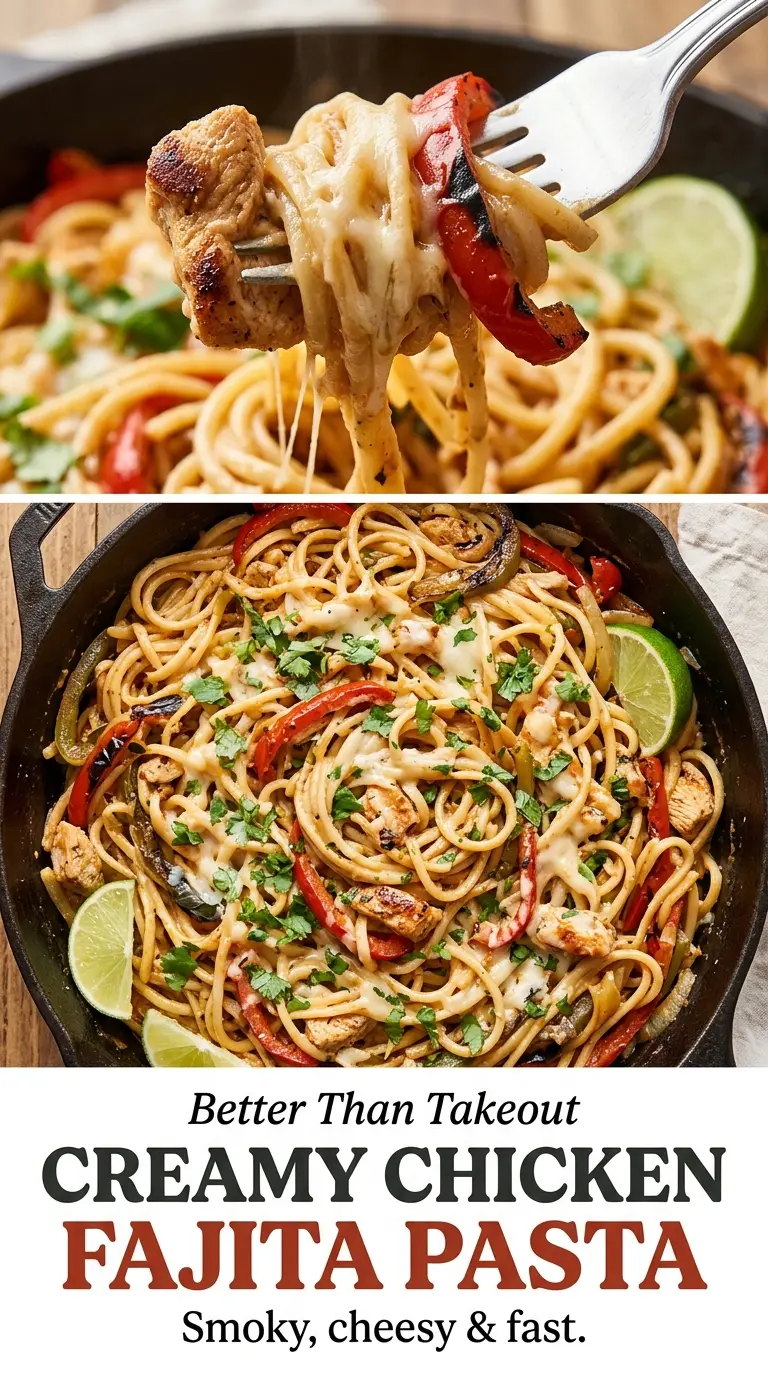
- Chicken breast — Lean chicken works well here because the sauce carries the dish, but it needs a fast sear and a short finish. Slice it into even strips so it cooks at the same pace and doesn’t dry out on the edges before the center is done.
- Fajita seasoning — This is the backbone of the whole pan. If you’re using a store-bought blend, check the salt level before adding extra at the end; some are much saltier than others. A homemade mix gives you more control over the smoke and heat.
- Chicken broth and heavy cream — The broth loosens the sauce enough to coat the pasta, while the cream gives it body. You can use half-and-half in a pinch, but the sauce will be a little thinner and won’t cling quite as well.
- Diced tomatoes with green chiles — These keep the sauce bright and give it that fajita-style background heat. Don’t swap in plain diced tomatoes unless you’re willing to add extra seasoning, because they won’t bring the same bite.
- Mexican blend cheese — Pre-shredded works here, though freshly shredded melts a little smoother. Add it off the hottest part of the burner so it melts into the sauce instead of turning stringy or grainy.
- Penne pasta — The ridges catch the sauce well, which matters in a dish this creamy. Any short pasta with grooves or tubes will work, but long noodles won’t hold the peppers and chicken as nicely.
Building the Skillet in the Right Order
Seasoning and Searing the Chicken
Toss the chicken with the fajita seasoning until every strip looks coated, then cook it in a hot skillet with one tablespoon of oil. You want golden edges and cooked-through centers, not dark crust on the outside and pale meat inside. If the pan looks crowded, cook the chicken in two batches so it browns instead of steaming.
Softening the Peppers Without Losing Their Bite
Add the second tablespoon of oil, then the peppers and onion. Cook them until they’re softened and the edges are lightly charred, which usually takes about five minutes in a hot pan. If they turn limp and wet before browning, the heat is too low or the skillet is overloaded. The little bit of char is what makes the sauce taste like fajitas instead of plain chicken pasta.
Pulling the Sauce Together
Stir in the garlic for just long enough to smell it, then add the broth, cream, tomatoes, smoked paprika, salt, and pepper. Let the mixture come to a gentle simmer, not a hard boil. A hard boil can make the cream look split before the cheese even goes in. Once the sauce looks glossy and lightly thickened, return the chicken, add the cheese, and stir until smooth.
Finishing with the Pasta
Add the drained pasta and toss until every piece is coated. If the sauce seems too thick, splash in a little pasta water or broth and toss again. Finish with cilantro and a squeeze of lime. That bright hit at the end keeps the whole dish from feeling too heavy.
Three Ways to Adjust the Pan Without Losing the Point
Dairy-Free Version
Use a full-fat unsweetened coconut cream or a creamy oat-based cooking milk instead of heavy cream, then skip the cheese or use a dairy-free melting cheese that you know behaves well. The sauce will taste a little different, but the fajita spices and tomatoes still carry the dish.
Gluten-Free Swap
Use your favorite gluten-free penne and cook it just to al dente, since it can soften a little more once it hits the sauce. The rest of the recipe already fits naturally, so the texture of the pasta is the main thing to watch.
Make It With Thighs Instead of Breast
Boneless thighs bring a little more richness and stay tender even if you cook them a minute longer. They’re a smart swap if you want extra insurance against dry chicken, and they work especially well if you like a slightly deeper savory flavor.
Dial the Heat Up or Down
Use mild diced tomatoes with green chiles for a gentler version, or add a pinch of cayenne with the paprika if you want more heat. The key is keeping the spice balanced enough that the lime and cilantro still taste fresh at the end.
Storage and Reheating
- Refrigerator: Store in an airtight container for up to 4 days. The pasta will absorb some of the sauce as it sits, so it gets a little thicker by day two.
- Freezer: It freezes, but the cream sauce can loosen and the pasta softens after thawing. If you want to freeze it, undercook the pasta slightly and thaw it in the fridge before reheating.
- Reheating: Warm it gently on the stovetop or in the microwave with a splash of broth or milk to loosen the sauce. High heat can make the cheese separate and turn the chicken tough, so low and slow works best.
Answers to the Questions Worth Asking
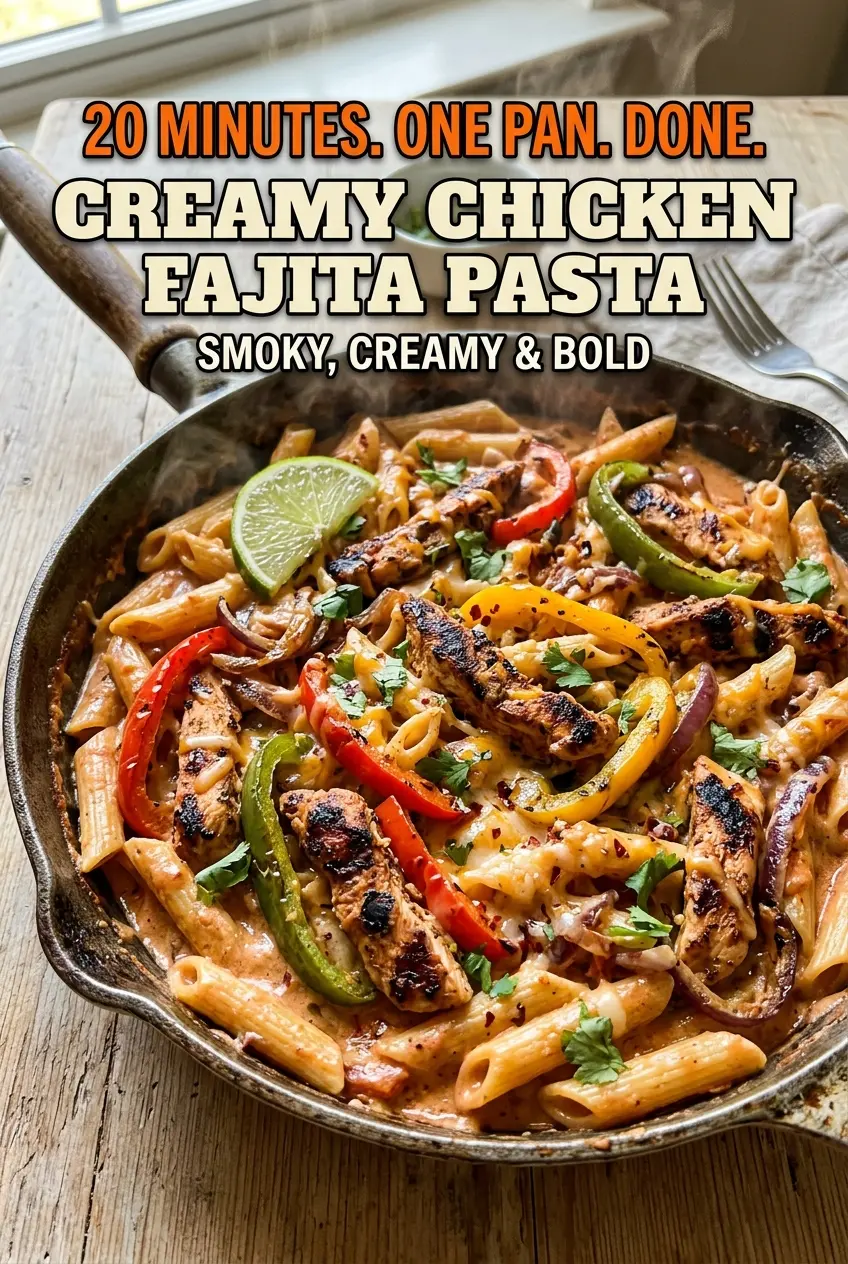
Creamy Chicken Fajita Pasta
Ingredients
Equipment
Method
- Toss the chicken strips with the fajita seasoning until evenly coated.
- Cook the penne pasta in salted boiling water until al dente, about 8-10 minutes, then drain and set aside.
- Heat 1 tablespoon olive oil in a large skillet over medium-high heat, then add the seasoned chicken and cook until golden and cooked through, about 5-6 minutes; remove and set aside.
- Add the remaining oil to the skillet, then cook the bell peppers and onion until softened and lightly charred, about 5-6 minutes.
- Add the garlic and cook until fragrant, about 30 seconds.
- Stir in the chicken broth, heavy cream, diced tomatoes with green chiles, smoked paprika, salt, and pepper, then bring to a gentle simmer.
- Return the chicken to the skillet and stir in the shredded cheese until melted and the sauce turns smooth and creamy.
- Add the cooked pasta and toss until fully coated in the sauce.
- Top with fresh cilantro and serve with lime wedges.
