
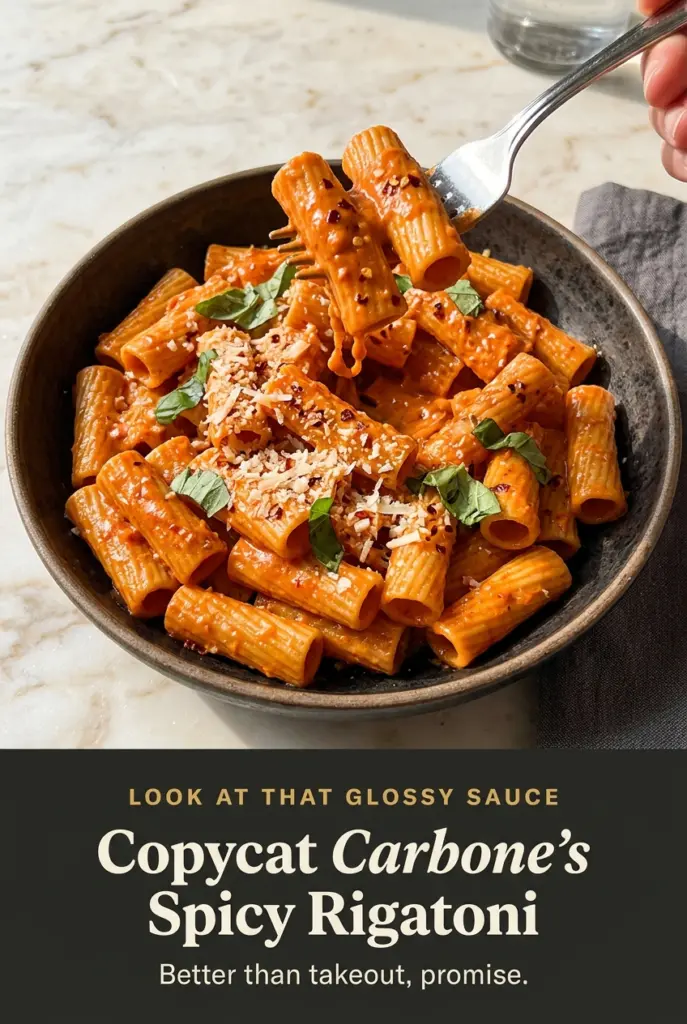
Copycat Carbone’s Spicy Rigatoni
Rosy, glossy rigatoni with a tomato-cream sauce clinging to every ridge is the whole point here, and this copycat version gets that restaurant finish without turning fussy. The sauce tastes…
Tip: save now, cook later.Rosy, glossy rigatoni with a tomato-cream sauce clinging to every ridge is the whole point here, and this copycat version gets that restaurant finish without turning fussy. The sauce tastes bold up front, then settles into something rich and balanced, with enough heat from Calabrian chili to keep each bite interesting. It’s the kind of pasta that looks dramatic in the pan and disappears fast at the table.
The trick is building the flavor in layers instead of dumping everything together. Tomato paste needs a minute in the pan to deepen and lose that raw edge, vodka needs time to cook down, and the cream goes in only after the tomatoes have had a real simmer. That order keeps the sauce thick, smooth, and glossy instead of flat or watery. Parmesan finishes the sauce off the heat so it melts in cleanly instead of turning grainy.
Below you’ll find the timing that matters most, the best swap if you can’t find Calabrian chili paste, and a few practical notes for making the sauce cling the way it should.
The sauce turned out silky and coated the rigatoni exactly like the restaurant version. I used the full amount of chili paste and it had a nice kick without drowning out the tomato or Parmesan.
Save this Copycat Carbone’s Spicy Rigatoni for the nights when you want that glossy vodka sauce, a real chili kick, and pasta that eats like a restaurant bowl.
The Reason the Sauce Stays Glossy Instead of Breaking
The difference between a sauce that clings and one that turns greasy usually comes down to heat and timing. Tomato paste needs to toast until it darkens a shade or two, because that brief cooking removes the tinny edge and gives the sauce more backbone. Vodka isn’t there for a boozy finish; it helps carry flavor and evaporates fast enough that what’s left is depth, not sharpness.
The cream and Parmesan are the danger zone. If either goes into a violently bubbling sauce, the texture can turn grainy or separate at the edges. Keep the simmer gentle once the cream is in, then take the pan off the heat before adding cheese so the residual warmth melts it smoothly.
- Calabrian chili paste — This is where the signature heat comes from. It brings fruit, smoke, and spice at once, which dry red pepper flakes can’t fully replace. If you can only find Calabrian chiles in oil, drain them a little and mince them finely, then use a spoonful of the oil in the pan for extra flavor.
- Tomato paste — Don’t skip the browning step. That minute or two in the butter and onion mixture gives the sauce a concentrated tomato base and keeps the finished dish from tasting thin.
- San Marzano tomatoes — Good canned tomatoes matter here because the sauce is simple. If you use a different brand, choose whole peeled tomatoes and crush them by hand so you keep some texture instead of ending up with a sauce that tastes flat from the can.
- Heavy cream — This gives the sauce body and that pale brick color. Half-and-half will work in a pinch, but the sauce will be less plush and a little more likely to split if you rush the simmer.
- Parmesan — Freshly grated melts far better than the pre-shredded bagged kind. The anti-caking agents in packaged cheese can leave the sauce sandy instead of silky.
Building the Sauce in the Right Order
Start with the pasta water first
Bring a large pot of water to a strong boil and salt it well. The pasta needs that seasoned water because the sauce alone won’t do all the seasoning work. Cook the rigatoni until just al dente, then save some pasta water before draining; the starch in that water helps loosen the sauce later without thinning it into soup.
Cook the onion until it loses its bite
Melt the butter in a large skillet and cook the onion until soft and translucent, not browned. If the onion stays crunchy, it will stand out in the finished sauce in the wrong way. Add the garlic and Calabrian chili paste next and cook just until fragrant, because garlic burns fast and turns bitter once it gets too much color.
Deepen the tomato base before adding liquid
Stir in the tomato paste and keep it moving in the pan until it darkens slightly. That short cook is what builds a full-bodied sauce instead of one that tastes like warmed tomato puree. Pour in the vodka and let it reduce until the alcohol smell is mostly gone; you want the flavor lift, not the sharp edge.
Finish with cream, cheese, and pasta
Add the crushed tomatoes and simmer until the sauce thickens enough to coat a spoon. Stir in the cream and keep the heat gentle so the sauce turns rosy and glossy. Remove the pan from the heat before adding Parmesan, then toss in the rigatoni with a splash of pasta water until every tube is lacquered with sauce.
How to Adapt This for Different Heat Levels and Diets
Milder version with the same creamy finish
Cut the Calabrian chili paste in half and add more only after the sauce is finished. That keeps the tomato-cream balance intact while softening the heat, which is the smartest move if you want the pasta to stay kid-friendly or table-friendly without changing the texture.
Dairy-free version
Use a plant-based cream with some body, then finish with nutritional yeast or a dairy-free Parmesan-style cheese. The sauce will still taste rich, but it won’t have quite the same salty, nutty finish that real Parmesan brings.
Gluten-free pasta swap
Use a sturdy gluten-free rigatoni and pull it from the water when it still has a slight bite. Gluten-free pasta goes soft fast, and if it overcooks before the sauce is ready, it won’t hold up to tossing.
Storage and Reheating
- Refrigerator: Store leftovers in an airtight container for up to 4 days. The sauce thickens as it chills, so the pasta will look a little tighter the next day.
- Freezer: The sauce freezes fairly well on its own for up to 2 months, but cream sauces can separate a bit after thawing. If you plan ahead, freeze the sauce without the pasta and stir in a splash of cream while reheating.
- Reheating: Warm it gently on the stove over low heat with a spoonful or two of water or milk to loosen it. High heat is what usually turns the sauce oily, so slow reheating is the difference between creamy leftovers and broken leftovers.
Answers to the Questions Worth Asking
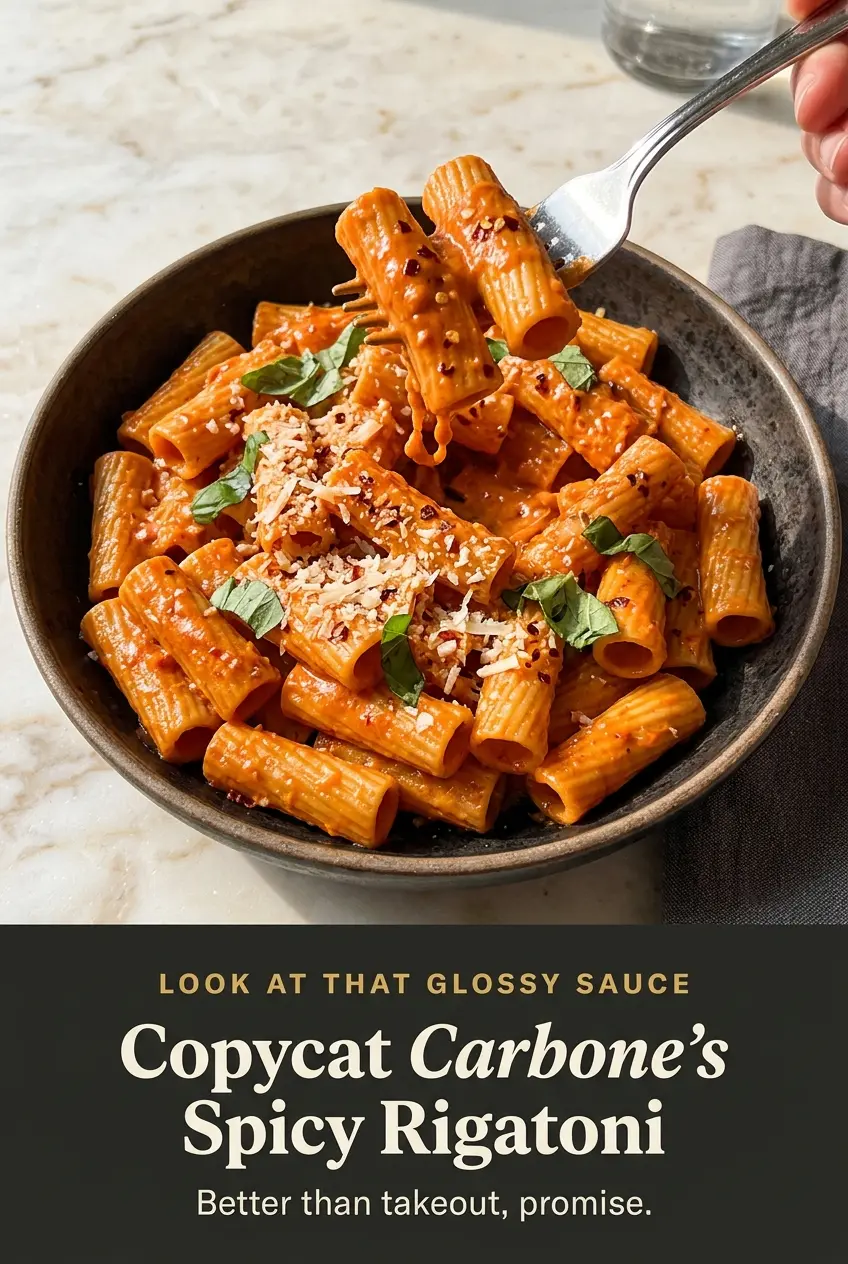
Copycat Carbone's Spicy Rigatoni
Ingredients
Equipment
Method
- Bring a large pot of salted water to a boil and cook the rigatoni until al dente. Time it so the pasta still has a firm bite, then reserve 1 cup of pasta water before draining.
- Melt the butter in a large skillet over medium heat until fully liquefied and glossy. Add the diced onion and cook for about 5 minutes, stirring occasionally, until soft.
- Add the minced garlic and Calabrian chili paste and cook for about 1 minute. Stir to keep it fragrant without burning.
- Stir in the tomato paste and cook for about 2 minutes, stirring constantly, until it darkens slightly. Keep the heat at medium so it cooks evenly.
- Pour in the vodka and simmer for about 3-4 minutes, stirring as needed until mostly reduced. You should see the sauce thicken as the alcohol cooks off.
- Add the crushed San Marzano tomatoes and simmer for 10-12 minutes, stirring occasionally, until thickened. Keep it at a gentle simmer so it reduces without splattering.
- Stir in the heavy cream and simmer for 2-3 minutes until the sauce turns rosy and glossy. Season with the salt and black pepper during this stage.
- Remove the skillet from the heat and stir in the Parmesan cheese until melted. Toss in the cooked rigatoni, adding reserved pasta water as needed to loosen the sauce.
- Top with the torn fresh basil and extra Parmesan, then serve immediately. The sauce should cling thickly to the ridges of the rigatoni.
