
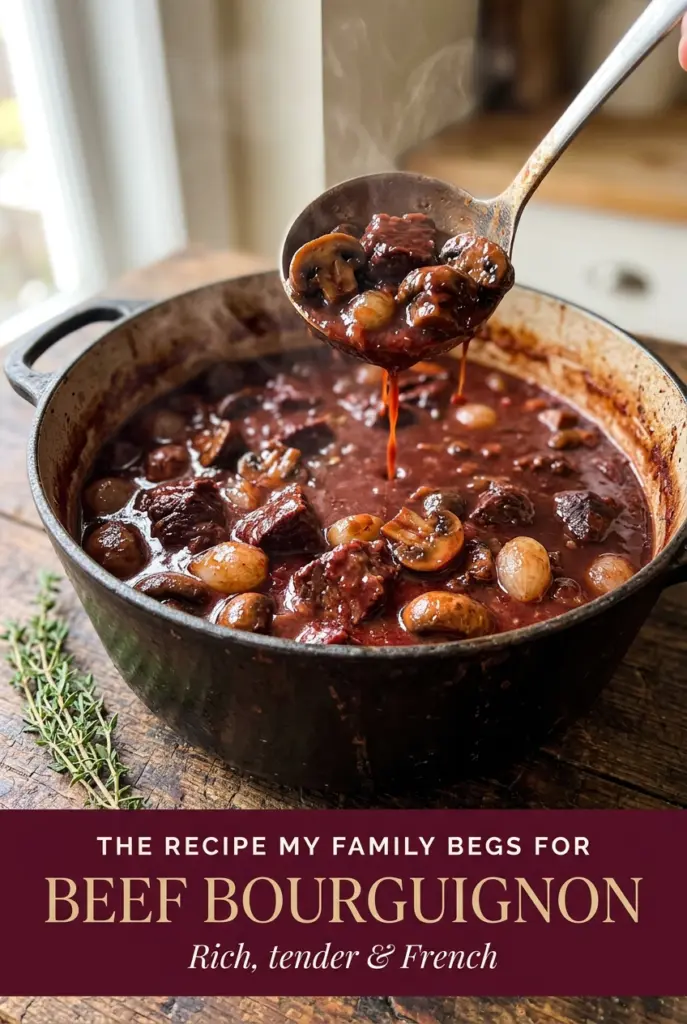
Beef Bourguignon
Deeply braised beef, red wine, mushrooms, and bacon turn into the kind of stew that settles into the pot and into memory. The beef comes out tender enough to break…
Tip: save now, cook later.Deeply braised beef, red wine, mushrooms, and bacon turn into the kind of stew that settles into the pot and into memory. The beef comes out tender enough to break apart with a spoon, the sauce reduces into something glossy and rich, and the pearl onions and mushrooms give every bite a little extra sweetness and earthiness. This is the version people come back to when they want a dinner that tastes like it took all day because, in the best way, it did.
The key is giving the beef a real sear before anything else and then letting the wine do what it does best: lift every browned bit from the bottom of the pot and turn it into sauce. If the meat goes in gray or the pot gets crowded, the stew still works, but it loses that deep savory base that makes beef bourguignon worth the extra steps. Cooking the mushrooms and pearl onions separately keeps them from turning soggy and muddying the braise.
Below, I walk through the part that matters most: building the flavor in stages so the sauce ends up silky instead of thin, and the beef ends up tender instead of stringy. There’s also a few notes on substitutions and reheating, because this is the kind of dish that gets even better the next day.
The beef was fall-apart tender after 2 1/2 hours and the sauce thickened beautifully without needing extra flour at the end. I loved that the mushrooms stayed meaty instead of getting lost in the stew.
Save this beef bourguignon for the kind of night when you want a rich red wine stew with tender beef, silky sauce, and no shortcuts.
The Browning Stage Is Where the Flavor Starts
Beef bourguignon gets its depth from layering browned meat, rendered bacon fat, tomato paste, wine, and stock in the same pot. If you rush the browning, the stew still tastes good, but it loses the dark, rounded backbone that makes the sauce taste expensive. The goal is not to cook the beef through at this point. It’s to build a crust that dissolves into the braise later.
Two mistakes show up over and over here. The first is crowding the pan, which traps steam and keeps the beef from searing. The second is adding the wine before the tomato paste has cooked down; that raw edge stays in the final sauce. Let the paste darken for a minute, then pour in the wine and scrape until the bottom of the pot looks clean again.
What Each Ingredient Is Actually Doing in This Stew
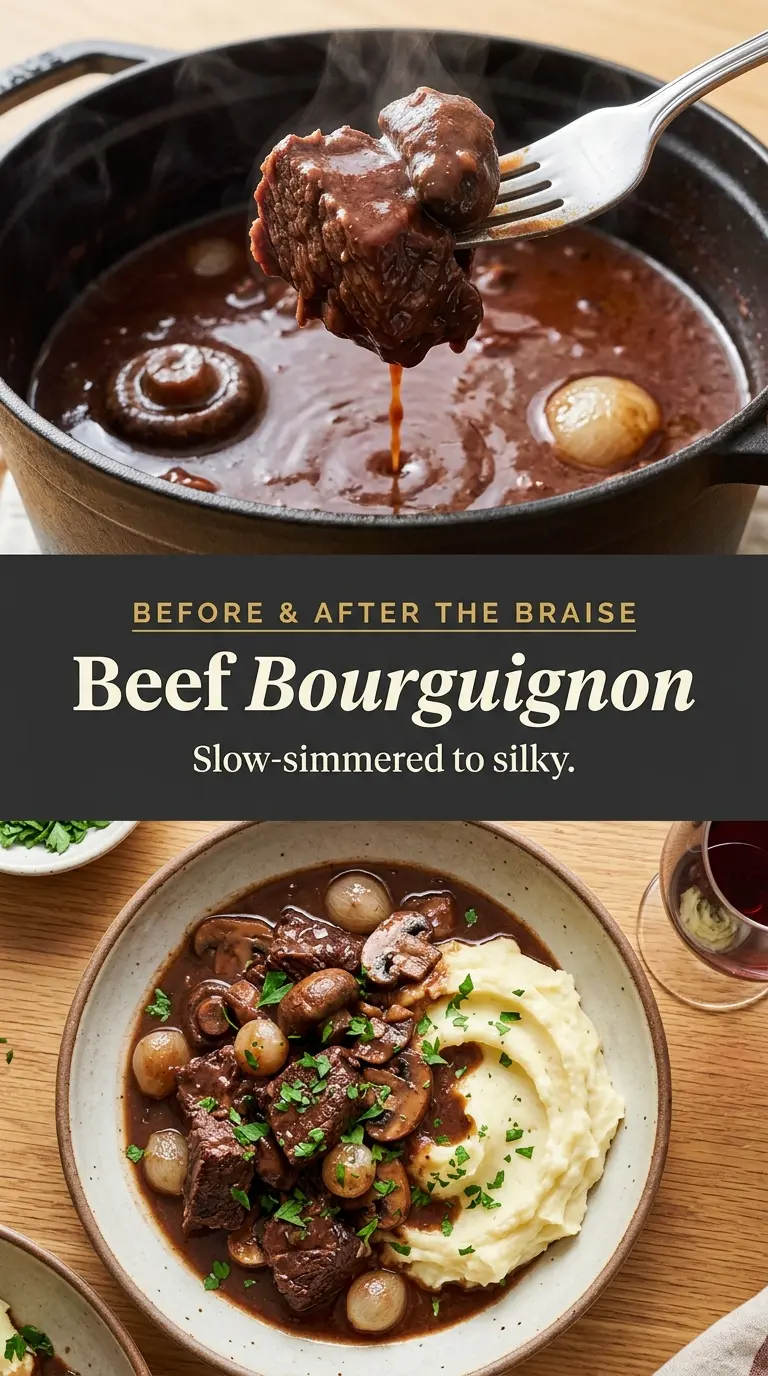
- Beef chuck roast — Chuck is the right cut because it has enough fat and connective tissue to turn tender during a long braise. Lean stew meat dries out before the sauce gets where it needs to go.
- Dry red wine — Use a wine you’d drink, not a cooking wine. The flavor concentrates as it reduces, so anything harsh or thin will stay harsh and thin in the finished stew. A pinot noir, merlot, or Burgundy-style red works well.
- Bacon — The bacon adds smoke and salt, but just as important, it leaves behind fat for searing the beef. Thick-cut bacon is fine if that’s what you have; just chop it smaller so it renders evenly.
- Pearl onions and cremini mushrooms — These should go in near the end so they keep their shape and their own flavor. If pearl onions are a pain to peel, use frozen pearl onions and thaw them first; they work well here.
- Flour — The light coating helps the beef brown and gives the braising liquid a little body. Don’t use a heavy hand or you’ll get a pasty sauce instead of a silky one.
The 20 Minutes That Decide Whether the Sauce Turns Silky or Flat
Rendering the Bacon
Cook the bacon over medium heat until it’s crisp and the fat has enough time to collect in the pan. Pull the bacon out once it’s done, but leave the fat behind. That fat carries flavor into the beef sear, and if you drain it away, the stew loses a layer of savoriness right at the start.
Building the Browned Base
Sear the beef in batches and give each piece time to develop a deep brown crust before turning it. If the cubes stick at first, leave them alone; they’ll release when they’re ready. Once the beef comes out, cook the onion and carrots in the same pot until they soften and pick up color from the fond on the bottom.
Turning Wine Into Sauce
Stir in the tomato paste and garlic until they smell sweet and concentrated, then add the red wine and scrape every browned bit from the bottom. That scrapings step matters. It’s where most of the finished sauce gets its depth. After the wine goes in, bring it to a steady simmer, not a hard boil, or the meat can tighten up before it has time to turn tender.
Finishing With the Mushrooms
Brown the mushrooms and pearl onions in butter on the side, then stir them into the stew during the last stretch of cooking. They stay more defined this way and keep the sauce from turning muddy. Pull the bay leaves before serving and finish with parsley for a fresh note that keeps the stew from feeling heavy.
How to Adapt This for What You Have on Hand
Gluten-Free Beef Bourguignon
Swap the all-purpose flour for a gluten-free flour blend or skip it entirely and reduce the stew uncovered for a bit longer at the end. The flour helps the sauce feel a little fuller, but the dish still works without it because the beef and wine already bring plenty of body.
Dairy-Free Version
Use olive oil instead of butter for the mushroom and pearl onion finish. You’ll lose a little of the buttery roundness, but the stew still reads as rich because the bacon fat and wine reduction do most of the work.
No Pearl Onions
Use extra mushrooms or add small chunks of yellow onion during the last 30 minutes of braising. You won’t get the same sweet pop that pearl onions bring, but you’ll still have the same savory stew structure.
Storage and Reheating
- Refrigerator: Store in an airtight container for up to 4 days. The sauce thickens as it sits, and the flavor deepens overnight.
- Freezer: Freezes well for up to 3 months. Cool it completely before freezing, and leave a little space in the container so the sauce can expand.
- Reheating: Warm gently on the stovetop over low heat with a splash of broth or water if needed. Don’t boil it hard, or the beef can tighten and the sauce can split.
Answers to the Questions Worth Asking
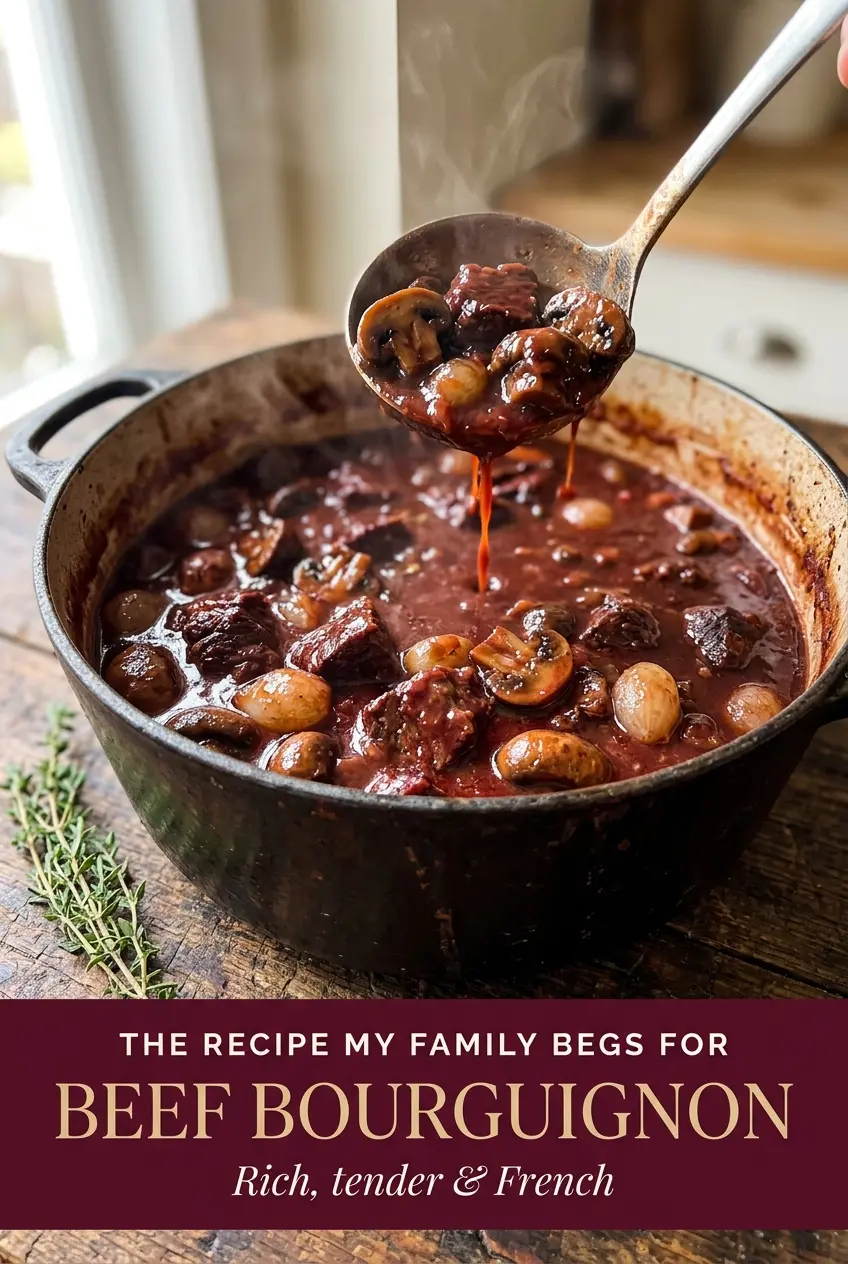
Beef Bourguignon
Ingredients
Equipment
Method
- Season the beef cubes with salt and pepper, then toss in the flour until lightly coated. Make sure every cube gets a thin flour layer so it browns well.
- Cook the bacon in a large Dutch oven over medium heat until crispy, about 5-6 minutes. Remove and set aside, leaving the rendered fat in the pot.
- Sear the beef in batches in the bacon fat and olive oil until deeply browned on all sides, about 6-7 minutes per batch. Remove and set aside so the pot stays hot for the next batch.
- Add the diced onion and carrots to the pot and cook until softened, about 5-6 minutes. Scrape up any browned bits as the vegetables soften.
- Add the garlic and tomato paste and cook until fragrant, about 1 minute. Stir constantly so the tomato paste toasts without scorching.
- Pour in the red wine, scraping up any browned bits from the bottom of the pot. Bring everything to a lively simmer before proceeding.
- Add the beef broth, thyme, bay leaves, seared beef, and crispy bacon. Bring to a simmer, cover, and cook on low for 2-2.5 hours, until the beef is fork-tender.
- Meanwhile, melt the butter in a skillet over medium heat. Add the mushrooms and pearl onions and cook until golden, about 8-10 minutes.
- Stir the mushrooms and pearl onions into the stew during the last 20 minutes of cooking. Remove the bay leaves before serving.
- Ladle into bowls and top with fresh parsley. Serve hot with crusty bread to soak up the sauce.
