

Cream Cheese Chicken
Tender chicken breasts and a rich cream cheese sauce are one of those combinations that earns a permanent spot in the weeknight rotation. The chicken stays juicy because it gets…
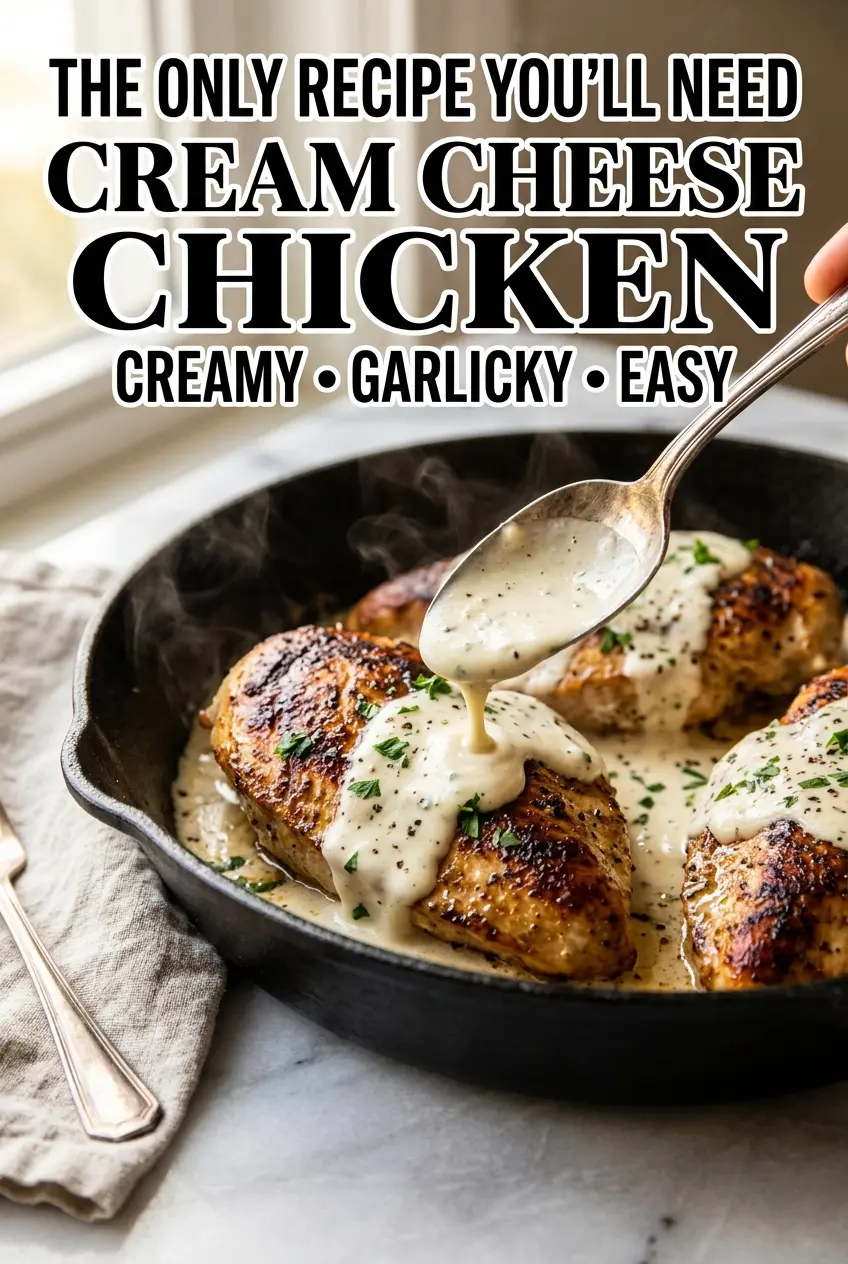
Tip: save now, cook later.Tender chicken breasts and a rich cream cheese sauce are one of those combinations that earns a permanent spot in the weeknight rotation. The chicken stays juicy because it gets a proper sear first, then finishes in a sauce that turns silky instead of heavy. That tang from the cream cheese keeps the whole skillet from tasting flat, and the parmesan adds just enough salt and depth to make every spoonful feel finished.
What makes this version work is the order. The chicken browns before the sauce goes in, so you get those flavorful bits left in the pan instead of a pale, one-note sauce. The cream cheese needs to be softened and added in pieces, not dumped in cold, or it will fight you and turn lumpy before it melts. Once the broth loosens the fond and the dairy goes in, the sauce thickens into something glossy enough to coat the back of a spoon.
Below, I walk through the part that matters most: keeping the sauce smooth while the chicken stays tender. There are also a few smart swaps and storage notes for the nights when you need to work with what you have.
The sauce turned out smooth and glossy, and the chicken stayed juicy even after simmering it at the end. I served it over rice and my husband kept going back for extra spoonfuls of the sauce.
Cream Cheese Chicken for the nights when you want a silky skillet sauce with almost no cleanup.
The Reason the Sauce Stays Smooth Instead of Turning Grainy
Most cream cheese sauces go wrong at the point where the dairy hits heat that is too aggressive. Cream cheese needs gentle warmth and a little patience. If the pan is roaring, the proteins tighten up before they melt evenly, and you end up with flecks instead of a smooth sauce. The broth first does two jobs: it lifts the browned bits from the skillet and creates enough liquid base for the cream cheese to melt into without seizing.
The second thing people miss is the finish. Parmesan adds body, but it also thickens fast, so it belongs in once the cream cheese is already smooth and the heat is lowered. If the sauce looks thin at first, let it simmer for a few minutes before adding more cheese or turning up the burner. Time thickens this sauce better than heat does.
What Each Ingredient Is Actually Doing in This Skillet

- Chicken breasts — Boneless, skinless breasts cook quickly and give you a clean base for the sauce. If yours are thick on one end, pound them to an even thickness so they finish at the same time and stay juicy.
- Cream cheese — This is the ingredient that gives the sauce its body and tang. Soften it first and cube it before it goes into the pan; cold blocks take longer to melt and are the fastest route to a lumpy sauce.
- Chicken broth — Broth loosens the browned bits from the skillet and keeps the sauce from feeling heavy. Use a good-tasting broth here, since it becomes the savory backbone of the whole dish.
- Heavy cream — This rounds out the cream cheese and makes the sauce pourable. Half-and-half can work in a pinch, but the sauce will be a little thinner and less plush.
- Freshly grated parmesan — Fresh parmesan melts cleaner and gives the sauce a sharper, saltier finish than the shelf-stable kind. Pre-grated cheese often has anti-caking agents that can make the sauce a little gritty.
- Garlic — Garlic cooks in the butter for just enough time to perfume the sauce without turning bitter. If it browns, the whole skillet will taste harsh, so keep that step short.
Building the Sauce in the Same Pan Without Breaking It
Searing the Chicken First
Pat the chicken dry before it hits the pan so the seasoning sticks and the surface browns instead of steams. Give it enough time on the first side to develop a deep golden crust; if it sticks at first, leave it alone until it releases naturally. Pull it off the heat when the center reaches doneness, then let it rest on a plate while you build the sauce.
Waking Up the Skillet
Lower the heat before the butter and garlic go in. The pan will still be hot from the chicken, and that residual heat is enough to bloom the garlic without scorching it. Once the broth goes in, scrape the bottom firmly with a wooden spoon; those browned bits are what give the sauce its savory depth.
Melt the Dairy Slowly
Add the cream cheese a few pieces at a time and whisk until each piece disappears before adding more. That gradual approach keeps the sauce smooth and helps it emulsify instead of separating. When the heavy cream and parmesan go in, keep the simmer gentle; a hard boil can make the sauce turn oily or grainy.
Bringing the Chicken Back
Return the chicken only after the sauce is glossy and thick enough to coat a spoon. Spoon the sauce over the top while it warms through so the pieces pick up flavor without overcooking. If the sauce thickens too much, loosen it with a splash of broth instead of more cream, which can dull the seasoning.
Three Practical Ways to Work This Into Your Own Kitchen
Make it gluten-free without losing the sauce
This dish is naturally gluten-free as written, as long as your broth is certified gluten-free. The sauce gets its body from cream cheese, cream, and parmesan, not flour, so nothing has to change to keep it safe and still silky.
Swap in chicken thighs for a richer result
Boneless thighs bring more fat and a little more forgiveness, which is helpful if you tend to overcook chicken breasts. They’ll need a few extra minutes in the skillet, but the finished dish tastes deeper and stays especially tender.
Lighten the sauce with half-and-half
Half-and-half works if you want a slightly lighter skillet, but the sauce won’t coat quite as thickly. Reduce it a little longer over low heat so it has time to tighten up, and don’t rush the parmesan or it can turn the texture grainy.
Add mushrooms or spinach for a built-in side
Sauté sliced mushrooms after the chicken comes out, or wilt in a few handfuls of spinach at the end. Mushrooms deepen the savory flavor, while spinach softens quickly and adds color without changing the sauce structure.
Storage and Reheating
- Refrigerator: Store in an airtight container for up to 3 days. The sauce will thicken as it chills, so expect it to look a little tighter the next day.
- Freezer: It can be frozen, but dairy sauces sometimes separate after thawing. If you do freeze it, cool it completely first and thaw it slowly in the fridge before reheating.
- Reheating: Rewarm gently in a skillet over low heat with a splash of broth or cream. The common mistake is blasting it in the microwave, which can make the sauce split before the chicken heats through.
Questions I Get Asked About This Recipe
Cream Cheese Chicken
Ingredients
Equipment
Method
- Pat the chicken breasts dry and season both sides with paprika, garlic powder, Italian seasoning, salt, and pepper.
- Heat the olive oil in a large skillet over medium-high heat, then sear the chicken for 5–6 minutes per side until golden and cooked through.
- Transfer the chicken to a plate and tent with foil while you make the sauce.
- Lower the heat to medium and melt the butter in the same skillet.
- Add the garlic and cook for 30 seconds until fragrant.
- Pour in the chicken broth and scrape up any browned bits from the pan, then simmer for 2 minutes.
- Whisk in the cream cheese a few pieces at a time until fully melted and smooth.
- Stir in the heavy cream, parmesan, and Italian seasoning, then simmer for 3–4 minutes until the sauce thickens and turns glossy.
- Return the chicken to the skillet, spooning the sauce over the top.
- Simmer for 2–3 minutes until the chicken is warmed through.
- Sprinkle with fresh parsley and serve hot, spooning extra sauce over each piece.
