
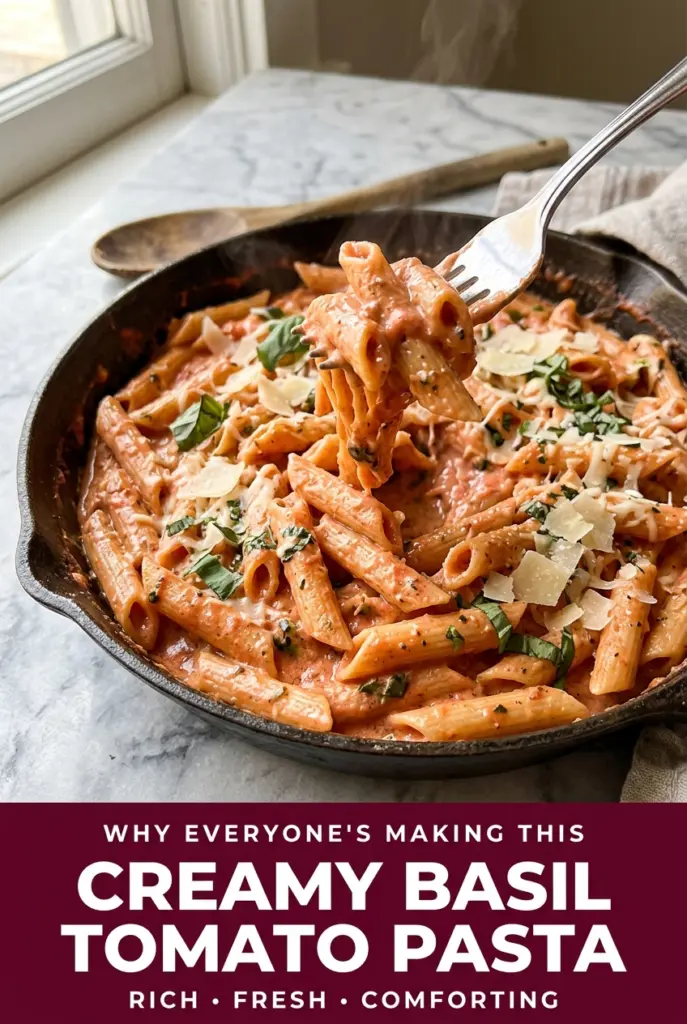
Creamy Basil Tomato Pasta
Sweet tomatoes and fresh basil turn into a sauce that lands somewhere between bright marinara and a silky cream pasta, and that balance is what makes this one worth putting…
Tip: save now, cook later.Sweet tomatoes and fresh basil turn into a sauce that lands somewhere between bright marinara and a silky cream pasta, and that balance is what makes this one worth putting on repeat. The tomatoes cook down until they lose that raw canned edge, then the cream softens everything into a glossy pink sauce that clings to every ridge of the pasta instead of sliding off the bottom of the bowl.
What makes this version work is the order. The onion gets a real chance to soften first, the garlic stays in the pan just long enough to bloom, and the cream goes in after the tomatoes have had time to concentrate. That keeps the sauce from tasting flat or split. Fresh basil goes in at the end so it stays fragrant and doesn’t disappear into the sauce.
Below, I’ll show you the small details that keep the sauce smooth, how to loosen it with pasta water without making it thin, and a few easy ways to adapt it if you need a dairy-free version or want to change up the pasta shape.
The sauce turned out silky and coated the pasta perfectly, and the basil stayed fresh instead of getting lost. I added a splash of pasta water at the end and it came together like a restaurant dish.
Save this creamy basil tomato pasta for the night you want a fast pasta with a bright tomato base and a velvety finish.
The Reason the Sauce Stays Creamy Instead of Turning Grainy
The biggest mistake in a tomato cream pasta is rushing the dairy. If the cream goes into a sauce that’s still aggressively boiling, it can separate or taste chalky instead of smooth. Let the tomatoes simmer first until they’ve lost some water and look slightly jammy, then lower the heat before you stir in the cream.
That order matters for another reason too: tomato sauces need time to concentrate before the cream goes in. If you add cream too early, the sauce can taste thin and muted. Once the parmesan enters, the sauce should look glossy and slightly thicker than you want it to be in the pan, because the pasta will finish the job.
What Each Ingredient Is Actually Doing in This Dish
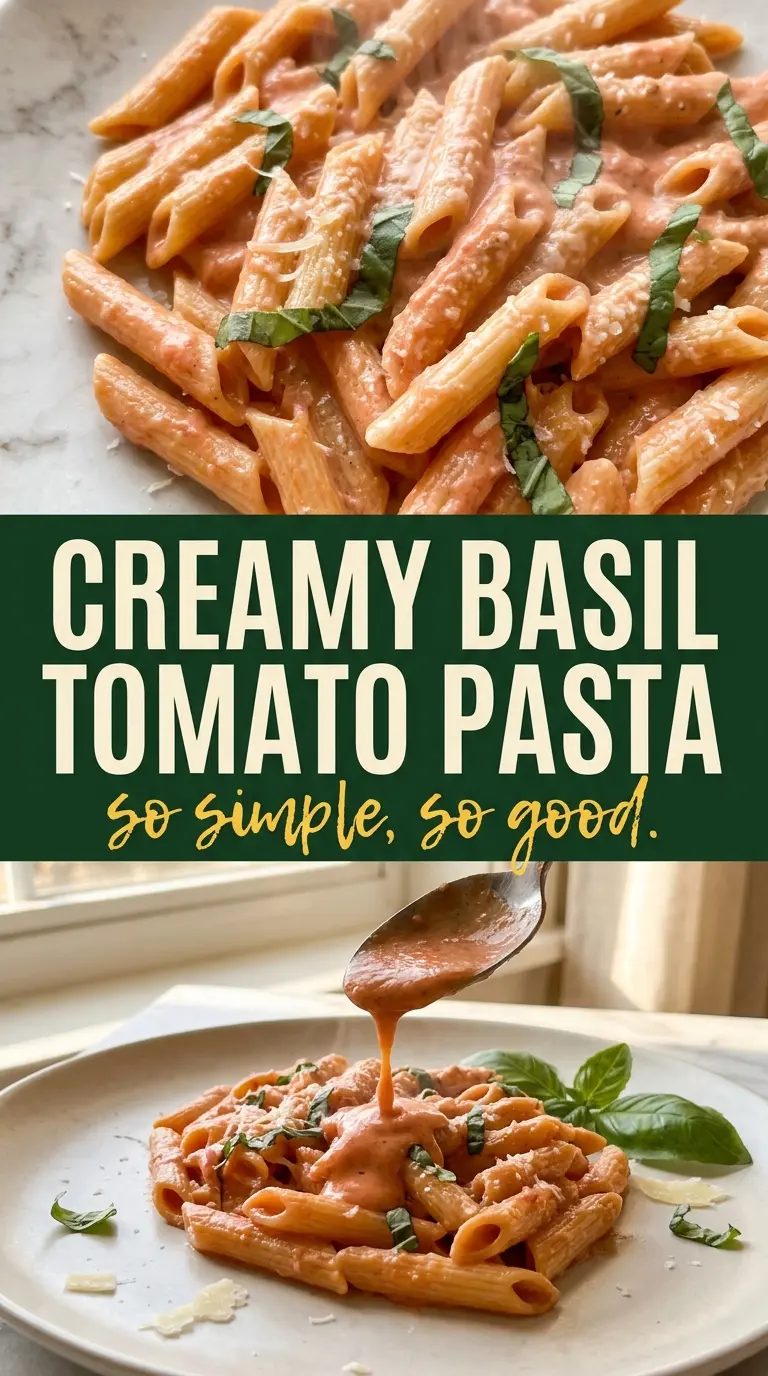
- Penne or rigatoni — Short pasta with ridges holds onto the sauce better than spaghetti here. The shape matters because this sauce is creamy and a little loose until the end, so you want pasta that grabs instead of letting it pool at the bottom of the bowl.
- Crushed tomatoes — Canned crushed tomatoes give you body without needing extra simmer time. Good canned tomatoes taste cleaner and sweeter here, but you don’t need the most expensive brand on the shelf as long as they aren’t overly acidic or watery.
- Heavy cream — This is what turns the sauce from straight tomato into a velvety pink coating. Half-and-half works in a pinch, but the sauce will be thinner and a little more fragile, so keep the heat low and don’t let it boil hard.
- Fresh basil — Dried basil won’t give you the same bright, peppery finish. Tear the leaves instead of chopping them; that keeps them from bruising into dark ribbons and helps them stay aromatic right up to serving.
- Freshly grated parmesan — Pre-shredded cheese often has anti-caking agents that make the sauce less smooth. Grate it yourself so it melts cleanly into the cream and tomato base instead of leaving little gritty bits behind.
Building the Sauce in the Right Order
Soften the onion until it smells sweet
Cook the onion in olive oil over medium heat until it turns translucent and soft at the edges, not browned. This is where the sauce gets its backbone, and if the onion stays crunchy, you’ll taste sharp raw pieces later. If the pan is too hot and the onion starts to color too fast, lower the heat and give it another minute or two.
Wake up the garlic without burning it
Add the garlic and red pepper flakes just long enough for the garlic to smell fragrant, about 30 seconds. Garlic burns fast in a dry pan, and burnt garlic makes the whole sauce taste bitter. The second you can smell it, move on to the tomatoes.
Reduce the tomatoes before the cream goes in
Let the crushed tomatoes simmer until the sauce looks thicker and a little glossy, with small bubbles breaking slowly across the surface. You’re cooking off excess water here, which is what keeps the final sauce from tasting diluted. The sugar is there to round out the acidity, not to make the sauce sweet, so don’t overdo it.
Finish with cream, parmesan, and basil
Turn the heat down before adding the cream, then stir in the parmesan until it melts smoothly. The sauce should look pink and silkier almost immediately. Add the basil at the very end so it stays bright; if you cook it too long, it fades into the sauce and loses the fresh finish that makes this pasta taste alive.
Three Practical Ways to Adapt It
Dairy-Free Version That Still Tastes Rich
Use a plain unsweetened oat cream or cashew cream in place of heavy cream, then swap the parmesan for a dairy-free parmesan-style topping or a spoonful of nutritional yeast. The sauce won’t be quite as lush as the original, but it still turns smooth and satisfying if you keep the heat low and give it a minute to thicken.
Gluten-Free Pasta Without a Soggy Finish
Use a sturdy gluten-free short pasta made from rice, corn, or lentils, and pull it from the water as soon as it’s al dente. Gluten-free pasta keeps cooking fast once it hits the sauce, so a minute too long in the pot can leave you with broken pieces instead of a clean bite.
Make It a Little More Substantial
Add sautéed mushrooms, spinach, or cooked chicken at the end so the sauce stays the main event. Mushrooms deepen the savory side of the tomatoes, spinach melts in quietly, and chicken turns this into a fuller dinner without changing the base recipe.
Storage and Reheating
- Refrigerator: Store in an airtight container for up to 4 days. The pasta will absorb some of the sauce, so expect it to tighten up overnight.
- Freezer: The sauce freezes well, but the pasta turns softer after thawing. For the best result, freeze the sauce separately and cook fresh pasta when you’re ready to serve.
- Reheating: Warm gently on the stove over low heat with a splash of water or milk to loosen it. High heat can make the cream separate, and that’s the fastest way to ruin the texture.
Answers to the Questions Worth Asking
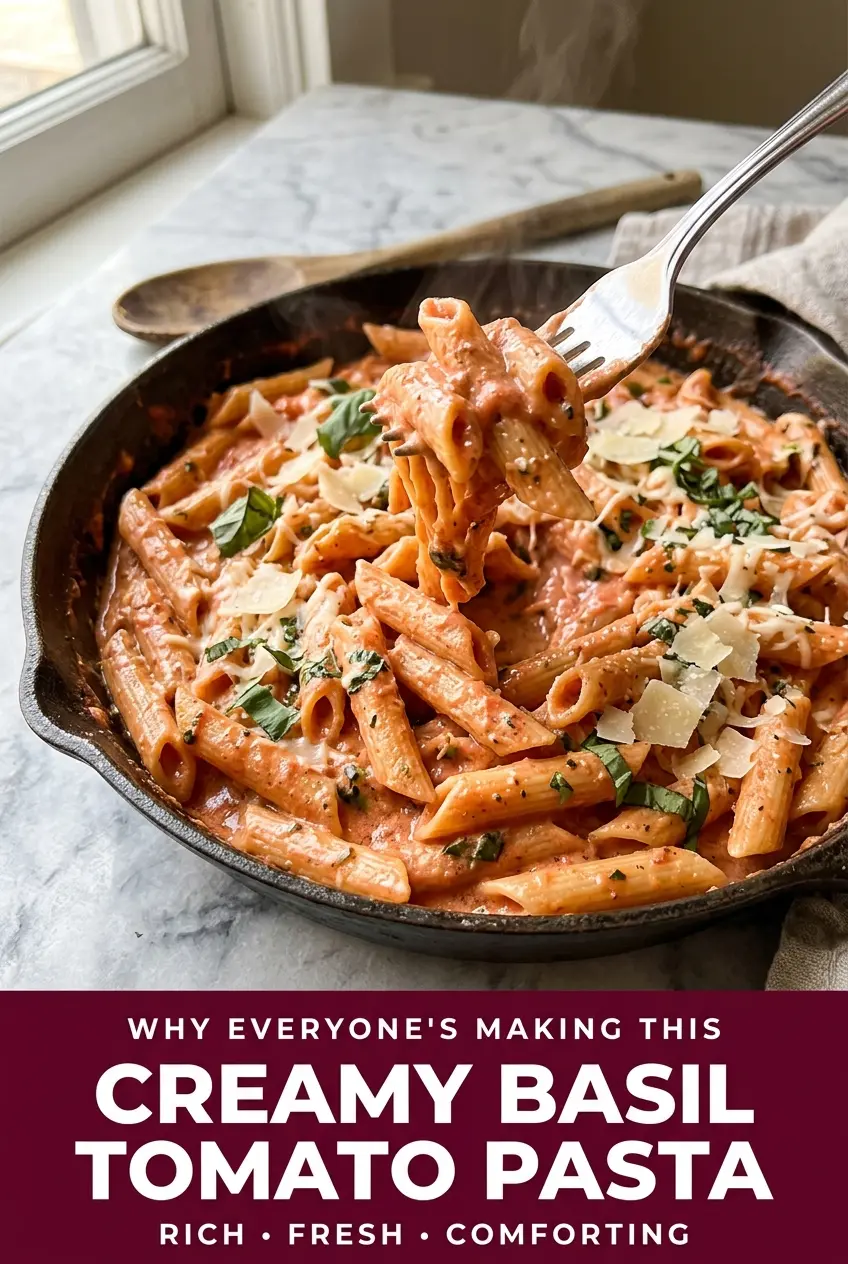
Creamy Basil Tomato Pasta
Ingredients
Equipment
Method
- Bring a large pot of salted water to a boil and cook the pasta until al dente.
- Reserve 1/2 cup pasta water, then drain the pasta.
- Heat olive oil in a large skillet over medium heat.
- Add the onion and cook for 4–5 minutes until softened.
- Stir in the garlic and red pepper flakes, if using, and cook for 30 seconds until fragrant.
- Pour in the crushed tomatoes and sugar, stirring to combine, then simmer for 10–12 minutes, stirring occasionally, until slightly thickened.
- Lower the heat and stir in the heavy cream, then simmer for 2–3 minutes until the sauce turns a rich pink and glossy.
- Add the parmesan and torn basil, stirring until the cheese melts into the sauce.
- Add the cooked pasta to the skillet and toss, adding splashes of reserved pasta water until the sauce coats every piece.
- Season with salt and black pepper to taste, top with extra basil and parmesan, and serve immediately.
