
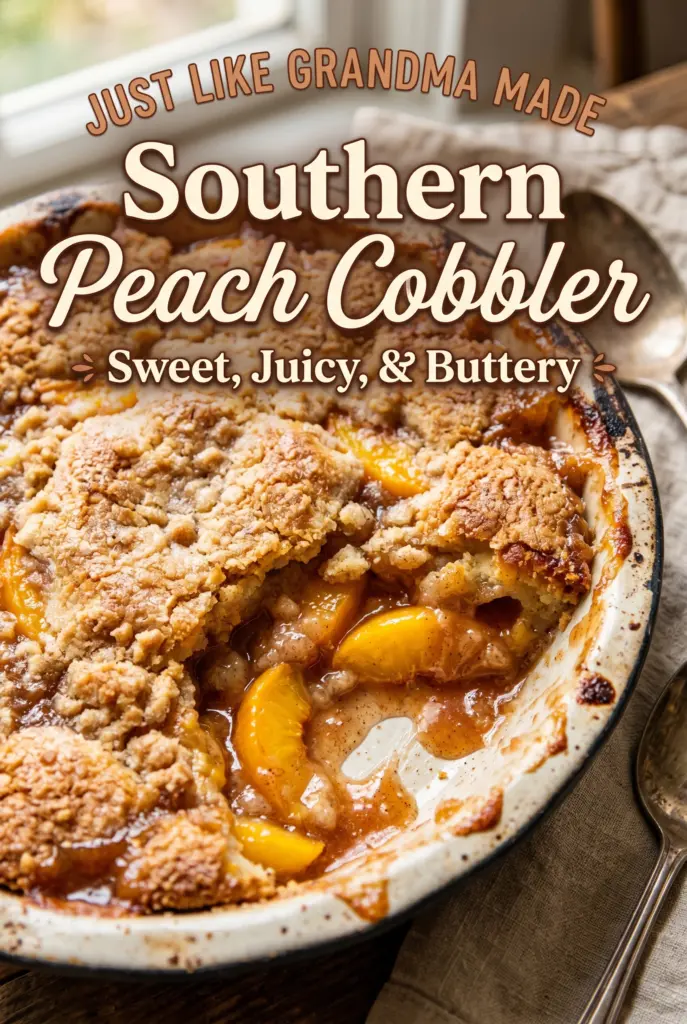
Classic Southern Peach Cobbler
Juicy peaches bubbling up through a buttery, golden crust is the kind of dessert that disappears fast and never needs dressing up. This cobbler lands in that sweet spot between…
Tip: save now, cook later.Juicy peaches bubbling up through a buttery, golden crust is the kind of dessert that disappears fast and never needs dressing up. This cobbler lands in that sweet spot between rustic and reliable: the fruit stays spoonable and bright, while the top bakes into a tender, cakey layer with crisp edges where the butter meets the batter. Served warm, it tastes like the kind of dessert people remember long after the pan is empty.
The trick here is letting the peaches do their own work instead of drowning them in flour. Cornstarch thickens the juices cleanly, lemon juice keeps the filling from tasting flat, and a little cinnamon and nutmeg give the peaches enough warmth without turning the whole dessert into spice cake. Pouring the batter over melted butter looks odd the first time you do it, but that layer is what gives the crust those rich, browned edges without a fussy pastry step.
Below, I’ve broken down the parts that matter most: how to keep the filling from turning watery, what the batter is supposed to look like before it goes in the oven, and a few smart swaps if your peaches are extra sweet or you’re working with frozen fruit.
The peaches held their shape and the topping baked up with those crisp buttery edges I always want in cobbler. I served it after dinner and the pan was scraped clean before I could even get seconds.
Save this classic Southern peach cobbler for the night you want juicy fruit, a buttery golden crust, and an easy dessert that bakes in one pan.
The Secret to Cobbler That Bubbles Up Instead of Turning Soupy
A good peach cobbler needs enough thickener to catch the juice, but not so much that the filling turns pasty. Cornstarch works here because it sets up as the cobbler bakes, and the filling settles into a glossy sauce instead of a watery puddle at the bottom of the pan. If you skip the thickener, the peaches release a lot of liquid and the topping ends up steaming instead of baking into that soft, crisp contrast people want.
The other common failure is overcrowding the fruit. Eight cups sounds like a lot, but peaches shrink as they heat, so the pan should look full before it goes into the oven. If the filling seems very loose after mixing, let it sit for a few minutes before baking so the sugar can draw out the juices and the cornstarch can start dissolving evenly.
What Each Ingredient Is Actually Doing in This Cobbler

- Fresh peaches — Ripe peaches give you the best aroma and the cleanest fruit flavor, but they still need to be peeled and sliced so they bake evenly. If your peaches are a little firm, let the finished cobbler bake a few minutes longer so the fruit softens without turning to mush.
- Cornstarch — This is what turns all those peach juices into a sauce that clings to the fruit. Flour can work in a pinch, but it usually makes the filling heavier and a little cloudy.
- Brown sugar — A small amount adds depth and helps the filling taste round instead of sharp. If your peaches are extremely sweet, cut the granulated sugar back a little, but keep the brown sugar for the caramel note.
- Vanilla, cinnamon, and nutmeg — These don’t mask the peaches; they give the filling a warm, baked-dessert background. Nutmeg should stay subtle here or it takes over.
- Butter — Melted butter under the batter is what gives the topping its rich edges and keeps the crust from tasting dry. Use real butter, not margarine, because the flavor and browning are part of what makes this cobbler worth making.
- Milk and baking powder — Together they create the spoonable batter that rises around the peaches as it bakes. Whole milk gives the best texture, but 2% will still work; the topping just won’t be quite as tender.
How to Build the Layers So the Crust Bakes Through
Start With the Fruit Mixture
Toss the peaches with the sugars, cornstarch, lemon juice, vanilla, cinnamon, and nutmeg until every slice looks lightly coated. The mixture should look glossy and a little syrupy, not dry and powdery. If you have time, let it sit while the oven heats so the peaches begin releasing juice and the cornstarch can dissolve instead of clumping in the pan.
Pour the Batter, Then Leave It Alone
Whisk the flour, sugar, baking powder, salt, and milk just until combined. The batter should be smooth but not beaten into a silkier cake batter; overmixing tightens the topping. Pour the melted butter into the baking dish first, then add the batter over it without stirring, because that separation is what lets the crust rise and brown around the fruit.
Layer the Peaches on Top
Spoon the peach mixture over the batter in an even layer. Don’t press it down or stir it in; the batter will rise around the fruit while it bakes. If the pan looks very full, set it on a rimmed baking sheet before it goes into the oven so any bubbling juices stay contained.
Bake Until the Center Is Set and the Edges Are Deep Gold
The cobbler is done when the top is puffed, the edges are a deep golden brown, and the filling is actively bubbling through the crust. That bubbling matters more than the clock, because it tells you the cornstarch has thickened the juices. Let it rest for about 10 minutes before serving so the filling settles and doesn’t run all over the plate.
How to Adapt This Cobbler When the Peaches Change
Frozen Peaches When Fresh Aren’t Available
Use frozen peaches straight from the freezer and don’t thaw them first, or you’ll lose a lot of juice before the cobbler even hits the oven. They may need a few extra minutes to bake, and the filling will be a little softer, but the flavor still lands beautifully.
A Gluten-Free Topping That Still Browns Well
Swap the all-purpose flour for a 1:1 gluten-free baking blend that includes xanthan gum. The texture will be a touch more delicate, but the crust still bakes up nicely as long as the batter isn’t overmixed.
Dairy-Free Version With the Same Soft Crust
Use a neutral dairy-free butter substitute and an unsweetened plant milk like almond or oat milk. The topping won’t taste quite as rich, but the structure still works because the baking powder and butter layer are doing the heavy lifting.
How to Store and Reheat Leftovers Without Soggy Crust
- Refrigerator: Keep covered for up to 4 days. The topping softens as it sits, but the filling stays spoonable and good.
- Freezer: Peach cobbler freezes well after baking. Cool it completely, wrap tightly, and freeze for up to 2 months; the crust will be a little softer after thawing.
- Reheating: Warm individual portions in a 325°F oven until the filling is hot and the top starts to crisp again. The microwave will heat it fast, but it also turns the crust limp.
Questions I Get Asked About This Recipe
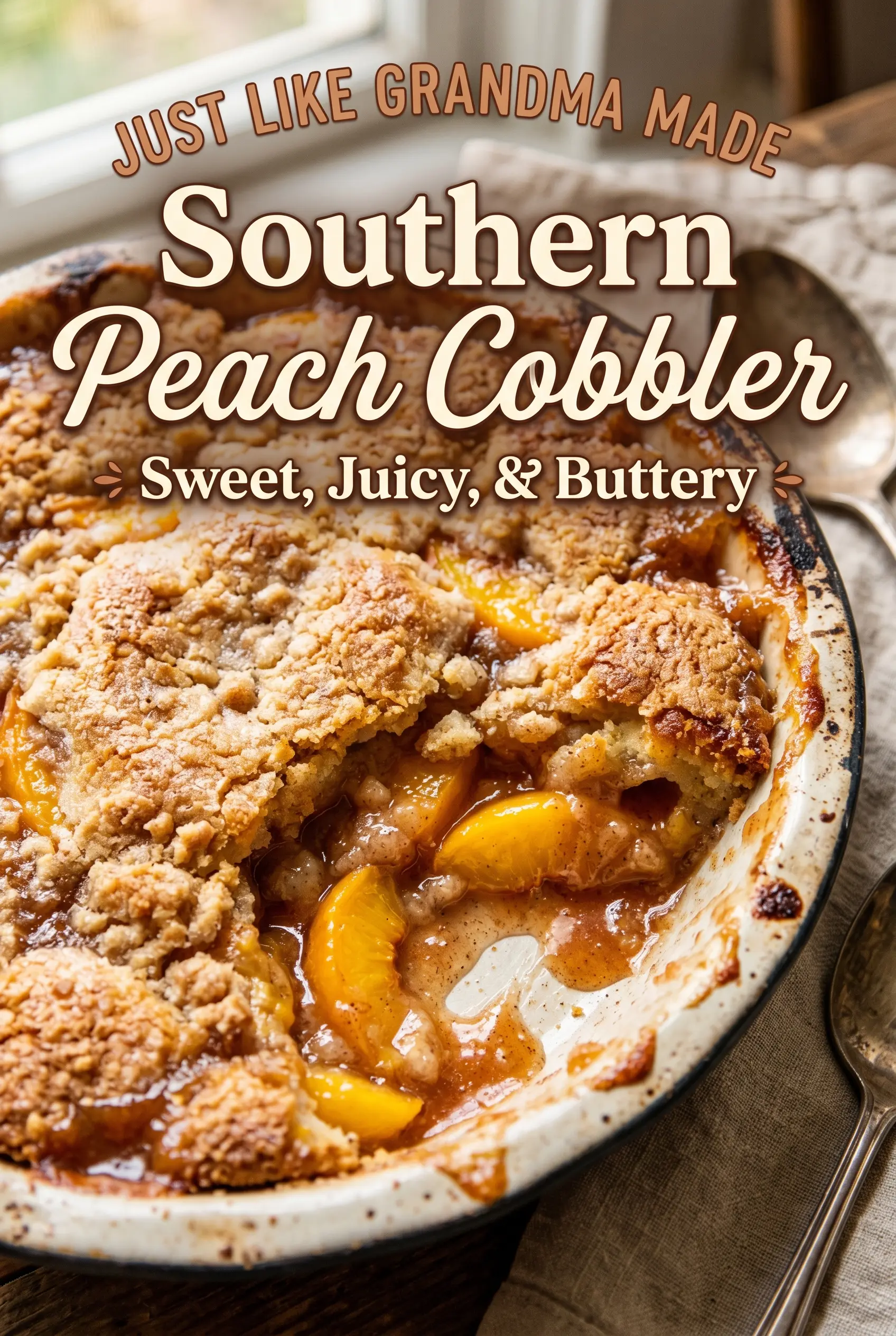
Classic Southern Peach Cobbler
Ingredients
Equipment
Method
- Preheat your oven to 350°F (175°C).
- Place the sliced peaches in a large bowl.
- Mix peaches with granulated sugar, brown sugar, cornstarch, lemon juice, vanilla extract, cinnamon, and nutmeg until evenly coated, using a glossy coating as your visual cue.
- Transfer the peach mixture to a greased 9×13-inch baking dish.
- In a separate bowl, whisk all-purpose flour, granulated sugar, baking powder, and salt until no dry clumps remain.
- Stir in milk until combined, then stop when the batter looks smooth and pourable.
- Pour the melted butter into the baking dish and spread it evenly so it pools under the topping.
- Pour the batter evenly over the butter without stirring, then look for batter covering the surface in an even layer.
- Spoon the peach mixture over the batter.
- Bake at 350°F (175°C) for 45–55 minutes until golden brown and bubbly.
- Cool for 10 minutes before serving, so the filling thickens slightly.
- Serve warm as desired, including with vanilla ice cream if using.
