

Christmas Gingerbread Poke Cake
The molasses makes this cake batter dark and thick, and the first time I made a poke cake with it, I worried the pudding would sit on top instead of…
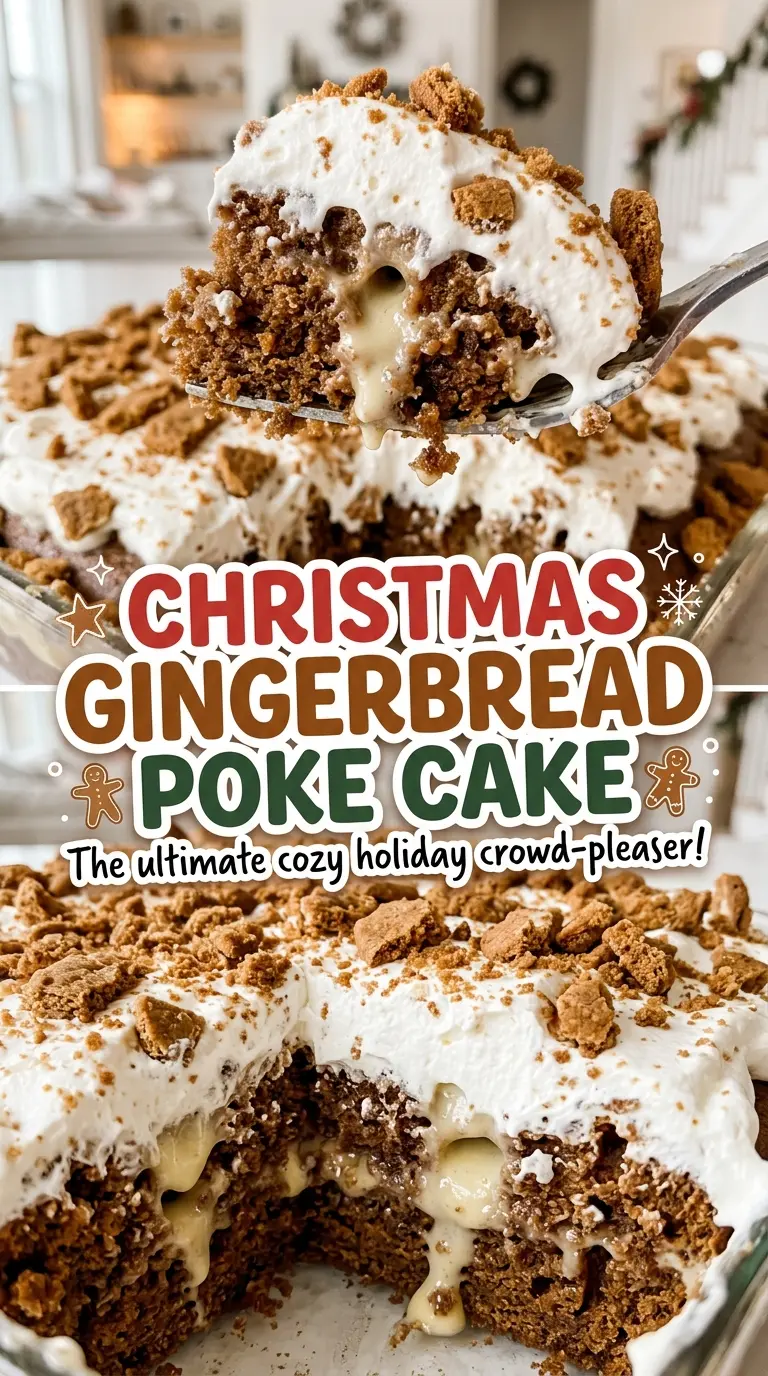
Tip: save now, cook later.The molasses makes this cake batter dark and thick, and the first time I made a poke cake with it, I worried the pudding would sit on top instead of finding its way inside. The holes need to be wide enough for the filling, and the cake needs a short rest after baking before you poke it. Those details give this Christmas Gingerbread Poke Cake its tender, spiced crumb with cool vanilla pudding tucked through every slice.
I mix the dry ingredients into the butter-and-molasses mixture in alternating additions with buttermilk. That keeps the batter easy to combine without beating it longer than necessary. After baking, the cake stays in its dish while it cools and chills, so the pudding has time to settle into the crumb. A layer of whipped cream and a scatter of Christmas sprinkles finish each piece with a soft, festive top.

Kitchen Note
I set the cake beside the bowl before I whisk the pudding. Instant pudding starts thickening as soon as it meets cold milk, so whisk for 1 minute and pour it over right away while it still flows into the holes.
Save this Christmas Gingerbread Poke Cake for a soft, warmly spiced slice with vanilla pudding tucked through the middle.
Why Gingerbread Cake Batter Needs a Lighter Hand Than It Looks
Molasses and dark brown sugar make this batter rich, but that richness can tempt you to keep mixing until every streak disappears. The flour and leaveners need to be distributed evenly; after that, extra beating can tighten the cake instead of making it more tender. I add the flour mixture in three additions, alternating with the buttermilk in two, and stop as soon as the batter comes together.
That alternating method also helps the thick molasses mixture accept the flour without leaving dry pockets around the bowl. Buttermilk brings moisture and a gentle tang, while baking soda and baking powder give the cake lift. The result should bake up sturdy enough to hold the pudding but soft enough to soak it in. A few moist crumbs on the toothpick are a better stopping point than waiting for it to come out perfectly clean.
What Gives This Cake Its Gingerbread Flavor and Creamy Center
- Unsulphured molasses — It gives the cake its deep, unmistakable gingerbread taste and helps keep the crumb moist. Choose unsulphured molasses for a balanced sweetness; blackstrap is more bitter and can overpower the warm spices.
- Ground ginger, cinnamon, and cloves — Ginger leads, cinnamon rounds it out, and cloves add a low, aromatic warmth. Fresh, fragrant spices matter more than a premium brand here; if a jar smells faint, its flavor will be muted in the cake.
- Buttermilk — Its acidity works with the baking soda, and its thickness adds tenderness. Use it straight from the carton; plain milk does not bring the same acidity or body, so I wouldn’t swap it one-for-one.
- Instant vanilla pudding mix and whole milk — Instant mix thickens when whisked with cold milk, making a filling that can flow into the cake and then set as it chills. Whole milk gives the pudding a fuller, creamy texture; cook-and-serve pudding isn’t an equivalent swap here.
- Heavy cream — Chilled heavy cream whips into a topping that holds soft ridges over the pudding cake. Lower-fat milk won’t whip into the same topping, so keep the heavy cream cold and use it for this finish.
The Order That Keeps the Cake Tender and the Pudding in Place
Whisk the dry ingredients before the molasses goes in
Heat the oven to 350°F and grease a 9×13-inch baking dish. In a medium bowl, whisk the flour, baking soda, baking powder, ginger, cinnamon, cloves, and salt until the spices look evenly distributed. This gives the leaveners a chance to disperse through the flour rather than clumping in one part of the batter. Set the bowl aside while you cream the butter and sugar.
Build the batter without overmixing
Beat the softened butter with the packed dark brown sugar in a large bowl until light and fluffy, about 2 minutes. Beat in the eggs one at a time, then mix in the molasses. Add the dry ingredients in three additions, alternating with the buttermilk in two additions, and mix just until combined. Spread the batter in the prepared dish; if you see a small streak of flour, give it one gentle fold rather than beating the whole bowl again.
Bake to a few moist crumbs, not a dry toothpick
Bake for 32 to 38 minutes. Check the center with a toothpick: it should come out with a few moist crumbs, not wet batter and not completely clean. A dry toothpick usually means the cake has gone further than it needs to, and the crumb can feel drier after chilling. Let the cake cool in the dish for 15 minutes before you make the holes.
Fill the holes and let the pudding set
Use the handle of a wooden spoon to poke holes about 1 inch apart across the cake. Whisk the instant pudding mix with cold whole milk for 1 minute, then pour it evenly over the surface and guide it into the holes. Cover the dish and refrigerate the cake for at least 3 hours, until it’s thoroughly chilled and the pudding is set. If the top looks a little uneven, that’s fine; the whipped cream will cover it.
Finish with softly structured whipped cream
Beat the chilled heavy cream with the powdered sugar and vanilla in a chilled bowl until medium-stiff peaks form. The cream should hold its shape when you lift the beaters, with the tips bending just a little; stop before it looks grainy. Spread it over the cold cake, then scatter the Christmas sprinkles across the top. Keep the finished cake chilled until you serve it.
Small Changes to the Finish Without Changing the Gingerbread Cake
Pipe the whipped cream instead of spreading it
Once the cream reaches medium-stiff peaks, pipe it across the chilled cake in rosettes or ridges, then add the sprinkles. The flavor stays the same, but the topping has a more defined, decorated look; don’t beat the cream past medium-stiff peaks or it may lose its smooth texture.
Leave off the Christmas sprinkles
For a simpler finish, spread on the vanilla whipped cream and skip the sprinkles. You keep the cool topping and the gingerbread-and-pudding combination, but the cake looks less holiday-specific. The cake itself still contains dairy and wheat, so this isn’t a dairy-free or gluten-free adaptation.
Storage and Reheating
- Refrigerator: Cover and refrigerate for up to 3 days. The whipped cream may soften slightly over time, but the pudding cake stays moist.
- Freezer: I don’t recommend freezing the assembled cake; the pudding and whipped cream can lose their smooth texture as they thaw.
- Reheating: Serve it cold; reheating isn’t needed and can loosen the pudding and whipped cream.
Questions That Come Up When Making Gingerbread Poke Cake
Christmas Gingerbread Poke Cake
Ingredients
Equipment
Method
- Heat the oven to 350°F.
- Grease a 9x13-inch baking dish.
- Whisk the flour, baking soda, baking powder, ginger, cinnamon, cloves, and salt in a medium bowl.
- Beat the butter and brown sugar in a large bowl until light and fluffy, about 2 minutes.
- Beat in the eggs one at a time, then mix in the molasses.
- Add the flour mixture in three additions, alternating with the buttermilk in two additions, mixing just until combined.
- Spread the batter in the prepared dish.
- Bake for 32 to 38 minutes, until a toothpick inserted in the center comes out with a few moist crumbs.
- Cool in the dish for 15 minutes.
- Poke holes about 1 inch apart across the cake with the handle of a wooden spoon.
- Whisk the pudding mix and cold milk for 1 minute.
- Immediately pour the pudding evenly over the cake, guiding it into the holes.
- Cover and refrigerate the cake for at least 3 hours, until thoroughly chilled and the pudding is set.
- Beat the heavy cream, powdered sugar, and vanilla in a chilled bowl until medium-stiff peaks form.
- Spread the topping over the chilled cake.
- Finish with the Christmas sprinkles.
