
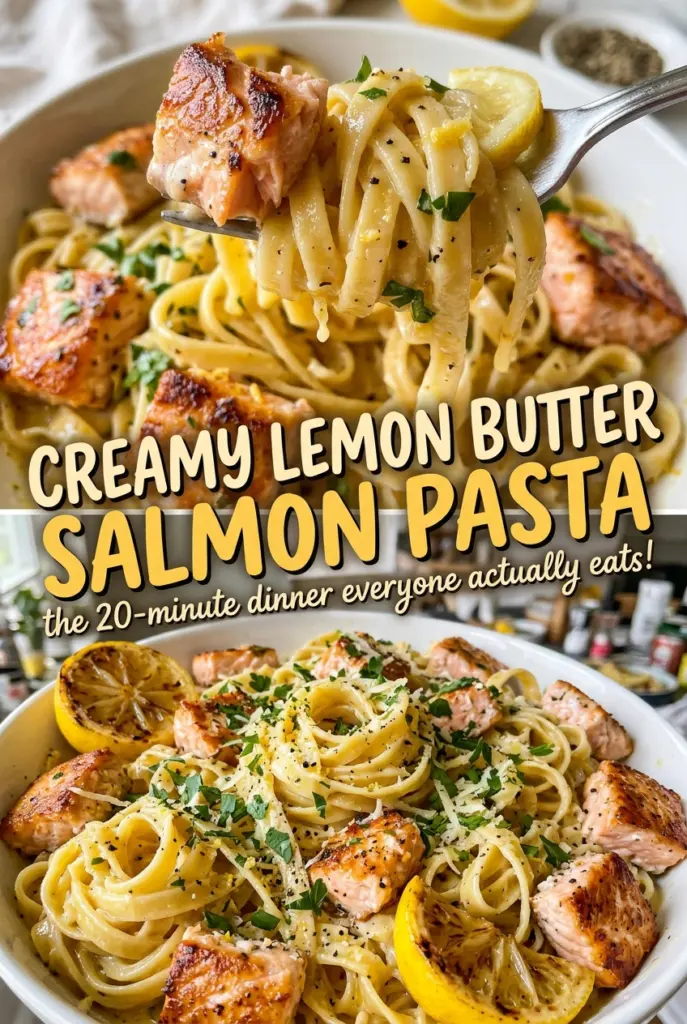
Creamy Lemon Butter Salmon Pasta
The first sign this pasta is coming together is the bright lemon scent rising from the warm cream. The sauce starts rich, then the lemon zest and juice cut through…
Tip: save now, cook later.The first sign this pasta is coming together is the bright lemon scent rising from the warm cream. The sauce starts rich, then the lemon zest and juice cut through it so each forkful doesn’t feel heavy. I make this creamy lemon butter salmon pasta when I want a satisfying skillet dinner without a separate sauce pan or a long list of ingredients.
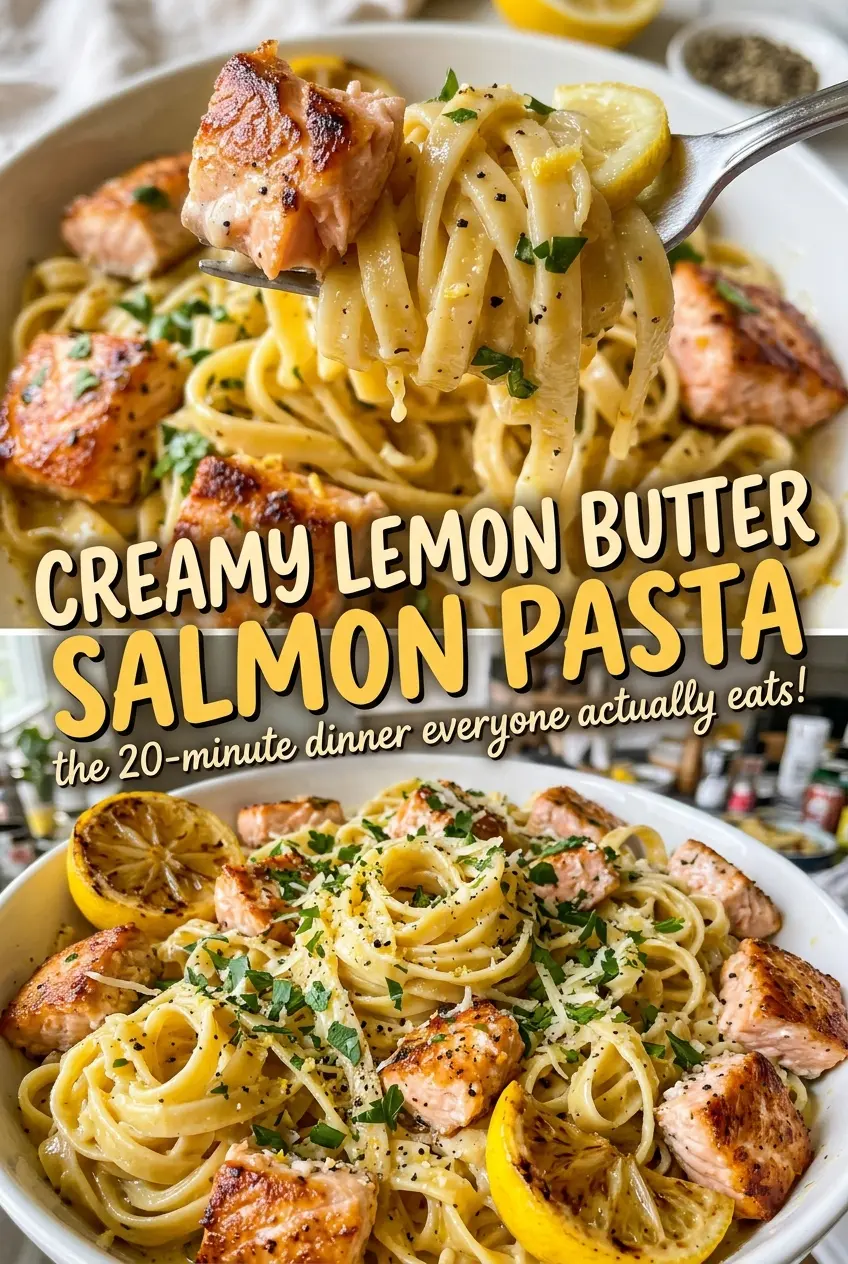
Cooking the salmon in the same skillet gives the butter and garlic a head start on the sauce, and the broad fettuccine catches every bit of it. I keep the salmon in large flakes rather than stirring it into the sauce until it disappears. That way, you get tender pieces of fish alongside the silky noodles, with Parmesan adding a savory finish.
Kitchen Note
Take the skillet off the heat before stirring in the lemon and Parmesan. The sauce stays smoother, and the lemon tastes fresh instead of muted by a simmer.
Save this creamy lemon butter salmon pasta for a night when you want silky fettuccine, bright lemon, and generous flakes of salmon.
Why This Cream Sauce Needs Pasta Water, Not Another Pour of Cream
A cream sauce can seem like it needs more cream when it looks loose or thin, but that often makes the finished pasta heavier without helping the sauce cling. The water left from cooking the fettuccine brings starch along with it. When you toss that water with the cream sauce and noodles, the starch helps the sauce coat the strands instead of pooling at the bottom of the bowl.
That matters here because the lemon juice and Parmesan are added after the cream has simmered. The sauce is already rich, and the pasta water gives you control over its texture without burying the lemon under more dairy. Start with some of the reserved water, toss well, then add another small splash only if the noodles still look dry. You’re aiming for a glossy coating that follows the pasta, not a puddle in the skillet.
There’s a useful visual cue: lift a few strands with tongs. If the sauce clings along their length, stop adding water. If it slides off and leaves the noodles looking bare, loosen the sauce a little more before folding in the salmon.
What the Lemon, Parmesan, and Fettuccine Each Bring to the Sauce
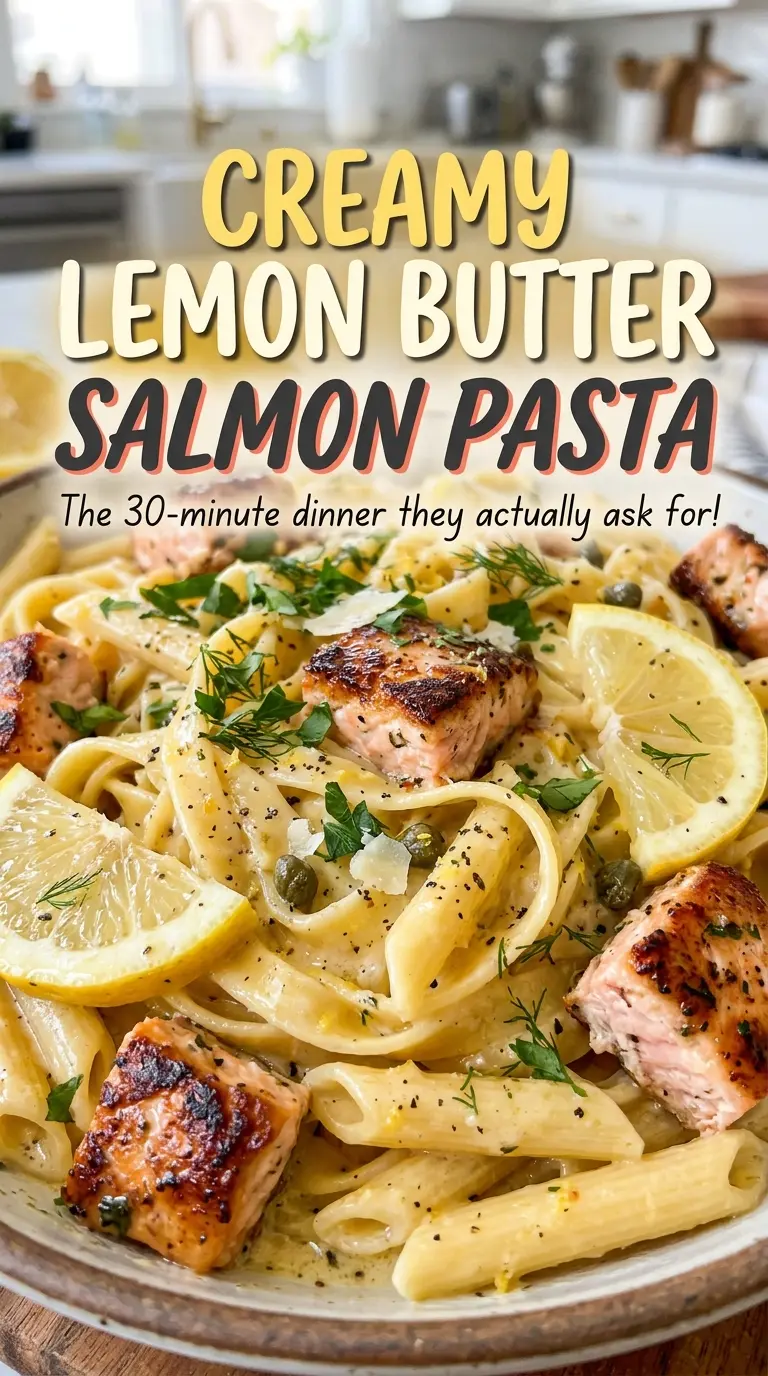
- Fettuccine — Its broad, flat shape gives the cream sauce plenty of surface to cling to. If you’re out, linguine is a useful stand-in, though the narrower strands give you a slightly different bite. Cook whichever pasta you use to al dente, rather than letting it soften while it waits for the sauce.
- Skinless salmon — Evenly sized portions cook at a similar pace and are easy to flake into substantial pieces. Good-quality salmon is worth choosing because it’s the main protein, but a premium label isn’t required. Patting the surface dry before seasoning helps keep excess moisture out of the hot skillet.
- Fresh lemon — The juice brings acidity, while the zest contributes fragrant lemon oils; one part can’t fully replace the other. A fresh lemon is the right choice for this combination. Zest it before juicing, while the peel is firm and easy to handle.
- Finely grated Parmesan — It adds salty, savory depth and blends into the cream more readily when grated fine. A supermarket wedge works well; the fine texture matters more than buying an expensive brand. If your cheese is in coarse shreds, grate it more finely before it goes into the skillet.
- Unsalted butter and garlic — Butter makes the sauce rich, while garlic gives the cream a savory base. The garlic only needs a brief cook until fragrant; letting it brown can make its flavor harsh. Unsalted butter also keeps the seasoning easier to control alongside the kosher salt and Parmesan.
Build the Salmon and Lemon Cream Sauce in the Right Order
Cook the Fettuccine and Save Its Water
Bring a large pot of water to a boil, add the tablespoon of kosher salt, then cook the fettuccine according to the package directions until al dente. Before draining, reserve a cup of the cooking water; it’s much easier to set it aside before the pasta is in the colander. Drain the noodles, but don’t rinse them. The surface starch helps the sauce hold on later.
Sear the Salmon in the Skillet
Season the patted-dry salmon portions with the remaining kosher salt and black pepper. Heat the olive oil in a 12-inch skillet over medium heat, then add the fish and cook for 3–5 minutes per side, until it reaches 145°F. The exact timing depends on the thickness of the portions, so use the temperature as your doneness check. Transfer the salmon to a plate and flake it into large pieces.
Make the Garlic Cream Sauce
Melt the butter in the same skillet over medium-low heat, then stir in the minced garlic for about 30 seconds, just until fragrant. Pour in the heavy cream and let it simmer gently for 2–3 minutes; a steady, quiet simmer is what you want, not a hard boil. Remove the skillet from the heat, then stir in the lemon zest, lemon juice, and finely grated Parmesan. The sauce should look creamy, with the cheese incorporated rather than sitting in clumps.
Toss Until the Sauce Clings
Stir half a cup of the reserved pasta water into the sauce, add the fettuccine, and toss until the strands are coated. Add more pasta water a little at a time if the sauce looks too thick to move with the noodles. Once the fettuccine is glossy, gently fold in the salmon so the flakes stay in large pieces. Serve while the sauce is creamy and warm.
Three Small Changes That Shift This Salmon Pasta
Use Gluten-Free Fettuccine
Swap in gluten-free fettuccine and cook it according to its package directions. The strands may be more delicate, so toss them gently when the sauce goes in. Gluten-free pasta water can behave differently from wheat pasta water; add it gradually and stop as soon as the sauce coats the noodles.
Make the Lemon Milder
Leave out the lemon juice but keep the zest. You’ll still get the lemon’s fragrant aroma, with less sharp acidity in the cream sauce. This version tastes rounder and richer, so it’s a good adjustment if you prefer a softer citrus note.
Break the Salmon Into Smaller Flakes
Flake the cooked salmon into smaller pieces before folding it into the pasta. The fish will spread more evenly through the fettuccine, giving you salmon in more bites, though you’ll lose the distinct large pieces of the original version.
Storage and Reheating
- Refrigerator: Store leftovers in an airtight container for up to 3 days. The fettuccine will absorb some sauce and firm up as it chills.
- Freezer: Freezing isn’t a good fit for this pasta. The cream sauce can separate after thawing, and the noodles tend to turn soft.
- Reheating: Warm leftovers gently in a saucepan over low heat with a splash of water, stirring carefully until hot. High heat can cause the cream sauce to split and make the salmon tough.
Questions That Come Up With Creamy Lemon Butter Salmon Pasta
Creamy Lemon Butter Salmon Pasta
Ingredients
Equipment
Method
- Bring a large pot of water to a boil, add 1 tablespoon kosher salt and the fettuccine, and cook according to package directions until al dente. Reserve 1 cup of pasta water, then drain the pasta.
- Season the salmon with the remaining 1/2 teaspoon kosher salt and the black pepper. Heat the olive oil in a 12-inch skillet over medium heat, add the salmon, and cook for 3–5 minutes per side, until it reaches 145°F; transfer to a plate and flake into large pieces.
- Melt the butter in the same skillet over medium-low heat, add the garlic, and cook for about 30 seconds, stirring until fragrant. Pour in the heavy cream and simmer gently for 2–3 minutes, then remove the skillet from the heat and stir in the lemon zest, lemon juice, and Parmesan.
- Stir 1/2 cup reserved pasta water into the sauce, add the fettuccine, and toss to coat; add more pasta water a little at a time until the sauce clings to the pasta. Gently fold in the salmon and serve.
