

Christmas Orange Honey Glazed Chicken
The first brush of orange-honey glaze turns glossy as it hits the hot chicken, and the rosemary makes the kitchen smell like something worth slowing down for. I make this…
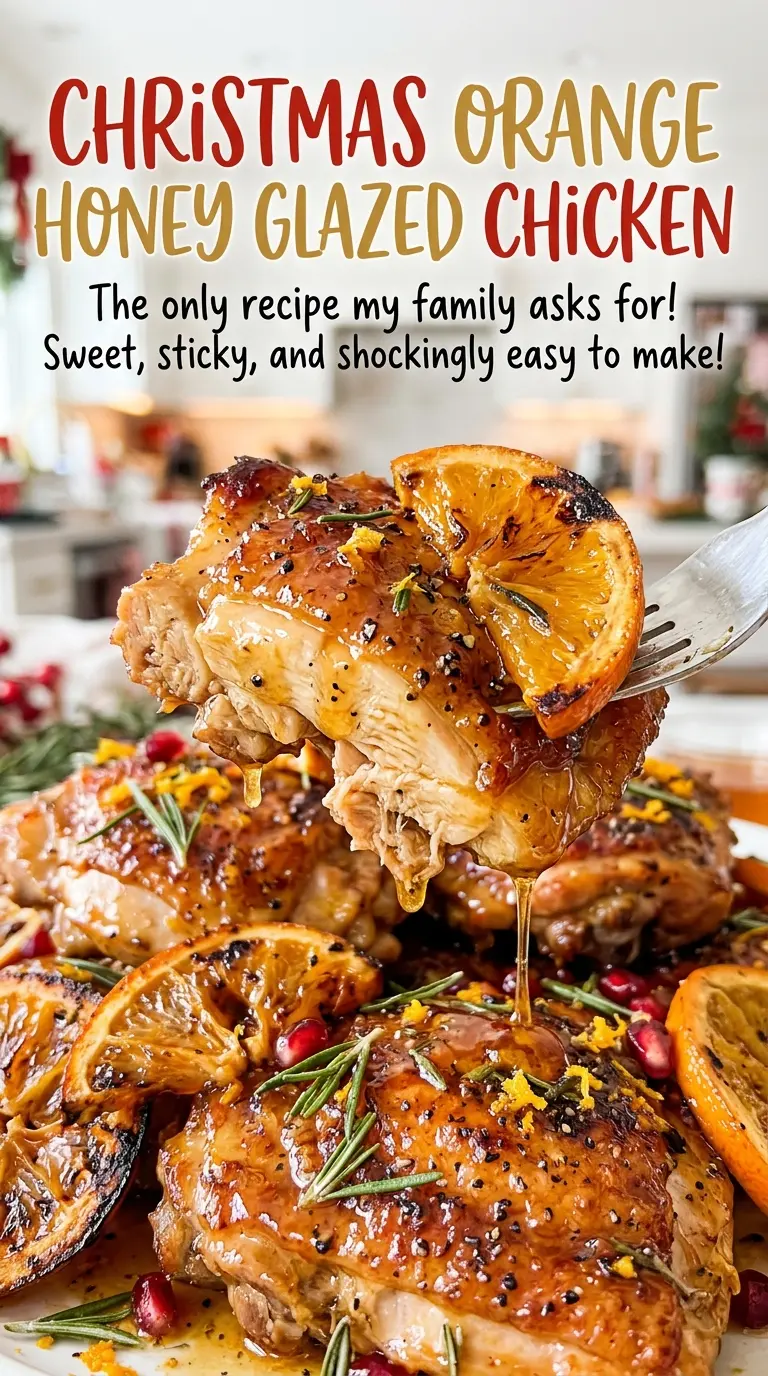
Tip: save now, cook later.The first brush of orange-honey glaze turns glossy as it hits the hot chicken, and the rosemary makes the kitchen smell like something worth slowing down for. I make this Christmas Orange Honey Glazed Chicken when I want a whole roast bird with a bright citrus note, a little sweetness, and a savory edge from Dijon. The glaze gives the skin a burnished finish without asking you to fuss over the chicken every few minutes.
Fresh orange zest matters here as much as the juice: it carries the fragrant oils that make the citrus come through after roasting. Honey gives the glaze body, while butter softens its sweetness and Dijon keeps it from tasting like candy. The result is a whole chicken with glossy, deeply colored skin and juicy slices underneath, ready to carve after a short rest.

Kitchen Note
Give the chicken the full 15-minute rest before carving. The juices settle back into the meat, and the slices stay neater on the board.
Save this Christmas Orange Honey Glazed Chicken for a roast with fragrant orange, a glossy honey finish, and rosemary in every slice.
Why the Honey Glaze Goes on in Two Rounds
Honey gives this glaze its shine, but it also browns quickly in a hot oven. If it coats the chicken from the start, the sugary surface has a long time to darken before the meat reaches its finish. Waiting through the first 45 minutes lets the chicken roast and the skin begin coloring on its own, without the glaze sitting on the surface for the entire cook.
The first coat goes on after that initial roast, then gets 10 minutes in the oven to turn tacky and cling to the skin. The remaining glaze adds a fresh layer near the end, so its orange and rosemary aromas stay lively rather than becoming overly dark. The final roasting time is guided by the thermometer, not the color of the outside. Honey can make the skin look ready before the thickest parts of the chicken are cooked through, so the breast and innermost thigh both need a temperature check.
This timing also gives you a useful visual cue: the glaze should look shiny and settled on the skin, not wet and running in rivulets. If the skin is browning too quickly during the final stretch, a loose foil tent slows that surface browning while the chicken continues to roast.
Why Orange Zest, Honey, and Dijon Belong in the Same Glaze
- Whole chicken — A 4- to 5-pound bird gives you both breast and thigh meat to check, and its size matches the roasting schedule here. Patting the skin dry helps it roast instead of starting out damp. Freshness matters more than choosing an especially expensive bird.
- Orange zest and juice — The juice brings tang and moisture to the glaze; the finely grated zest supplies the concentrated orange aroma that juice alone won’t give you. Use a fresh orange with clean, firm skin, and grate only the colored outer peel rather than the bitter white pith. A different orange variety will shift the citrus character, but fresh zest is the part not to skip.
- Honey and unsalted butter — Honey thickens the glaze and helps it shine, while butter rounds out the citrus and mustard. A mild honey works well; a strongly flavored honey will be more noticeable. For a dairy-free version, olive oil can replace the butter, though the glaze will taste fruitier and less buttery.
- Dijon mustard and fresh rosemary — Dijon adds a sharp, savory note that keeps the honey from reading as purely sweet. Fresh rosemary contributes a piney aroma, so finely chop it to distribute it through the glaze instead of leaving large, woody pieces. If fresh rosemary isn’t available, dried rosemary can stand in at one-third the quantity, crushed between your fingers before it goes into the pan.
Roasting the Chicken Before the Glaze Takes Over
Dry and Season the Bird
Heat the oven to 425°F and set a rack in a roasting pan. Pat the chicken dry, season it all over with kosher salt and black pepper, and place it breast side up on the rack. Tuck the wing tips under the body so their thin ends aren’t exposed during the roast. A dry surface gives the skin a better chance to brown instead of staying damp.
Simmer the Orange-Rosemary Glaze
Combine the orange zest and juice, honey, butter, Dijon mustard, and finely chopped rosemary in a small saucepan. Bring the mixture to a gentle simmer over medium-low heat, stirring as the butter melts and the ingredients come together. Cook for 5–7 minutes, until the glaze looks slightly thickened. Keep the heat moderate; a hard boil can darken the honey before the glaze has reduced evenly.
Roast First, Then Brush on the First Coat
Roast the chicken for 45 minutes before adding any glaze. Brush on half of the glaze, covering the breast and legs, then return the pan to the oven for 10 minutes. The first coat should begin to look glossy and cling to the skin. Brushing too early gives the honey extra time to brown, which is why this first stretch is unglazed.
Finish with the Remaining Glaze and a Thermometer
Brush the chicken with the remaining glaze and roast for another 10–25 minutes. Check the thickest part of the breast and the innermost thigh without touching bone; both readings need to reach 165°F. If either spot is short, continue roasting in 5-minute increments and check again. Loosely tent the chicken with foil if the skin starts browning too quickly.
Rest Before Carving
Transfer the chicken to a cutting board and leave it undisturbed for 15 minutes. This gives the juices time to settle and makes the bird easier to carve without flooding the board. Use a sharp carving knife and work carefully around the joints. The glaze will remain glossy as the chicken rests.
Three Practical Ways to Adapt the Orange-Honey Glaze
Make the Glaze Dairy-Free
Replace the unsalted butter with the same amount of olive oil. It blends into the orange and honey and keeps the glaze smooth, though the finished flavor will be more citrus-forward and less rich.
Use a Blood Orange
Swap the regular orange for one large blood orange, using both its zest and juice. The glaze keeps its sweet-tart balance, with a deeper, slightly berry-like citrus note and a richer color.
Use Thyme Instead of Rosemary
Replace the fresh rosemary with the same amount of finely chopped fresh thyme. Thyme gives the glaze a softer, less piney herbal note that sits neatly alongside the orange.
Storage and Reheating
- Refrigerator: Store carved chicken in a covered container for 3–4 days. The skin softens as it sits, while the meat stays suitable for salads, sandwiches, or another warm meal.
- Freezer: Freeze carved pieces in an airtight container or freezer bag for up to 4 months. Separate portions before freezing so you can thaw only what you need.
- Reheating: Warm sliced chicken covered in a 325°F oven until hot throughout, or microwave portions in short intervals. Leaving the chicken uncovered in the oven can dry the meat before the center warms.
Questions That Come Up While Roasting This Chicken
Christmas Orange Honey Glazed Chicken
Ingredients
Equipment
Method
- Preheat the oven to 425°F and set a rack in a roasting pan.
- Pat the chicken dry and season it all over with the salt and pepper.
- Place the chicken breast side up on the rack.
- Tuck the wing tips under the body.
- Combine the orange zest and juice, honey, butter, Dijon mustard, and rosemary in a small saucepan.
- Bring to a gentle simmer over medium-low heat and cook for 5–7 minutes, stirring, until slightly thickened.
- Roast the chicken for 45 minutes.
- Brush the chicken with half the glaze.
- Roast for 10 minutes.
- Brush the chicken with the remaining glaze.
- Roast for 10–25 minutes, until a thermometer inserted into the thickest part of the breast and the innermost thigh without touching bone reads 165°F.
- If needed, continue roasting in 5-minute increments.
- Loosely tent with foil if the skin browns too quickly.
- Transfer the chicken to a cutting board and let it rest for 15 minutes before carving.
