

Chimichurri Chicken Thighs
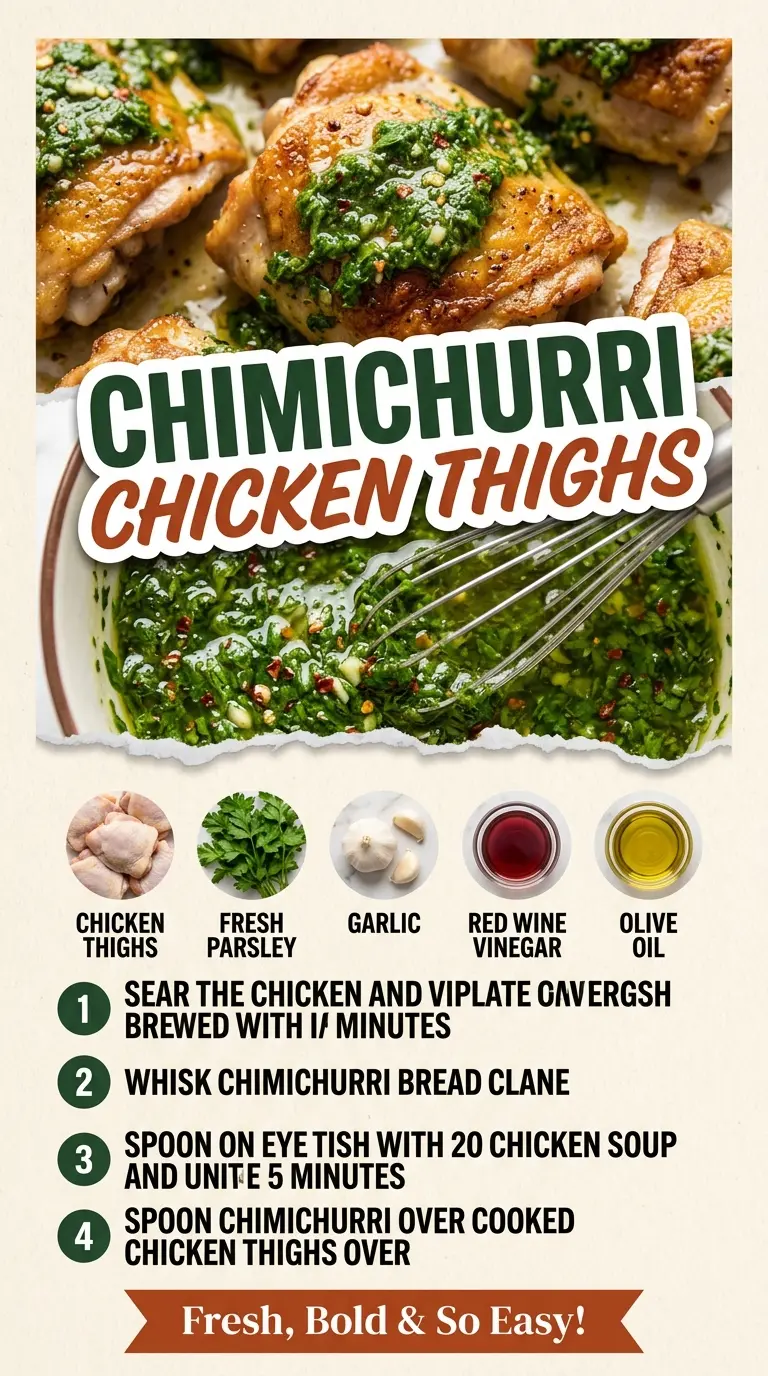
Juicy chicken thighs with shatter-crisp skin and a spoonful of sharp, herb-packed chimichurri on top are the kind of dinner that disappears fast. The contrast is what makes this dish…
Tip: save now, cook later.Juicy chicken thighs with shatter-crisp skin and a spoonful of sharp, herb-packed chimichurri on top are the kind of dinner that disappears fast. The contrast is what makes this dish work: rich, well-seared chicken underneath, bright parsley, garlic, and red wine vinegar cutting through it on top. Every bite lands with salt, acid, and a little heat, so it never tastes flat or heavy.
The trick is treating the chimichurri like a finishing sauce, not a marinade. When the herbs are chopped fine and the garlic is fresh, the sauce stays bold instead of muddy, and the vinegar keeps the whole plate lively. The chicken itself needs a dry surface and steady heat so the skin renders and crisps before the meat overcooks.
The skin got beautifully crisp and the chimichurri stayed bright even after sitting on the hot chicken for a few minutes. I made extra sauce and used it on roasted potatoes the next night.
Juicy chicken thighs with crisp skin and a punchy chimichurri finish belong on your Pinterest dinner board.
The Skin Needs Dry Heat, Not Hope
The most common mistake with chicken thighs is starting with damp skin and expecting it to crisp in the pan. It won’t. Moisture turns the surface into steam, and steam keeps the skin pale and rubbery while the meat underneath keeps cooking. Patting the thighs dry before they hit the skillet is what gives you that deep, crackly skin and the kind of browned bits that taste like dinner earned its keep.
Another thing that matters here is not crowding the pan. If the thighs are packed in tight, they trap moisture and the pan temperature drops fast. You want each piece to have direct contact with the hot surface so the skin can render and brown instead of just sitting there and softening.
What the Chimichurri Ingredients Are Actually Doing
The parsley is the backbone of the sauce. Use fresh parsley with bright stems and leaves, not tired bunches that have been hanging around in the fridge too long. Oregano adds the earthy edge that makes chimichurri taste like chimichurri instead of just chopped herbs in oil. Fresh oregano is stronger than dried, so if you swap in dried, use only about 2 teaspoons and let it sit in the vinegar for a few minutes to wake up before adding the oil.
Garlic, red wine vinegar, and olive oil carry the rest of the sauce. The garlic should be minced fine so it spreads evenly, not in sharp raw chunks. The vinegar gives the sauce its lift, and the oil rounds it out so it clings to the chicken instead of running off the plate. A decent olive oil matters here, but it doesn’t need to be your most expensive bottle.
- Parsley — Flat-leaf parsley gives the cleanest, brightest flavor. Curly parsley works in a pinch, but the sauce will taste a little less bold and look less vivid.
- Red wine vinegar — This is what makes the sauce pop. Lemon juice can replace it, but the flavor turns sharper and less rounded.
- Shallot — It softens the raw garlic edge and adds a little sweetness. If you don’t have one, a tiny amount of finely minced red onion works, but it will bite harder.
- Chicken thighs — Bone-in, skin-on thighs stay juicy during searing and give you the best flavor payoff. Boneless thighs cook faster, but the skinless version won’t give you the same contrast.
The Sequence That Gives You Crispy Chicken and Bright Sauce
Dry the Chicken and Season Early
Start by patting the thighs dry on all sides, then season them evenly with salt and pepper. The salt begins seasoning the meat before it goes into the pan, and the dry surface helps the skin brown instead of steam. If the thighs look wet after you season them, blot them again with a paper towel.
Sear Until the Skin Releases on Its Own
Heat the oil in a large skillet over medium-high heat, then lay the thighs skin-side down and leave them alone for 6 to 7 minutes. You’re waiting for the skin to turn deeply golden and release cleanly from the pan; if it sticks, it isn’t ready yet. Pull the heat down if the skin darkens too fast before it has time to crisp and render.
Finish Cooking Without Drying Out the Meat
Flip the thighs and cook them until the internal temperature reaches 165°F. That second side doesn’t need much color; it just finishes the meat through. Let the thighs rest for 5 minutes after they come out of the skillet so the juices settle instead of spilling onto the cutting board.
Build the Chimichurri While the Chicken Cooks
Stir the parsley, oregano, garlic, olive oil, vinegar, shallot, red pepper flakes, salt, and pepper together while the chicken is in the pan. The sauce doesn’t need to be cooked. In fact, the fresh, raw character is the whole point, and it tastes best spooned over warm chicken right before serving. If you let it sit too long, give it a quick stir before using so the oil and vinegar come back together.
How to Adapt This for Different Nights and Different Diets
Make It Dairy-Free Without Changing the Dish
This recipe is naturally dairy-free, which is one reason it works so well as a weeknight dinner. The chimichurri gives you all the richness you need without cream or butter, and the olive oil carries the sauce beautifully. Keep the chicken skin-on for the most satisfying texture.
Use Chicken Breasts When That’s What You Have
Chicken breasts work, but they need gentler heat and a shorter cook time so they don’t turn dry. Pound them to an even thickness, sear until golden, then finish cooking just until the center reaches temperature. You’ll lose some richness from the skin-on thighs, but the chimichurri helps carry the leaner meat.
Turn It Into a Vegetarian Dinner
The chimichurri is strong enough to anchor roasted cauliflower steaks, thick portobello mushrooms, or crispy tofu. The sauce brings acid and herb brightness, which those vegetables and proteins need. You’ll get a lighter plate, but the same sharp, savory finish.
Storage and Reheating
- Refrigerator: Store the chicken and chimichurri separately for up to 4 days. The sauce will darken a little, but the flavor stays good.
- Freezer: The chicken freezes well for up to 2 months. Chimichurri doesn’t freeze well because the herbs lose their fresh texture and color.
- Reheating: Warm the chicken gently in a covered skillet over low heat or in a 325°F oven until heated through. High heat will dry out the meat and can make the skin leathery instead of crisp.
Answers to the Questions Worth Asking

Chimichurri Chicken Thighs
Ingredients
Equipment
Method
- Pat the chicken thighs dry and season both sides with salt and pepper.
- Heat the olive oil in a large skillet over medium-high heat, then sear the chicken skin-side down for 6–7 minutes until deeply golden and crisp.
- Flip the thighs and cook for 6–8 minutes more, until the internal temperature reaches 165°F.
- While the chicken cooks, whisk together the parsley, oregano, garlic, olive oil, red wine vinegar, shallot, red pepper flakes, salt, and black pepper in a bowl to make the chimichurri.
- Remove the chicken from the skillet and let it rest 5 minutes.
- Spoon the chimichurri generously over the warm chicken thighs, and serve immediately with extra chimichurri on the side.
