
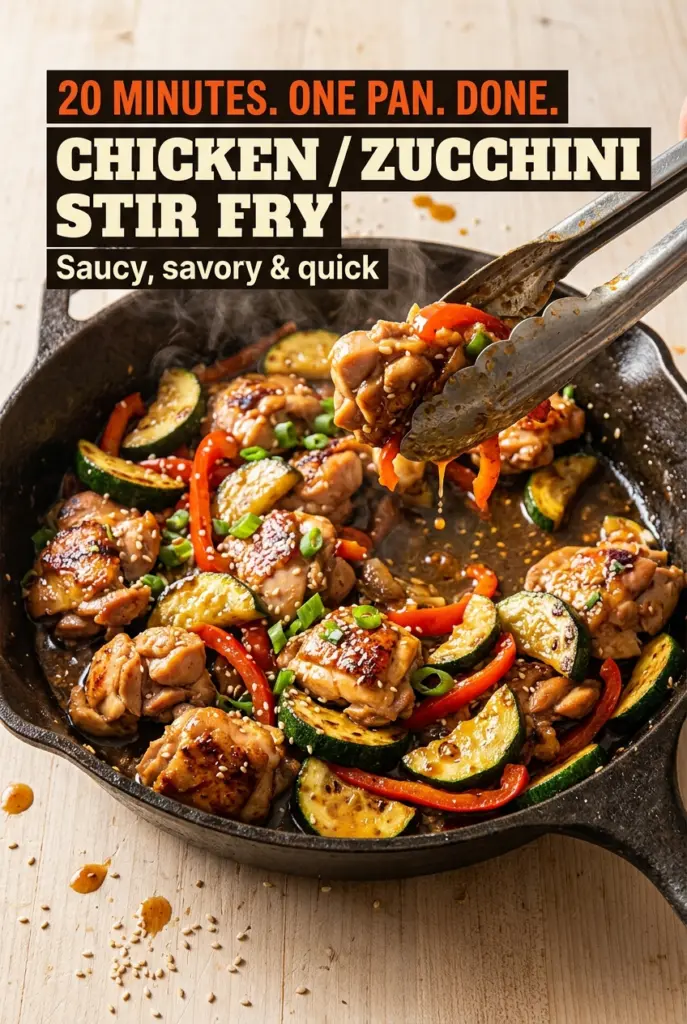
Chicken Zucchini Stir Fry
Golden chicken, crisp-tender zucchini, and sweet bell pepper are exactly what you want in a fast skillet dinner, and this chicken zucchini stir fry lands on the table with the…
Tip: save now, cook later.Golden chicken, crisp-tender zucchini, and sweet bell pepper are exactly what you want in a fast skillet dinner, and this chicken zucchini stir fry lands on the table with the kind of glossy, savory sauce that makes plain rice disappear fast. The chicken gets a light cornstarch coating before it hits the pan, which gives it that tender, slightly velvety bite instead of drying out while the vegetables finish cooking.
The key is cooking in stages. The chicken sears first so it can brown instead of steam, then the zucchini and peppers go in hot and fast so they stay bright and just tender at the edges. The garlic, ginger, and sauce get only a short run in the pan at the end, which keeps the flavor fresh and prevents the honey from scorching.
Below, I’ve included the one mistake that usually ruins stir fries, plus the ingredient swaps that still keep this dish moving in the right direction when you’re short on something.
The chicken stayed tender and the zucchini kept its bite, which never happens for me with stir fry. The sauce clung to everything instead of pooling at the bottom, and it tasted just right over rice.
Save this chicken zucchini stir fry for the nights when you want a glossy garlic-ginger skillet dinner on the table fast.
The Reason Stir Fry Goes Soggy Instead of Glossy
The mistake that ruins most chicken zucchini stir fry is crowding the pan. Chicken and zucchini both give off moisture, and if they’re piled together, they steam before they sear. That’s how you end up with pale chicken, limp vegetables, and a sauce that tastes thinner than it should.
This version works because each part gets a short, hot turn in the skillet. The cornstarch on the chicken helps it brown and also gives the sauce something to cling to. The zucchini and pepper only need a few minutes; once they start to soften and pick up a little color, they’re done. If the garlic stays in the pan too long, it turns bitter fast, so it goes in after the vegetables have already taken on heat.
- Thinly sliced chicken breast — Thin slices cook fast and stay tender. If the pieces are thick, the outside overcooks before the center is done. Chicken thighs also work and stay juicier, though they bring a richer flavor and a slightly softer texture.
- Cornstarch — This is doing more than thickening the sauce. It gives the chicken a light coating that protects it from drying out and helps the sauce cling later. Don’t skip the resting time; even 10 minutes lets the surface hydrate and start doing its job.
- Oyster sauce — This is the ingredient that gives the stir fry depth. Soy sauce brings salt, but oyster sauce brings body and a round, savory finish. If you need a substitute, use a little hoisin mixed with soy sauce, but expect a sweeter result.
- Fresh ginger and garlic — Fresh is worth it here. Powdered versions won’t give you the same sharp, fragrant hit in the last minute of cooking. Mince the garlic finely so it disperses quickly instead of sitting in one burned clump.
What Each Ingredient Is Actually Doing in This Stir Fry
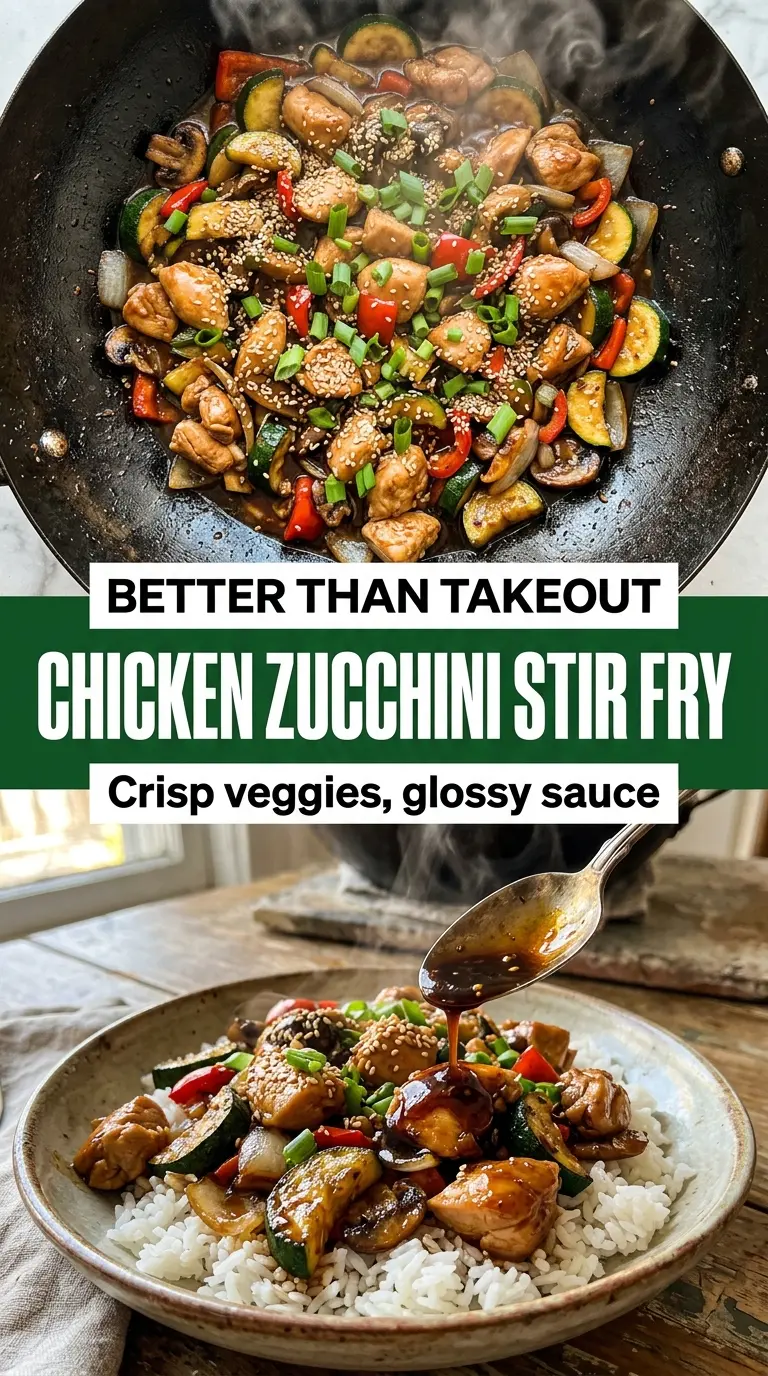
- Vegetable oil — A neutral oil handles the high heat needed for searing and stir-frying. Olive oil can work in a pinch, but it doesn’t stay as clean-tasting at high heat and can compete with the sauce.
- Zucchini — Zucchini should be sliced into half-moons that are thick enough to hold shape. Too thin and they collapse before the sauce goes in. If yours are extra large and watery, scoop out the seedier center before cooking.
- Red bell pepper — This adds sweetness and a bit of crunch that balances the savory sauce. Any bell pepper color works, but red tastes the sweetest and stands up best to the garlic and ginger.
- Sesame oil — Use it for flavor, not cooking. It’s added in the sauce at the end, where its nutty aroma can stay intact. If you pour it into the hot pan too early, the aroma disappears.
- Green onions and sesame seeds — These are finishing ingredients, not decoration. The green onions bring a fresh bite, and the sesame seeds add a little texture on top. Toasted sesame seeds are even better if you have them.
Building the Sauce and Veggies Without Losing the Sear
The chicken gets its first chance to brown
Toss the sliced chicken with soy sauce and cornstarch until every piece looks lightly coated, then let it sit for about 10 minutes. That short rest keeps the coating from flaking off as soon as it hits the pan. Sear the chicken in a single layer over high heat and leave it alone long enough for one side to turn golden before moving it. If you stir too soon, the pieces will pale and release liquid instead of browning.
The vegetables need space and speed
Add the zucchini and pepper to the hot pan after the chicken comes out. Keep them moving, but don’t rush the timing so much that they never touch the surface of the pan long enough to char. You want crisp-tender pieces with browned edges, not soft vegetables that collapse into the sauce. If the pan cools down, the vegetables start steaming, so keep the heat up.
Garlic, ginger, and sauce go in at the very end
Garlic and ginger only need about 30 seconds before they turn fragrant. After that, the sauce goes in and should bubble immediately around the edges of the pan. Toss everything together just until the sauce turns glossy and coats the chicken and vegetables. Once the sauce thickens, get it off the heat; if you keep cooking, the honey can get sticky and the vegetables will lose their last bit of snap.
How to Adapt This for a Different Pan or a Different Diet
Make it gluten-free
Use gluten-free soy sauce or tamari and check that your oyster sauce is labeled gluten-free. The texture stays the same, and the sauce still finishes glossy, so this is an easy swap with almost no loss in flavor.
Use chicken thighs for a richer version
Boneless, skinless thighs give you a juicier bite and a little more forgiveness if the pan runs hot. Cut them thinly the same way you would breast meat, and keep the sear short so they stay tender.
Swap in broccoli, snap peas, or mushrooms
Broccoli needs a little extra time, so add it before the zucchini. Snap peas can go in with the peppers and stay crisp. Mushrooms release more liquid, so cook them first and give them time to brown before the sauce goes in.
Storage and Reheating
- Refrigerator: Store leftovers in an airtight container for up to 3 days. The zucchini softens a bit, but the flavor holds up well.
- Freezer: It can be frozen, but the zucchini will lose its crispness and turn softer after thawing. If you plan to freeze it, undercook the vegetables slightly and cool the stir fry completely before packing it away.
- Reheating: Reheat in a skillet over medium heat with a splash of water to loosen the sauce. The microwave works, but it softens the vegetables faster and can make the chicken rubbery if you overdo it.
Answers to the Questions Worth Asking
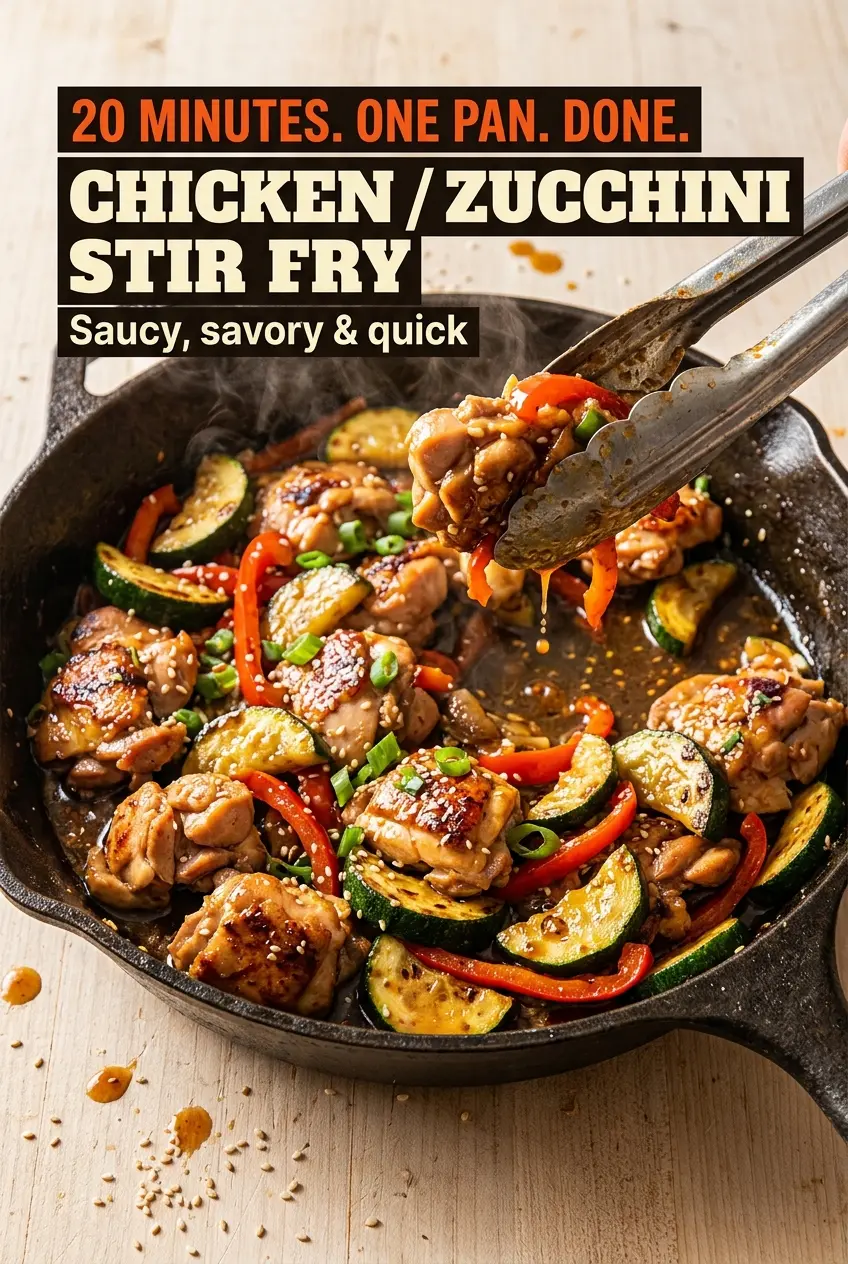
Chicken Zucchini Stir Fry
Ingredients
Equipment
Method
- Toss the sliced chicken with 1 tbsp soy sauce and the cornstarch, then let it sit at room temperature for 10 minutes so it turns slightly tacky. Visual cue: the chicken looks lightly coated, not wet.
- Whisk together the remaining soy sauce, oyster sauce, honey, and sesame oil until smooth. Visual cue: the mixture turns glossy and uniform.
- Heat 1 tbsp vegetable oil in a large skillet or wok over high heat until shimmering. Visual cue: a thin wisp of heat rises and the surface looks slick.
- Add the chicken in a single layer and sear until golden brown, about 4-5 minutes, without moving it too much. Visual cue: browned edges and an opaque center.
- Remove the chicken and set it aside. Visual cue: you should see darker fond on the pan.
- Add the remaining 1 tbsp vegetable oil to the pan, then stir-fry zucchini and bell pepper over high heat for 3-4 minutes until crisp-tender and lightly charred. Visual cue: blistered spots on the vegetables.
- Add the garlic and ginger and stir-fry for about 30 seconds until fragrant. Visual cue: quick aroma with no burning.
- Return the chicken to the pan, pour in the sauce, and toss for about 1-2 minutes until everything looks glossy and evenly coated. Visual cue: sauce clings and thickens slightly on the chicken.
- Turn off the heat and top with green onions and sesame seeds. Visual cue: bright green and toasted-looking specks on top.
- Serve hot over rice. Visual cue: chicken and vegetables look saucy right as it hits the plate.
