
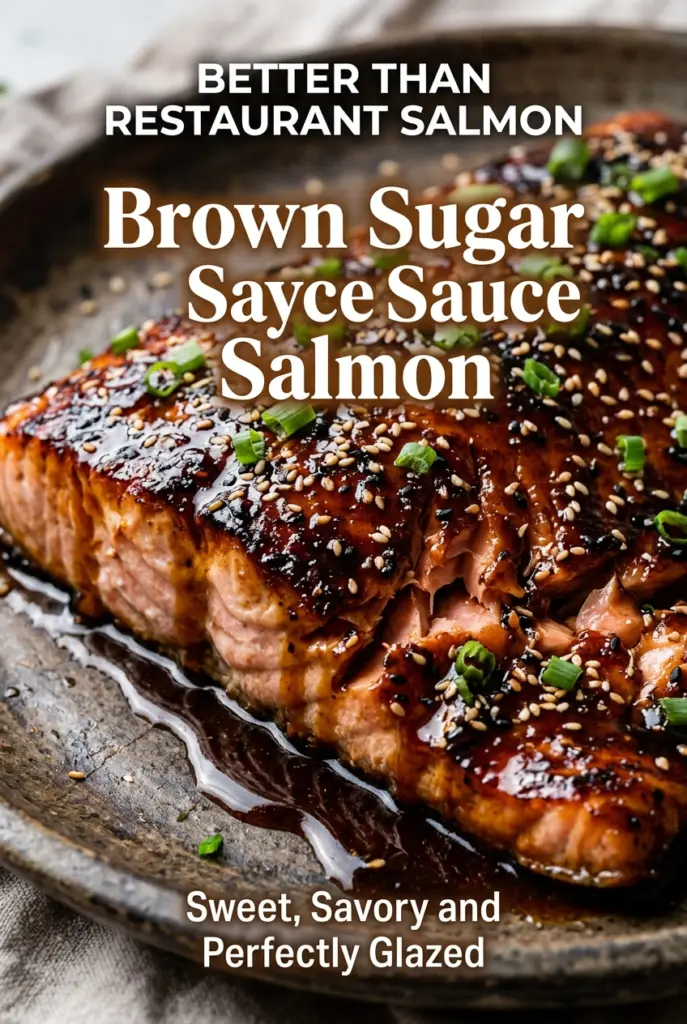
Brown Sugar Soy Sauce Glazed Salmon
Brown sugar soy sauce glazed salmon lands on the plate with glossy edges, tender flakes, and a sweet-savory finish that tastes like a lot more work than it is. The…
Tip: save now, cook later.Brown sugar soy sauce glazed salmon lands on the plate with glossy edges, tender flakes, and a sweet-savory finish that tastes like a lot more work than it is. The glaze clings to the fish instead of running off, and the last minute under the broiler gives you those caramelized edges that make every bite better than the last.
What makes this version work is the balance. Soy sauce brings salt and depth, brown sugar adds that dark caramel note, and honey helps the glaze thicken into something that brushes on cleanly. Lemon juice keeps the whole thing from tasting heavy, while ginger and garlic give the sauce enough backbone to stand up to rich salmon. Drying the fillets first matters more than people think; moisture on the surface keeps the seasoning and glaze from gripping the fish properly.
Below, I walk through the exact moment to reduce the glaze so it turns sticky instead of thin, plus a few smart swaps if you need to adjust for what’s in the pantry. The process is straightforward, but the timing of the broil and the texture of the sauce make the difference between decent salmon and the kind people ask for again.
The glaze thickened up beautifully in the saucepan, and the salmon stayed flaky under the broiler instead of drying out. I served it with rice and the whole pan disappeared fast.
Like this brown sugar soy glazed salmon? Save it to Pinterest for the nights when you want sticky caramelized fish with almost no cleanup.
The Reason the Glaze Stays Glossy Instead of Burning
The biggest mistake with this kind of salmon is rushing the glaze straight onto the fish and expecting the oven to do all the work. Brown sugar burns fast, and honey can go from glossy to bitter if it sits under high heat too long. That’s why half the glaze goes on before baking and the rest gets reduced on the stove, where you can control the texture instead of guessing.
Broiling at the end is what gives you that caramelized finish, but it only works if the glaze has already thickened. If it’s still thin and watery, it will slide off and scorch in spots instead of coating the salmon in a shiny layer. The salmon should flake cleanly when pressed with a fork, with the center still just barely translucent when it comes out of the oven before the final glaze goes on.
What Each Ingredient Is Actually Doing in This Dish
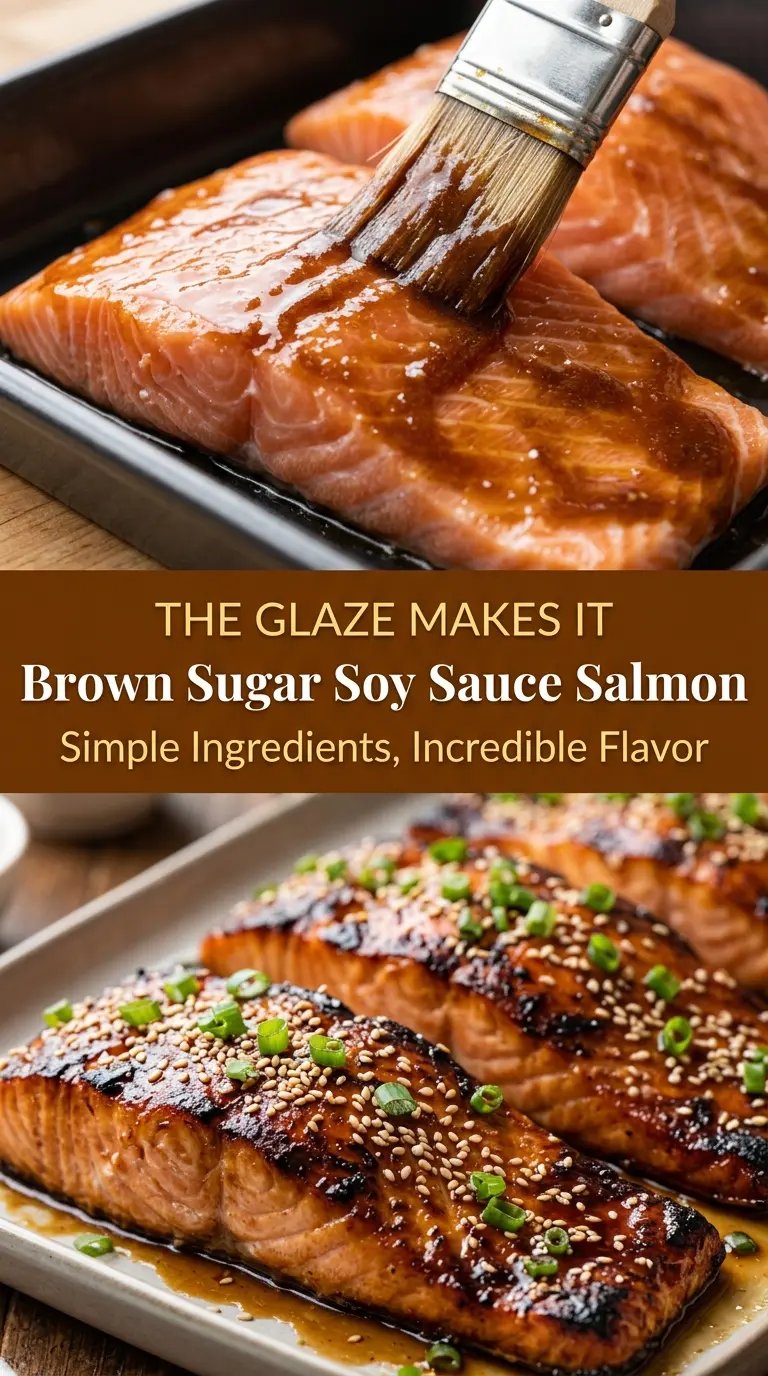
- Salmon fillets — Use fillets of similar thickness so they finish at the same time. Skin-on salmon works well because the skin protects the fish from drying out, but skinless fillets are fine if that’s what you have. Thicker pieces hold up best under the broiler.
- Soy sauce — This is the salt and backbone of the glaze. Regular soy sauce gives the best balance here; low-sodium works if that’s what’s in your kitchen, but the glaze may need a touch more reduction to taste full.
- Brown sugar and honey — The brown sugar brings the molasses note, and the honey helps the glaze turn lacquered. Don’t swap both for plain white sugar; you’ll lose the deeper caramel flavor and the glaze won’t cling as well.
- Ginger and garlic — These keep the sauce from tasting flat or one-note. Fresh is worth using here because dried versions won’t melt into the glaze the same way and can leave it dusty rather than smooth.
- Lemon juice and sesame oil — Lemon brightens the glaze so it doesn’t read as sticky-sweet, and sesame oil adds that toasted finish in the background. A little sesame oil goes a long way; too much can overpower the salmon.
Building the Glaze So It Clings to the Salmon
Drying and seasoning the fillets
Pat the salmon dry before anything else. If the surface is damp, the seasoning slides around and the glaze can’t adhere properly. A light coat of olive oil helps the salt and pepper stick and gives the fish a little insurance against drying out in the oven. Season both sides, but don’t bury the fish under salt because the soy sauce is doing plenty of that work later.
Mixing the glaze with intent
Whisk the soy sauce, brown sugar, honey, garlic, ginger, lemon juice, and sesame oil until the sugar starts dissolving. The mixture should look dark and glossy, not gritty. If you see a pile of brown sugar stuck at the bottom, keep whisking for another few seconds before it goes on the fish. That early dissolve matters because undissolved sugar tends to burn in patches.
Baking first, broiling last
Pour only half the glaze over the salmon before it goes into the oven. That gives the fish time to absorb flavor without drowning it. Bake just until the salmon is almost done, then reduce the remaining glaze on the stove until it coats a spoon. Brush it on generously, then broil for about 2 minutes and watch closely; the line between caramelized and scorched is thin with sugar-based sauces.
Three Ways to Make This Salmon Fit What You Need
Gluten-Free Version
Use a certified gluten-free tamari instead of regular soy sauce. The flavor stays deep and savory, and the glaze still reduces the same way. Check the sesame oil and any packaged garnishes if you’re cooking for someone with celiac disease.
Lower-Sugar Adjustment
Cut the brown sugar slightly and lean on the honey for shine, but don’t remove both sweeteners completely. The sugar isn’t just about sweetness here; it helps the glaze thicken and caramelize. Without enough of it, the sauce stays thin and won’t lacquer the salmon.
Air Fryer or Broiler-Only Cooking
You can cook the salmon in an air fryer, then brush on the reduced glaze at the end for a faster dinner. The result is slightly less saucy than oven-baked salmon, but the edges get a nice set and the texture stays firm. If using only the broiler, watch the fillets closely and keep them a few inches below the heat so the sugar doesn’t blacken before the fish is cooked through.
Storage and Reheating
- Refrigerator: Store leftovers in an airtight container for up to 3 days. The glaze will thicken more as it chills.
- Freezer: It freezes, but the texture is best if you freeze the cooked salmon without extra garnish and thaw it gently in the refrigerator.
- Reheating: Warm in a 300°F oven covered loosely with foil until just heated through. High heat dries the salmon out and can make the glaze sticky in the wrong way.
Answers to the Questions Worth Asking
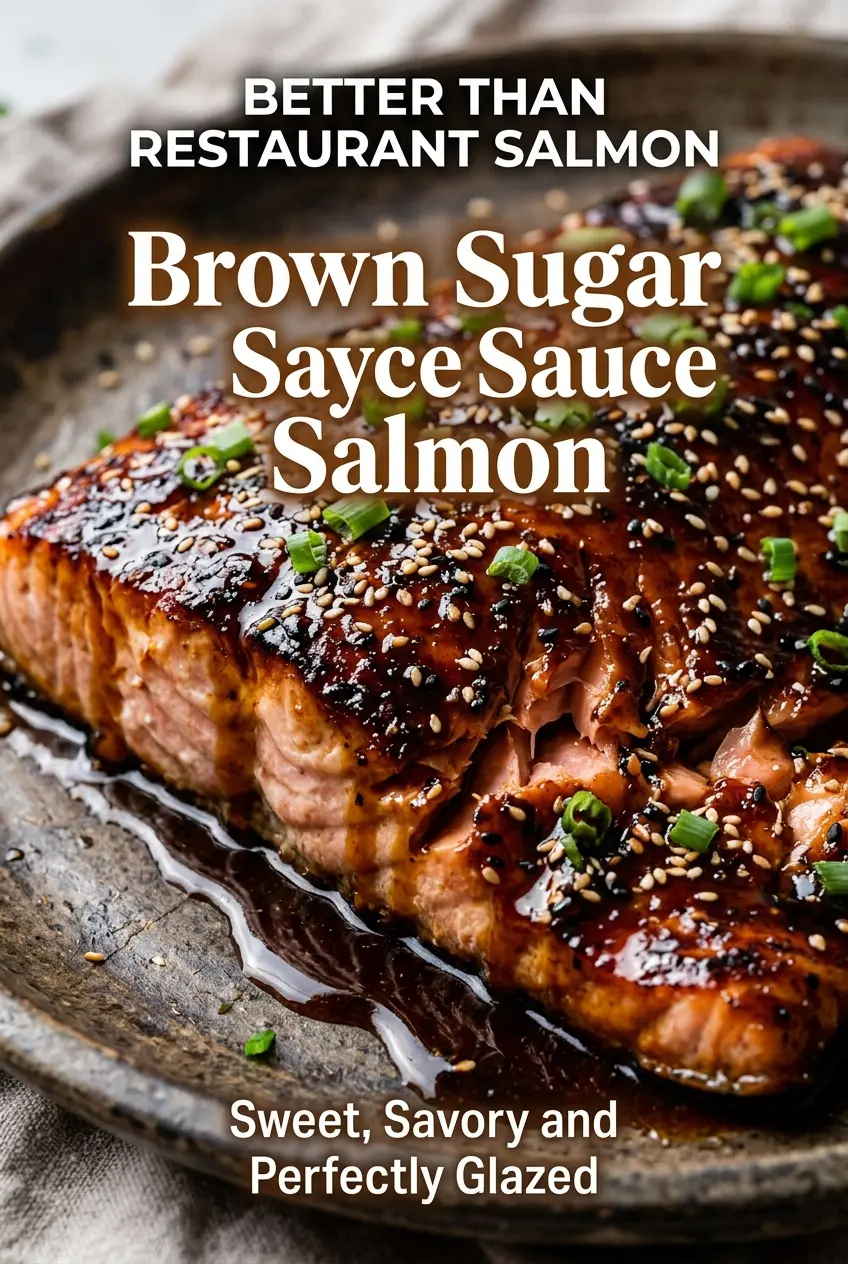
Brown Sugar Soy Sauce Glazed Salmon
Ingredients
Equipment
Method
- Preheat oven to 400°F (200°C) and line a baking dish with parchment paper.
- Pat salmon dry, then season with salt and black pepper.
- Whisk together soy sauce, brown sugar, honey, garlic, fresh ginger, lemon juice, and sesame oil until smooth.
- Place salmon in the baking dish and pour half of the glaze over the fillets.
- Bake for 12 minutes at 400°F (200°C).
- Meanwhile, simmer the remaining glaze in a small saucepan for 3–4 minutes until slightly thickened.
- Remove salmon from oven and brush generously with the thickened glaze.
- Broil for 2 minutes to caramelize, watching closely so the glaze doesn’t burn.
- Garnish with green onions and sesame seeds, and serve with lemon wedges.
- Serve the glazed salmon with rice or roasted vegetables.
