
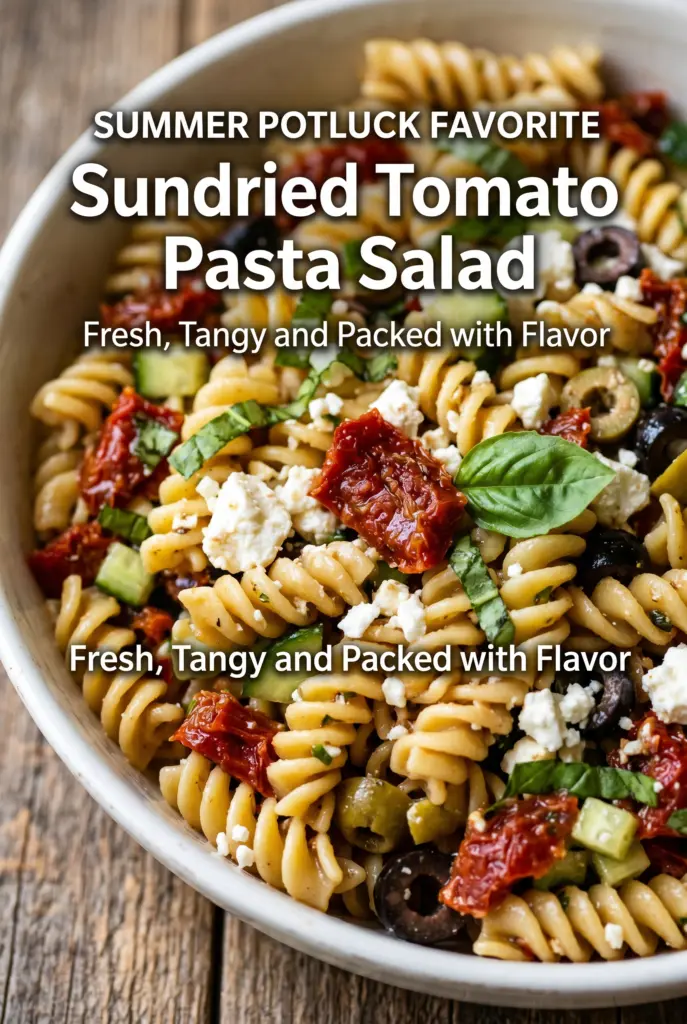
Sundried Tomato Pasta Salad with Feta and Fresh Basil
Sundried tomato pasta salad has a way of disappearing fast once it hits the table. The pasta stays sturdy, the feta brings a salty creamy bite, and the sundried tomatoes…
Tip: save now, cook later.Sundried tomato pasta salad has a way of disappearing fast once it hits the table. The pasta stays sturdy, the feta brings a salty creamy bite, and the sundried tomatoes give every forkful that concentrated, almost sweet-tart punch that keeps you going back for one more scoop. Fresh basil finishes it with a clean green note that keeps the whole bowl from feeling heavy.
What makes this version work is balance. The dressing leans on olive oil, red wine vinegar, and lemon juice, so it tastes bright instead of greasy, and the Dijon helps it cling to the pasta instead of sliding to the bottom of the bowl. Rinsing the pasta after cooking sounds small, but for a cold salad it matters — it stops the cooking, cools the noodles fast, and keeps the texture from turning sticky once the dressing goes on.
Below, you’ll find the detail that keeps the salad lively even after it chills, plus a few smart swaps if you need to work around what’s in your pantry. It’s the kind of make-ahead bowl that gets better once the flavors sit together for a bit.
The dressing coated every noodle without pooling at the bottom, and the feta stayed creamy even after chilling overnight. I brought it to a picnic and came home with an empty bowl.
Like this pasta salad? Save it to Pinterest for the creamy feta, basil, and sundried tomato combination you’ll want for lunches and potlucks.
The Trick to Keeping Cold Pasta Salad From Turning Mushy
The biggest mistake with pasta salad is treating it like a warm pasta dish that just happens to be cold. Overcooked noodles go soft fast once they’re dressed, and the whole bowl can collapse into something dull and soggy. Rotini helps here because the spirals catch the dressing, but it still needs to be cooked to a firm al dente texture so it keeps some bite after chilling.
Rinsing the pasta under cold water does more than cool it down. It washes off extra surface starch, which keeps the salad from clumping and helps the dressing coat each piece cleanly. If the pasta sits in the colander while you prep the rest, toss it with a tiny splash of olive oil so it doesn’t glue itself together before the vegetables are added.
What Each Ingredient Is Actually Doing in This Dish
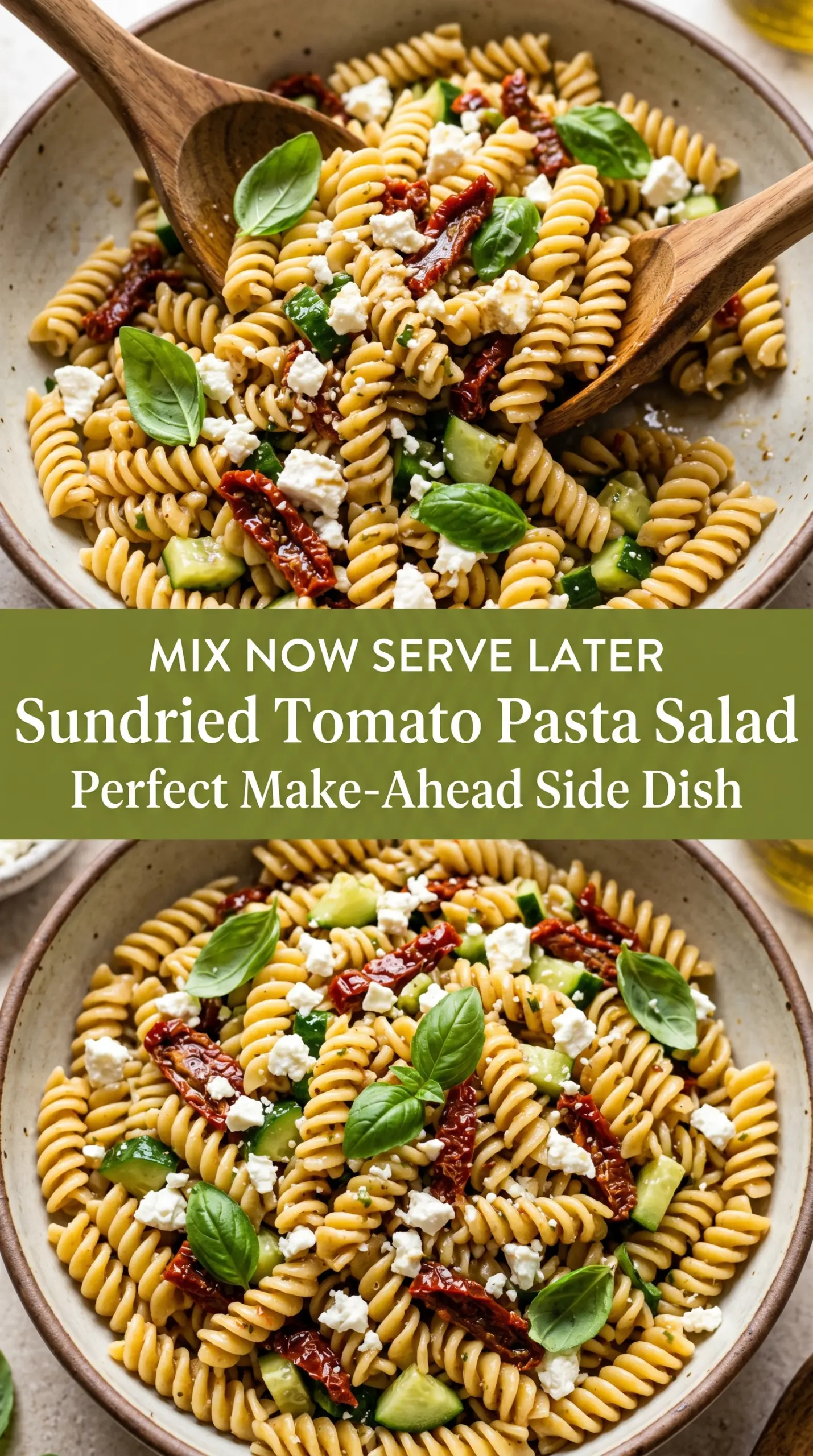
- Rotini pasta — The spirals grab the dressing and little bits of feta, which is why this shape works better than long noodles here. Any short pasta with ridges or curves will work if that’s what you have.
- Oil-packed sundried tomatoes — These bring concentrated tomato flavor and a chewy texture that stands up to chilling. Drain them well so the salad doesn’t turn oily, but don’t rinse away all the seasoning clinging to them.
- Feta cheese — Feta adds salt and creaminess without needing a heavy dressing. Buy a block and crumble it yourself if you can; pre-crumbled feta is drier and usually less creamy.
- Dijon mustard — This is the quiet piece that binds the dressing and helps it cling instead of pooling. If you skip it, the vinaigrette tastes thinner and separates faster.
- Fresh basil — Basil makes the salad taste bright and fresh instead of flat. Add it right before serving if you’re making the salad far ahead, because it darkens as it sits.
Building the Salad So Every Bite Stays Bright
Cooking the Pasta to Hold Its Shape
Cook the rotini until it’s just al dente, then drain it right away and rinse it under cold water until it’s no longer steaming. You want the pasta cool and firm, not chalky in the center or soft enough to bend without resistance. If it’s overcooked now, it’ll only get softer once the dressing and vegetables go in.
Whisking the Dressing Until It Clings
Whisk the olive oil, vinegar, lemon juice, Dijon, and seasonings until the dressing looks smooth and lightly thickened. The Dijon should disappear into the liquid; if you still see streaks, keep whisking because that emulsion is what keeps the salad from tasting split and flat. Taste it before it goes on the pasta, since cold salad dulls seasoning a little once it chills.
Tossing and Chilling at the Right Time
Add the tomatoes, cucumber, onion, olives, feta, and basil after the pasta has cooled. Pour the dressing over the bowl and toss until every spiral looks lightly coated, then refrigerate for at least 30 minutes so the flavors settle together. If you chill it too long before adding basil, the herbs lose their fresh edge, so save a little basil and feta for the top just before serving.
How to Adapt This for Different Eaters and Busy Schedules
Make It Gluten-Free Without Losing Texture
Use a sturdy gluten-free short pasta, not a delicate rice noodle. Cook it just to the package’s lower end, then rinse and cool it quickly so it doesn’t break down when tossed with the dressing. Some gluten-free pastas get soft after chilling, so this salad is best served the same day.
Dairy-Free Version That Still Tastes Full
Skip the feta and add chopped kalamata olives and a handful of toasted pine nuts or sunflower seeds for richness and salt. The salad becomes less creamy but gains a little more crunch, which works well if you want something lighter.
How to Prep It a Day Ahead
Mix the dressing and chop the vegetables the day before, but hold the basil and feta until serving if you want the freshest look and taste. The pasta will absorb some dressing overnight, so save a few spoonfuls to toss in right before serving.
Storage and Reheating
- Refrigerator: Store covered for up to 3 days. The pasta will absorb some dressing, so the salad gets a little less glossy by day two.
- Freezer: Don’t freeze this salad. The cucumber, feta, and basil lose their texture after thawing, and the pasta turns unpleasantly soft.
- Reheating: Serve cold or let it sit at room temperature for 15 to 20 minutes before eating. If it seems dry after chilling, add a small splash of olive oil and a squeeze of lemon, then toss again.
Questions I Get Asked About This Recipe
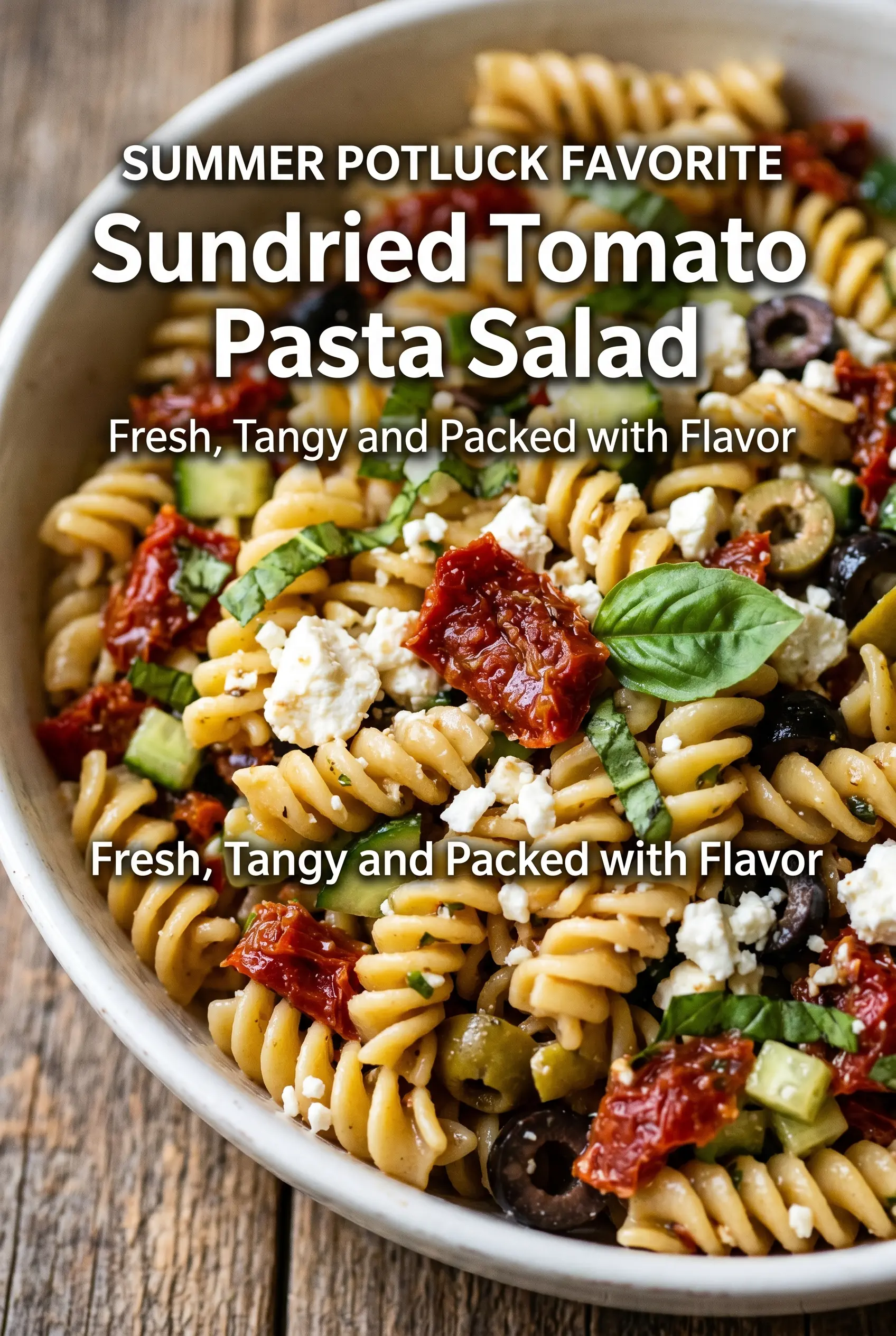
Sundried Tomato Pasta Salad with Feta and Fresh Basil
Ingredients
Method
- Cook rotini pasta according to package instructions until al dente. Visual cue: the pasta should be tender but still hold slight bite.
- Drain and rinse the pasta under cold water. Visual cue: the pasta cools quickly and stops cooking.
- Transfer the pasta to a large mixing bowl. Visual cue: spread it out so it cools evenly.
- Add sundried tomatoes, cucumber, red onion, black olives, feta cheese, and fresh basil. Visual cue: the salad becomes brightly speckled with red tomatoes and green basil.
- Whisk olive oil, red wine vinegar, lemon juice, Dijon mustard, Italian seasoning, garlic powder, salt, and black pepper until smooth. Visual cue: the dressing looks evenly blended and slightly glossy.
- Pour the dressing over the salad. Visual cue: the pasta and vegetables look lightly coated.
- Toss until evenly coated. Visual cue: feta and basil are distributed throughout without dry spots.
- Refrigerate for at least 30 minutes. Visual cue: the flavors deepen as the salad firms slightly while chilled.
- Garnish with extra fresh basil and extra feta cheese before serving. Visual cue: top with fresh green leaves and crumbled white feta for contrast.
