
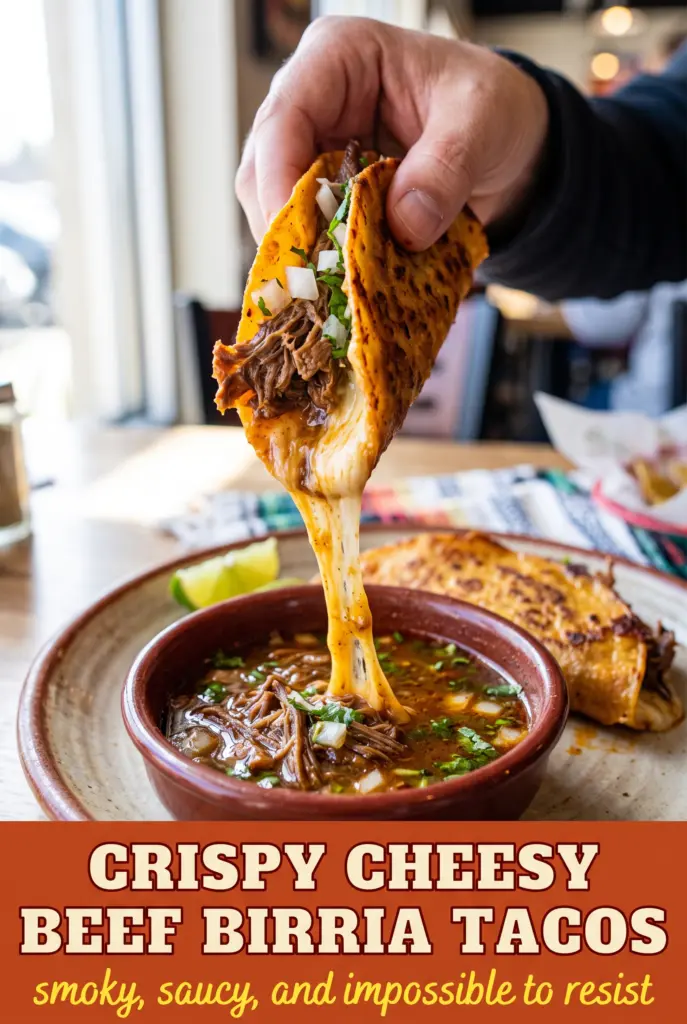
Birria Tacos (Quesabirria)
Birria tacos hit that rare sweet spot where the filling is deeply savory, the tortillas crisp up in the rendered fat, and the first dip into hot consommé makes the…
Tip: save now, cook later.Birria tacos hit that rare sweet spot where the filling is deeply savory, the tortillas crisp up in the rendered fat, and the first dip into hot consommé makes the whole thing feel almost over the top in the best way. The beef turns fall-apart tender after a long braise, but the real payoff is the contrast: smoky chile broth, stretchy melted cheese, and a tortilla that fries at the edges while staying soft enough to fold.
What separates a good batch from a muddy one is balance. Guajillo and ancho chiles bring color and roundness, while a small amount of chiles de árbol gives the broth a little edge without turning the tacos harsh. Toasting the dried chiles wakes up the oils, and blending the sauce until completely smooth keeps the braise silky instead of grainy. A good sear on the beef matters too, because those browned bits deepen the consommé in a way plain simmering never can.
Below, I’ll walk through the small details that matter most: how to keep the chile sauce from tasting flat, how to get that crisp-chewy taco shell, and what to do with the fat on top of the broth so the tacos come out rich instead of greasy.
The consommé was rich and smooth, and the tortillas crisped up perfectly after I dipped them in the fat. My husband kept going back for more and asked if I could make these again next weekend.
Save these crispy birria tacos with smoky consommé for the night you want a taco filling that’s worth the extra simmer.
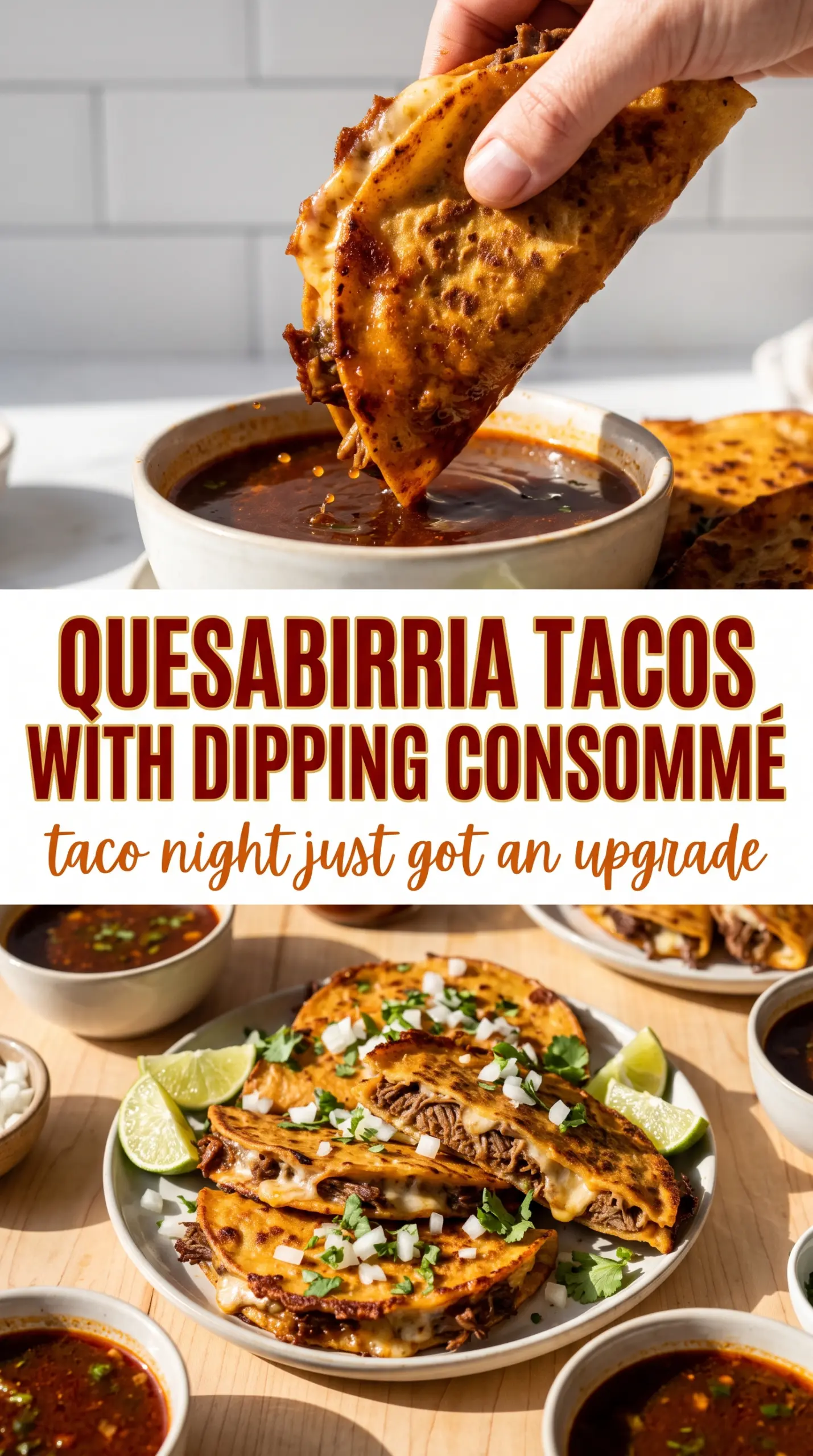
The Difference Between Rich Birria and a Heavy, Flat One
A lot of birria gets weighed down by too much chile paste or not enough seasoning in the braise. The goal isn’t just heat or color. It’s a broth that tastes layered, with sweetness from the dried chiles, a little tang from vinegar, and enough beef richness to carry the tacos without tasting dull after the first bite.
The other place people lose the recipe is in the fat. That top layer is not something to discard if you want true quesabirria texture. It’s what crisps the tortilla and gives the tacos that stained, bronzed surface in the skillet. Skim the broth, season it, then use that fat in thin layers so the tortillas fry, not soak.
- Beef chuck roast — This is the workhorse cut here. It breaks down into shreds without drying out, and it holds onto the chile broth better than a lean roast would.
- Beef short ribs — These add body to the consommé because of the bones and marbling. If you skip them, the birria still works, but the broth loses some depth.
- Dried guajillo and ancho chiles — Guajillos bring bright, fruity chile flavor and an earthy red color. Anchos add a raisin-like sweetness. Together they build the base without making the broth harsh.
- Chiles de árbol — These are for a little lift, not fire for its own sake. Two chiles give the broth a clean finish. More than that can crowd out the smoke and sweetness.
- Oaxaca or mozzarella cheese — Oaxaca melts with the best stretch, but low-moisture mozzarella gets you close if that’s what you have. Freshly shredded cheese melts more evenly than pre-shredded, which often has anti-caking starches.
How to Build the Consommé Before the Tacos Ever Hit the Pan
Toast the Chiles Until They Smell Warm and Nutty
Use a dry skillet and keep the chiles moving. Thirty to sixty seconds per side is enough to wake them up; if they darken too much, they turn bitter and the broth tastes scorched instead of smoky. Soak them in hot water until fully pliable so the blender can break them down without leaving flecks of skin behind.
Brown the Beef Until the Pan Gives You Those Dark Bits
Season the chuck roast and short ribs generously, then sear them in batches if the pot feels crowded. You’re looking for a deep brown crust, not a pale gray surface. If the meat steams, the broth will be thinner and less complex, because those browned bits are what give the consommé its backbone.
Blend the Base Until It’s Completely Smooth
Blend the softened chiles with onion, garlic, tomatoes, spices, vinegar, and some broth until the mixture looks velvety. Stop and scrape the blender if needed. Any visible chile skin or onion chunk ends up in the finished sauce, and that rough texture shows up most once the broth reduces during braising.
Braise Low Until the Meat Shreds Without Resistance
Cover the pot and keep the heat low enough for steady simmering, not a hard boil. The braise is done when the beef pulls apart easily and the short rib meat nearly falls from the bone. If the liquid boils aggressively, the edges of the meat can tighten before the center softens, which leaves you with stringy shreds instead of tender ones.
What to Change When You Need to Work Around the Ingredients
Gluten-Free Birria Tacos
These are naturally gluten-free as long as your broth is certified gluten-free. Corn tortillas give you the right texture for quesabirria anyway, so this version doesn’t need any compromise to work.
Dairy-Free Filling
Skip the cheese and serve the shredded birria as traditional tacos with onion, cilantro, and plenty of consommé for dipping. You lose the stretchy, crisped cheese layer, but the braised beef and chile broth still carry all the flavor.
Using a Pressure Cooker
You can cut the braise time way down in an Instant Pot, but don’t skip the sear or the chile toasting. Those two steps still build the flavor that pressure alone can’t create. The meat will cook faster, though the broth may need a short simmer at the end to taste rounded instead of sharp.
Make-Ahead and Reheating
Birria tastes even better the next day because the chile and beef flavors settle together. Refrigerate the meat and consommé separately for up to 4 days. Freeze the shredded beef in some of the broth for up to 3 months. Reheat gently on the stove over low heat so the meat stays juicy and the broth doesn’t turn oily and harsh from a hard boil.
Answers to the Questions Worth Asking
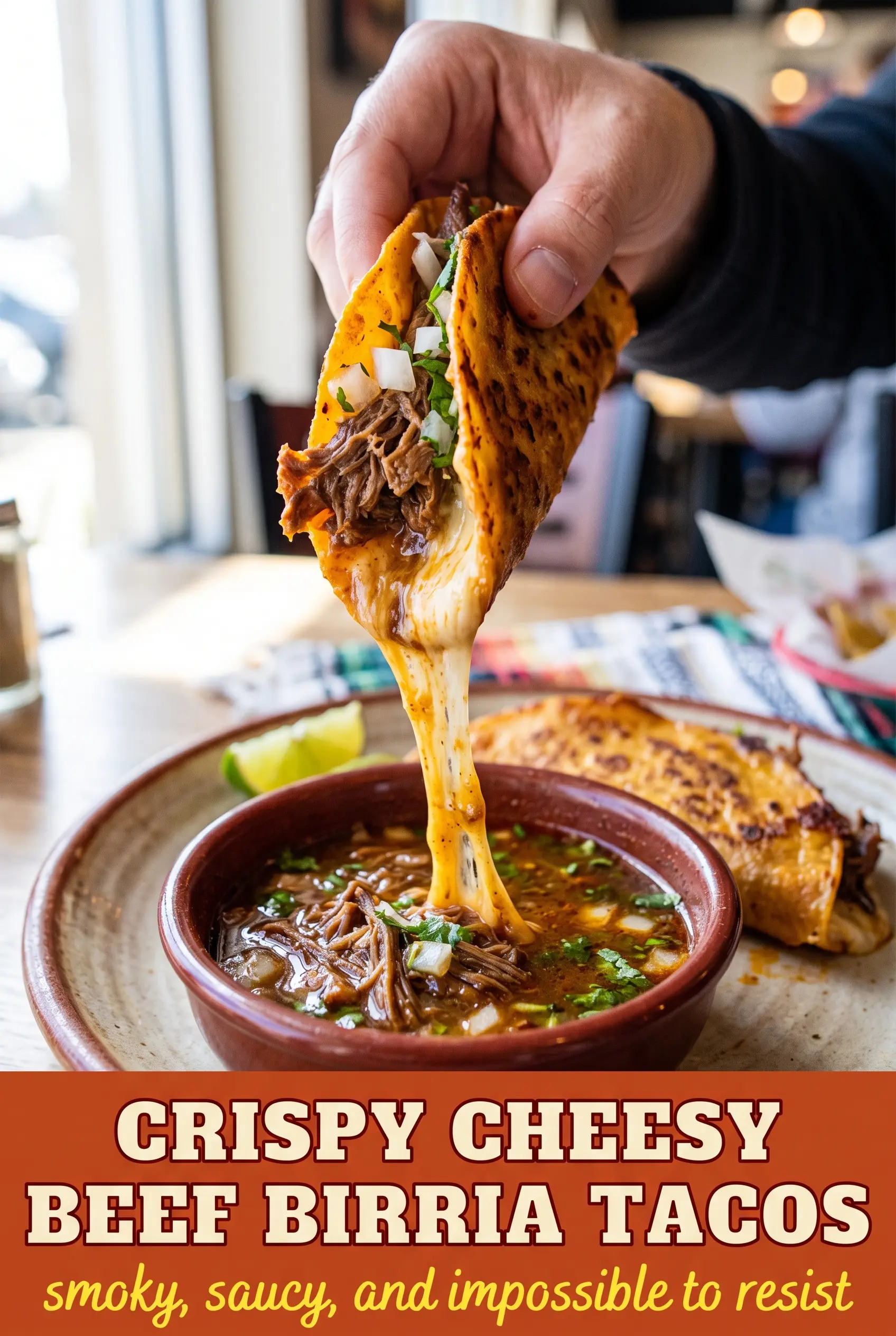
Birria Tacos (Quesabirria)
Ingredients
Equipment
Method
- Toast the guajillo, ancho, and árbol chiles in a dry skillet over medium heat for 30–60 seconds per side until fragrant, then keep them moving so they don’t burn.
- Soak the toasted chiles in hot water for 15 minutes until softened, then drain well before blending.
- Season the chuck roast and short ribs generously with salt, then sear in a large Dutch oven over medium-high heat for 3–4 minutes per side until deeply browned.
- Remove the browned meat to a plate or sheet pan and set aside while you prepare the sauce.
- Blend the softened chiles, onion halves, garlic, Roma tomatoes, cumin, oregano, cinnamon, whole cloves, apple cider vinegar, and 1 cup beef broth until completely smooth.
- Return the meat to the pot, pour in the chile sauce and remaining beef broth, add the bay leaves, and bring everything to a boil.
- Cover, reduce heat to a low simmer, and cook for 3 to 3.5 hours until the meat is fork-tender and the internal temperature exceeds 200°F.
- Remove the meat, shred with two forks, and discard bones and excess fat.
- Skim fat from the broth (consommé) and season with salt to taste.
- Dip each tortilla in the fat skimmed from the top of the consommé, then griddle on a hot skillet until pliable and lightly sizzling.
- Layer shredded cheese and shredded beef on one half, fold, and cook 2–3 minutes per side until crispy and the cheese is melted.
- Cut the tacos in half, garnish with diced onion and cilantro, and serve with small bowls of hot consommé and lime wedges for dipping.
