
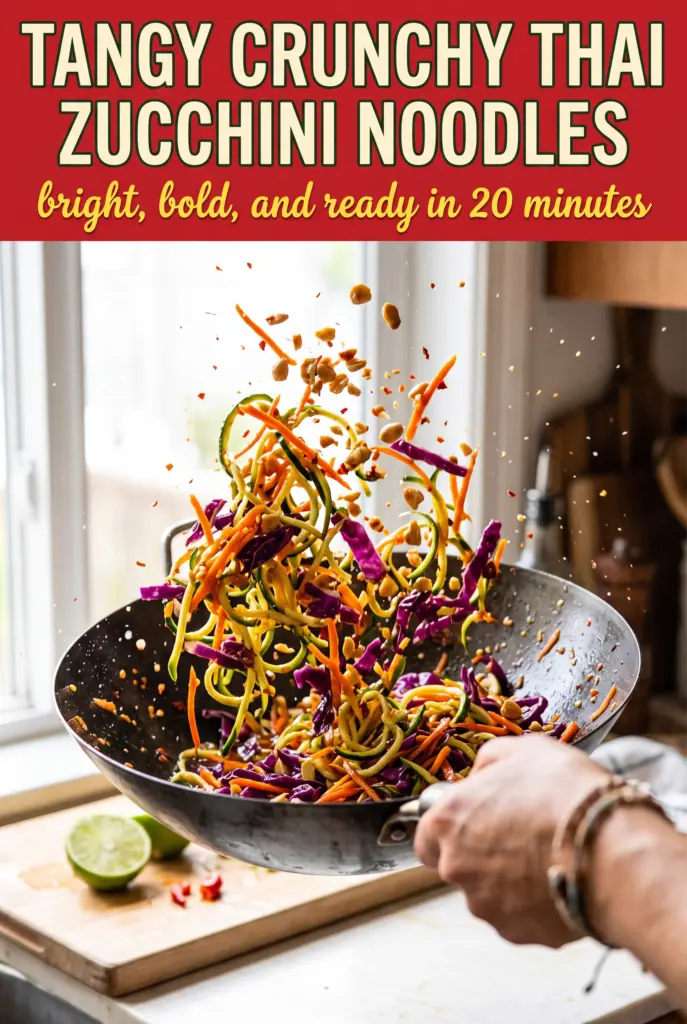
Thai Zucchini Noodles
Crisp-tender zucchini noodles make this bowl feel light without tasting like a compromise. The sauce hits all the right notes at once: lime for brightness, fish sauce for depth, brown…
Tip: save now, cook later.Crisp-tender zucchini noodles make this bowl feel light without tasting like a compromise. The sauce hits all the right notes at once: lime for brightness, fish sauce for depth, brown sugar for balance, and just enough chili to wake everything up. What you get is a fast, crunchy, fresh-tasting dinner that still feels complete.
The part that makes this recipe work is treating the zucchini like it matters. It needs to drain first, then cook for just a minute so it stays springy instead of turning watery and limp. The vegetables go in at the end for the same reason — you want them warmed through and coated, not softened into a tangle of mush.
Below, I’ll walk you through the small details that keep the noodles crisp, how to adjust the heat and sweetness, and what to swap if you want to make it vegetarian or pack it with extra crunch.
The sauce clung to the zucchini noodles without turning them soggy, and the lime with the peanuts on top made every bite pop. I drained the zoodles like you said and they stayed crisp all the way through dinner.
Save these Thai Zucchini Noodles for a fast, crunchy bowl with lime, herbs, and a bold Thai-style sauce.
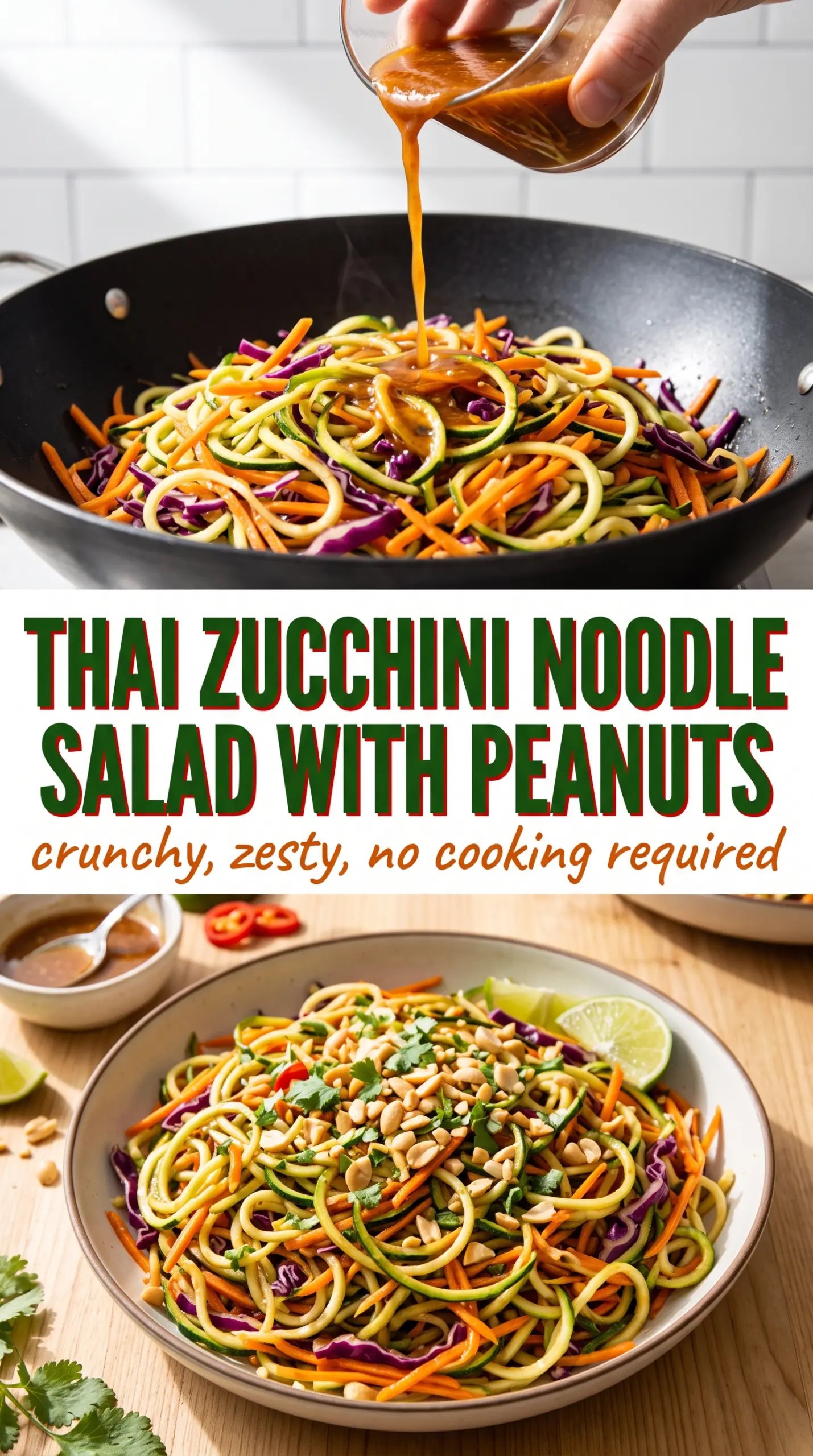
The Trick to Keeping Zucchini Noodles Crisp Instead of Watery
Zucchini carries a lot of hidden water, and that’s the reason so many zoodle dishes end up pale, slippery, and diluted. Salting and draining the noodles first pulls out some of that moisture before the pan ever heats up. That one step changes everything because the noodles can pick up sauce instead of releasing liquid into it.
The other mistake is cooking them too long. Zucchini doesn’t need time to soften the way wheat pasta does; it only needs a brief toss in the skillet until it’s warmed through and just barely glossy. If the pan fills with steam or the noodles start looking translucent, they’ve gone too far.
- Zucchini — Choose firm, medium zucchini with smooth skin. Large ones can be seedy and watery, which works against the texture here.
- Fish sauce — This is the backbone of the dressing. It gives the sauce that salty, savory depth you can’t get from lime and soy alone.
- Rice vinegar — Adds a softer acidity than more aggressive vinegars. It rounds out the lime instead of fighting it.
- Thai basil or mint — Use whatever fresh herb you can get, but don’t skip it. The herbs are what make the bowl taste bright and alive at the end.
The Fast Toss That Builds the Whole Bowl
Dry the Noodles First
After spiralizing, salt the zucchini and let it sit in a colander for about 10 minutes. That draws out the surface water before it hits the skillet. Pat the noodles dry with a clean towel or paper towels so they sear lightly instead of steaming. If you skip this, the sauce will thin out the second it touches the pan.
Whisk the Sauce Until the Sugar Disappears
Stir the lime juice, fish sauce, brown sugar, soy sauce, rice vinegar, garlic, ginger, and chili until the sugar dissolves and the mixture looks even. You want the sauce ready before the pan gets hot, because this dish moves fast once the noodles go in. If the sugar stays grainy in the bowl, it’ll cling unevenly in the skillet.
Cook the Zucchini Briefly, Then Add the Crunch
Heat the oil in a large skillet or wok and add the noodles for just a minute, tossing constantly. The goal is warmed zucchini with a little bounce, not softened strands. Add the carrots, bell pepper, and cabbage for one more quick toss so they stay crisp and fresh. Pour in the sauce at the end and turn everything until it looks glossy and evenly coated.
Make It Vegetarian Without Losing the Bold, Salty Edge
Swap the fish sauce for a vegetarian fish sauce alternative or use soy sauce plus a little extra lime and a pinch of salt. The flavor will be a touch less briny and deep, but the bowl will still taste balanced and bright. If you use only soy sauce, add a little more ginger or chili to keep the sauce from tasting flat.
How to Make It Lower-Carb
The zucchini base already keeps this naturally lighter, but you can cut the brown sugar to 1 tablespoon if you want the sauce sharper and less sweet. The bowl will taste more lime-forward and a little less glossy, which works well if you’re serving it alongside grilled shrimp or chicken.
Extra Crunch for a Heartier Bowl
Add bean sprouts, snap peas, or shredded cucumber right at the end for more raw crunch. Peanuts already bring texture, but these additions make the bowl feel bigger without weighing it down. Just keep everything crisp and don’t add watery vegetables too early.
Storage and Reheating
- Refrigerator: Store leftovers up to 2 days. The zucchini softens and releases more liquid, so expect a looser texture the next day.
- Freezer: Don’t freeze this one. Zucchini noodles break down after thawing and turn watery.
- Reheating: Eat it cold or let it sit at room temperature for 10 to 15 minutes. If you warm it, use a skillet over low heat for just a minute; high heat makes the noodles collapse and the herbs wilt.
Questions I Get Asked About This Recipe
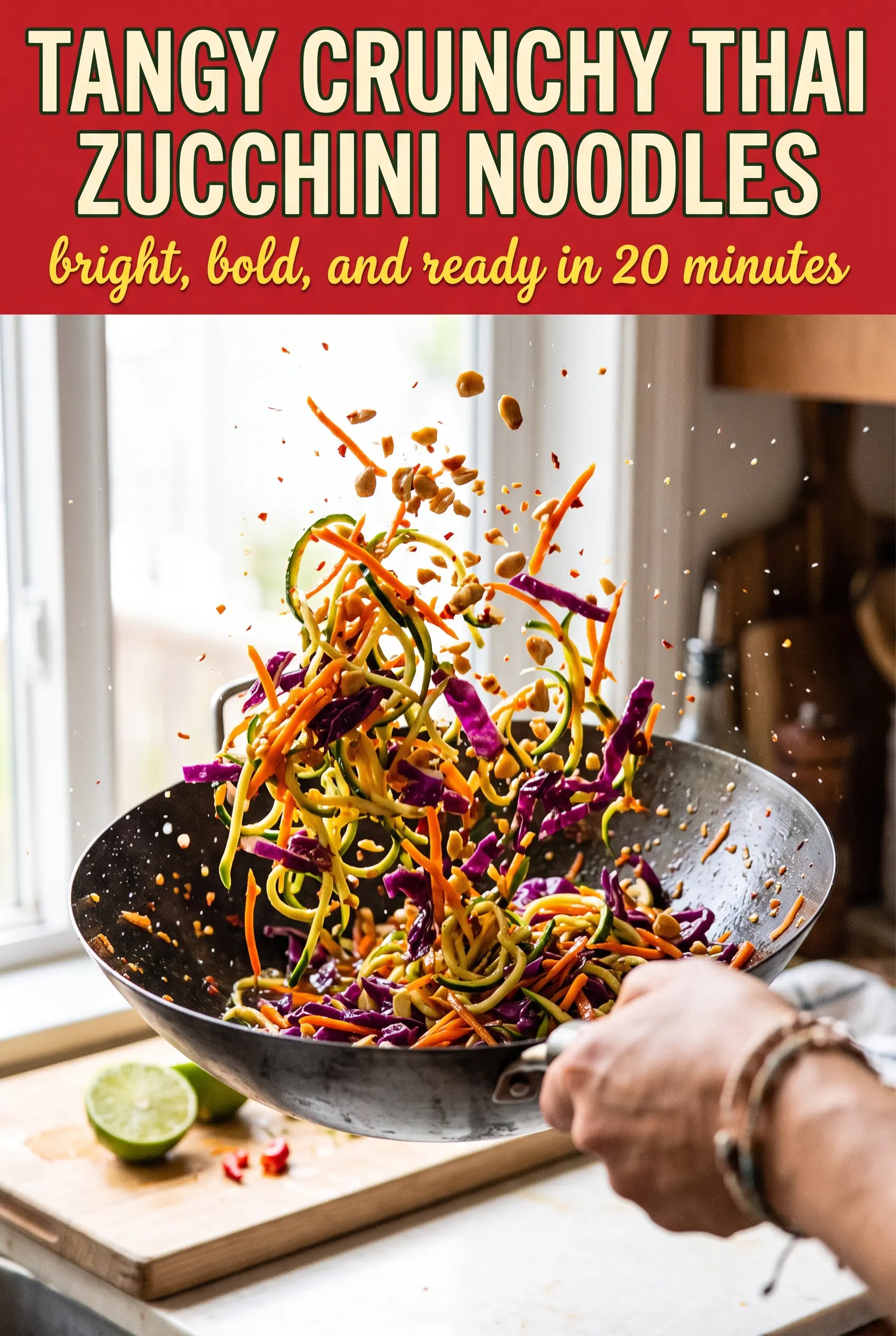
Thai Zucchini Noodles
Ingredients
Equipment
Method
- Toss the spiralized zucchini with a pinch of salt in a colander and let drain for 10 minutes, then pat dry thoroughly for less watery noodles.
- Whisk fresh lime juice, fish sauce, brown sugar, soy sauce, rice vinegar, minced garlic, grated ginger, and sliced red chili until the sugar dissolves and the sauce looks smooth.
- Heat olive oil in a large skillet or wok over medium-high heat, then add zucchini noodles and cook 1 minute, tossing constantly, just until barely warmed so they stay crisp.
- Add shredded carrots, thinly sliced red bell pepper, and purple cabbage, then toss for 1 more minute until just combined and still crunchy.
- Pour the Thai sauce over the noodles and vegetables and toss for about 30 seconds until everything is evenly coated and glossy.
- Remove from heat, transfer to bowls, then top with roasted peanuts, chopped cilantro, thai basil or mint, and green onions; serve immediately with lime wedges.
