
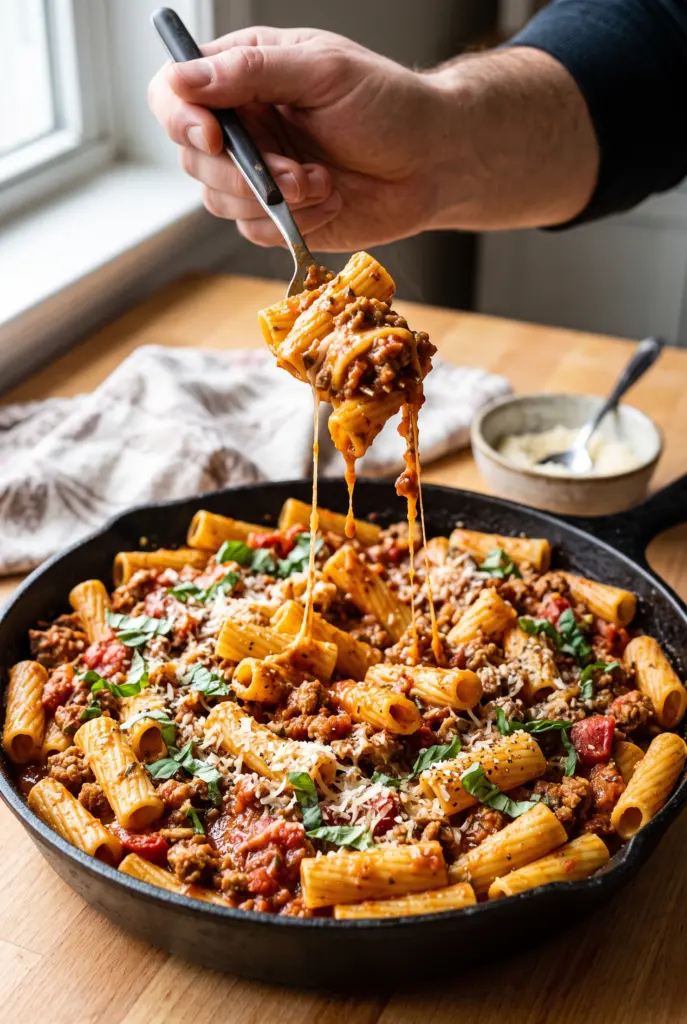
Rigatoni with Sausage, Tomatoes & Zucchini
Rigatoni with sausage, tomatoes, and zucchini lands in that sweet spot between hearty and fresh. The sausage gives the sauce enough backbone to feel like a full meal, while the…
Tip: save now, cook later.Rigatoni with sausage, tomatoes, and zucchini lands in that sweet spot between hearty and fresh. The sausage gives the sauce enough backbone to feel like a full meal, while the zucchini softens into little tender bites and the cherry tomatoes collapse just enough to turn glossy and sweet. What you end up with is a skillet pasta that tastes like it took more work than it did.
The key is letting each ingredient do one job well. Browning the sausage builds the savory base, and the browned bits left in the pan give the wine something worth scraping up. The zucchini goes in after the sausage so it softens without disappearing, and the tomatoes are cooked just long enough to burst and release their juices without turning into a watery mess. A little reserved pasta water and Parmesan finish the sauce so it clings to the rigatoni instead of pooling underneath it.
Below, I’ll show you how to keep the sauce glossy, which substitutions hold up, and what to do if you want to stretch this into a bigger dinner. The little details matter here, especially when you want a pasta that tastes rich instead of heavy.
The sausage browned up beautifully and the tomatoes broke down into a sauce that coated every ridge of the rigatoni. I added a splash more pasta water at the end and it came out silky instead of dry.
Rigatoni with sausage, tomatoes, and zucchini is the kind of one-skillet pasta worth keeping on repeat for saucy, weeknight comfort.
The Secret to a Pasta Sauce That Clings Instead of Slipping Off
The difference between a great skillet pasta and a soggy one usually comes down to the last five minutes. If the pan is too wet when the pasta goes in, the sauce turns thin and slides to the bottom of the bowl. Here, the tomatoes are cooked until they start to break down and the wine cooks off enough to leave behind brightness without excess liquid.
That pasta water matters just as much. It contains starch from the rigatoni, and that starch helps the Parmesan melt into a sauce instead of turning grainy. If the skillet looks a little tight before the pasta goes in, that’s fine. Once the pasta and pasta water hit the pan, the sauce loosens, then settles into a glossy coating as you toss.
- Browned sausage builds the savory base and seasons the whole pan.
- Zucchini adds softness and a little sweetness, but it needs the head start after the sausage so it doesn’t go mushy.
- Cherry tomatoes bring juice and acidity; halved tomatoes break down faster than whole ones, which helps the sauce come together quickly.
- White wine lifts the sauce and dissolves the browned bits. Chicken broth works if you want a gentler flavor or don’t keep wine on hand.
What Each Ingredient Is Doing in This Dish
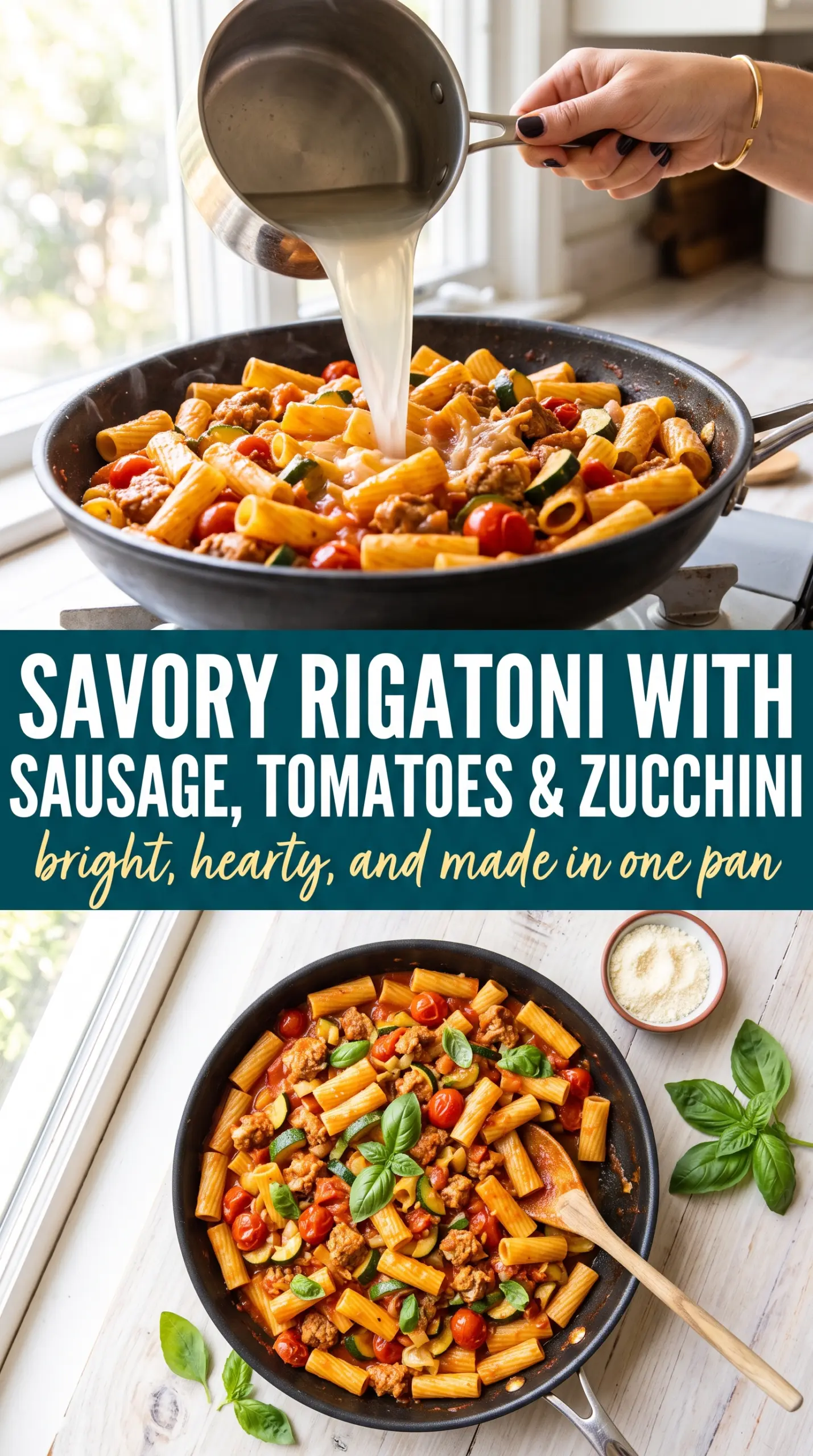
- Rigatoni is the right shape here because the ridges and wide tubes catch the sausage bits and tomato juices. Penne works, but it won’t hold onto the sauce quite as well.
- Italian sausage brings fat, seasoning, and body. Use mild or hot depending on how much heat you want; if you use a leaner sausage, expect to add a touch more olive oil so the pan doesn’t dry out.
- Cherry tomatoes are worth using instead of canned tomatoes because they stay bright and sweet while still melting into a sauce. If you only have grape tomatoes, they work the same way.
- Parmesan thickens and finishes the sauce. Grate it finely so it melts smoothly; pre-shredded cheese can leave the sauce a little gritty.
- Fresh basil should go on at the end so it stays fragrant and doesn’t turn dark in the heat. Dried basil won’t give you the same finish here.
Building the Pan Sauce in the Right Order
Cook the pasta first and save the water
Get the rigatoni boiling before you start the skillet so the sauce and pasta finish at the same time. Pull the pasta when it’s just al dente because it will keep softening once it hits the hot pan. Reserve at least half a cup of the cooking water before you drain it; if you forget that step, the sauce loses one of its best tools for turning silky.
Brown the sausage hard enough to matter
Let the sausage sit in the skillet long enough to develop deep brown spots before you start breaking it up too much. Those caramelized bits are where the flavor lives. If the pan looks crowded or the sausage starts steaming, keep cooking until the liquid cooks off and the meat begins to sizzle again.
Cook the vegetables until they soften, not collapse
Add the zucchini and onion after the sausage so they pick up flavor from the fat left behind. Cook them until the onion turns translucent and the zucchini edges look lightly golden. If you let them go too far, the zucchini turns soft and disappears into the sauce instead of giving you little tender pieces throughout the pasta.
Finish with liquid, cheese, and pasta water
Once the tomatoes and wine have reduced, add the pasta and toss with the reserved water. The starch in the water helps the sauce cling, and the Parmesan finishes it into something glossy. If the sauce seems loose at first, keep tossing over low heat for a minute or two; it tightens as it emulsifies.
How to Adapt This for Different Tables
Make it dairy-free
Skip the Parmesan and finish with a spoonful of olive oil plus an extra pinch of salt. You’ll lose the salty, nutty edge that cheese gives the sauce, but the sausage, tomatoes, and pasta water still make a satisfying pan sauce. A dairy-free Parmesan substitute can work too, but add it at the very end and taste before salting again.
Use chicken sausage for a lighter version
Chicken sausage gives you a leaner, slightly cleaner-tasting pasta, but it won’t render as much fat or build the same deep browned base. Add a little extra olive oil and let it sear well before adding the vegetables so the sauce still tastes layered.
Swap the rigatoni for a gluten-free shape
A sturdy gluten-free penne or rigatoni works well here, as long as you cook it just to the texture you want on the plate. Gluten-free pasta can soften fast after it sits in the sauce, so toss it through and serve right away instead of letting it linger in the pan.
Storage and Reheating
- Refrigerator: Store in an airtight container for up to 4 days. The pasta absorbs some sauce as it sits, so it will look thicker the next day.
- Freezer: It freezes, but the zucchini softens after thawing. Freeze in portions for up to 2 months if you don’t mind a softer vegetable texture.
- Reheating: Warm it in a skillet over medium-low heat with a splash of water or broth. The biggest mistake is blasting it in the microwave until the sausage dries out and the sauce splits; low heat keeps the pasta from turning tough.
Answers to the Questions Worth Asking
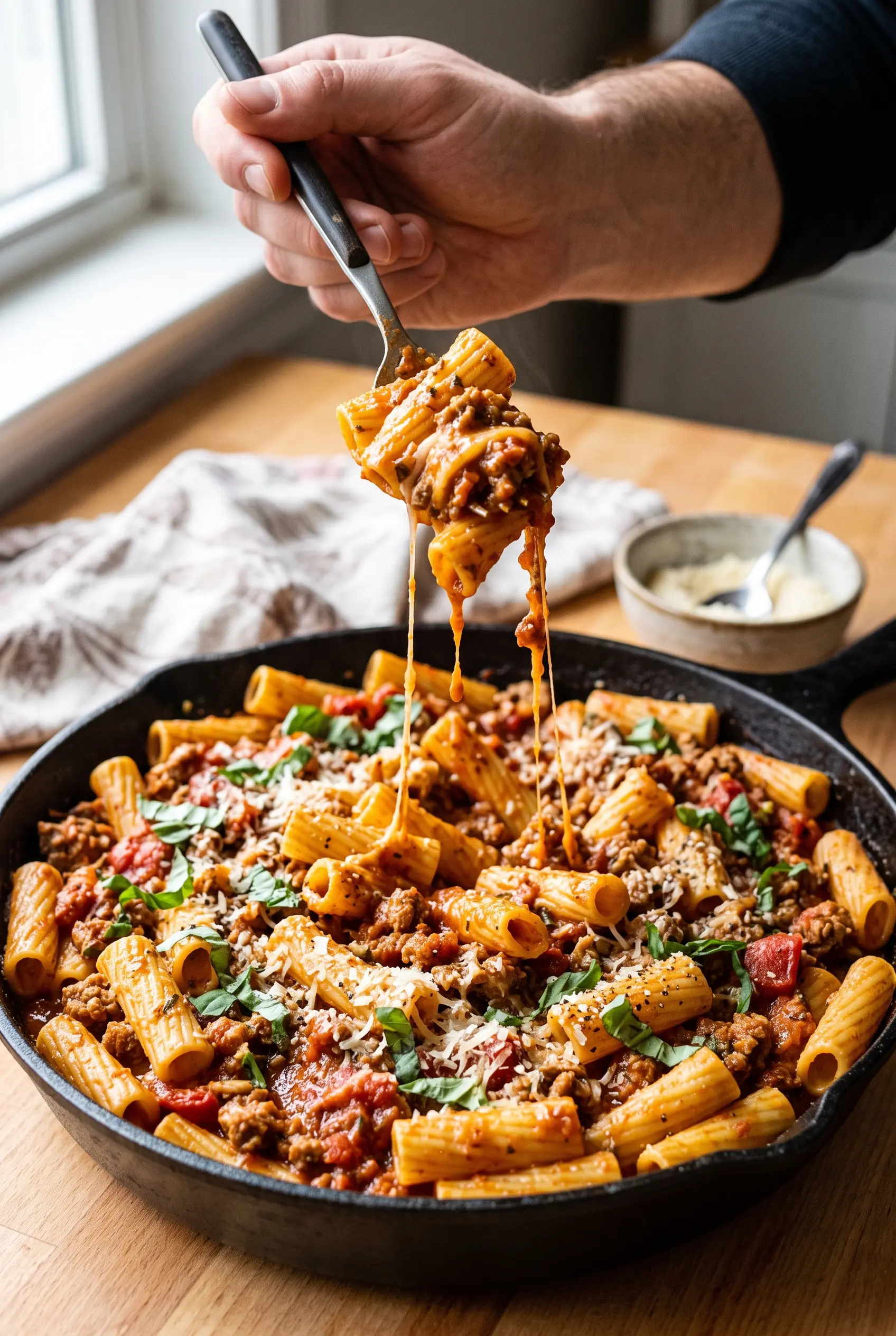
Rigatoni with Sausage, Tomatoes & Zucchini
Ingredients
Equipment
Method
- Bring a large pot of salted water to a boil, then cook rigatoni until al dente, about 11 minutes. Reserve 1/2 cup pasta water, then drain.
- Heat olive oil in a large skillet over medium-high heat, then add sausage and break it into crumbles. Cook 6–7 minutes until deeply browned.
- Add zucchini and onion to the skillet and cook 4–5 minutes until softened and lightly golden. Stir occasionally so the edges color evenly.
- Stir in garlic, cherry tomatoes, oregano, and red pepper flakes. Cook 3–4 minutes until tomatoes start to break down.
- Pour in the white wine (or chicken broth) while scraping up browned bits from the pan. Simmer 3–4 minutes until slightly reduced and the sauce thickens.
- Add the drained rigatoni and reserved pasta water to the skillet. Toss until the pasta is coated in a glossy, clinging sauce, adding more pasta water as needed.
- Stir in Parmesan until melted, then top with torn basil and black pepper. Serve hot with extra Parmesan.
