
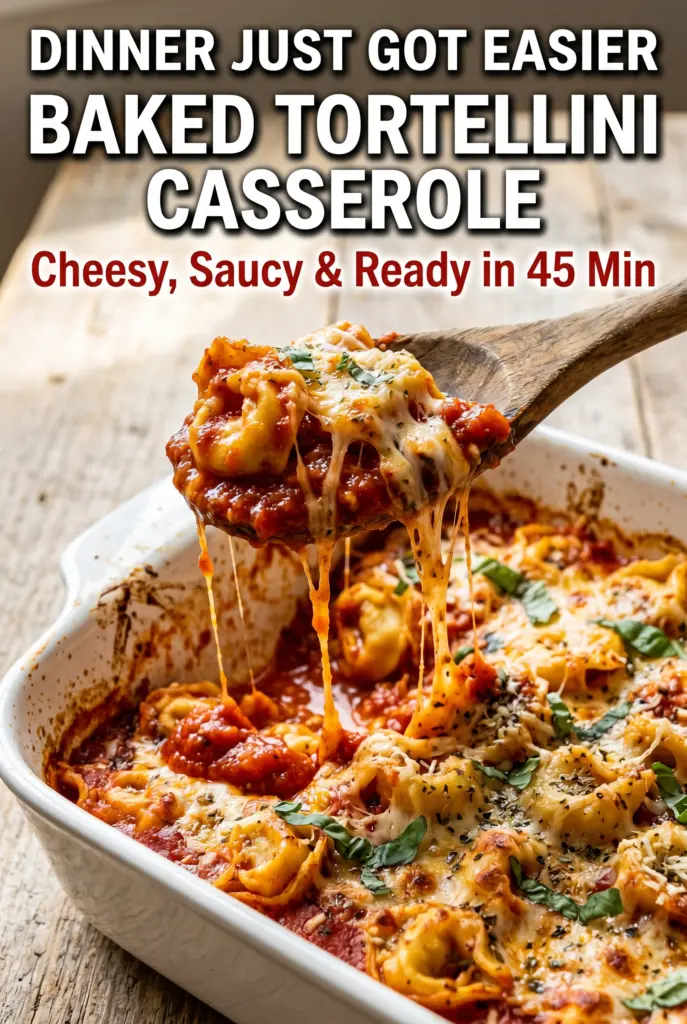
Baked Tortellini Casserole with Marinara
Baked tortellini casserole with marinara delivers the kind of comfort that gets scraped clean from the pan. The tortellini stay tender, the ricotta melts into the sauce, and the mozzarella…
Tip: save now, cook later.Baked tortellini casserole with marinara delivers the kind of comfort that gets scraped clean from the pan. The tortellini stay tender, the ricotta melts into the sauce, and the mozzarella forms that stretchy, browned top everyone reaches for first. It tastes like a much longer dinner than it is, which is exactly why it ends up on repeat.
The trick is keeping the filling creamy without turning the bake watery. Ricotta gives the sauce body, Parmesan sharpens the flavor, and a short covered bake lets the tortellini finish cooking before the top dries out. Frozen tortellini need a quick head start in boiling water, but refrigerated ones can go straight into the pan and still come out properly tender.
Below, you’ll find the layering order that keeps the cheese from sinking, the one timing detail that keeps the pasta from overcooking, and a few practical swaps if you need to use what’s already in the fridge.
The tortellini stayed perfectly tender and the top got that bubbly, browned cheese layer I was hoping for. I used frozen tortellini and the timing was spot on — nothing came out mushy.
Save this baked tortellini casserole for the nights when you want bubbling marinara, creamy ricotta, and a golden mozzarella top without a long list of steps.
The reason this casserole stays creamy instead of turning gluey
Most tortellini bakes go wrong in one of two ways: the pasta gets too soft, or the sauce turns thick and heavy before the dish ever reaches the table. This version avoids both problems by using enough marinara to keep everything loose during baking, then letting the oven finish the tortellini gently under foil before the top browns. The ricotta matters here because it adds body without needing a roux or extra cream.
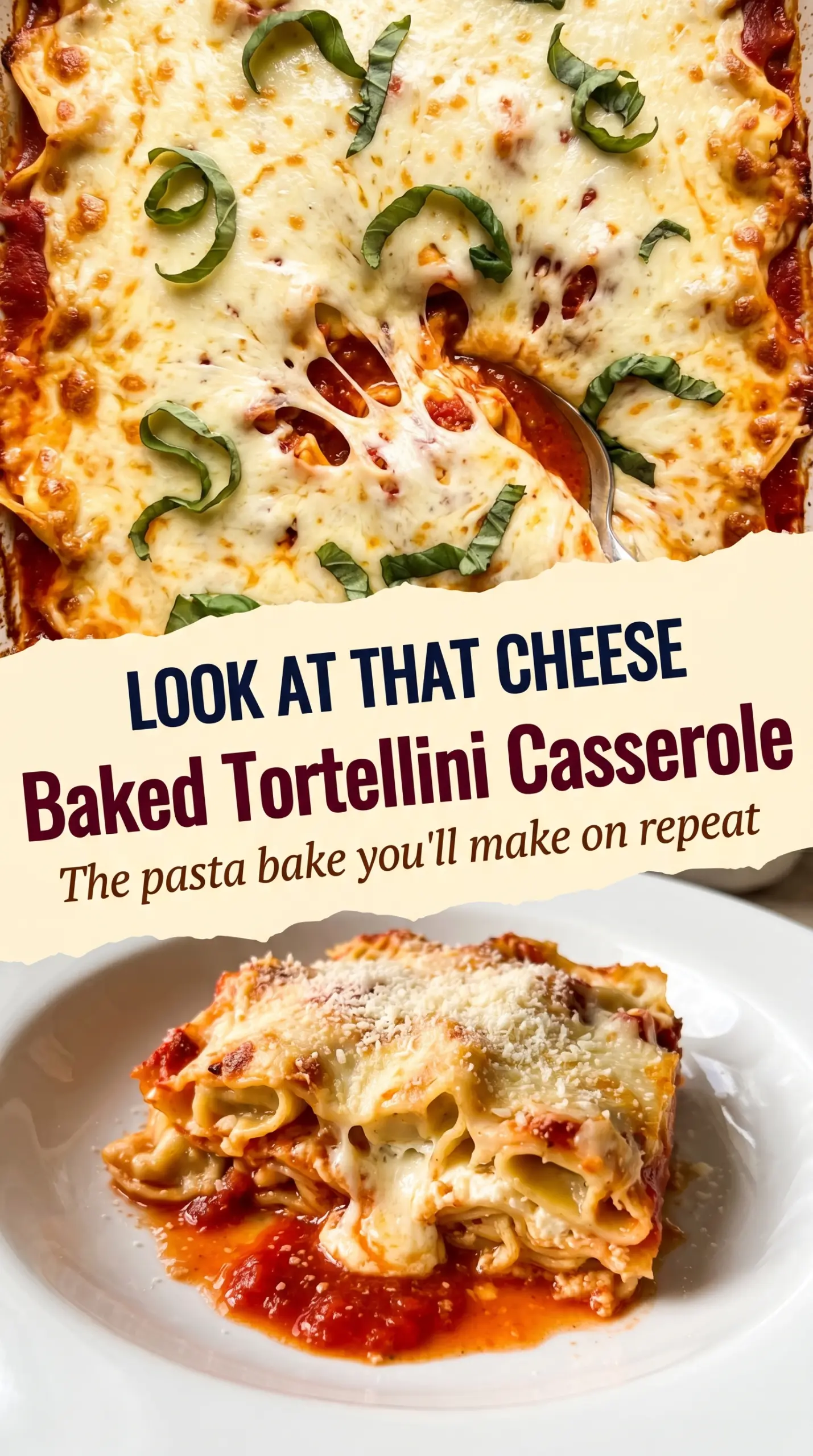
The other key move is layering the cheese instead of dumping it all on top. A little mozzarella in the middle helps the casserole bake through as one cohesive dish, while the final layer melts into a browned lid. If you skip the covered bake, the top will dry out before the center heats through. If you overbake after removing the foil, the sauce tightens up and the tortellini lose their soft bite.
What each ingredient is actually doing in this dish
- Refrigerated or frozen cheese tortellini — This is the heart of the casserole, so use a brand you trust. Refrigerated tortellini can go in raw because they finish cleanly in the oven. Frozen tortellini need a brief boil first; that step keeps the centers from staying stubbornly firm while the top overcooks.
- Marinara sauce — Use a sauce you’d happily eat on its own, because the flavor gets concentrated in the oven. If your jarred sauce tastes flat, stir in a little extra garlic powder or Parmesan before baking. A watery sauce will thin out the casserole, so if it looks loose in the bowl, don’t add extra liquid.
- Ricotta cheese — This is what makes the sauce creamy instead of just tomato-coated. Whole-milk ricotta gives the smoothest texture, but part-skim works if that’s what you have. Stir it thoroughly into the sauce so you don’t end up with white pockets in the finished bake.
- Mozzarella and Parmesan — Mozzarella gives you the stretch and the melt, while Parmesan adds salt and a deeper savory edge. Pre-shredded mozzarella works, but freshly shredded melts more evenly and browns better. If you only have one cheese, use mozzarella for the top and add extra Parmesan for more flavor.
- Garlic powder, Italian seasoning, and onion powder — These season the sauce without making the casserole taste like it was layered from shortcuts. Garlic powder blends in more smoothly than fresh garlic here, which matters because the dish bakes long enough that raw garlic can turn sharp. Italian seasoning brings the herb note that keeps the marinara from tasting one-dimensional.
- Red pepper flakes — These are optional, but a small pinch wakes up the whole dish. The heat doesn’t read as spicy once it bakes into the cheese; it just keeps the sauce from tasting heavy. Leave it out if you’re serving kids or anyone who wants a milder pan.
The 20 minutes under foil that decide everything
Building the sauce base
Stir the marinara, ricotta, seasonings, salt, and pepper together until the sauce looks smooth and evenly speckled. That first mix matters because ricotta takes a little effort to break down; if you rush it, you’ll get uneven pockets in the casserole. The sauce should look thick but still spreadable, not paste-like. If it seems stiff, add a splash more marinara rather than water.
Coating the tortellini without breaking them
Add the tortellini and toss gently with a spatula or large spoon. Fresh tortellini can tear if you stir like you’re mixing bread dough, and torn pasta leaks filling into the sauce. You want every piece coated, but the shape should stay intact. If you’re using frozen tortellini that were boiled first, drain them well so extra water doesn’t thin the sauce.
Layering for melt and structure
Spread half the mixture in the baking dish, add a layer of mozzarella, then spoon the rest on top and finish with the remaining cheese and Parmesan. This middle layer gives the casserole a little internal pull when you scoop it, instead of one dense block of pasta at the bottom. Press the top down only lightly so the cheese stays on the surface. A heavy hand here just squeezes the sauce out from between the tortellini.
Baking covered, then uncovering for color
Cover the dish tightly with foil and bake until the sauce is bubbling at the edges. That covered stretch is what heats the center without drying the cheese. Once you remove the foil, the top should go from pale and soft to browned in spots and visibly molten. If the edges darken too fast, the oven is running hot; tent the foil back over the top and give it a few more minutes.
Letting it settle before serving
Rest the casserole for five minutes before scooping. That short pause lets the sauce thicken just enough so it doesn’t run across the plate. If you cut in immediately, the filling will spill out and look looser than it really is. After resting, the portions hold together and still stay creamy.
Three ways to adapt this casserole without losing what makes it work
Make it vegetarian with a little more depth
This casserole is already vegetarian as written, but if you want a deeper, more savory flavor, use a marinara with roasted garlic or mushrooms and add a handful of chopped spinach to the sauce mixture. The spinach wilts right into the filling and gives the dish more body without making it feel heavy.
Use gluten-free tortellini with one adjustment
Gluten-free tortellini can work here, but they tend to soften faster than wheat pasta. Keep the boil on the shorter side if they’re frozen, then go straight into the sauce and bake just until the center is hot. If you overcook them, they lose the firm bite that keeps the casserole spoonable instead of mushy.
Swap in a meat version without changing the bake time
Add cooked Italian sausage or browned ground beef to the sauce before layering. The casserole gets heartier, but the bake time stays the same because the meat is already cooked. Drain off excess fat first so the sauce doesn’t separate or turn greasy around the edges.
How to make it ahead for a busy night
Assemble the casserole up to a day ahead, cover it tightly, and refrigerate it unbaked. Add 10 to 15 extra minutes to the covered bake if it’s going into the oven cold from the fridge. The only thing to avoid is baking it fully, chilling it, and trying to reheat the whole dish from there — that’s how the tortellini go soft and the cheese turns oily.
Storage and Reheating
- Refrigerator: Store leftovers in an airtight container for up to 4 days. The pasta will soften a little as it sits, but the flavor stays solid.
- Freezer: This casserole freezes better before baking than after. Assemble it in a freezer-safe dish, wrap well, and freeze for up to 2 months, then bake from thawed or partially thawed.
- Reheating: Reheat covered in a 325°F oven until hot in the center, or use short bursts in the microwave with a splash of marinara to keep the sauce from tightening up. The mistake to avoid is blasting it uncovered, which dries out the cheese before the middle warms through.
Answers to the questions worth asking
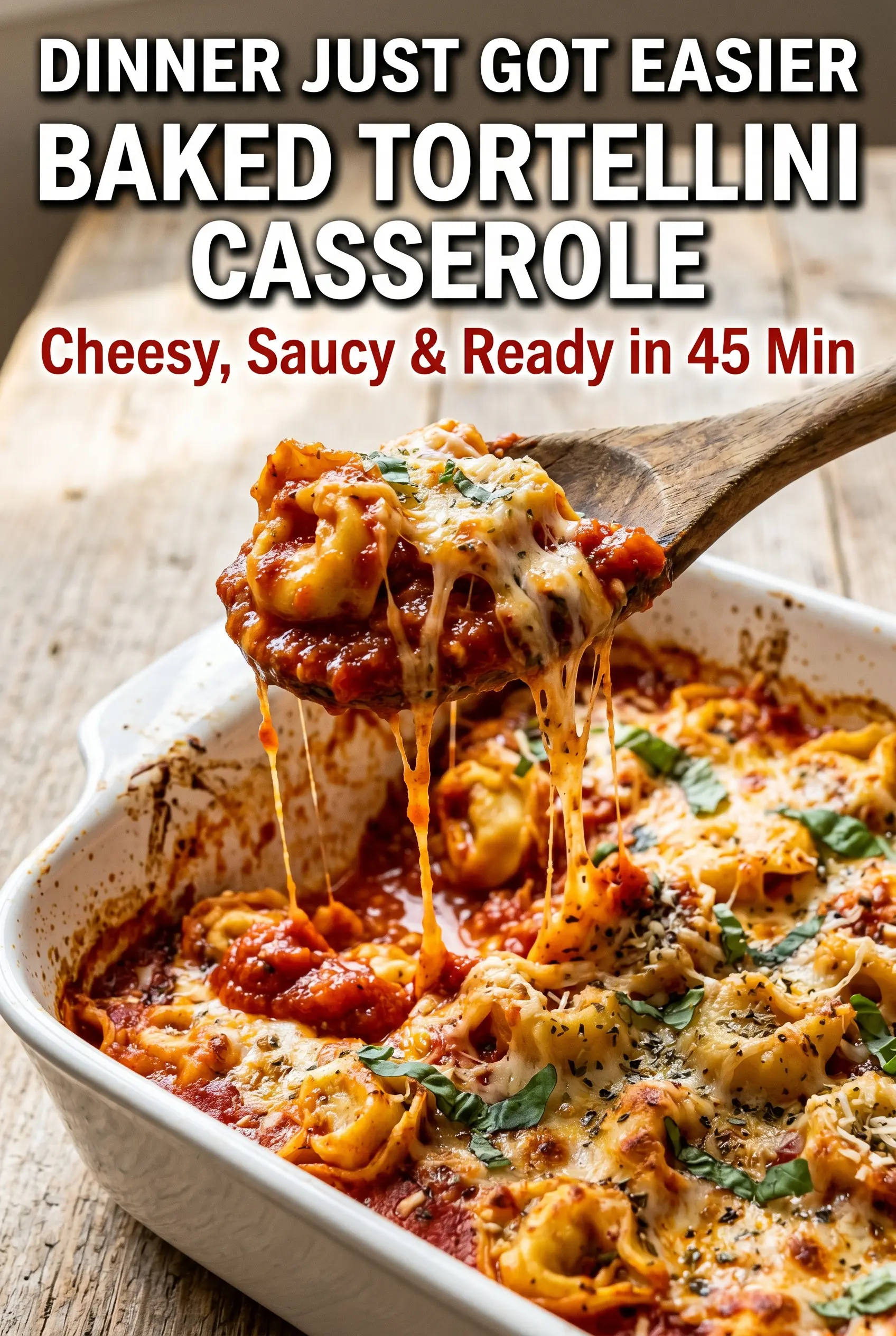
Baked Tortellini Casserole with Marinara
Ingredients
Equipment
Method
- Preheat your oven to 375°F (190°C). Lightly grease a 9×13-inch baking dish with olive oil and set it aside.
- If using frozen tortellini, boil in salted water for 2 minutes less than package instructions, then drain and set aside. Refrigerated tortellini can go in raw.
- In a large mixing bowl, combine marinara sauce, ricotta cheese, garlic powder, Italian seasoning, onion powder, red pepper flakes, salt, and black pepper. Stir until smooth and well combined.
- Add the drained (or raw refrigerated) tortellini to the sauce mixture and gently toss until every piece is well coated.
- Pour half the tortellini mixture into the prepared baking dish and spread evenly. Sprinkle with 1 cup of the shredded mozzarella cheese.
- Add the remaining tortellini mixture on top and spread into an even layer. Ensure the surface is level for even melting.
- Top with the remaining 1 cup shredded mozzarella cheese and the grated Parmesan cheese, spreading evenly across the surface. Keep the cheese layer as flat as possible.
- Cover the dish tightly with aluminum foil and bake for 20 minutes at 375°F (190°C). The edges should look actively bubbling under the foil.
- Remove the foil and bake uncovered for an additional 15–20 minutes at 375°F (190°C), until the cheese is golden and bubbly with slightly caramelized edges. Watch the top closely during the last 5 minutes.
- Let the casserole rest for 5 minutes after baking. This helps it set so it’s easier to scoop.
- Garnish with fresh basil leaves and extra Parmesan before serving. Serve hot.
