
Apple Fritters with Vanilla Glaze
The first fritter can turn deeply golden while the middle is still wet, which is why I watch the oil temperature as closely as the color. Keep the oil near…
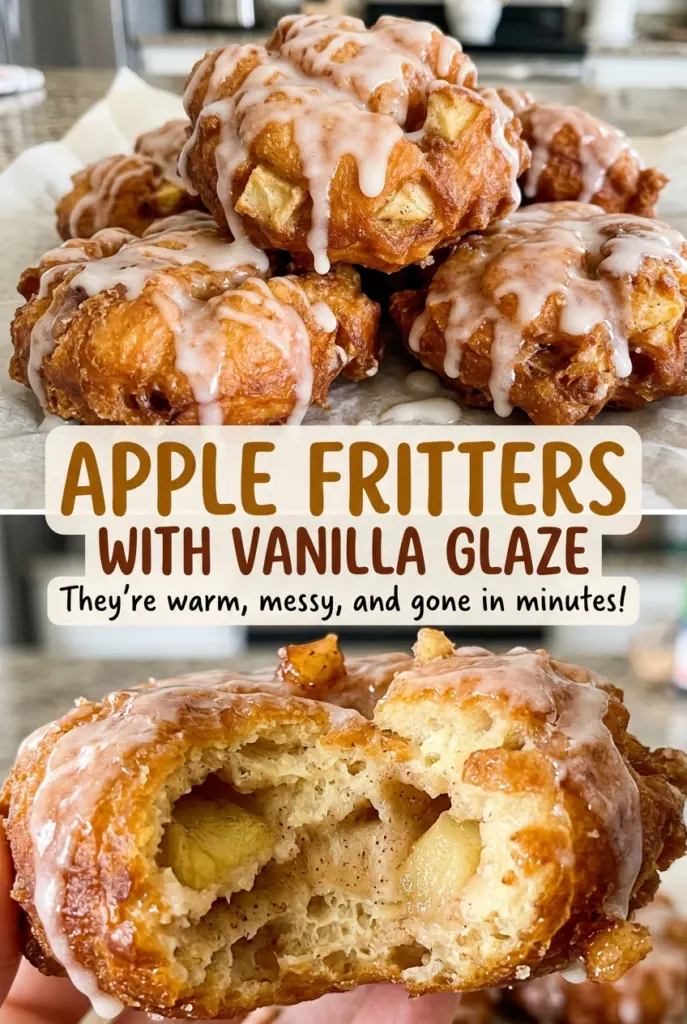
Tip: save now, cook later.The first fritter can turn deeply golden while the middle is still wet, which is why I watch the oil temperature as closely as the color. Keep the oil near 350°F, and these apple fritters with vanilla glaze have time to cook through without sitting in the pot until they’re dark. The centers stay tender, with little bites of apple throughout.
I fold the diced apples in after the batter comes together, then fry the fritters in uncrowded batches. That order keeps the batter from getting worked too much and gives each round room to cook evenly. After a short rest on a rack, the warm fritters go into a simple vanilla glaze that sets into a thin, sweet coating. They’re best while the glaze is fresh and the apple centers are soft.
Kitchen Note
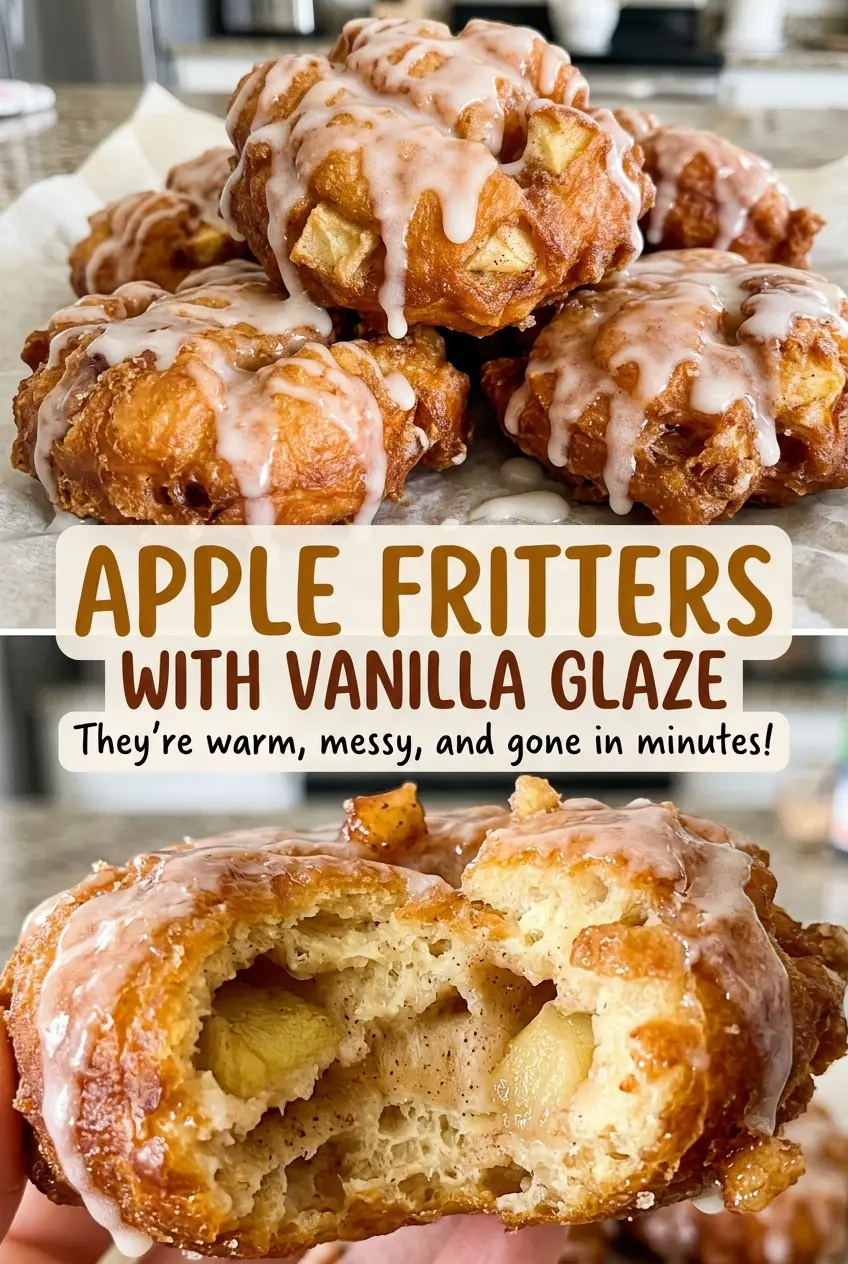
Let the fritters rest for 5 minutes before dipping them. They’ll still be warm enough for the glaze to coat, but the brief pause helps keep it from running straight off.
Save these apple fritters with vanilla glaze for a batch of golden, apple-filled treats finished with a smooth vanilla coating.
Why the Quarter-Inch Apple Dice Matter More Than the Apple Variety
Apple pieces that are too large can make a fritter lumpy and harder to cook evenly. Dicing the peeled apples into 1/4-inch pieces spreads them through the batter, so each fritter gets apple in more than one spot without leaving big chunks in the center. The smaller pieces also fold in easily; you won’t need to stir the batter repeatedly to distribute them.
For this batter, consistency matters more than choosing a particular named apple. Keep the pieces close in size, and stop mixing as soon as the flour is incorporated. A few small lumps are fine. Once the apples are folded in, the batter should hold together when portioned, rather than looking like a smooth cake batter. That thicker texture helps each fritter keep its round shape in the oil and gives the apples a soft, even cook.
Peeling is part of the texture, too. Without the peel, the apple pieces blend more gently into the tender center instead of adding chewy strips. It’s a small prep detail, but it makes the finished fritter feel cohesive from the first bite to the last.
What the Flour, Apples, and Glaze Each Bring to These Fritters
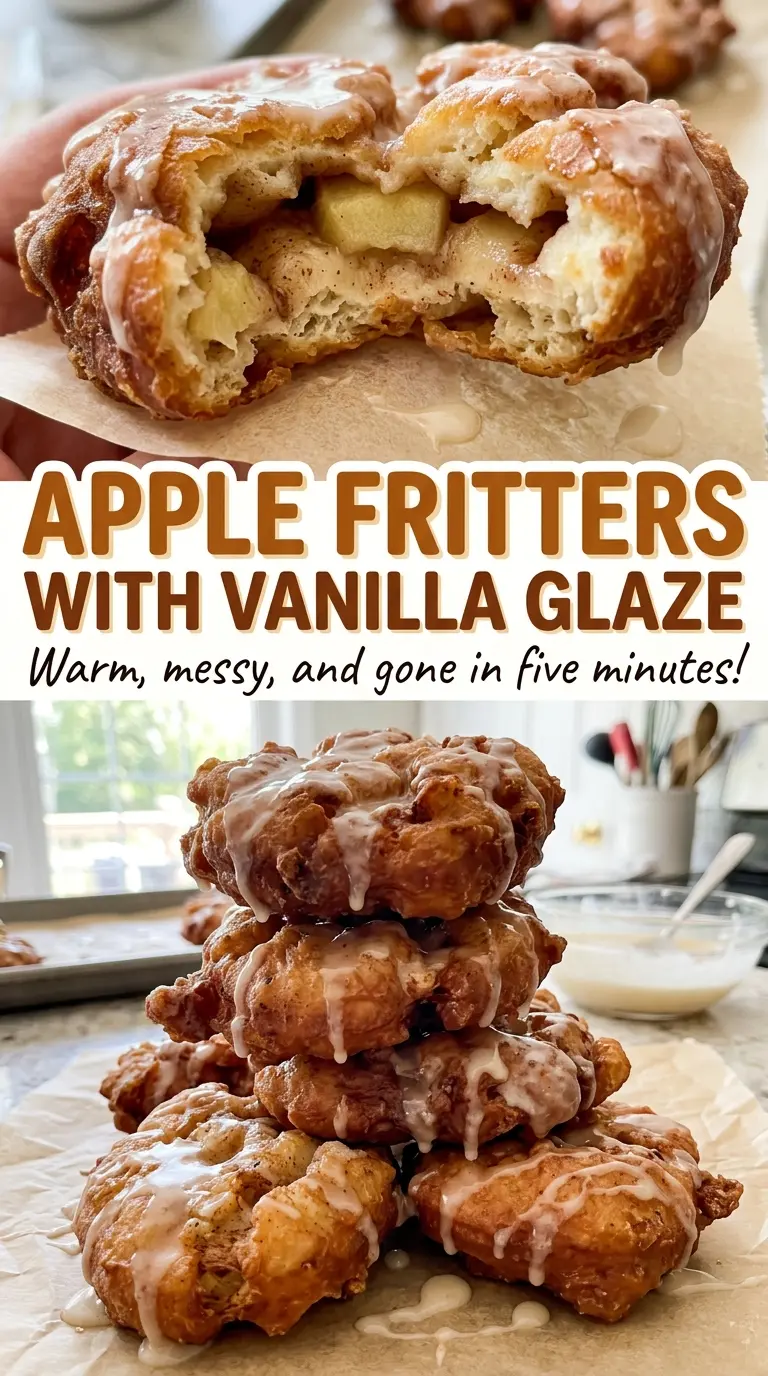
- All-purpose flour — It gives the batter enough structure to hold the apples and form rounds for frying. A standard store-brand flour works well here; a specialty flour isn’t needed. The gluten-free adaptation below uses a measure-for-measure baking blend, though the crumb won’t be identical.
- Apples — Choose apples that feel firm and crisp, since they hold their shape better as the fritters cook. Peel, core, and dice them just before mixing so the pieces stay fresh and don’t sit exposed while you prepare the batter.
- Eggs and whole milk — Together they bring moisture and help bind the dry ingredients into a batter that can carry the apple pieces. Whole milk also gives the fritters a richer crumb than a lower-fat option. For a dairy-free version, use the same amount of unsweetened oat beverage in the batter and glaze.
- Baking powder — This is the lift in a quick batter with no yeast or resting period. Check that it’s fresh; old baking powder can leave the fritters dense rather than light inside.
- Confectioners’ sugar — Its fine texture makes a smooth glaze without a gritty finish. Whisk it with the milk and vanilla until no dry pockets remain before dipping.
- Vegetable oil — Its neutral taste lets the apple, cinnamon, and vanilla come through. Use enough oil to reach the specified depth in the pot, while keeping the pot no more than halfway full.
How to Mix, Fry, and Glaze Apple Fritters Without Dense Centers
Whisk the Dry Ingredients Evenly
Whisk the flour, granulated sugar, baking powder, cinnamon, nutmeg, and kosher salt together in a large bowl. Break up any small flour or spice clumps so the cinnamon and leavening are distributed through the batter. This takes less effort than trying to correct uneven seasoning after the wet ingredients are added. Set the bowl aside while you mix the eggs, milk, and vanilla.
Bring the Batter Together Gently
Whisk the eggs, milk, and vanilla in a medium bowl, then stir that mixture into the dry ingredients just until combined. Don’t keep beating once the flour is moistened; overmixing makes the fritters heavier. Fold in the peeled, cored, diced apples until they’re spread through the batter. The mixture should look thick and spoonable, not silky smooth.
Fry in Uncrowded Rounds
Pour the vegetable oil into a 5-quart Dutch oven, checking that it’s about 2 inches deep and doesn’t fill the pot more than halfway. Heat it over medium to 350°F, then drop in the batter by 1/4-cup portions and gently flatten each into a 3-inch round. Fry in batches without crowding the pot, for 2 to 3 minutes per side, adjusting the heat to keep the oil near 350°F. The fritters should be deeply golden and cooked through, with no wet batter in the centers.
Dip While Warm, Then Let the Glaze Set
Transfer the cooked fritters to a wire rack set over a baking sheet and let them cool for 5 minutes. While they rest, whisk the confectioners’ sugar, milk, and vanilla in a medium bowl until smooth. Dip the warm fritters in the glaze, then return them to the rack. Give the coating time to set before moving the fritters, or the glaze can smear.
Easy Ways to Adapt the Apples, Spices, and Batter
Make Them Dairy-Free with Oat Beverage
Replace the whole milk with the same amount of unsweetened oat beverage in both the batter and glaze. The fritters will lose some of the richness whole milk brings, but the oat beverage keeps the batter moist and the glaze whiskable.
Use a Measure-for-Measure Gluten-Free Flour Blend
Swap the all-purpose flour for a cup-for-cup gluten-free baking blend designed to replace wheat flour. A blend that includes xanthan gum helps the fritters hold together; fold gently, since the finished crumb may be a little more tender and less elastic.
Choose Tart Apples for a Sharper Contrast
A tart apple gives the sweet vanilla glaze a brighter counterpoint, while a sweeter apple makes the fruit taste softer and rounder. Keep the same peeling and dicing prep either way so the pieces cook evenly in the fritters.
Storage and Reheating
- Refrigerator: Store glazed fritters in an airtight container for up to 2 days. The coating will soften, and the fried edges won’t stay as crisp.
- Freezer: Freezing isn’t my first choice; thawing softens the fried exterior and can leave the glaze tacky.
- Reheating: A toaster oven warms the fritters while keeping more texture than a microwave. Heat just until warmed through; overheating can dry the center and soften the glaze.
Questions That Come Up While Making Apple Fritters
Apple Fritters with Vanilla Glaze
Ingredients
Equipment
Method
- Whisk the flour, granulated sugar, baking powder, cinnamon, nutmeg, and salt in a large bowl.
- In a medium bowl, whisk the eggs, milk, and vanilla, then stir into the dry ingredients just until combined; fold in the apples.
- Pour the oil into a 5-quart Dutch oven, making sure it reaches about 2 inches deep and does not fill the pot more than halfway; heat over medium to 350°F.
- Drop the batter by 1/4-cup portions into the oil, gently flattening each into a 3-inch round and frying in batches without crowding the pot; fry for 2 to 3 minutes per side, adjusting the heat to keep the oil near 350°F, until deeply golden and cooked through with no wet batter in the centers.
- Transfer the fritters to a wire rack set over a baking sheet and let them cool for 5 minutes.
- Whisk the confectioners’ sugar, milk, and vanilla in a medium bowl until smooth, then dip the warm fritters in the glaze and return them to the rack until the glaze sets.
