
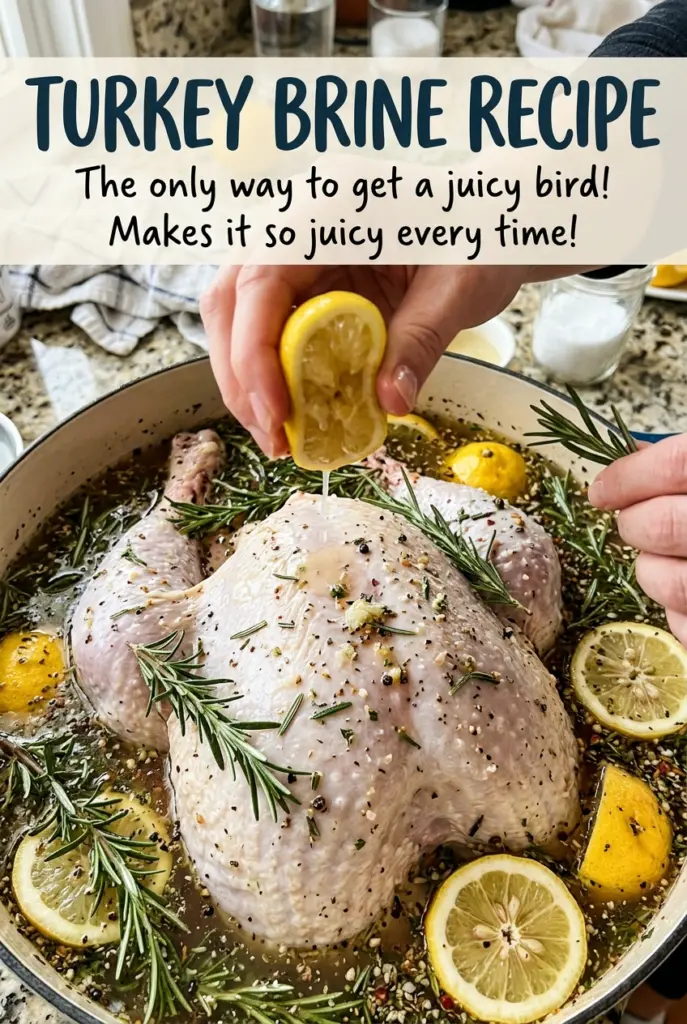
Turkey Brine Recipe
The salt and sugar disappear into the simmering water, and the whole kitchen starts to smell like rosemary and garlic. That short steep gives this turkey brine its savory, herby…
Tip: save now, cook later.The salt and sugar disappear into the simmering water, and the whole kitchen starts to smell like rosemary and garlic. That short steep gives this turkey brine its savory, herby aroma without boiling the fresh herbs. I use it for a thawed 12- to 14-pound turkey, and it serves 12.
One detail that matters before the turkey goes anywhere near the bag: kosher salt brands measure differently by volume. Diamond Crystal and Morton both work here, but they need different amounts. I also let the finished brine cool completely in the refrigerator before adding the bird, so the turkey stays safely cold throughout its soak. After brining, the skin gets patted dry and the turkey goes straight to cooking, where the breast and thigh are checked separately for doneness. The result is a well-seasoned turkey with rosemary, thyme, garlic, and pepper threaded through each slice.
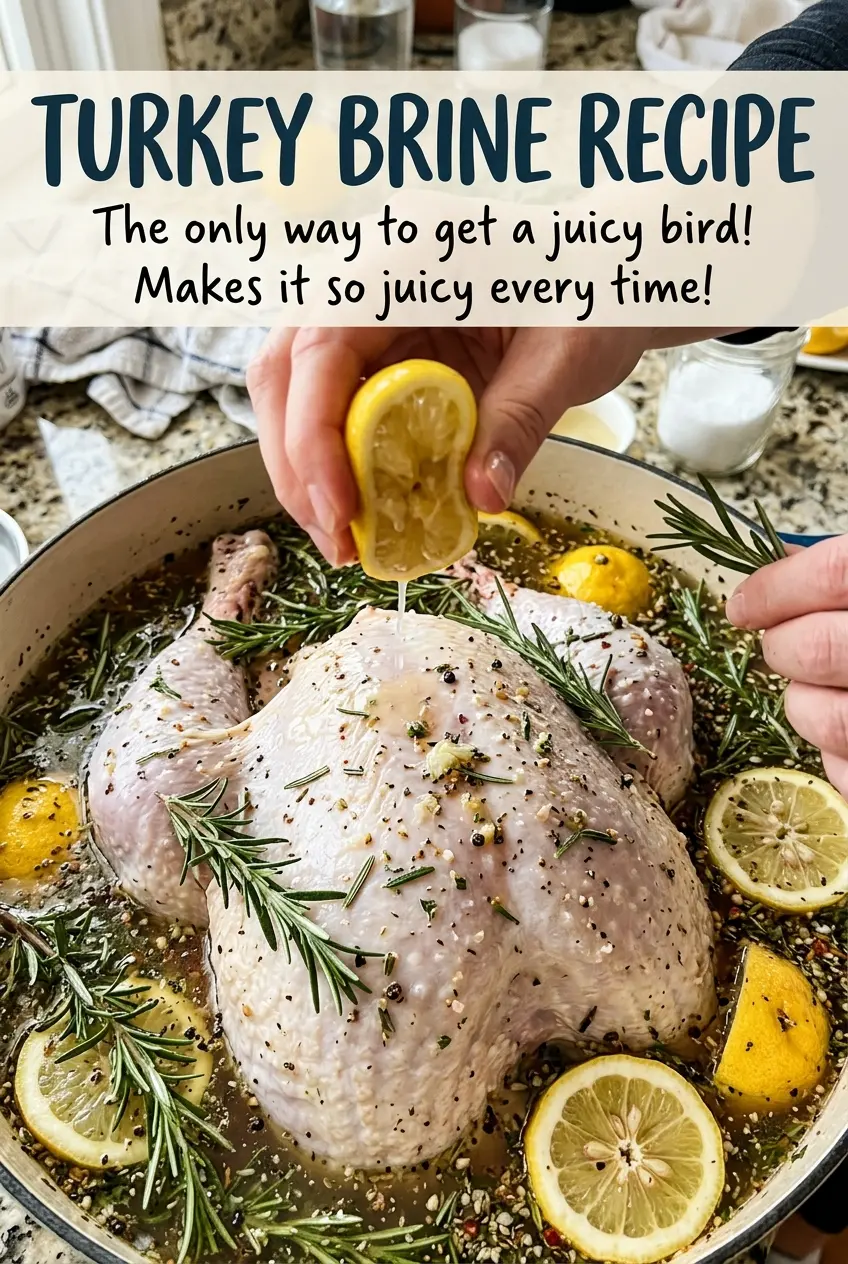
Kitchen Note
Give the peppercorns, bay, garlic, rosemary, and thyme the full 10 minutes to steep after the pot comes off the heat. That pause lets their aroma infuse the brine without needing to simmer the herbs.
Save this turkey brine for a deeply herbed bird with balanced seasoning and a simple overnight soak.
Why the Two Kosher Salt Measures Aren’t Interchangeable
Kosher salt looks simple to measure, but the crystals in different brands take up different amounts of space in a measuring cup. That matters in a brine: the salt is doing the main work of seasoning the turkey, and using the same volume of a denser crystal salt would change the balance. This version gives you a separate measure for Diamond Crystal and Morton kosher salt, so choose the line that matches the box in your pantry.
Don’t swap in table salt by volume. Its fine grains settle closely together, making a cupful much saltier than the listed kosher salt measures. The same goes for guessing or topping up by eye; a brine is not the place for an approximate scoop. If you’re unsure which kosher salt you have, check the package before you start, then measure that specific option. Once the salt and brown sugar dissolve, the brine base is ready for the aromatics.
The sugar isn’t there to make the turkey taste sweet. It rounds out the brine’s saltiness and adds a mild molasses note that sits quietly behind the herbs. Keep the packed light brown sugar with the listed salt measure rather than treating the brine like a seasoning mix you can adjust casually.
What the Aromatics Bring to This Turkey Brine
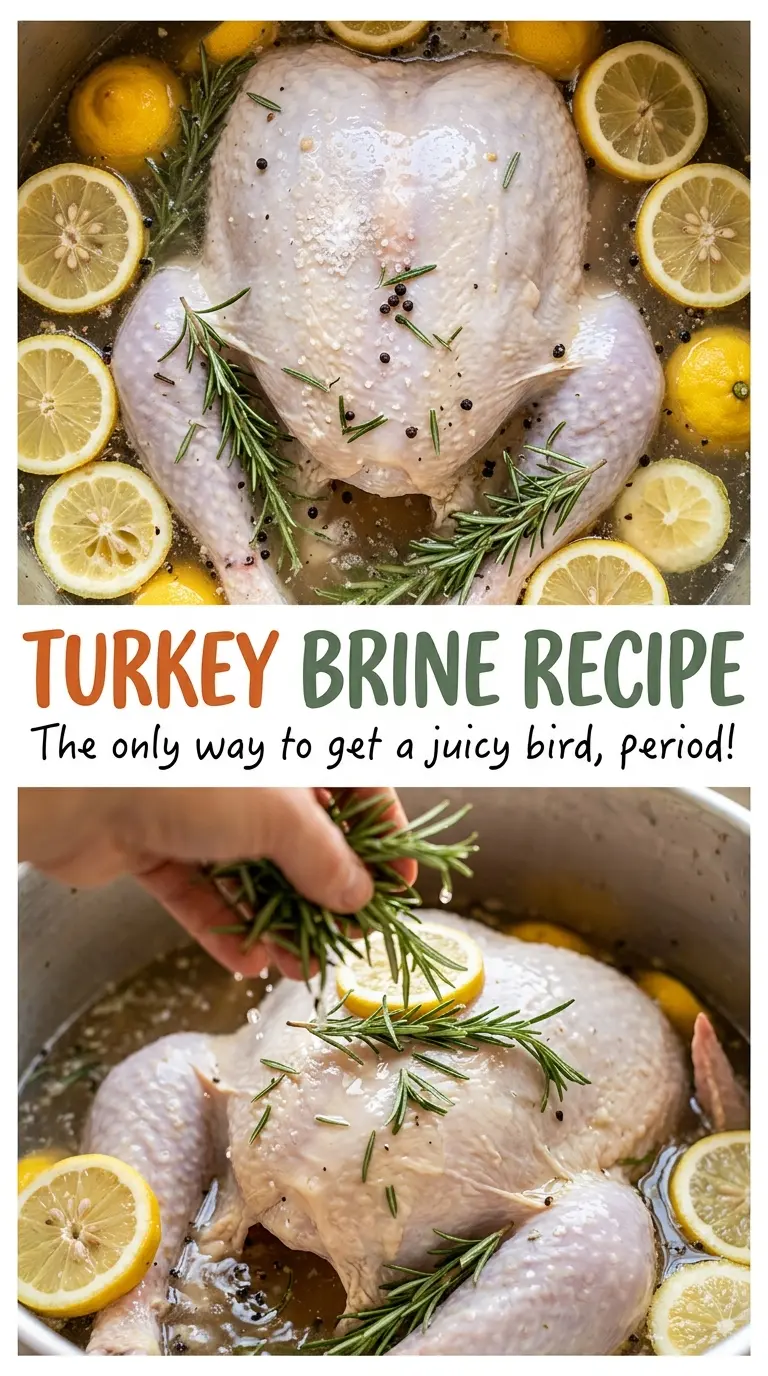
- Fresh rosemary and thyme — These sturdy herbs give the brine its unmistakable savory aroma. Choose sprigs that look fresh and smell fragrant; limp or dry herbs won’t bring the same lift. The recipe uses both, and I wouldn’t replace them with dried herbs by volume because dried herbs are more concentrated and behave differently in the steep.
- Garlic — Halving the whole head crosswise exposes the cut surfaces to the hot brine, releasing a mellow garlic note without needing to peel each clove. Fresh garlic is worth using here; jarred minced garlic won’t steep in the same clean, gentle way.
- Whole black peppercorns and bay leaves — Whole peppercorns add a rounded pepper aroma while the bay brings a subtle herbal background. Standard whole peppercorns and ordinary dried bay leaves are all you need; ground pepper would cloud the brine and is not a like-for-like swap.
- Light brown sugar — Packed light brown sugar dissolves readily and contributes a gentle molasses edge. The recipe is balanced around it, so another sweetener would change the brine’s flavor.
- Thawed turkey — The bird needs to be thawed, with the giblets removed, before it goes into the brine. A 12- to 14-pound turkey fits the size this batch is designed for; the brine needs to surround the bird rather than just coat its surface.
Build the Brine, Chill It, Then Let the Turkey Soak
Dissolve the Salt and Sugar
Combine 1 gallon of the water with the kosher salt and packed light brown sugar in a large pot. Bring it to a simmer over medium heat, stirring until the crystals dissolve. You’re looking for a clear, evenly mixed liquid rather than grains collecting on the bottom. Keep the heat at a simmer; there’s no need for a hard rolling boil.
Steep the Whole Aromatics
Take the pot off the heat, then stir in the whole black peppercorns, bay leaves, halved head of garlic, rosemary, and thyme. Let the mixture steep for 10 minutes. The liquid will take on a fragrant, savory smell as the herbs and garlic release their aroma. Don’t leave the pot over the burner during this pause.
Cool the Brine in the Roasting Pan
Set a 5-gallon food-safe brining bag in a roasting pan, then pour in the steeped mixture and add the remaining gallon of cold water. Refrigerate the brine until it reaches 40°F or colder before adding the turkey. A thermometer gives you a clear reading; the brine should feel thoroughly cold, not merely lukewarm at the edges. Keeping the bag supported in the pan also makes it easier to move without sloshing.
Submerge, Brine, and Cook
Put the thawed turkey, with the giblets removed, into the chilled brine and seal the bag. Keep the turkey submerged and the brine at 40°F or colder as it refrigerates for 12 to 16 hours. If part of the bird sits above the liquid, the seasoning won’t reach it evenly, so settle the turkey fully into the brine before sealing. Remove the bird, discard the brine, pat the turkey dry, and cook it immediately; check that the thickest part of the breast and the innermost thigh reach 165°F.
Two Practical Ways to Match the Brine to Your Turkey
Use the kosher salt you already buy
Diamond Crystal and Morton are both included options, with their own measures. Pick the one in your pantry and follow its corresponding amount; the rest of the brine stays the same. This keeps the seasoning balanced without a special shopping trip.
Choose a 12- or 14-pound bird
This batch is made for a whole turkey within that size range. A bird toward the smaller end leaves more room for brine around it, while one near the upper end needs to sit fully submerged in the bag. The brine’s herbs and sugar remain the same either way.
Storage and Reheating
- Refrigerator: Cook the turkey immediately after removing it from the brine. Refrigerate cooked leftovers within 2 hours and use them within 3 to 4 days.
- Freezer: Freeze cooked leftovers in airtight freezer packaging for best quality for 2 to 6 months.
- Reheating: Warm leftover turkey covered in the oven or in the microwave until hot throughout. Avoid prolonged reheating, which dries out the breast meat.
Questions That Come Up Before Brining a Turkey
Turkey Brine Recipe
Ingredients
Equipment
Method
- Combine 1 gallon of the water, the kosher salt, and brown sugar in a large pot.
- Bring the mixture to a simmer over medium heat, stirring until dissolved.
- Remove the pot from the heat.
- Stir in the peppercorns, bay leaves, garlic, rosemary, and thyme, then let steep for 10 minutes.
- Pour the mixture into a 5-gallon food-safe brining bag set in a roasting pan.
- Add the remaining 1 gallon cold water.
- Refrigerate until the brine is 40°F or colder.
- Place the turkey in the chilled brine and seal the bag.
- Refrigerate for 12 to 16 hours, keeping the turkey submerged and the brine at 40°F or colder.
- Remove the turkey and discard the brine.
- Pat the turkey dry.
- Cook immediately, checking that the thickest part of the breast and the innermost thigh reach 165°F.
