
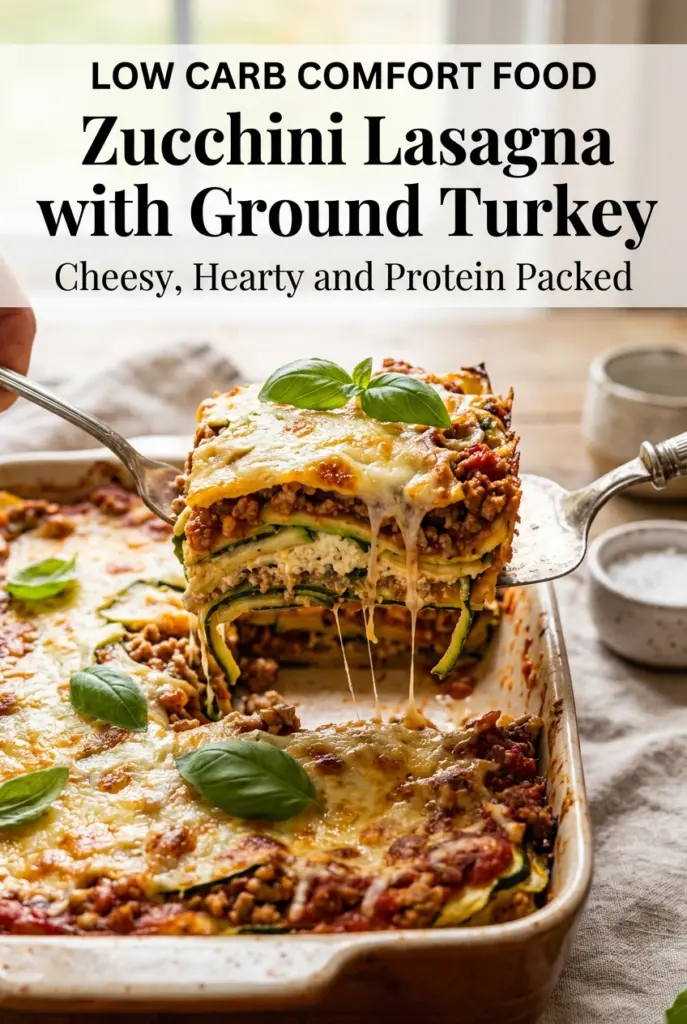
Zucchini Lasagna with Ground Turkey
Zucchini lasagna with ground turkey comes out hearty, saucy, and satisfying without the heavy pasta layer that can make classic lasagna feel like a project. The zucchini stays tender but…
Tip: save now, cook later.Zucchini lasagna with ground turkey comes out hearty, saucy, and satisfying without the heavy pasta layer that can make classic lasagna feel like a project. The zucchini stays tender but still gives the casserole structure, the turkey keeps the filling lean without tasting dry, and the ricotta-mozzarella layer melts into everything in the best way. What you get is a baked dish that slices cleanly, holds together on the plate, and still feels like a real lasagna dinner.
The part that makes this version work is handling the zucchini before it ever hits the baking dish. If you skip the salt-and-dry step, the vegetables release water in the oven and thin out the sauce. A short rest on paper towels pulls out enough moisture to keep the layers from sliding apart. The turkey also needs a good simmer with the marinara so the filling tastes seasoned all the way through, not just browned on the surface.
Below, I’m walking through the exact layering order that keeps this casserole from turning soupy, plus a few smart swaps if you want to make it lighter, dairy-free, or easier to prep ahead.
The zucchini was tender but not watery, and the layers held together after a 10-minute rest. My husband went back for seconds and asked if there was more for lunch tomorrow.
Save this zucchini lasagna with ground turkey for a low-carb baked dinner with clean layers and no watery pan of sauce.
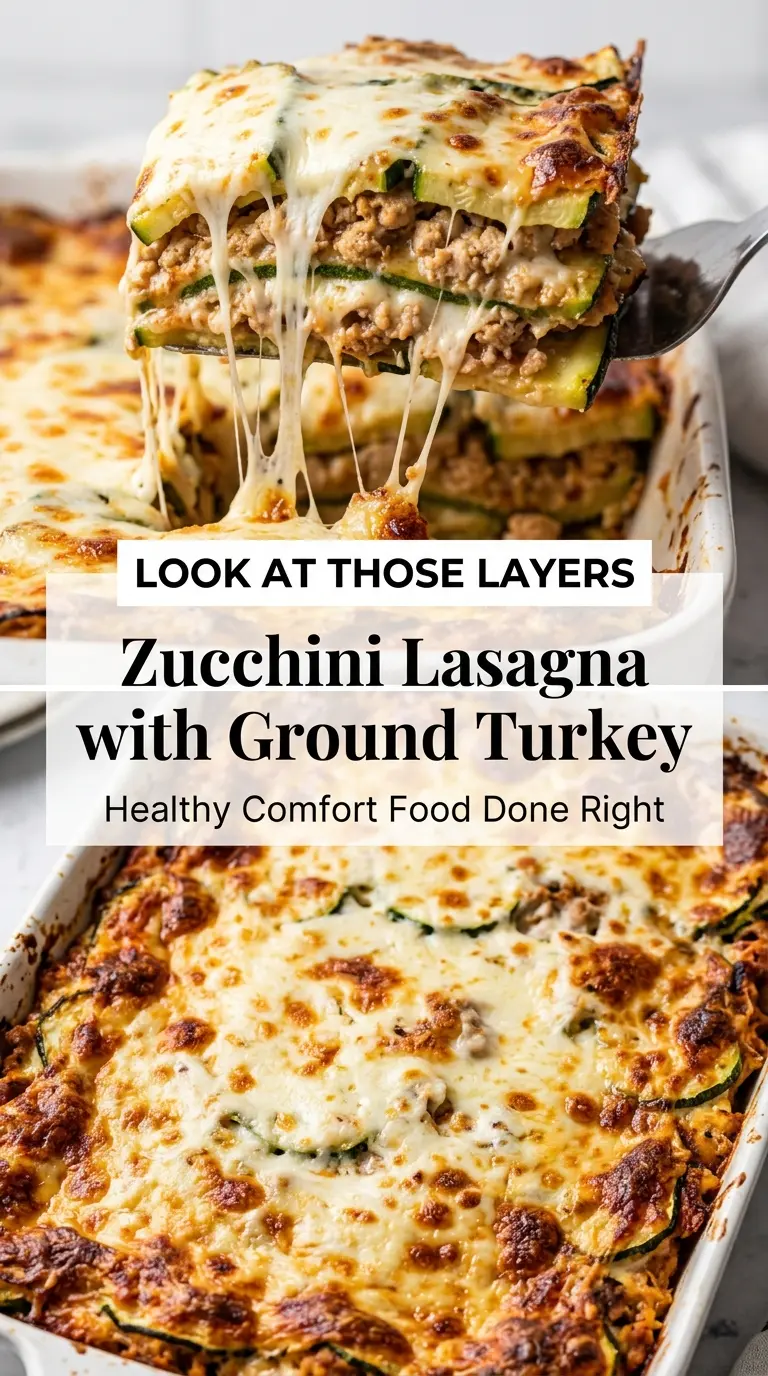
The Zucchini Trick That Keeps Lasagna from Turning Watery
Zucchini is the ingredient that can make or break this dish. It looks sturdy going into the pan, then quietly releases a lot of liquid as it bakes. That’s why the salt-and-rest step matters here. It pulls out some of that moisture before the oven ever gets involved, which keeps the sauce thick and the layers from collapsing into a puddle.
The other thing worth paying attention to is slice thickness. Too thick and the zucchini stays firm in a way that fights the rest of the casserole. Too thin and it disappears. You want thin, lengthwise strips that bend without breaking and stack neatly. If the strips seem floppy after salting, that’s a good sign — it means they’ve lost enough water to behave in the bake.
- Zucchini — Use large, straight zucchini if you can. They’re easier to slice into wide ribbons. Smaller zucchini work too, but the strips are shorter and a little fussier to layer.
- Ground turkey — Lean turkey keeps the filling light, but it needs onion, garlic, and marinara to taste rich. If you use extra-lean turkey, don’t skip the simmer time or it can taste a little flat.
- Ricotta — This gives the lasagna its creamy middle layer. Full-fat ricotta holds up best, but part-skim works if that’s what you keep on hand.
- Marinara — Choose a sauce you actually like on its own. Since this recipe uses a jarred sauce, quality matters more here than in many casseroles. A thin or overly sweet sauce will carry straight through the finished dish.
- Mozzarella and Parmesan — Mozzarella gives the melt and stretch, while Parmesan adds salt and depth. Freshly grated Parmesan tastes sharper, but the pre-grated kind will still do the job if convenience wins.
- Egg — The egg helps the ricotta layer set up as the lasagna bakes, so it slices cleanly instead of oozing out. If you leave it out, the filling will be softer and a little looser.
Layering It So the Pan Slices Cleanly
Salting and Drying the Zucchini
Lay the zucchini strips in a single layer when you can, then salt them and let them sit long enough to sweat. After 20 minutes, blot them dry with paper towels until the surface feels slick, not wet. If you rush this part, the oven ends up doing the work the salt should have done, and that’s how you get a watery casserole. The zucchini doesn’t need to look wrung out; it just needs to lose enough moisture to behave.
Building the Turkey Sauce
Cook the onion until it turns soft and translucent before the garlic goes in. Garlic burns fast, and burnt garlic makes the whole sauce taste harsh. Add the turkey and break it up into fine pieces so it browns evenly, then stir in the seasoning and marinara and let it simmer for a few minutes. You’re looking for a sauce that thickens slightly and smells rounded, not sharp.
Assembling the Layers
Start with a thin smear of sauce on the bottom of the dish so nothing sticks. Then build in a repeating pattern of zucchini, ricotta mixture, turkey sauce, and mozzarella. Keep the layers even and don’t overfill the pan, because too much filling makes the center slide when you cut it. The last layer should be sauce and mozzarella so the top browns instead of drying out.
Baking and Resting
Bake until the edges bubble and the cheese on top turns deep golden in spots. If the top browns too fast, cover it loosely with foil for the last stretch. The hardest part is waiting after it comes out of the oven, but that 10-minute rest is what lets the layers settle and firm up. Cut too early and the sauce runs everywhere; wait and the slices hold together.
Three Ways to Make This Work in Your Kitchen
Dairy-Free Enough for Weeknights
Swap the ricotta for a dairy-free ricotta-style cheese and use a plant-based mozzarella that melts well. The texture will be a little softer and less rich, but the lasagna still bakes into neat layers if you keep the zucchini dry. Skip the Parmesan or use a dairy-free hard cheese alternative.
Make It Gluten-Free Without Changing the Method
This recipe is already naturally gluten-free if your marinara is gluten-free, which most are, but it’s still worth checking the label. The method doesn’t change at all, and that’s the nice part — you’re not replacing noodles with a complicated workaround, just building with vegetables instead.
Use Ground Chicken Instead of Turkey
Ground chicken works the same way and gives a similar lean finish, but it can taste a little milder than turkey. If you swap it in, lean on the onion, garlic, and Italian seasoning so the filling still tastes layered. The final dish will be slightly lighter in flavor, not lower in comfort.
Storage and Reheating
- Refrigerator: Store covered for up to 4 days. The zucchini softens a bit as it sits, but the flavor gets even better after a night in the fridge.
- Freezer: It freezes better after baking than before. Cool it completely, wrap tightly, and freeze in portions for up to 2 months. The texture will be softer after thawing, but still good.
- Reheating: Reheat covered in a 350°F oven until hot in the center, or use the microwave in short bursts. The main mistake is blasting it too long, which turns the zucchini mushy and makes the cheese separate.
Answers to the Questions Worth Asking
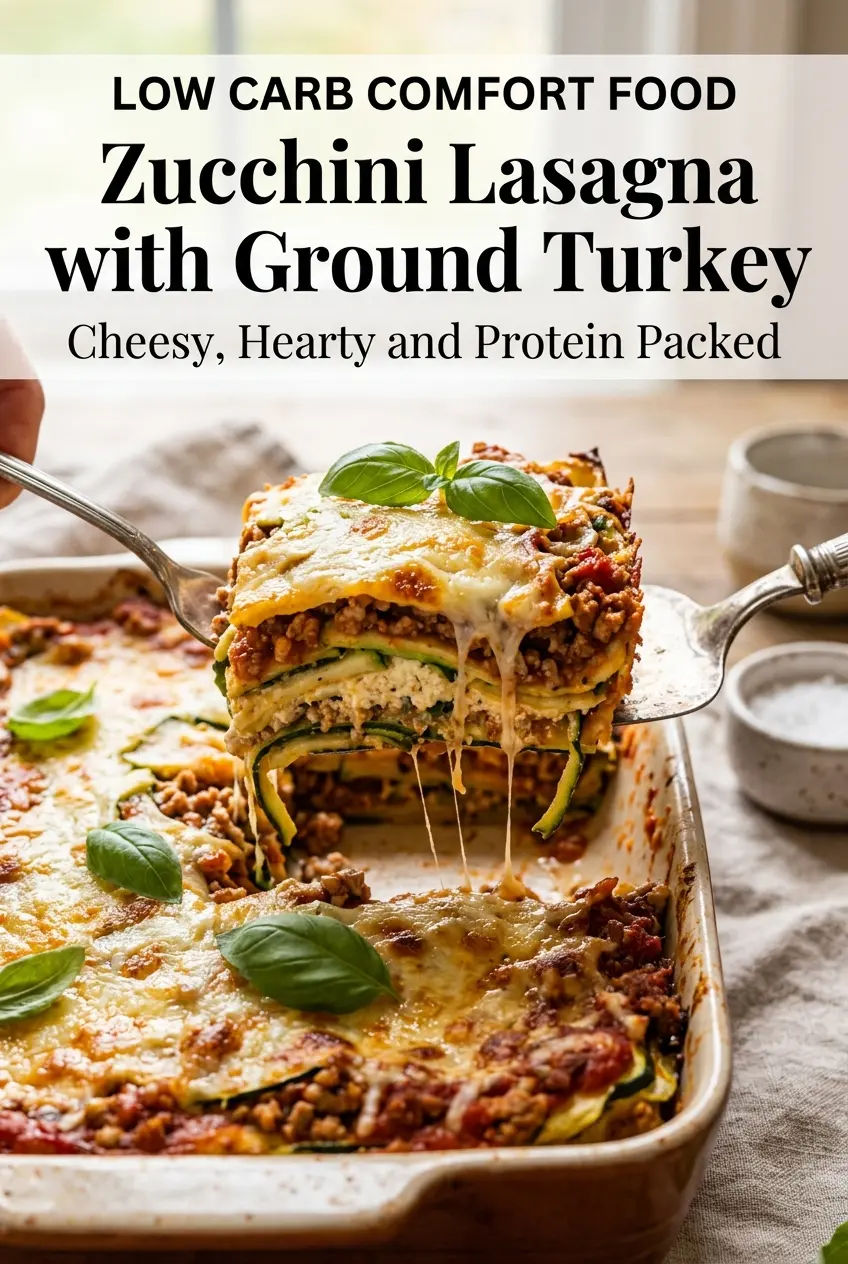
Zucchini Lasagna with Ground Turkey
Ingredients
Equipment
Method
- Slice zucchini lengthwise into thin strips.
- Sprinkle the zucchini with 1 tsp salt and let sit for 20 minutes.
- Pat the zucchini dry thoroughly with paper towels.
- Preheat oven to 375°F (190°C).
- Heat olive oil in a skillet over medium heat.
- Cook onion until softened.
- Add garlic and ground turkey, then cook until browned.
- Stir in Italian seasoning, remaining salt, black pepper, and marinara sauce.
- Simmer the sauce for 5 minutes.
- In a bowl, combine ricotta, egg, and Parmesan cheese.
- Spread a thin layer of meat sauce in a baking dish.
- Layer zucchini slices over the sauce.
- Add ricotta mixture and mozzarella cheese.
- Repeat layers until ingredients are used.
- Finish with remaining mozzarella cheese.
- Bake uncovered for 35–40 minutes until bubbly.
- Rest for 10 minutes before slicing.
- Garnish with fresh basil and extra Parmesan cheese before serving.
