
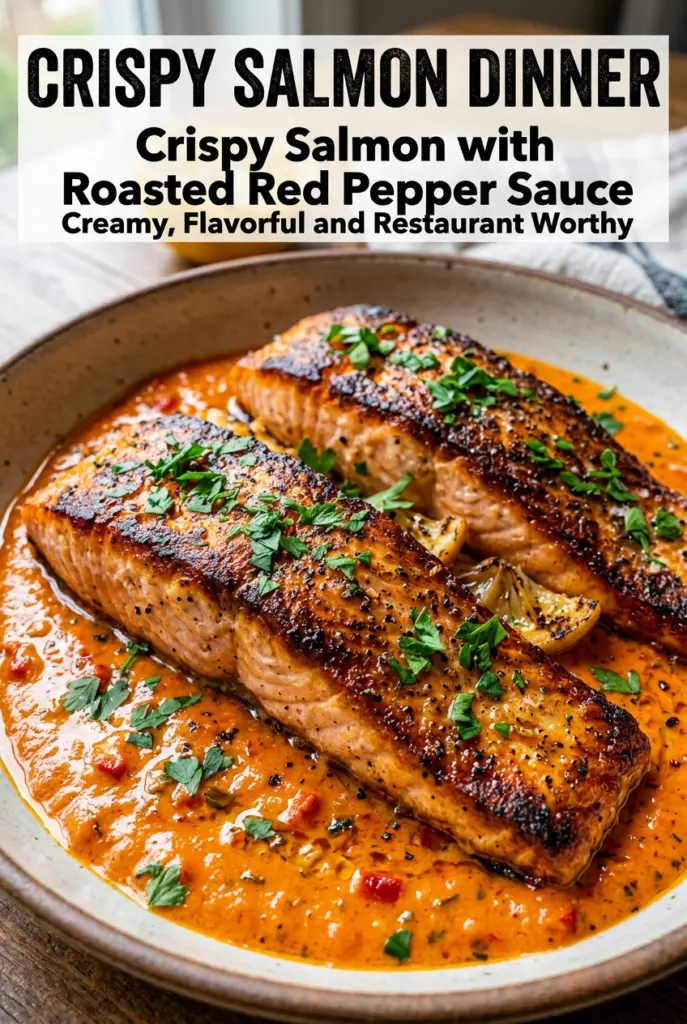
Crispy Salmon with Roasted Red Pepper Sauce
Crispy salmon with roasted red pepper sauce earns its place in the dinner rotation because it gives you two things at once: a shattering, well-browned crust on the fish and…
Tip: save now, cook later.Crispy salmon with roasted red pepper sauce earns its place in the dinner rotation because it gives you two things at once: a shattering, well-browned crust on the fish and a creamy sauce that tastes like it took much longer than it did. The salmon stays the star. The sauce is there to catch the crisp edges, add sweetness from the peppers, and bring just enough richness to make the whole plate feel complete.
The trick is separating the jobs. The salmon needs a dry surface and hot fat so the outside sears instead of steaming. The sauce needs a blender and a short simmer in the same skillet to pick up the browned bits left behind from the fish. That’s where the depth comes from. If you rush either part, you lose the contrast that makes this dish work.
Below, I’ll walk you through the small details that matter most, including how to keep the salmon crisp even after the sauce goes on and what to do if your peppers are extra sweet or your cream sauce needs a little more body.
The salmon got that crisp crust on the first try, and the roasted red pepper sauce thickened up beautifully in the same pan. I served it over rice, and my husband kept saying it tasted like something from a nice restaurant.
Crispy salmon and creamy roasted red pepper sauce make an easy dinner feel restaurant-worthy in one skillet.
The Reason the Salmon Stays Crisp After the Sauce Goes On
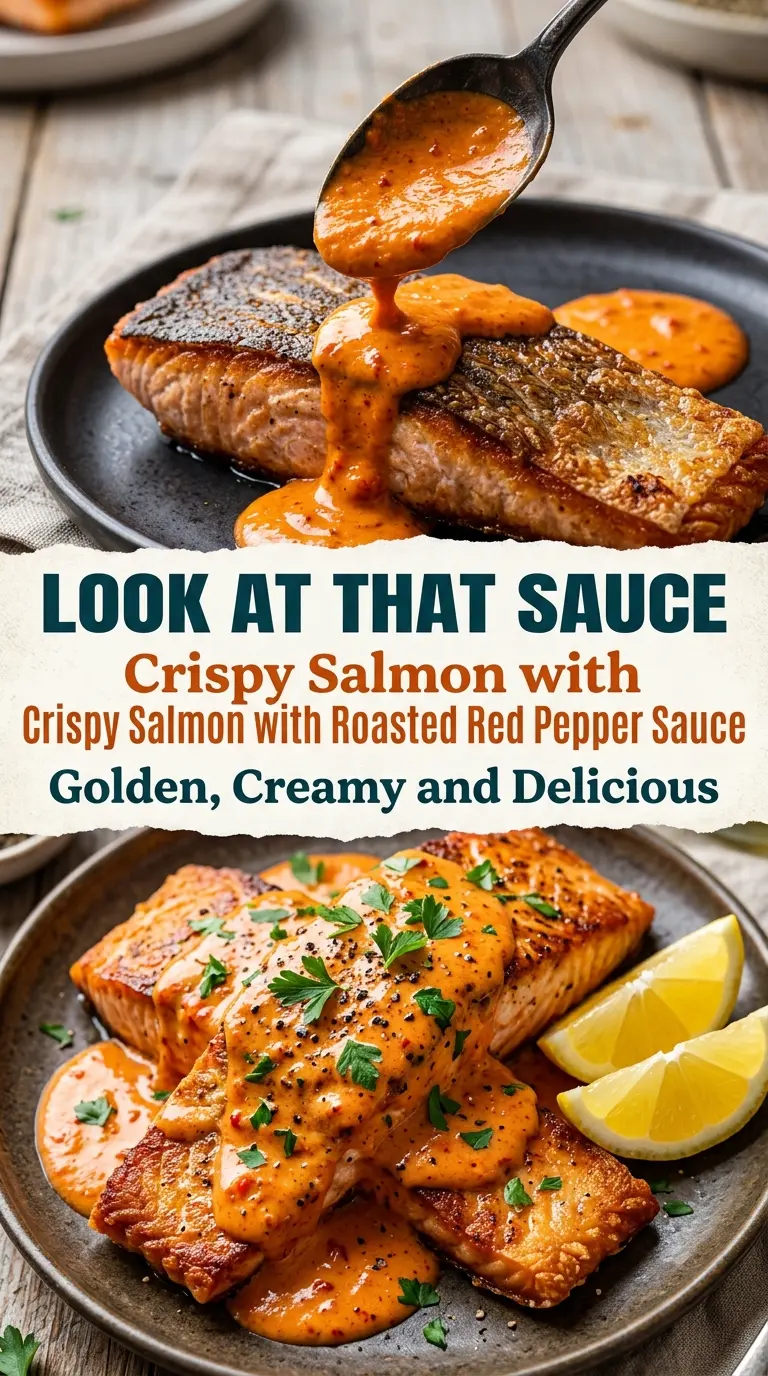
The mistake most people make here is putting the fish and sauce together too early. Salmon skin loses its crunch the minute it sits in a wet sauce, so the goal is to build the crust first, then add the sauce at the very end. If you want that clean sear and crisp edge, cook the salmon hard enough to release naturally from the pan before you flip it. If it sticks, it needs another minute.
The other thing that matters is heat control when the sauce goes in. The roasted red peppers and cream don’t need a rolling simmer; they need enough heat to reduce slightly and coat the back of a spoon. Too much heat and the dairy can split, especially after the pan has already been used to sear fish. Keep it steady and you get a glossy sauce instead of an oily one.
- Salmon fillets — Center-cut fillets cook evenly and are easier to portion. Skin-on gives you the best chance at a crisp base, but skinless works too if you’re careful not to overcook it.
- Roasted red peppers — Jarred peppers are perfect here because they’re already soft, sweet, and smoky. Drain them well so the sauce doesn’t turn thin. Fresh roasted peppers work, but they need peeling before blending.
- Heavy cream — This gives the sauce its body and keeps it from tasting sharp or one-note. Half-and-half can work in a pinch, but the sauce will be looser and less stable.
- Parmesan — This adds salt and a little thickness. Grate it finely so it melts smoothly; pre-shredded cheese can leave the sauce grainy.
- Butter and olive oil — The oil helps the salmon brown without burning, and the butter adds flavor once the pan is hot. Using both gives you better color than butter alone.
Building the Crust Before the Sauce Ever Starts
Dry and season the salmon
Pat the fillets dry until the surface looks matte, not wet. That single step changes everything, because moisture turns to steam and steam kills browning. Season the fish right before it hits the pan with garlic powder, paprika, salt, and pepper so the spices cling without drawing out extra water.
Sear skin-side down first
Heat the olive oil and butter until the butter foams, then lay the salmon in skin-side down if the fillets have skin. You should hear a lively sizzle. Leave it alone until the skin releases cleanly and the edges turn deep golden. If you force the flip too early, the crust tears and the skin sticks to the skillet.
Blend the sauce until completely smooth
Blend the roasted red peppers, cream, Parmesan, garlic, olive oil, lemon juice, and Italian seasoning until the mixture looks silky. Any chunk left behind will show up once the sauce reduces, so give it a full blend. Taste it before it goes into the pan; the peppers can be sweeter or saltier depending on the jar, and a small pinch of salt now keeps you from overcorrecting later.
Finish the sauce in the same skillet
After the salmon comes out, pour the sauce into the pan and simmer it until it lightly coats a spoon. The browned bits from the fish dissolve into the sauce and deepen the flavor fast. Stir often and keep the heat moderate. Once it thickens, return the salmon for just a brief warm-through or spoon the sauce over the top right away so the crust stays intact.
Three Ways to Adapt This Without Losing the Good Parts
Dairy-Free Version That Still Feels Rich
Use full-fat coconut milk or an unsweetened dairy-free cream in place of heavy cream, and skip the Parmesan. The sauce will be a little softer and less salty, so add an extra pinch of salt and a touch more lemon juice to keep it bright. The flavor shifts slightly, but the texture still coats the salmon well.
Lower-Carb Serving Ideas
Serve the salmon over cauliflower mash, sautéed spinach, or roasted broccoli instead of rice or pasta. The sauce already brings the richness, so you don’t need a heavy side to make the meal feel complete. This is the easiest way to keep the dish satisfying without adding much starch.
Using Frozen Salmon
Thaw it completely first and pat it very dry. Frozen salmon often releases more moisture, which works against the crisp crust you want here. Once it’s thawed and dry, it cooks almost the same as fresh.
Storage and Reheating
- Refrigerator: Store leftovers for up to 2 days. The salmon will lose some of its crust, but the flavor stays good.
- Freezer: The sauce doesn’t freeze well because the cream can separate. The cooked salmon can be frozen, but the texture is softer after thawing, so I don’t recommend freezing the finished dish.
- Reheating: Warm the salmon gently in a covered skillet over low heat or in a 275°F oven until just heated through. Reheat the sauce separately if possible, and don’t boil it or it may split.
Answers to the Questions Worth Asking
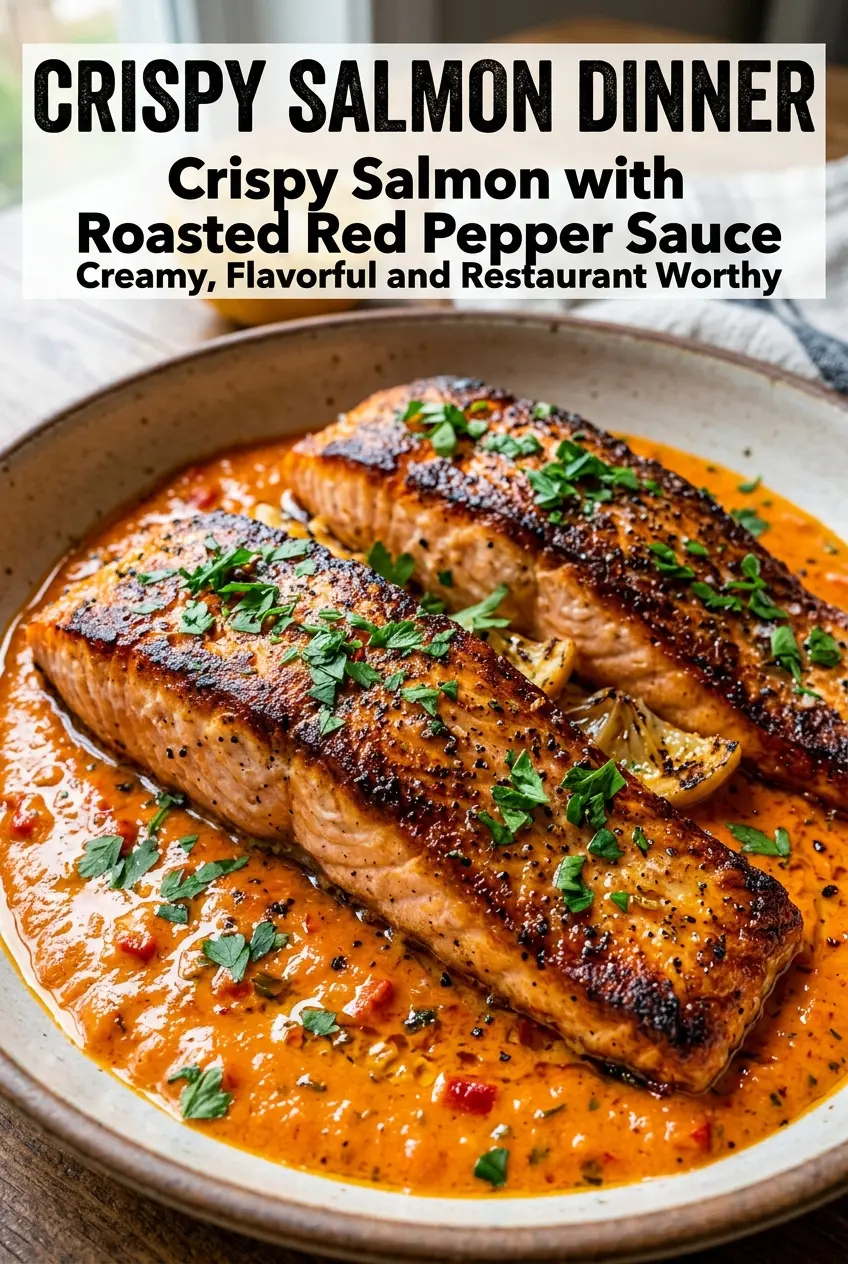
Crispy Salmon with Roasted Red Pepper Sauce
Ingredients
Equipment
Method
- Pat the salmon fillets dry with paper towels to help the surface crisp.
- Season both sides with garlic powder, paprika, salt, and black pepper so the coating clings during searing.
- Blend roasted red peppers, heavy cream, Parmesan cheese, garlic, olive oil, lemon juice, and Italian seasoning until smooth for a creamy sauce base.
- Heat the olive oil and butter in a skillet over medium-high heat until the butter foams and sizzles.
- Place the salmon in the skillet skin-side down if using skin-on fillets to maximize crisping on the contact side.
- Cook for 4–5 minutes until the underside is crisp and golden, watching for deep browning at the edges.
- Flip the salmon and cook another 3–4 minutes until cooked through, using visual firmness and a slight translucence check near the thickest part.
- Remove the salmon from the skillet so the skillet is ready for the sauce.
- Pour the sauce into the same skillet and simmer for 3–5 minutes until slightly thickened, stirring until glossy and coats the back of a spoon.
- Return the salmon to the skillet or spoon the sauce over each fillet so the sauce heats without steaming the crisp.
- Garnish with fresh parsley and serve with lemon wedges for brightness right before eating.
