
Watermelon Caprese Salad
Watermelon Caprese Salad hits the plate with the kind of contrast that makes people stop mid-conversation. You get cool, crisp watermelon, milky fresh mozzarella, ripe tomatoes, and basil that tastes…
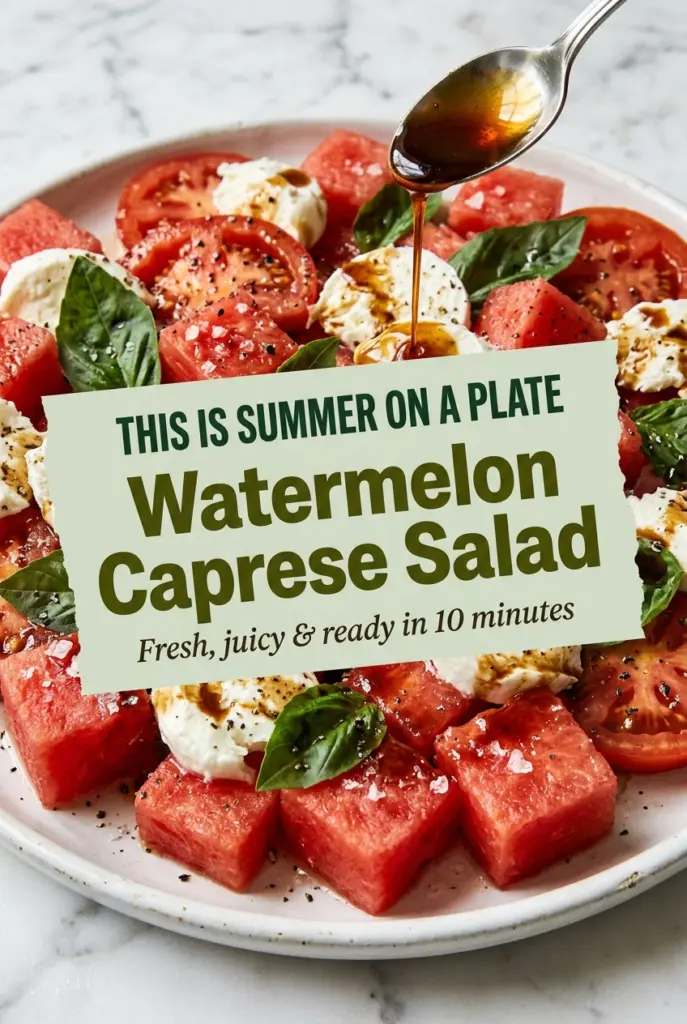
Tip: save now, cook later.Watermelon Caprese Salad hits the plate with the kind of contrast that makes people stop mid-conversation. You get cool, crisp watermelon, milky fresh mozzarella, ripe tomatoes, and basil that tastes like it was picked minutes ago. The balsamic glaze pulls everything together with a dark, tangy sweetness, and the flaky salt keeps the fruit from tasting flat. It looks elegant, but the real charm is how fast it disappears once it’s served.
The trick is keeping the fruit dry enough to stay bright and clean on the platter. Watermelon and tomatoes both carry a lot of juice, so a quick blot with paper towels keeps the salad from turning watery before it reaches the table. I also like using large basil leaves instead of chopped herbs because they stay fragrant and give the salad a more generous, layered look. Mozzarella matters here too: fresh mozzarella has the soft, creamy bite that makes this feel like Caprese rather than a fruit salad with cheese.
The watermelon stayed crisp, the tomatoes didn’t bleed all over the platter, and the balsamic glaze brought just enough sweetness to tie everything together. I served it with grilled chicken and there wasn’t a bite left.
Watermelon Caprese Salad is the kind of platter that disappears fast at cookouts, so pin it now for the next hot day when you want something cool, colorful, and no-cook.
The One Thing That Keeps This Salad From Turning Watery
Watermelon Caprese Salad fails when the fruit juices start pooling before the first serving. The fix is simple: keep the tomatoes and watermelon as dry as practical, then assemble the salad right before it hits the table. That short window matters more than any fancy plating trick. Once salt and balsamic glaze go on, the fruit starts shedding juice, and the salad goes from crisp and lively to soggy fast.
The other piece people miss is balance. Watermelon brings sweetness, tomatoes add acidity, mozzarella softens everything, and basil keeps it from tasting one-note. If one ingredient is underseasoned, the whole dish falls flat. A pinch of flaky salt wakes up the fruit and helps the balsamic taste less sticky and more layered.
What Each Ingredient Is Actually Doing in This Dish
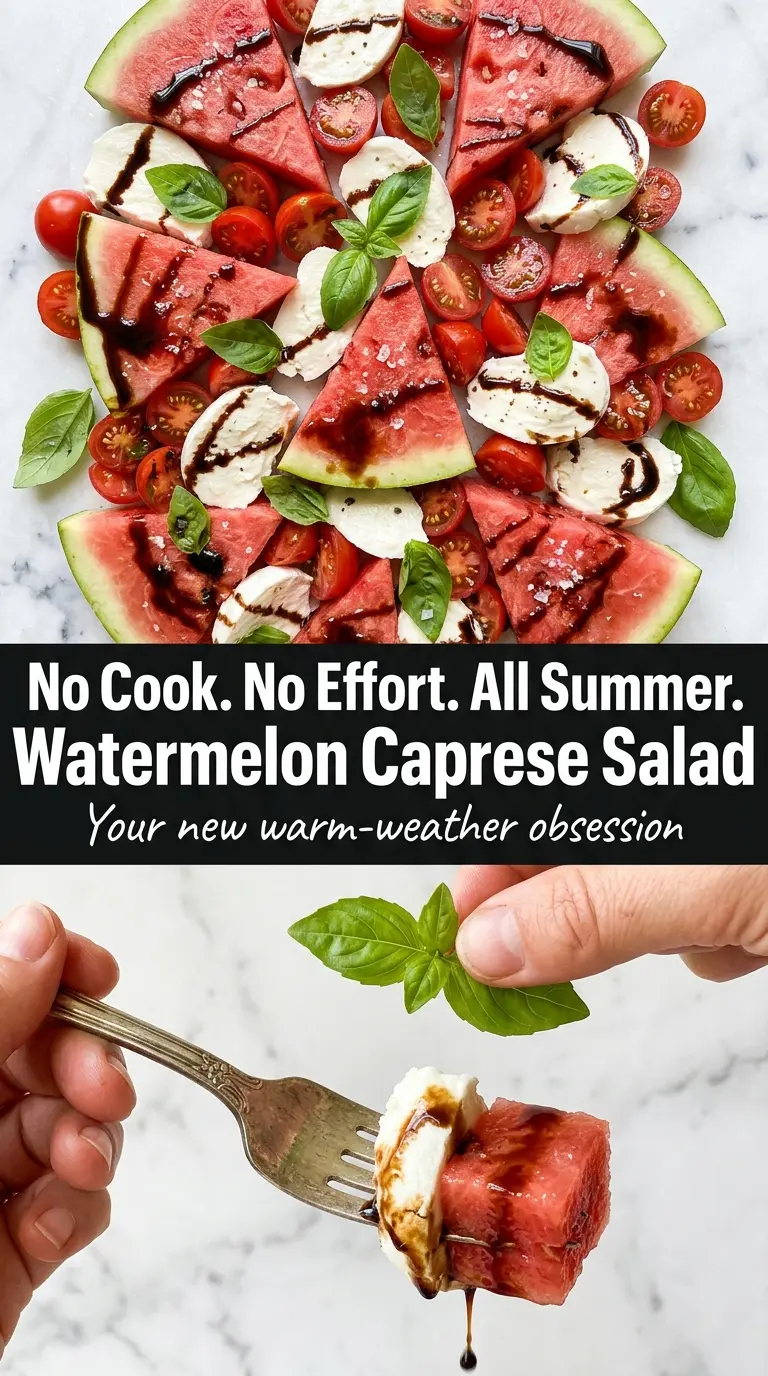
- Watermelon — Seedless watermelon is the base of the salad, so use one that tastes sweet on its own. If it’s bland, no amount of balsamic will fully rescue it. Cut it into neat cubes or triangles and blot the cut surfaces if they look especially wet.
- Fresh mozzarella — This brings the creamy, milky contrast that makes the salad feel like Caprese. Burrata is richer but softer, so it will collapse faster and leak more; use it only if you plan to serve immediately. Pre-sliced low-moisture mozzarella won’t give the same texture.
- Ripe tomatoes — Tomatoes add the savory edge that keeps the dish from tasting like fruit salad with cheese. Choose ripe but still firm tomatoes so they hold their shape on the platter. If they’re very juicy, set them on paper towels for a minute before assembling.
- Basil — Large basil leaves perfume the whole salad and add a clean finish. Chop the basil only if you have to, because torn or whole leaves hold their aroma better and look better scattered among the fruit.
- Balsamic glaze — This is the fastest way to get concentrated tang and sweetness without watering the salad down. Store-bought glaze works fine here. If you reduce balsamic yourself, cook it just until it lightly coats a spoon; over-reduced glaze can taste harsh.
- Flaky sea salt — The salt makes the watermelon taste sweeter and keeps the mozzarella from disappearing into the background. Don’t swap this for a heavy hand with table salt, which can make the fruit taste sharp instead of bright.
Building the Platter So Everything Stays Fresh
Dry the fruit before it meets the cheese
Pat the watermelon gently after cutting and give the tomato slices a brief rest on paper towels. You’re not trying to remove every drop of moisture; you’re keeping excess juice from spreading across the platter and diluting the balsamic. If the fruit looks glossy-wet when it goes on the plate, the salad will loosen up too quickly.
Layer with plenty of open space
Scatter the watermelon, tomatoes, and mozzarella in an overlapping pattern rather than lining them up in neat rows. That loose arrangement catches the basil leaves and lets the balsamic glaze land in little pockets instead of running straight off the plate. A shallow bowl or wide platter works best because the ingredients can nest together without getting buried.
Finish at the last minute
Drizzle the olive oil and balsamic glaze just before serving, then finish with salt and black pepper. The oil helps the glaze spread, and the salt sharpens the fruit right away. If the salad sits too long after dressing, the watermelon starts to release more juice and the texture softens fast.
How to Adapt This for a Crowd, a Dairy-Free Table, or a Different Herb
Make It Dairy-Free Without Losing the Caprese Idea
Skip the mozzarella and add sliced avocado or a handful of Castelvetrano olives for creamy richness and salt. The salad won’t taste like classic Caprese anymore, but it keeps the same sweet-savory balance and still feels substantial enough to serve as a side.
Use Burrata for a More Luxurious Version
Burrata turns the salad creamier and more dramatic, but it’s softer and less tidy than mozzarella. Tear it over the platter at the very end and serve immediately, since the creamy center will start to spread into the fruit almost as soon as it hits the plate.
Swap the Basil for Mint When You Want It Cooler
Mint gives the salad a brighter, cooler finish that leans even more refreshing on a hot day. Use it as a partial swap, not a total replacement, because basil still gives this dish its Caprese identity. A few mint leaves alongside the basil is the safest version.
Storage and Serving Window
- Refrigerator: Best served right away, but it can sit for up to 30 minutes after assembling. After that, the watermelon starts releasing too much juice and the platter gets watery.
- Freezer: This one doesn’t freeze well. The watermelon and tomatoes turn mushy when thawed, and the mozzarella loses its texture completely.
- Reheating: No reheating needed. If you’ve chilled the platter, let it sit at room temperature for 10 minutes so the basil smells more fragrant and the cheese isn’t too firm.
Questions I Get Asked About This Recipe
Watermelon Caprese Salad
Ingredients
Method
- Slice seedless watermelon into 1-inch cubes or neat triangular wedges, removing the rind, then pat gently with a paper towel if it seems very wet.
- Slice large ripe tomatoes into 1/2-inch rounds and lay them on a paper towel for 1–2 minutes to absorb excess moisture.
- Slice or tear fresh mozzarella into bite-sized pieces.
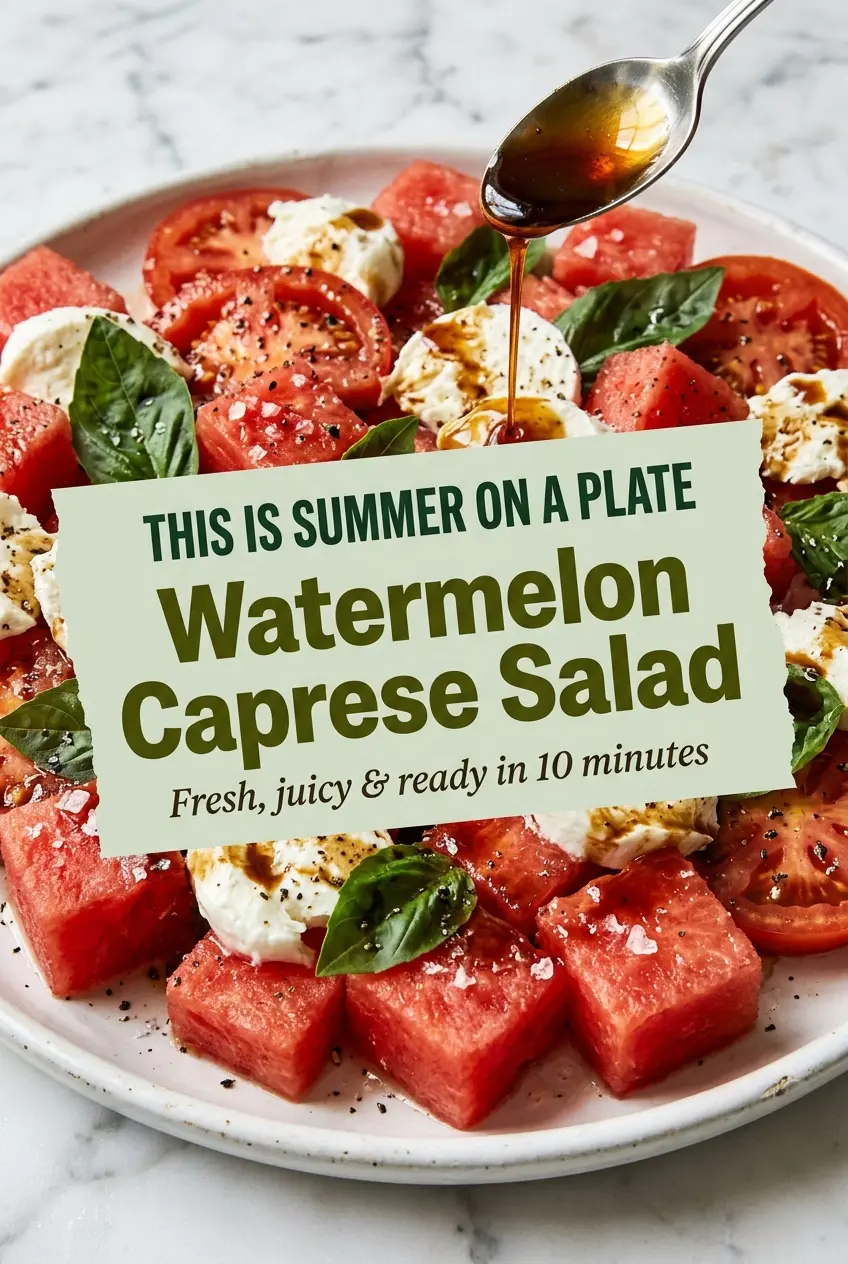
- On a large serving platter or wide shallow bowl, alternate and scatter the watermelon, tomato slices, and mozzarella pieces in an overlapping, abundant arrangement, keeping it loose and casual, not geometric.
- Tuck whole fresh basil leaves (and fresh mint leaves if using) throughout so some stand upright naturally.
- Drizzle extra virgin olive oil across the entire salad in a slow, uneven stream.
- Add a generous zigzag drizzle of balsamic glaze and let it pool slightly on the watermelon.
- Finish with a pinch of flaky sea salt and freshly cracked black pepper over the top.
- Serve immediately for the freshest texture, or refrigerate for up to 30 minutes before serving and avoid dressing more than 1 hour ahead to prevent excess juice.
