
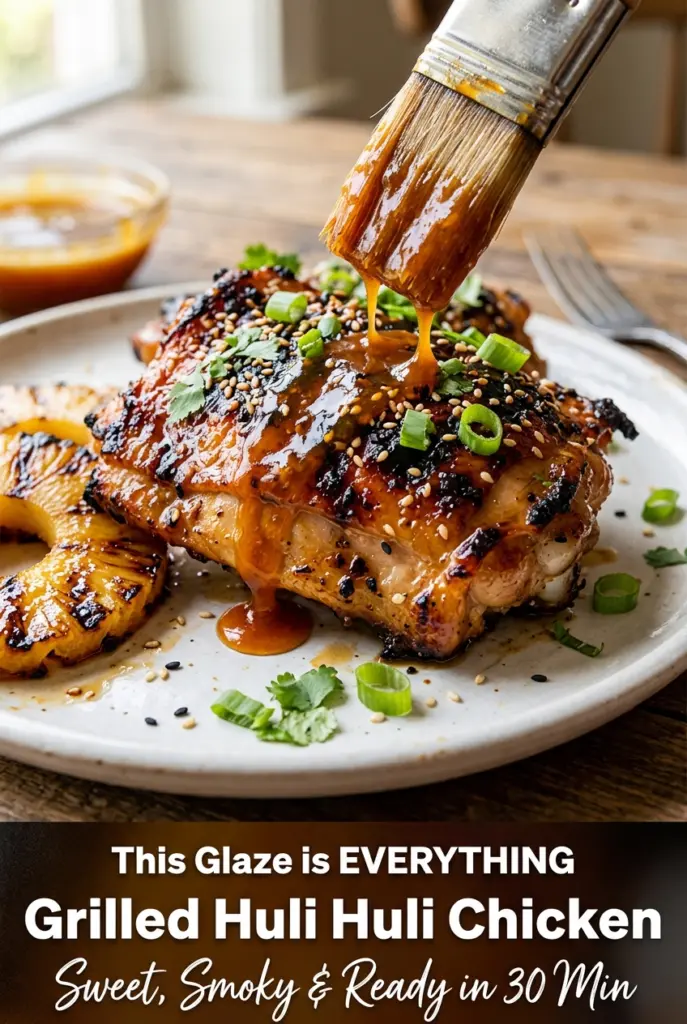
Grilled Huli Huli Chicken
Sticky, smoky chicken with a lacquered glaze and real grill-char is what makes Huli Huli chicken worth firing up the grill for. The sweet-savory coating clings to the skin instead…
Tip: save now, cook later.Sticky, smoky chicken with a lacquered glaze and real grill-char is what makes Huli Huli chicken worth firing up the grill for. The sweet-savory coating clings to the skin instead of sliding off, and the pineapple in the marinade keeps the whole thing bright enough to cut through the richness of the thighs. When it’s done right, you get crisp edges, juicy meat, and that deep caramelized finish that tastes like it came from a backyard cookout with a serious grill master at work.
The part that separates a good version from a great one is the balance in the marinade and the way the glaze gets treated before it ever hits the chicken. Pineapple juice brings sweetness and acidity, but it also needs time to work; the overnight marinade gives the salt, sugar, and aromatics enough time to season the meat all the way through. The reserved marinade must be simmered into a separate glaze before brushing, because raw marinade on cooked chicken is a shortcut to muddy flavor and a food-safety problem.
Below, I’ll walk through the grill timing, the best way to get that sticky finish without burning the sugars, and the simple swap that makes this work with boneless thighs or a gas grill.
The glaze thickened up beautifully and brushed on like candy on the grill. I used thighs exactly as written, and the chicken stayed juicy with those sticky charred edges my husband kept picking off the platter.
Save this grilled Huli Huli chicken for the nights when you want sticky pineapple-soy glaze, smoky char, and juicy thighs with almost no fuss.
The Marinade That Turns Sweet Sauce Into Grill-Ready Glaze
Huli Huli chicken can go wrong fast if the marinade is treated like a sauce from the start. Sugar and pineapple juice burn before the chicken is cooked through, and raw marinade brushed on at the wrong time leaves you with dark, bitter spots instead of a clean caramelized finish. The fix is to split the marinade in two jobs: one part seasons the chicken, and the rest gets boiled into a proper glaze.
That little move changes everything. The marinade that sits on the chicken gets time to work into the meat, while the reserved portion reduces into something sticky enough to cling through the last few minutes of grilling. If your glaze looks thin, it hasn’t simmered long enough. It should coat a spoon and leave a glossy trail, not run off like broth.
- Soy sauce — This gives the chicken its salt and backbone. Regular soy sauce works well; use low-sodium if that’s what you keep on hand, but don’t swap in coconut aminos and expect the same depth or color.
- Pineapple juice — This is the flavor cue that makes Huli Huli chicken taste like Huli Huli chicken. Fresh or canned both work, but the juice needs to be unsweetened enough that the glaze doesn’t turn cloying.
- Ketchup and brown sugar — These build the sticky red-brown glaze. Brown sugar matters here because its molasses notes help the chicken caramelize more evenly than white sugar would.
- Fresh ginger and garlic — Use fresh, not jarred, if you want the marinade to taste sharp and clean. Their flavor softens during grilling, so what you’re left with is warmth rather than bite.
- Bone-in, skin-on thighs — They handle direct heat better than breasts and stay juicy while the glaze finishes. Boneless thighs work too, but they cook faster and need a shorter grill time so the sugars don’t scorch.
How to Get the Char Marks Without Burning the Glaze
Mixing the Marinade
Whisk the marinade until the brown sugar dissolves and the mixture looks glossy, not grainy. That helps the chicken season evenly and prevents sandy sugar from clinging to the skin. Reserve part of the marinade before it touches the raw chicken, then chill that portion right away for the glaze. If you forget to separate it first, don’t use it for brushing later.
Marinating the Chicken
Coat the thighs well and give them at least two hours, though overnight is where the flavor really settles in. The pineapple juice and soy need time to penetrate, especially around the bone. Too short a marinate gives you flavor on the surface only. Keep the chicken in the fridge while it rests so the skin stays cold enough to sear instead of steaming.
Turning the Reserved Marinade Into Glaze
Bring the reserved liquid to a simmer in a small saucepan and let it bubble until it thickens slightly and looks syrupy. You’re not making caramel; you’re concentrating flavor. If it reduces too fast over high heat, the sugars can turn harsh. Low to medium heat gives you a glossy glaze that brushes on cleanly and doesn’t run straight off the chicken.
Grilling and Basting in the Final Minutes
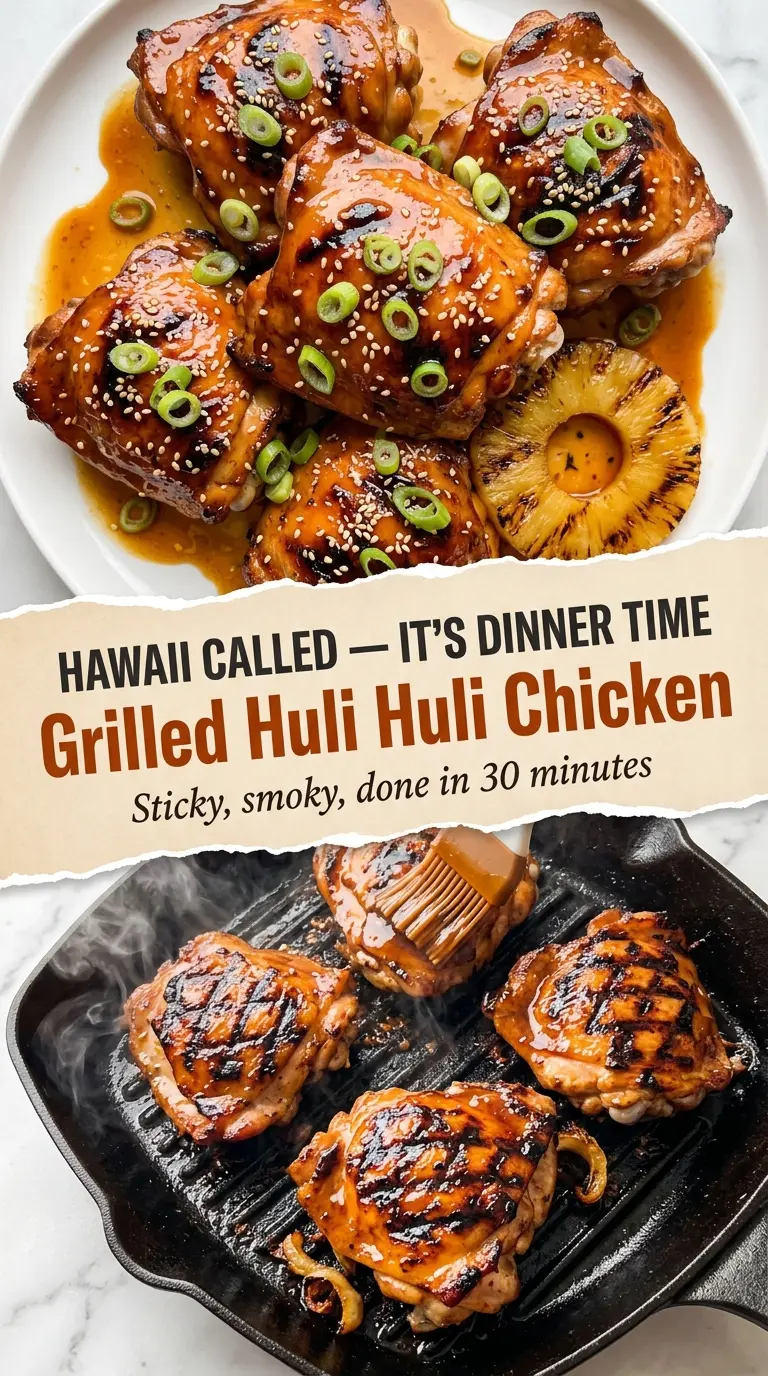
Start skin-side down over medium-high heat and leave it alone until you get deep grill marks and the skin releases without tearing. If the chicken sticks, it isn’t ready yet. Flip it, then brush on glaze during the last stretch of cooking so the sugars have time to lacquer without blackening. The chicken is done when the thickest part hits 165°F and the juices run clear, with the skin deeply bronzed and slightly sticky.
What to Change When You Don’t Have Exactly the Same Grill Setup
Boneless thighs for faster weeknight grilling
Boneless thighs cook faster and are easier to serve, but they don’t hold heat and smoke quite like bone-in pieces. Pull them off as soon as they hit 165°F, and start checking early so the glaze doesn’t burn while you wait for the center to catch up.
Gluten-free without losing the sticky finish
Use a gluten-free soy sauce or tamari and the rest of the recipe stays the same. The glaze still reduces the same way, and you’ll keep the salty-sweet balance that makes the chicken taste finished rather than just seasoned.
No grill, no problem: broiler finish
Cook the chicken most of the way in the oven, then brush on the glaze and finish under the broiler for a few minutes at a time. Keep the pan close to the heat and watch it constantly, because the sugar in the glaze can go from glossy to burnt in one minute.
Storage and Reheating
- Refrigerator: Store leftovers in an airtight container for up to 4 days. The skin softens a bit, but the flavor holds up well.
- Freezer: Freeze cooked chicken for up to 2 months. Wrap it well and freeze with a little extra glaze if you can, which helps protect the meat from drying out.
- Reheating: Warm in a 325°F oven, covered loosely with foil, until heated through. The microwave works in a pinch, but it softens the glaze and the skin loses its texture fast.
Answers to the Questions Worth Asking
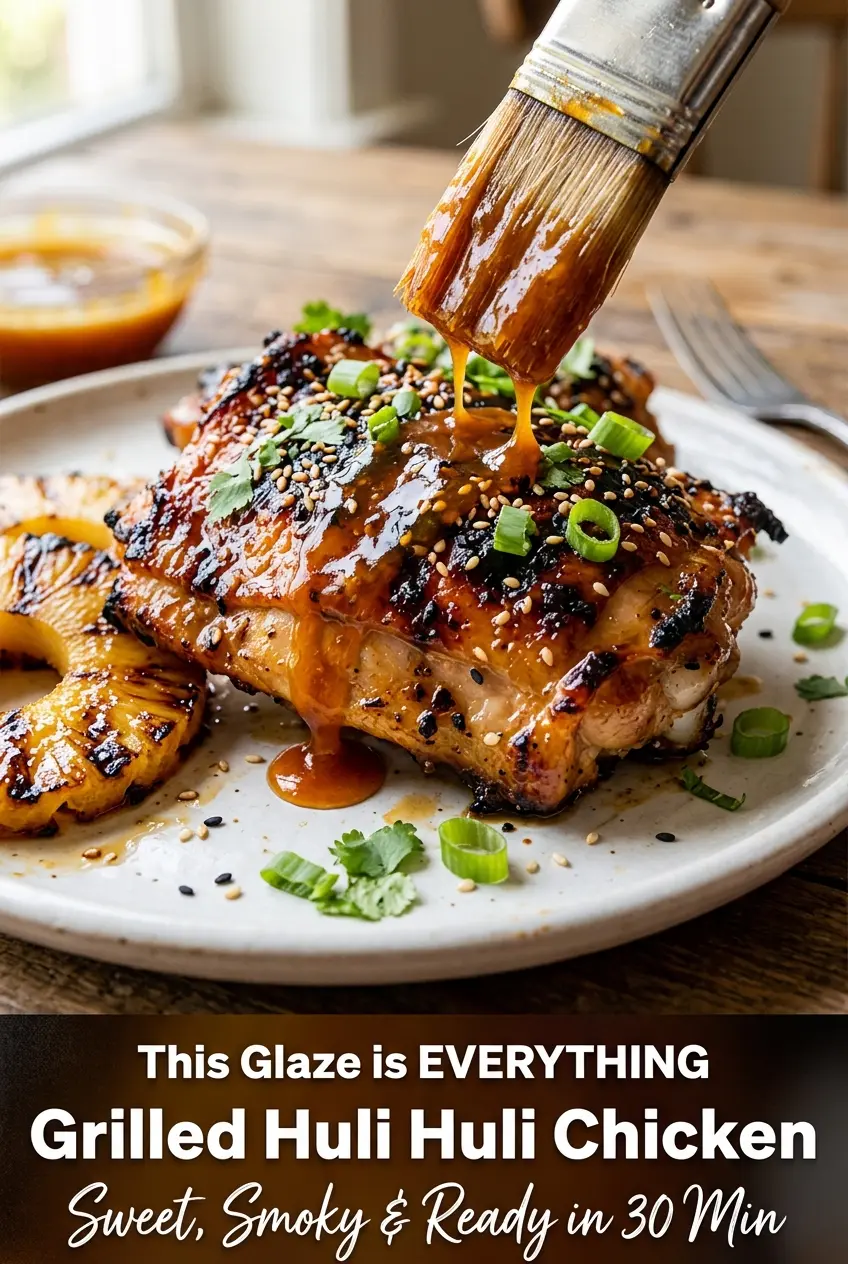
Grilled Huli Huli Chicken
Ingredients
Equipment
Method
- Whisk together soy sauce, pineapple juice, ketchup, brown sugar, rice vinegar, sesame oil, garlic, ginger, and crushed red pepper flakes in a medium bowl until the sugar dissolves.
- Place chicken thighs in a large zip-lock bag or shallow dish and pour 3/4 of the marinade over the chicken.
- Seal and marinate for at least 2 hours, or overnight for best results, and refrigerate the reserved 1/4 marinade for later basting.
- Simmer the reserved marinade in a small saucepan over medium heat for 5–7 minutes, stirring occasionally, until thickened into a sticky glaze.
- Set the glaze aside so it’s ready for brushing during grilling.
- Preheat your grill to medium-high heat (about 400°F) and oil the grates well to prevent sticking.
- Remove the chicken from the marinade and pat lightly with a paper towel, then season with a pinch of salt and pepper.
- Place chicken on the grill skin-side down and grill for 6–8 minutes without moving until deep char marks form.
- Flip the chicken, brush generously with the reserved glaze, and continue grilling for 6–8 more minutes, brushing with glaze every 2 minutes until the internal temperature reaches 165°F and the glaze is caramelized.
- Grill pineapple rings for 2–3 minutes per side until caramelized and golden.
- Rest the chicken for 5 minutes, then garnish with sliced green onions and sesame seeds.
- Serve with grilled pineapple and steamed white rice.
