

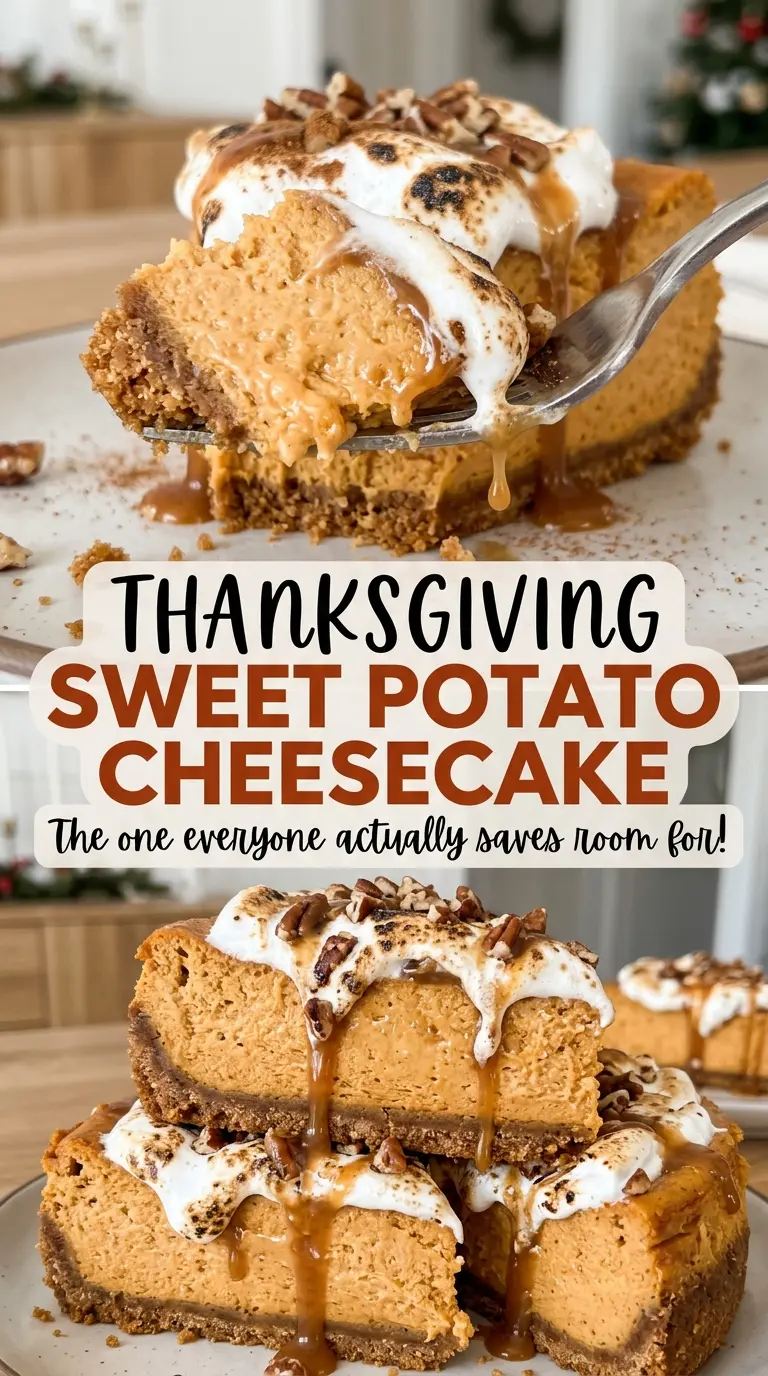
Thanksgiving Sweet Potato Cheesecake
When the oven door opens, the edges should look settled while the middle still gives a gentle wobble. That small bit of movement can be hard to trust, but it’s…
Tip: save now, cook later.When the oven door opens, the edges should look settled while the middle still gives a gentle wobble. That small bit of movement can be hard to trust, but it’s what keeps Thanksgiving Sweet Potato Cheesecake creamy instead of dry. The water bath and slow cooldown help the whole cake bake evenly, so there’s no rush to pull it out the moment the center looks firm.
I bake the sweet potato until it’s tender enough to mash smoothly, then let it cool before it goes into the filling. Brown sugar and warm spices give the cheesecake a familiar Thanksgiving feel, while the graham cracker and pecan crust brings a little crunch under each slice. Give it the full chill in the refrigerator; the filling turns silky and slices cleanly, with just enough sweet potato to make every bite taste like the holiday table.

Kitchen Note
Mash the sweet potato after peeling, then measure the cup for the filling rather than estimating from the whole potato. Let that mash cool completely before mixing it in; warm mash can soften the cream cheese and make the filling harder to blend smoothly.
Save this Thanksgiving Sweet Potato Cheesecake for a holiday dessert with a pecan-studded crust and a smooth, warmly spiced filling.
Why Baking the Sweet Potato Makes a Better Cheesecake Filling
Sweet potato brings moisture as well as flavor, and the way you cook it affects the filling. I bake the potato whole until it’s very tender, rather than boiling it in water. Baking keeps extra water out of the mash, which helps the cream cheese filling stay thick and rich instead of loose.
There’s also a useful texture cue: the potato should mash easily after you peel it, with no firm pieces left behind. A few lumps can show up in the finished cheesecake, where they interrupt the smooth filling. Let the mash cool before it meets the cream cheese, and measure the amount after mashing. The filling is balanced for that measured cup, not for the weight of the unpeeled potato.
What the Sweet Potato, Cream Cheese, and Pecan Crust Each Bring
- Sweet potato — A medium sweet potato baked until tender gives the filling its earthy sweetness and body. Choose one that feels firm and unblemished; the smooth mash matters more here than an unusually large potato.
- Cream cheese — This is the structure and richness of the filling, so use full-fat blocks rather than whipped or spreadable cream cheese. Softening it first helps it blend with the brown sugar without leaving little lumps.
- Eggs and sour cream — Room-temperature eggs blend into the filling more evenly, and sour cream keeps the texture tender with a gentle tang. Bring both to room temperature before mixing rather than adding them cold.
- Graham crumbs and pecans — Graham crumbs make the familiar crisp base, while finely chopped pecans add a more toasty, textured bite. Fresh pecans taste best, but there’s no need to buy a premium brand for a baked crust.
- Brown sugar and spices — Packed light brown sugar adds a soft molasses note that suits the sweet potato. Ground cinnamon, ginger, and nutmeg give the filling its warm holiday flavor; use spices that still smell fragrant when you open the jars.
- Unsalted butter — Melted butter binds the crust ingredients so they press into a firm base. Unsalted butter lets the fine salt in the filling stay in balance without making the crust unexpectedly salty.
How to Bake the Filling Without Drying Out the Center
Roast the Sweet Potato Until It Gives Easily
Heat the oven to 400°F and bake the sweet potato on a small baking sheet for 45 to 60 minutes. It’s ready when a knife slides into the center with little resistance and the flesh is very tender. Let it cool until it’s easy to handle, then peel and mash it. Measure 1 cup for the filling.
Press and Prebake the Pecan-Graham Crust
Lower the oven to 350°F and lightly coat the bottom and sides of a 9-inch springform pan with cooking spray. Stir the graham cracker crumbs, finely chopped pecans, sugar, and melted butter until evenly moistened, then press the mixture firmly over the bottom of the pan. Bake for 10 minutes and set the pan on a rack to cool. If the crumbs look dry before they go into the oven, keep mixing until the butter is distributed through them.
Mix the Filling Gently, Not Until Fluffy
Lower the oven to 325°F, then beat the softened cream cheese, brown sugar, and flour on medium-low speed until smooth, scraping down the bowl as needed. Add the room-temperature eggs one at a time on low speed, mixing just until each is incorporated. Mix in the cooled sweet potato, sour cream, vanilla, cinnamon, ginger, nutmeg, and salt on low just until smooth. Beating the eggs or filling until fluffy adds extra air, which can make the cheesecake puff and then sink as it cools.
Set Up the Water Bath Before Filling the Pan
Wrap the outside of the springform pan tightly in two layers of heavy-duty foil and set it inside a 16×12-inch roasting pan. Pour the filling over the crust, then carefully add the boiling water to the roasting pan until it comes about 1 inch up the springform pan’s sides. Keep the water below the foil’s top edge as you pour. The water bath cushions the cheesecake from intense heat around the edges.
Use the Center Temperature, Then Let the Cake Rest
Bake for 75 to 90 minutes, until the edges are set and an instant-read thermometer in the center reads 160°F. Turn off the oven, prop the door open, and let the cheesecake rest in the water bath for 1 hour. Remove the springform pan, take off the foil, and run a thin knife around the edge before cooling it completely on a rack. Cover and refrigerate for at least 8 hours before removing the pan ring and serving.
Two Useful Swaps for the Crust
Make the Crust Gluten-Free
Replace the graham cracker crumbs with the same amount of gluten-free graham-style crumbs. Keep the pecans, sugar, and butter as written; the crust will still press and bake into a crisp base, though the exact crumb may vary by brand.
Skip the Pecans
For a nut-free crust, replace the finely chopped pecans with the same volume of graham cracker crumbs. The base will lose the pecans’ toasted crunch and taste more like a classic graham crust, but it will still hold together when sliced.
Storage and Reheating
- Refrigerator: Cover and refrigerate leftovers for 3 to 4 days. The crust softens a little as it sits, but the filling stays creamy.
- Freezer: Cheesecake freezes well. Freeze slices until firm, then wrap them tightly and store for up to 1 month for the best texture; thaw overnight in the refrigerator.
- Reheating: Serve chilled rather than reheating. Warming cheesecake can soften the filling and make the slices slump.
Questions That Come Up When Baking This Cheesecake
Thanksgiving Sweet Potato Cheesecake
Ingredients
Equipment
Method
- Preheat the oven to 400°F.
- Bake the sweet potato on a small baking sheet for 45 to 60 minutes, until very tender.
- Cool until easy to handle, then peel and mash to yield 1 cup.
- Reduce the oven temperature to 350°F.
- Lightly coat the bottom and sides of a 9-inch springform pan with nonstick cooking spray.
- Mix the graham cracker crumbs, pecans, granulated sugar, and melted butter until evenly moistened, then press firmly over the bottom of the pan.
- Bake the crust for 10 minutes, then set the pan on a rack to cool.
- Reduce the oven temperature to 325°F.
- Wrap the outside of the springform pan tightly in two layers of heavy-duty foil, and set it in a 16x12-inch roasting pan.
- Beat the cream cheese, brown sugar, and flour in a large bowl on medium-low speed until smooth, scraping down the bowl as needed.
- Beat in the eggs one at a time on low speed, mixing just until each is incorporated.
- Add 1 cup of the cooled mashed sweet potato, the sour cream, vanilla, cinnamon, ginger, nutmeg, and salt; mix on low just until smooth.
- Pour the filling over the crust.
- Carefully pour the 8 cups boiling water into the roasting pan until it reaches about 1 inch up the sides of the springform pan.
- Bake for 75 to 90 minutes, until the edges are set and the center reaches 160°F on an instant-read thermometer.
- Turn off the oven, prop the door open, and let the cheesecake rest in the water bath for 1 hour.
- Remove the springform pan from the water bath and remove the foil.
- Run a thin knife around the edge, then cool completely on a rack.
- Cover and refrigerate for at least 8 hours before removing the pan ring and serving.
