
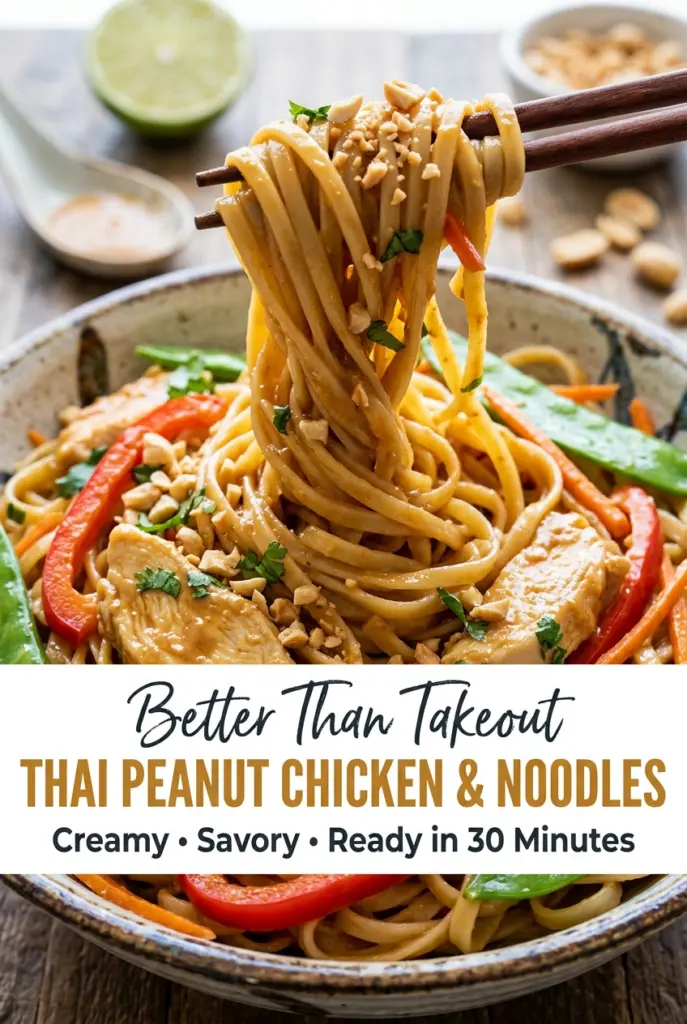
Thai Peanut Chicken and Noodles
Thai peanut chicken and noodles hit that sweet spot between takeout comfort and weeknight practicality: tender chicken, slippery rice noodles, crisp vegetables, and a peanut sauce that clings to every…
Tip: save now, cook later.Thai peanut chicken and noodles hit that sweet spot between takeout comfort and weeknight practicality: tender chicken, slippery rice noodles, crisp vegetables, and a peanut sauce that clings to every strand instead of pooling at the bottom of the bowl. The sauce is rich without feeling heavy, and the lime keeps it bright enough that you want another bite before you’ve even finished the first. It’s the kind of dinner that tastes like you paid attention, even though it comes together fast.
The trick is getting the sauce smooth before it ever touches the pan. Peanut butter needs warm liquid and a little whisking to loosen up; if you try to stir it straight into the skillet, it tends to seize and leave you with uneven pockets. Rice noodles also behave better if you rinse them after cooking, which stops the carryover heat and keeps them from turning gummy while you finish the stir-fry.
Below, I’ll walk through the part that matters most: how to keep the chicken juicy, how to toss the noodles without breaking them, and the small tweak that makes the peanut sauce taste balanced instead of flat. There’s also a simple way to adjust the heat level so everyone at the table can eat from the same pan.
The peanut sauce coated everything evenly and stayed silky instead of clumping. I added the lime at the end like you said and it made the whole dish taste brighter.
Pin these Thai Peanut Chicken and Noodles for a fast skillet dinner with creamy sauce, crisp vegetables, and bright lime flavor.
The Reason the Peanut Sauce Stays Silky Instead of Turning Gluey
Peanut sauce can go wrong in two ways: it either clumps up when it hits the pan, or it turns thick and pasty once the noodles go in. Both problems usually come from heat and timing. The sauce wants to be built separately first, thinned to a pourable consistency, then tossed with everything at the end over low to medium heat.
That matters because peanut butter thickens fast as it warms. If the pan is too hot, the sauce tightens before it has a chance to coat the noodles evenly. A little reserved warm water or a splash from the noodle pot fixes that in seconds. The goal is glossy noodles, not a sticky mound.
- Creamy peanut butter gives the sauce body. Natural peanut butter can work, but it tends to separate and needs more whisking; the classic shelf-stable kind gives you the smoothest result.
- Rice vinegar and lime juice keep the sauce from tasting flat. One brings clean tang, the other adds a sharper finish, and together they stop the peanut flavor from feeling heavy.
- Sesame oil is there for depth, not volume. A little goes a long way, and too much will take over the whole dish.
- Sriracha is optional, but even a small amount helps the sauce read as savory instead of just sweet and nutty.
What Each Ingredient Is Actually Doing in This Dish
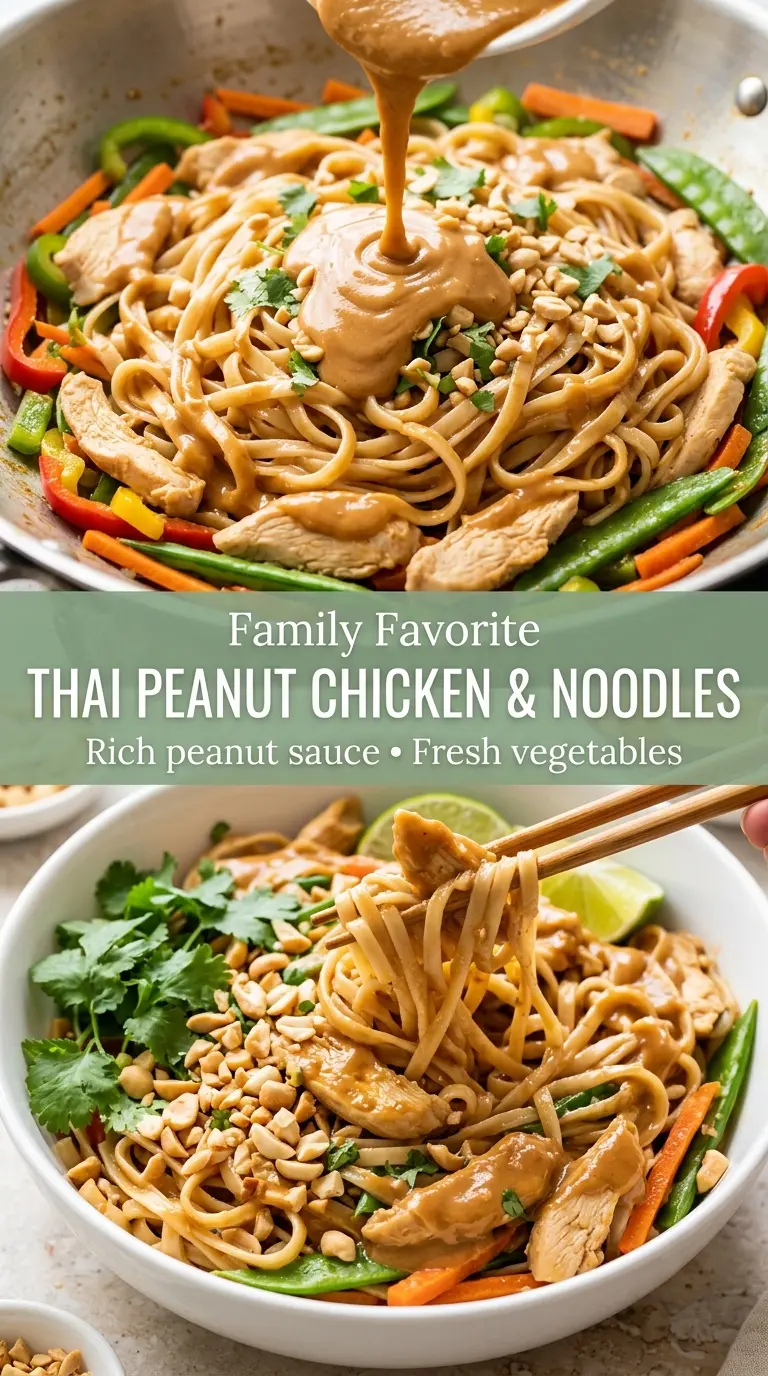
- Rice noodles give you the right slippery texture for peanut sauce. They cook fast and stay tender, but they also overcook fast, so rinse them under cold water right after draining to stop them from turning soft and sticky.
- Chicken breast stays lean and quick-cooking here. Slice it into thin strips so it browns quickly and stays juicy; thick chunks take longer and dry out before the vegetables are ready.
- Ginger and garlic are the foundation of the skillet flavor. They only need a brief sauté; if they sit in the pan too long, they can burn and turn bitter under the sauce.
- Bell pepper, carrots, and snow peas give you crunch against the creamy noodles. The vegetables should stay crisp-tender, not soft, or the dish loses that fresh stir-fry feel.
- Green onions and cilantro belong at the end. They add a fresh finish that wakes up the whole bowl after the sauce and noodles have come together.
- Roasted peanuts and lime wedges are not just garnish. The peanuts add a last bit of crunch, and the lime lets each person brighten the bowl to taste.
How to Build the Skillet So the Noodles Stay Glossy
Cook the noodles first and stop them from carrying on
Cook the rice noodles until they’re just tender, then drain and rinse them under cold water. That rinse is what keeps them from clumping while you finish the chicken and vegetables. If they sit hot and wet in the colander, they’ll glue together before the sauce gets a chance to coat them.
Brown the chicken before the vegetables go in
Give the chicken direct contact with the hot oil and leave it alone long enough to pick up a little color. If the pan looks crowded, cook it in two batches instead of steaming the strips. You want light browning and just-cooked centers, not pale chicken that has to sit in the pan too long while the vegetables soften.
Pull the sauce together before it reaches the skillet
Whisk the peanut butter, soy sauce, honey, vinegar, sesame oil, sriracha, warm water, and lime juice until it looks smooth and pourable. If it seems too thick, add a tablespoon more warm water. A finished sauce should flow off the whisk in ribbons, not sit in a paste.
Toss everything over low heat at the end
Once the chicken and vegetables are back in the pan, add the noodles and pour the sauce over the top. Toss gently for just a couple of minutes until everything is coated and heated through. High heat at this stage is the fastest way to tighten the sauce and break the noodles.
Three Ways to Make This Work for Your Table
Dairy-Free and Naturally Creamy
This dish is already dairy-free as written, which is part of why it works so well for a wide crowd. The creaminess comes from peanut butter and the noodles’ ability to hold sauce, so you don’t lose anything by skipping dairy.
Gluten-Free Without Losing the Sauce
Use gluten-free tamari instead of soy sauce and check that your rice noodles are certified gluten-free if needed. The sauce stays balanced, and the texture doesn’t change at all.
Make It Vegetarian
Swap the chicken for extra-firm tofu or edamame. Tofu should be pressed and seared first so it picks up color before the sauce goes in, while edamame gives you a faster, softer-textured bowl with more protein than extra vegetables alone.
Dial the Heat Up or Down
Keep the sriracha out for a milder version, or add a little extra at the table if you like the sauce with a sharper finish. Heat should sit behind the peanut flavor here, not cover it.
Storage and Reheating
- Refrigerator: Store leftovers in an airtight container for up to 4 days. The noodles will absorb some sauce as they sit, so expect a thicker texture the next day.
- Freezer: It freezes better than a cream-based pasta, but the noodles soften after thawing. If you plan to freeze it, stop the noodles a touch early and cool everything completely before packing.
- Reheating: Reheat gently in a skillet or microwave with a splash of water to loosen the sauce. The common mistake is blasting it on high heat, which dries out the chicken and makes the peanut sauce tighten up.
Answers to the Questions Worth Asking
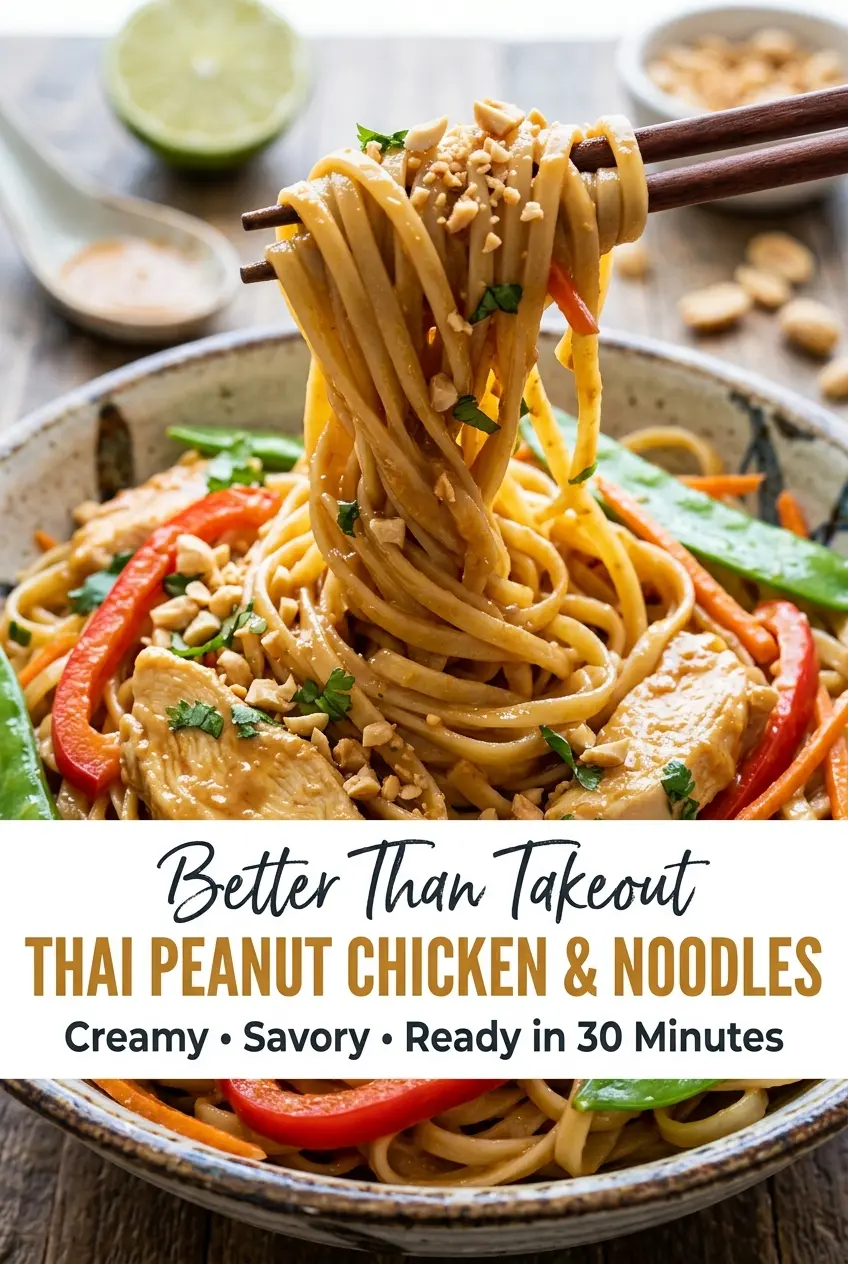
Thai Peanut Chicken and Noodles
Ingredients
Equipment
Method
- Cook the rice noodles according to the package directions until tender, then drain and rinse under cold water to stop cooking.
- Set the noodles aside while you prepare the sauce and stir-fry so they stay silky and don’t overcook.
- Whisk the creamy peanut butter, low-sodium soy sauce, honey, rice vinegar, sesame oil, sriracha, warm water, and fresh lime juice until smooth and creamy.
- Heat the vegetable oil in a large skillet or wok over medium-high heat until shimmering.
- Season the chicken with salt and black pepper, then cook for 5–6 minutes, turning occasionally, until lightly golden and the internal temperature reaches 165°F.
- Transfer the chicken to a plate to keep it from overcooking while you sauté the aromatics.
- Add the garlic and ginger to the skillet and sauté for 30 seconds until fragrant.
- Stir in the red bell pepper, shredded carrots, and snow peas, then cook for 3–4 minutes until crisp-tender.
- Return the chicken to the skillet, add the cooked noodles, and pour the peanut sauce over everything.
- Toss gently for 2–3 minutes until every noodle is coated in the creamy sauce and heated through.
- Fold in the green onions and chopped cilantro right before serving for a fresh, bright finish.
- Serve immediately topped with chopped roasted peanuts, extra cilantro, and fresh lime wedges.
