
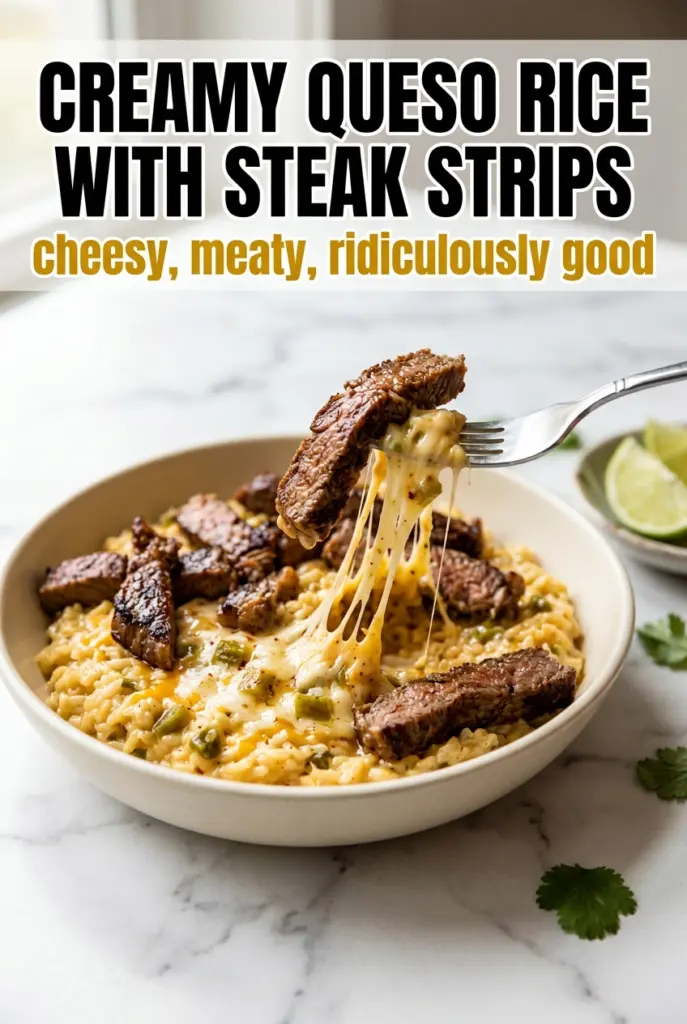
Creamy Queso Rice with Steak Strips
Creamy queso rice with steak strips hits that sweet spot between weeknight practical and restaurant-style comfort. The rice turns rich and spoonable without going gluey, the steak stays juicy with…
Tip: save now, cook later.Creamy queso rice with steak strips hits that sweet spot between weeknight practical and restaurant-style comfort. The rice turns rich and spoonable without going gluey, the steak stays juicy with a proper sear, and the whole bowl gets lifted by a little smoky heat from green chiles and paprika. It eats like something you’d order out, but it’s built in one skillet and comes together fast enough for a regular dinner.
What makes this version work is the order. The steak gets cooked first so the pan keeps those browned bits, then the onion, garlic, rice, and milk go in to build the base right where the flavor already is. Freshly shredded Monterey Jack and cheddar melt into the rice much more smoothly than pre-shredded cheese, which can turn grainy because of the anti-caking coating. A splash of lime at the end matters too. It cuts through the richness and keeps the bowl from tasting heavy.
Below, I’ll walk through the sear that keeps the steak tender, the cheese-melting step that makes the rice creamy instead of clumpy, and a few easy swaps if you want to change up the heat or make it work with what’s already in your kitchen.
The steak stayed tender, and the queso rice turned out creamy without getting sticky. I added the lime at the end like suggested and it made the whole bowl taste brighter.
Keep this creamy queso rice with steak strips handy for the nights when you want a one-pan dinner with melty cheese, smoky beef, and almost no cleanup.
The Seared Steak Matters More Than the Sauce
If the steak goes into the pan crowded or under-heated, it steams and turns gray instead of getting that browned crust that makes the whole bowl taste richer. Thin strips cook fast, so the difference between juicy and overdone is just a minute or two. High heat is the point here, but only for the steak. Once it comes out, the pan drops to medium so the butter, onion, and rice can build a creamy base without scorching.
The other common failure is treating the rice like a side dish instead of the body of the meal. It needs enough milk and cheese to become saucy, but not so much that it turns loose and soupy. The cheese goes in after the rice and milk are warm, not before, because low, gentle heat helps it melt into the starch instead of tightening into strings.
- Slice the steak thinly against the grain — that shortens the muscle fibers and keeps every bite tender, even if the sear runs a little long.
- Use a hot pan and leave the strips alone — moving them too soon tears the crust before it forms.
- Add the cheese in handfuls — a gradual melt gives the rice a smoother finish and helps prevent clumps.
What Each Ingredient Is Actually Doing in This Bowl
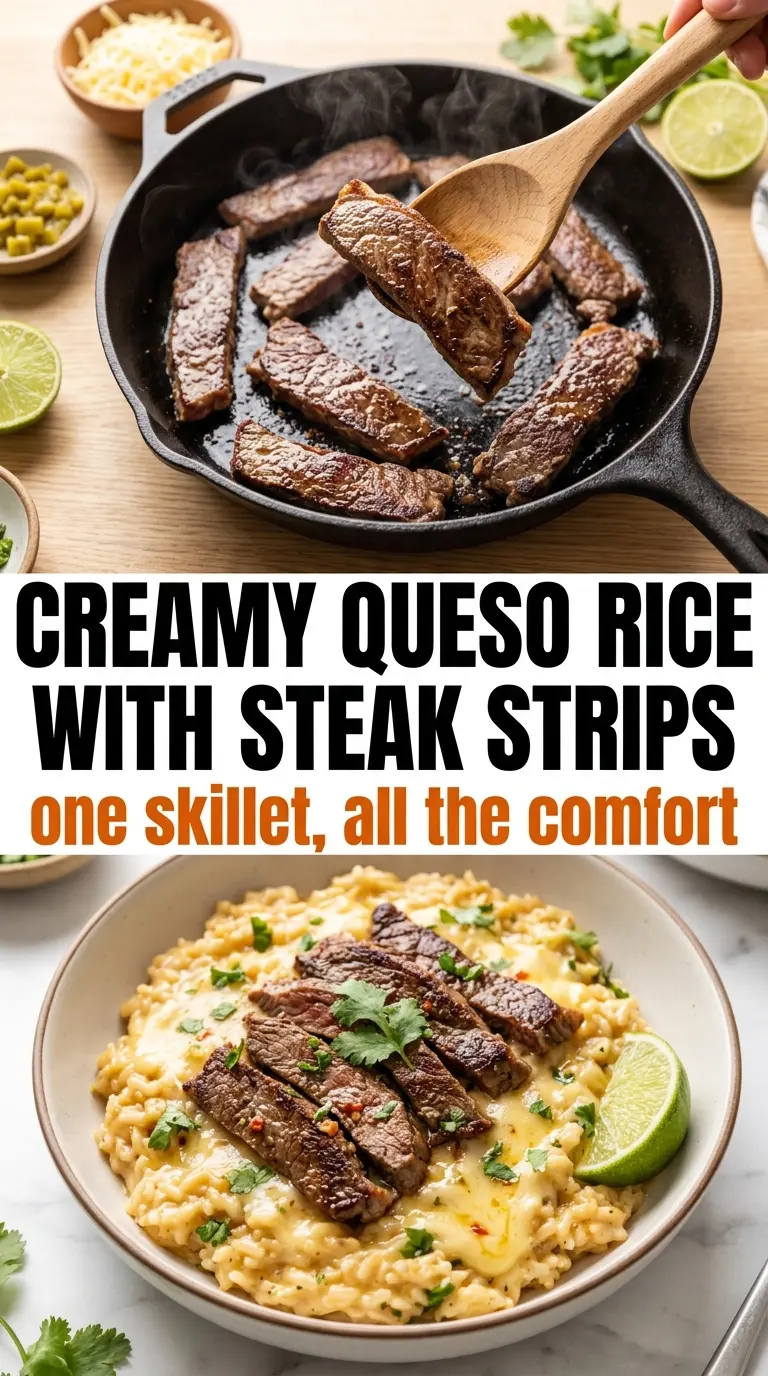
- Flank or sirloin steak — both are lean enough to sear well and tender enough for quick cooking when sliced thin. Flank gives you a little more chew and beefy flavor; sirloin is a touch softer. If you use flank, cut it very thin across the grain.
- Monterey Jack and sharp cheddar — Jack brings the melt, cheddar brings the punch. Together they make the queso taste full instead of one-note. Freshly shredded cheese matters here because packaged shreds often melt into a grainier sauce.
- Cooked long-grain white rice — day-old rice or freshly cooked and cooled rice both work, as long as the grains are separate. Short-grain rice can get too sticky once the milk and cheese go in.
- Green chiles and smoked paprika — these give the bowl its subtle smoky edge without making it taste hot. Use roasted chiles if you want a little deeper flavor, or keep the canned ones for a cleaner, milder finish.
- Whole milk — this loosens the rice just enough to carry the cheese. Lower-fat milk works in a pinch, but the sauce will be thinner and less plush.
Building the Queso Rice Without Breaking It
Searing the Steak First
Season the steak strips before they hit the pan so the surface is dry and ready to brown. Get the oil hot enough that the beef sizzles the second it lands, then spread the pieces in a single layer. Two to three minutes per side is enough for thin strips. If the pan looks crowded, work in batches or the steak will leak juice and lose its crust.
Softening the Onion and Garlic
Once the steak is out, drop the heat to medium and let the butter melt into the brown bits left behind. Those stuck-on bits are the flavor foundation, so don’t scrub them away. Cook the onion until it goes translucent and soft at the edges, then add the garlic for only about 30 seconds. Garlic burns fast in a skillet that’s still carrying searing heat, and burnt garlic will take over the whole dish.
Melting the Rice Into a Sauce
Stir in the rice, milk, and smoked paprika first so the grains warm through before the cheese goes in. Add the Monterey Jack and cheddar gradually, stirring until each addition melts before adding more. If the pan is too hot at this stage, the cheese can tighten and turn gritty. Pull it back to low if the mixture starts bubbling hard, then keep stirring until the rice looks glossy and creamy.
Finishing With Steak and Brightness
Fold in the green chiles, taste for salt, then return the steak to the pan just long enough to warm through. You want the beef heated, not cooked again. Finish with cilantro and a squeeze of lime. That little hit of acid keeps the queso rice from feeling heavy and makes the steak taste even more savory.
How to Adapt This for Different Kitchens and Different Eaters
Make It Spicier Without Drowning Out the Cheese
Add a pinch of cayenne to the steak seasoning or use hot green chiles instead of mild. Keep the heat in the background, not the foreground, or you’ll lose the creamy balance that makes the bowl work.
Dairy-Free Version That Still Tastes Rich
Use a dairy-free butter, unsweetened oat milk, and a good melting vegan cheese. The texture will be a little less silky than the original, but the smoky chiles and seared steak still carry the dish. Warm the dairy-free cheese over low heat only, because many substitutes seize faster than the real thing.
Turn It Into a Chicken or Shrimp Bowl
Swap the steak for thin-sliced chicken breast or peeled shrimp and season it the same way. Chicken needs a longer cook time and shrimp only needs a couple of minutes per side, so keep an eye on the protein you choose. The queso rice stays the same and works with either one.
Storage and Reheating
- Refrigerator: Store in an airtight container for up to 3 days. The rice will tighten as it chills, and the cheese sauce will thicken.
- Freezer: It freezes, but the texture gets softer after thawing because dairy sauces can separate a little. Freeze only if needed and expect the rice to be less creamy than fresh.
- Reheating: Warm gently on the stovetop over low heat with a splash of milk, stirring often until the rice loosens again. High heat is the fastest way to make the cheese grainy and the steak tough.
Answers to the Questions Worth Asking
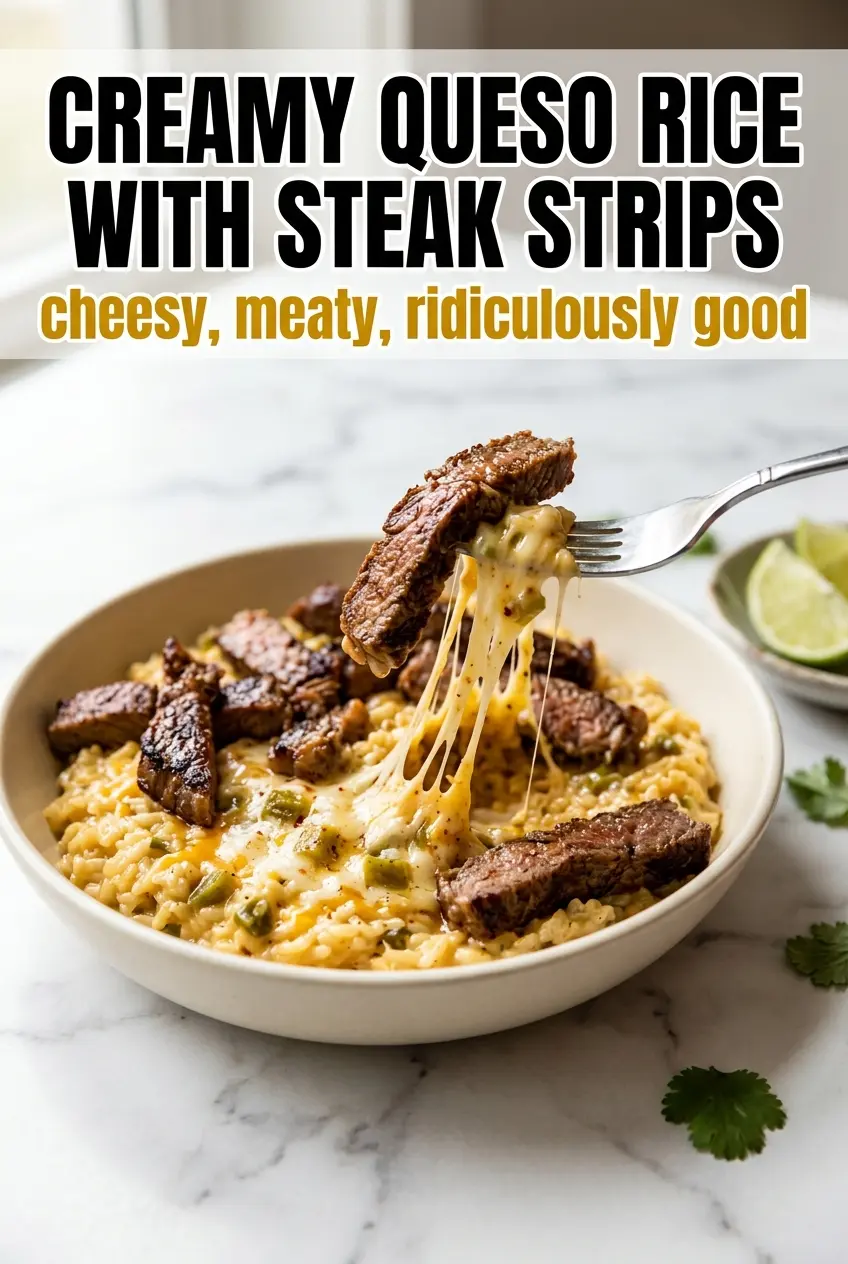
Creamy Queso Rice with Steak Strips
Ingredients
Equipment
Method
- Toss the steak strips with chili powder, cumin, salt, and black pepper until evenly coated. Aim for a consistent layer of seasoning on every piece.
- Heat the vegetable oil in a large skillet over high heat until shimmering. Sear the steak strips in a single layer for 2–3 minutes per side until deeply browned but still juicy inside, then remove and set aside.
- Reduce heat to medium and melt the butter in the same skillet. Sauté the diced onion for 3 minutes until soft and translucent.
- Add the minced garlic and cook for 30 seconds until fragrant. Stir constantly so the garlic doesn’t brown.
- Stir in the cooked long-grain white rice, whole milk, and smoked paprika. Cook and stir until the rice is hot and the mixture looks evenly combined.
- Add the shredded Monterey Jack cheese and shredded sharp cheddar cheese in handfuls, stirring until fully melted and creamy. Keep stirring until no cheese clumps remain.
- Fold in the diced green chiles. Season with salt and pepper to taste.
- Return the steak strips to the skillet, nestling them into the queso rice or arranging on top. Warm through for 1–2 minutes so the beef heats up without drying out.
- Garnish with fresh cilantro and serve with lime wedges. Add a squeeze of lime right before eating.
