
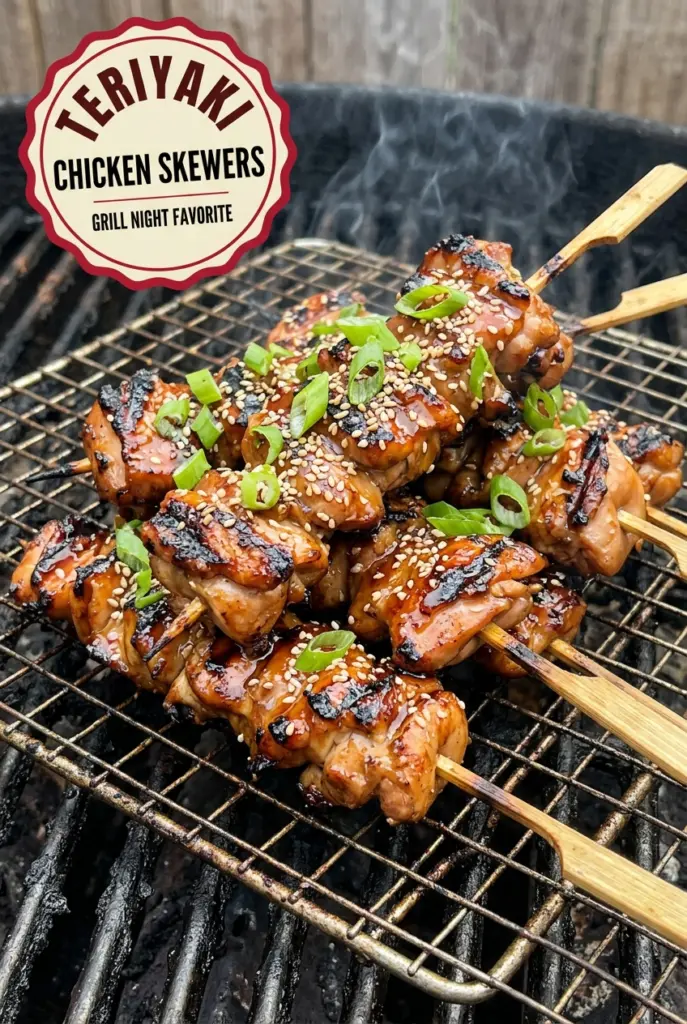
Teriyaki Chicken Skewers
Juicy teriyaki chicken skewers hit the grill with a sticky glaze, charred edges, and that sweet-salty finish that disappears fast once they land on the table. The chicken stays tender…
Tip: save now, cook later.Juicy teriyaki chicken skewers hit the grill with a sticky glaze, charred edges, and that sweet-salty finish that disappears fast once they land on the table. The chicken stays tender because it’s cut into even pieces, marinated long enough to pick up flavor, and glazed at the end instead of being drowned in sauce from the start.
What makes this version work is the balance in the marinade. Soy sauce brings salt and depth, brown sugar and honey build gloss, and rice vinegar keeps the sweetness from turning flat. Reserving part of the marinade before it touches raw chicken gives you a glaze you can simmer safely and brush on at the end, which is what gives these skewers that shiny, lacquered finish.
Below, I’ve included the small details that matter most: how to keep the chicken cooking evenly on the skewer, how to thicken the glaze without turning it gummy, and the easiest swap if you’re cooking indoors instead of firing up the grill.
The glaze turned out glossy instead of watery, and the chicken stayed juicy even after grilling. I made a double batch and my husband kept sneaking skewers off the tray before dinner.
Save these sticky teriyaki chicken skewers for grilling night, game day, or any dinner that needs a sweet-salty glaze with real char.
The Difference Between Sticky Glaze and Burnt Sugar
The biggest mistake with teriyaki skewers is putting all of the marinade on the chicken and then trying to use the same sauce for basting. That sounds efficient, but it leaves you with a glaze that’s either unsafe to use or cooked down into a harsh, overly salty reduction. The better approach is to reserve a portion before the chicken goes in, then turn that clean marinade into a glaze on the stove.
Even then, the heat matters. Teriyaki has enough sugar to go from glossy to scorched fast, especially on a grill with hot spots. Medium-high heat gives you char on the edges without turning the outside into blackened candy before the inside cooks through. The chicken thighs help here too, because they stay tender and forgiving even if the grill runs a little hotter than planned.
- Reserve the glaze first. That portion never touches raw chicken, so it can be simmered safely and brushed on at the end.
- Use thighs, not breasts. Thighs stay juicier and handle the direct heat of the grill better.
- Don’t overcrowd the skewers. A little space between pieces helps the heat move around the chicken instead of steaming it.
- Watch the sugar. If the glaze starts smoking hard or turning bitter, the grill is too hot.
What Each Ingredient Is Actually Doing in These Skewers

- Chicken thighs — This is the right cut for skewers because the extra fat keeps the meat succulent over direct heat. Chicken breast can work, but it dries out faster and doesn’t forgive overcooking the way thighs do.
- Soy sauce — This gives the dish its salt and the deep savory base that makes teriyaki taste like teriyaki. Use regular soy sauce unless you need low-sodium; if you do, add a little less so the glaze doesn’t taste flat.
- Brown sugar and honey — These build the sticky coating and help the glaze cling to the chicken. If you swap in only honey, the glaze will taste sharper and can darken faster on the grill.
- Rice vinegar — This keeps the sauce from becoming one-note sweet. Apple cider vinegar can step in, but use a little less because it reads sharper.
- Garlic and ginger — Fresh is worth it here. Powder won’t give the same bright, punchy edge, and that freshness is part of what keeps the glaze from tasting heavy.
- Cornstarch — This is what turns the reserved marinade into a glossy glaze that clings instead of running off the skewers. Stir it in cold first, then heat it until the sauce thickens and looks shiny, not paste-like.
Building the Glaze, Then Grilling Without Losing It
Mixing the Marinade the Right Way
Whisk the soy sauce, brown sugar, rice vinegar, honey, garlic, ginger, and sesame oil until the sugar mostly dissolves. Reserve a portion before the chicken goes in. That clean reserve is what becomes the glaze later, and it’s the difference between a safe finish sauce and a bowl of marinade you can’t use again.
Threading for Even Cooking
Cut the chicken into pieces that are close to the same size so they finish together. Slide them onto the skewers with tiny gaps between each piece instead of packing them tight. If the pieces touch too much, the outside chars before the center has a chance to cook through.
Thickening the Reserved Sauce
Whisk the cornstarch into the reserved marinade before it goes on the heat. Then simmer it gently in a small pan until it turns glossy and coats the back of a spoon. If it turns lumpy, the cornstarch was not fully dispersed before heating, so whisk harder next time and keep the heat steady rather than aggressive.
Grilling and Glazing at the End
Grill the skewers over medium-high heat, turning them as the edges pick up color. The chicken should feel firm but still springy when pressed, and the juices should run clear. Brush on the thickened glaze during the last few minutes only, since sugar burns quickly and can turn bitter long before the chicken is done.
How to Adapt These Teriyaki Chicken Skewers for Different Kitchens and Diets
For the grill pan or broiler
If you’re cooking indoors, use a grill pan over medium-high heat or broil the skewers on a lined sheet pan. You’ll still get good browning, but the char will be less smoky and a little more even. Brush on the glaze near the end either way, because the sugars can scorch under the broiler fast.
Gluten-free teriyaki skewers
Use gluten-free tamari in place of soy sauce and check that your cornstarch is certified gluten-free if needed. The flavor stays close to the original, and the glaze still thickens the same way.
A lighter sweetness level
Cut the brown sugar back slightly and keep the honey as written, or vice versa if you want a deeper caramel note. The glaze will be a touch less sticky, but it also burns less quickly on the grill.
Vegetable add-ins for a fuller skewer
Thread chunks of bell pepper, onion, or pineapple between the chicken pieces. Pineapple brings extra sweetness and browning, while peppers and onion add color and keep the skewers from feeling one-note.
Storage and Reheating
- Refrigerator: Store leftovers in an airtight container for up to 4 days. The glaze may thicken and cling more after chilling, which is normal.
- Freezer: These freeze well. Remove from the skewers, pack the chicken tightly, and freeze for up to 2 months.
- Reheating: Warm gently in a covered skillet over low heat or in a 300°F oven until heated through. High heat dries the chicken out and can make the sugar in the glaze taste burnt.
Answers to the Questions Worth Asking
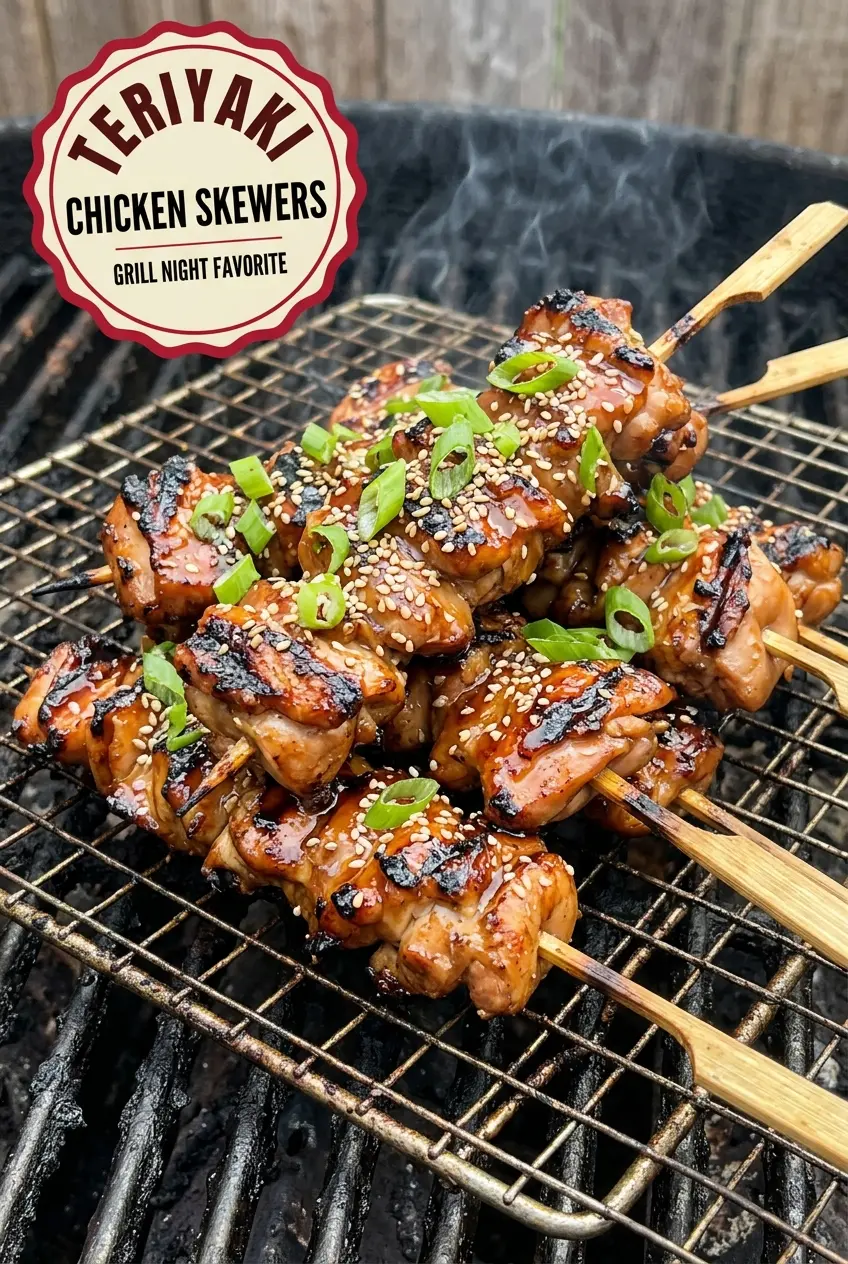
Teriyaki Chicken Skewers
Ingredients
Equipment
Method
- Whisk together soy sauce, brown sugar, rice vinegar, honey, garlic, ginger, and sesame oil in a bowl until the sugar dissolves and the mixture looks uniform.
- Reserve 1/3 cup of the marinade, then pour the rest over the chicken pieces and turn to coat; let marinate at least 30 minutes.
- Whisk cornstarch into the reserved marinade, then simmer in a small saucepan over medium heat for 2–4 minutes until thickened into a glossy glaze, stirring often.
- Thread the marinated chicken onto skewers, leaving small gaps between pieces for even cooking.
- Grill over medium-high heat for 10–12 minutes, turning occasionally, until charred at the edges and cooked through.
- Brush skewers generously with the thickened glaze during the last few minutes of grilling so it turns sticky and caramelized.
- Garnish with sesame seeds and green onions before serving.
