
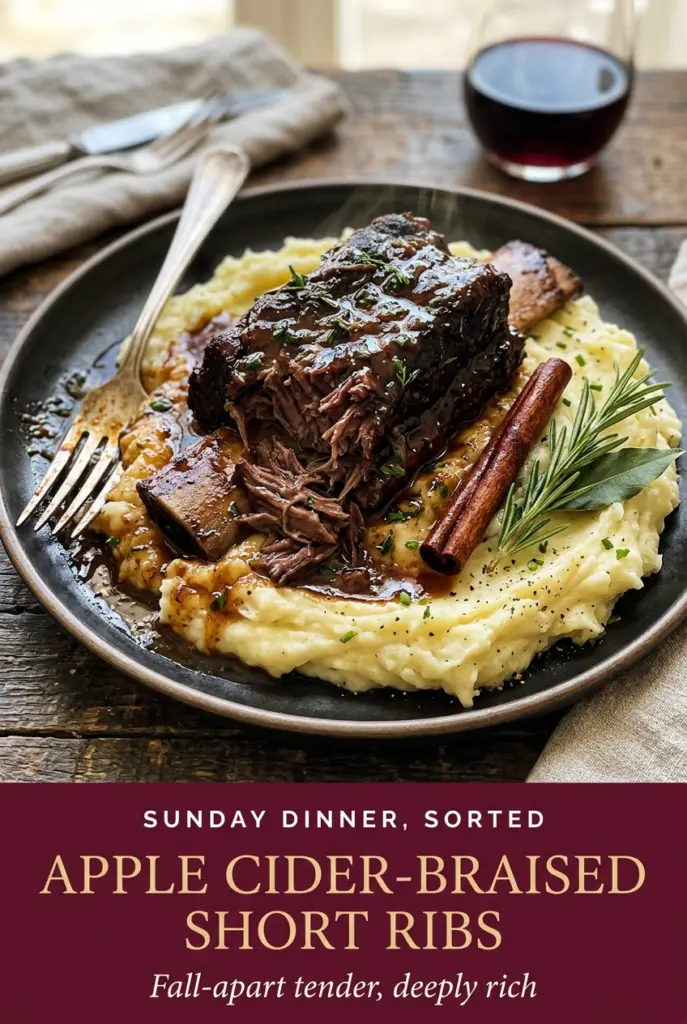
Tender Apple Cider-Braised Short Ribs
Short ribs go from sturdy and meaty to spoon-tender when they’re given enough time, and this apple cider version lands in that sweet spot where the sauce tastes polished instead…
Tip: save now, cook later.Short ribs go from sturdy and meaty to spoon-tender when they’re given enough time, and this apple cider version lands in that sweet spot where the sauce tastes polished instead of heavy. The cider brings a gentle fruitiness that keeps the braise from feeling flat, while the red wine and browned bits build the deep savory base that makes you keep going back for another bite. By the time the meat is done, it should barely need a nudge from a fork.
The part that makes this recipe work is restraint. The short ribs get a proper sear first, which gives the finished sauce a darker, richer edge, and the cider only needs a short simmer before the braise goes into the oven. That keeps the flavor clean instead of turning the whole pot sweet. The cinnamon stick is subtle here; it rounds out the braising liquid without making the dish taste like dessert.
Below, I’ll walk through the little things that matter most: how to get a deep brown crust, how to keep the sauce silky, and what to do if you want to make this ahead for a dinner that feels special without any last-minute scrambling.
The short ribs were fall-apart tender, and the sauce reduced into this glossy, rich gravy that tasted even better the next day. I served it over mashed potatoes and my husband kept talking about the rosemary and cider combo.
Save these apple cider-braised short ribs for a slow-braised dinner with a glossy pan sauce and real fall comfort.
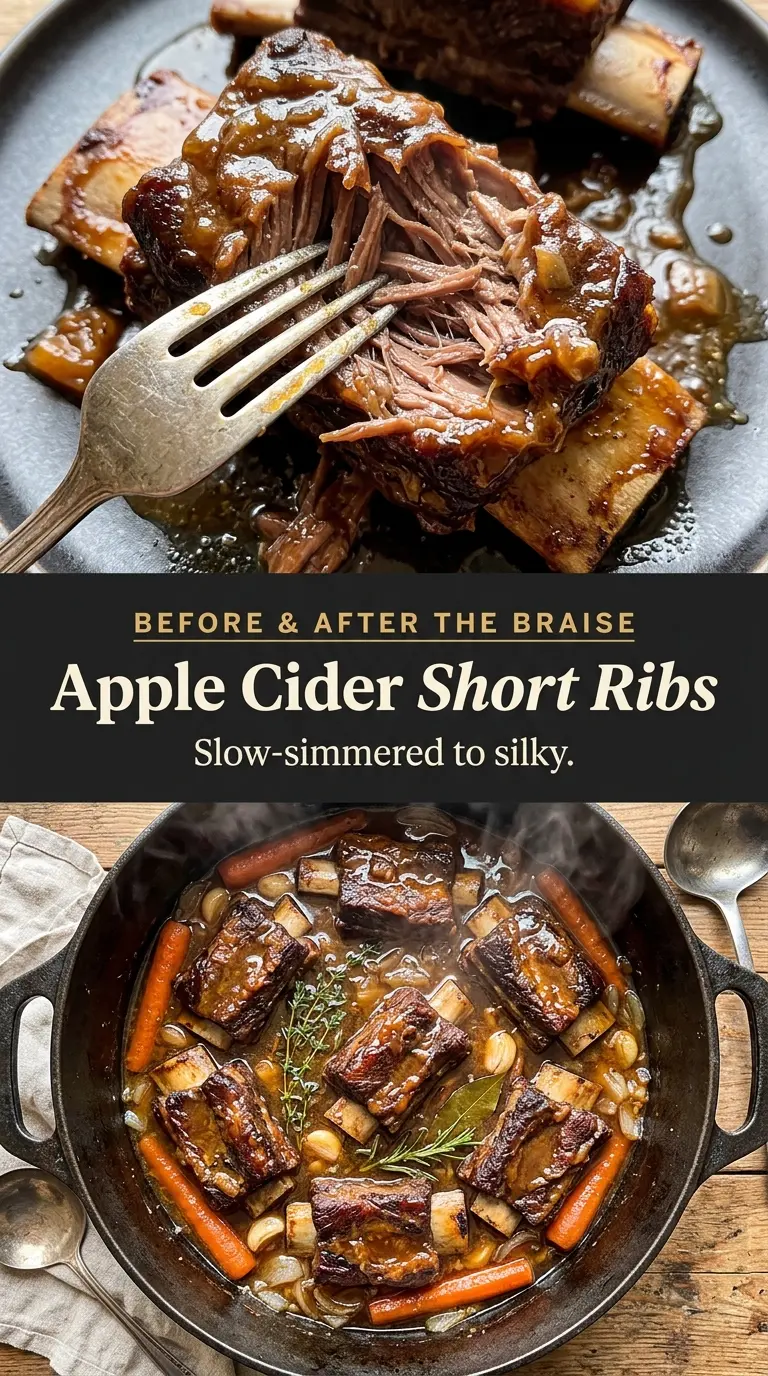
The Browned Bits Are the Whole Point
The biggest mistake with braised short ribs is treating the sear like a formality. If the meat only turns tan, the finished sauce stays thin and a little one-note. You want a dark crust that releases cleanly from the pan and leaves behind browned bits you can actually hear crackle when the wine hits.
The other trap is crowding the pot. Short ribs need space so the surface can dry and brown instead of steaming. Work in batches and give each side time to develop color; once they’re in the oven, that sear is what carries the whole dish.
- Flour — The light dusting helps the ribs brown and gives the braising liquid a little body. Use just enough to coat; too much turns gummy in the pot.
- Apple cider — Use actual cider, not apple juice. Cider has a fuller, less sugary flavor that holds up against beef and wine.
- Dry red wine — Pick something you’d drink, but it doesn’t need to be expensive. Cabernet, Merlot, or a dry red blend all work because they bring structure, not sweetness.
- Tomato paste — This adds depth and a little backbone to the sauce. Let it cook for a minute until it darkens slightly; raw paste tastes sharp.
- Rosemary, thyme, and cinnamon — The herbs bring the classic braise flavor, and the cinnamon stick gives the cider a warm edge without making the dish taste spiced. Don’t add ground cinnamon here; it muddies the sauce.
Building the Braise Without Diluting the Flavor
Searing the Ribs
Pat the short ribs dry before they hit the flour. Moisture is the enemy of browning. Season them, dust them lightly, then sear in hot oil until each side has a deep mahogany crust. If the pan starts smoking hard, lower the heat a touch; you want browning, not burnt flour.
Softening the Vegetables
The onion, carrot, and celery need enough time to lose their raw edge and pick up a little color from the fond in the pot. Cook them until the onion looks translucent and the carrots just start to soften around the edges. If the bottom of the pot looks too dark before the vegetables are ready, splash in a spoonful of broth to loosen it.
Reducing the Cider and Wine
Add the cider and wine and scrape every browned bit from the bottom. Let that mixture simmer for a few minutes before the broth goes in. That small reduction matters because it concentrates the cider’s flavor and cooks off the sharp alcohol edge, which keeps the finished sauce balanced instead of thin.
Low Oven, Long Time
Once the ribs go back into the pot, cover it tightly and braise until the meat gives when you poke it with a fork. At 325°F, that usually takes 2.5 to 3 hours, but the real test is tenderness, not the clock. If the meat still feels tight, give it another 20 to 30 minutes and check again.
Make It Gluten-Free
Skip the all-purpose flour or replace it with a gluten-free flour blend. You’ll still get good browning from the sear, and the sauce can be reduced a little longer at the end if you want it thicker.
Dairy-Free Finish
Leave out the butter and finish the sauce with a spoonful of olive oil instead. The sauce won’t be quite as glossy, but it still tastes rich because the braising liquid is already built on meat drippings and reduced cider.
No Wine in the Braise
Use more beef broth plus 2 tablespoons of red wine vinegar or apple cider vinegar for brightness. You’ll lose a little depth, but the vinegar keeps the cider from tasting flat and helps the sauce cut through the richness of the beef.
Storage and Reheating
- Refrigerator: Store the short ribs and sauce in an airtight container for up to 4 days. The flavor deepens overnight, and the fat will firm up on top, which is normal.
- Freezer: These freeze well for up to 3 months. Cool completely first, then freeze the meat with plenty of sauce so it stays moist when thawed.
- Reheating: Rewarm gently on the stovetop over low heat or covered in a 300°F oven until hot. Don’t boil the sauce, or the meat can tighten up and the sauce can separate.
Answers to the Questions Worth Asking
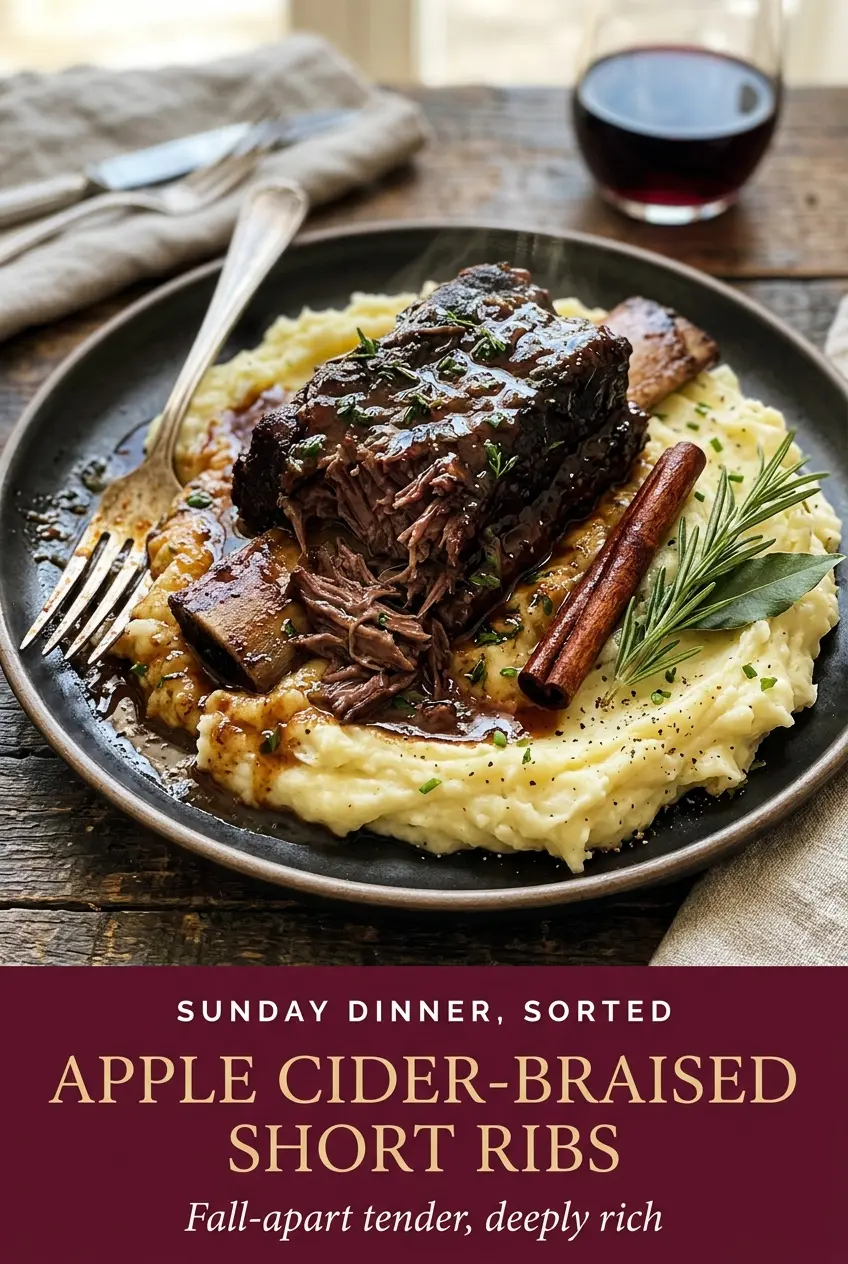
Tender Apple Cider-Braised Short Ribs
Ingredients
Equipment
Method
- Season the bone-in beef short ribs with salt and black pepper, then dust lightly with the all-purpose flour on all sides.
- Heat the olive oil in a large Dutch oven over medium-high heat until shimmering.
- Sear the short ribs in batches until deeply browned on all sides, about 8-10 minutes per batch, then remove and set aside.
- Add the yellow onion, carrots, and celery to the pot and cook until softened, about 5-6 minutes.
- Add the garlic and tomato paste and cook until fragrant, about 1 minute.
- Pour in the apple cider and dry red wine, scraping up any browned bits from the bottom of the pot, then simmer for 3-4 minutes to reduce slightly.
- Add the beef broth, fresh rosemary, fresh thyme, bay leaves, cinnamon stick, and the seared bone-in beef short ribs to the pot.
- Bring to a simmer, cover, and braise in a 325°F oven (or over low heat on the stovetop) for 2.5-3 hours, until fork-tender and falling off the bone.
- Remove the short ribs and strain the braising liquid, discarding the solids.
- Return the liquid to the pot and simmer until slightly thickened, then stir in the unsalted butter.
- Garnish with fresh parsley, chopped and serve the short ribs with the silky sauce.
