
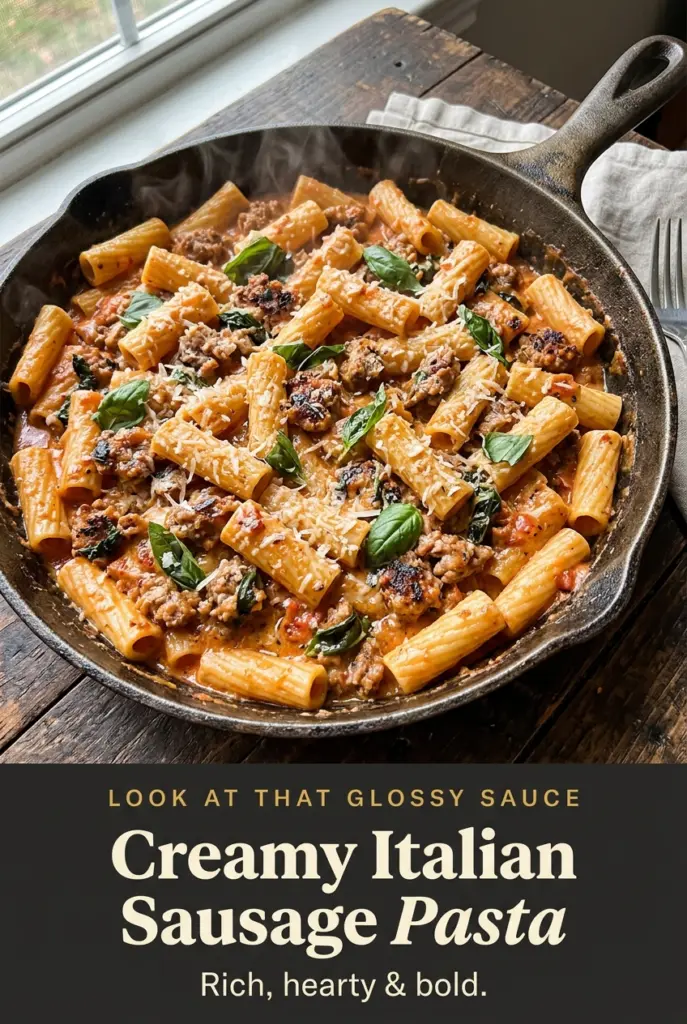
Creamy Italian Sausage Pasta
Rich, rosy, and packed with enough savory sausage to carry the whole pan, creamy Italian sausage pasta hits that sweet spot between a weeknight dinner and something that feels a…
Tip: save now, cook later.Rich, rosy, and packed with enough savory sausage to carry the whole pan, creamy Italian sausage pasta hits that sweet spot between a weeknight dinner and something that feels a little indulgent. The sauce clings to every ridge of rigatoni, the Parmesan melts into the tomato cream base, and the red pepper flakes keep it from tasting flat. It’s the kind of meal that disappears fast because it lands with bold flavor in every bite.
What makes this version work is the order. The sausage browns first so the pan picks up real flavor, then the onion and tomato paste cook long enough to lose their raw edge and turn deeper and sweeter. That step matters. If the cream goes in too early or the tomato paste never cooks down, the sauce tastes thinner and sharper than it should. A splash of pasta water at the end gives you control over the texture, which is what keeps the sauce glossy instead of heavy.
Below, I’ve included the detail that matters most when you’re building a sauce like this, plus a few swaps that still keep the dish balanced. If you’ve ever had a cream sauce turn bland, grainy, or oddly thick, this method fixes the usual trouble spots.
The sauce turned out silky and coated the rigatoni perfectly, and the little hit of red pepper made it taste restaurant-level. I also loved that it thickened up without feeling heavy.
Creamy Italian Sausage Pasta with a glossy tomato-Parmesan sauce is the kind of one-pan dinner worth keeping close for busy nights.
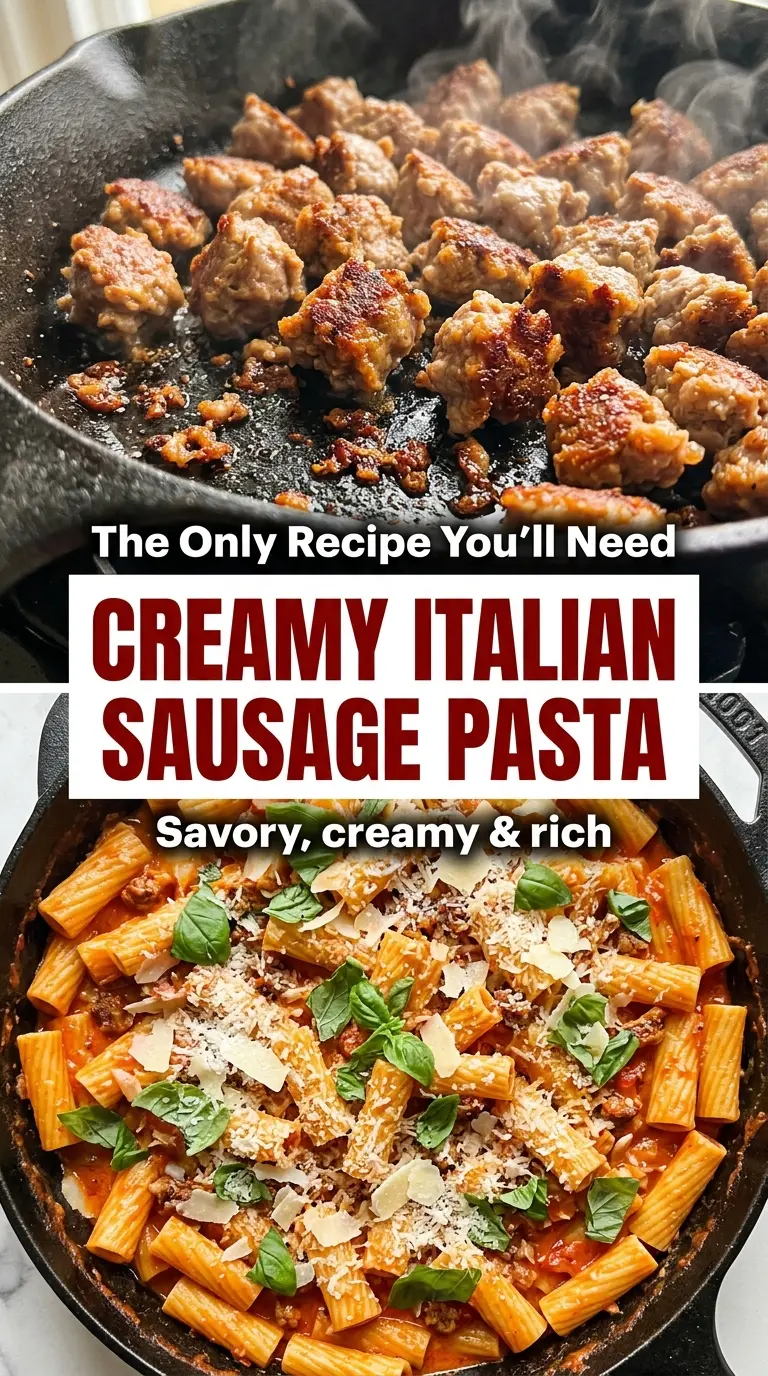
The Reason the Sauce Stays Creamy Instead of Splitting
The biggest mistake in a tomato cream sauce is rushing the cream into a pan that’s still too hot or too sharp. Tomato paste needs time in the skillet to darken and lose that tinny edge, and the broth needs to loosen all the browned bits before the cream goes in. That’s what gives you a sauce that tastes rounded instead of blunt.
The sausage fat matters too. If you brown the sausage and then drain the pan clean, you throw away part of the flavor base. Leave just enough behind to cook the onion, then scrape the skillet well once the broth goes in. Those browned bits are what make the sauce taste like it was built on purpose.
- Italian sausage — Use mild or hot depending on how much heat you want. If you can only find links, remove the casings before browning so you get the same crumbled texture.
- Tomato paste — This is not a background ingredient here. It needs a full minute or two in the pan so it deepens in color and sweetens. That step keeps the sauce from tasting flat.
- Heavy cream — This is what gives the sauce its plush texture. Half-and-half can work in a pinch, but the sauce will be thinner and a little less stable.
- Parmesan — Freshly grated melts smoother than the pre-shredded stuff. Pre-grated cheese often has anti-caking agents that can make the sauce feel grainy.
- Rigatoni or penne — Short pasta with ridges grabs the sauce better than long noodles. The shape matters here because the sauce is thick enough to cling, not drape.
The Heat Management That Keeps the Sauce Glossy
Browning the sausage first
Cook the sausage in a large skillet over medium-high heat until it’s deeply browned and no pink remains. You want some crisp edges, not just cooked-through crumbles, because those browned bits become part of the sauce. If the pan looks dry before the sausage is done, the sausage was probably lean; add a little olive oil and keep going.
Building the tomato base
Add the onion and cook until soft and translucent, then stir in the garlic and tomato paste. The paste should darken slightly and smell sweeter, not raw or metallic. If you stop too soon here, the sauce will taste thin even after the cream goes in.
Turning broth and tomatoes into sauce
Pour in the broth and scrape the skillet thoroughly so every browned bit comes up. Stir in the crushed tomatoes and let the sauce simmer long enough to thicken and lose its sharpness. If it still tastes aggressive at this point, it needs more simmer time, not more cream.
Finishing with cream, cheese, and pasta
Lower the heat before adding the cream and sausage back to the pan. Stir in the Parmesan off the hottest part of the burner so it melts into the sauce instead of clumping. Toss in the pasta and add splashes of reserved water until the sauce coats the noodles in a slick, even layer.
Make it a little lighter
Use half-and-half instead of heavy cream if you want a lighter sauce, but keep the heat low once it goes in. The texture will be a bit less velvety, and the sauce won’t cling quite as thickly, but the flavor still holds up well.
Make it gluten-free
Swap in your favorite gluten-free rigatoni or penne and cook it just to al dente. GF pasta can go soft fast once it sits in sauce, so undercooking it by a minute helps it hold its shape at the table.
Add greens without watering it down
Stir in a few handfuls of baby spinach at the very end and let it wilt in the residual heat. Add it too early and it turns mushy and dulls the sauce; at the end, it gives you color without changing the texture.
Storage and Reheating
- Refrigerator: Store in an airtight container for up to 4 days. The sauce thickens as it chills, so it will look tighter the next day.
- Freezer: It freezes reasonably well for up to 2 months, though the cream may loosen a little after thawing. Freeze in portions for the smoothest reheating.
- Reheating: Warm gently on the stove over low heat with a splash of water, broth, or milk. High heat is the mistake that breaks the sauce and makes the pasta dry before the center is hot.
Answers to the Questions Worth Asking
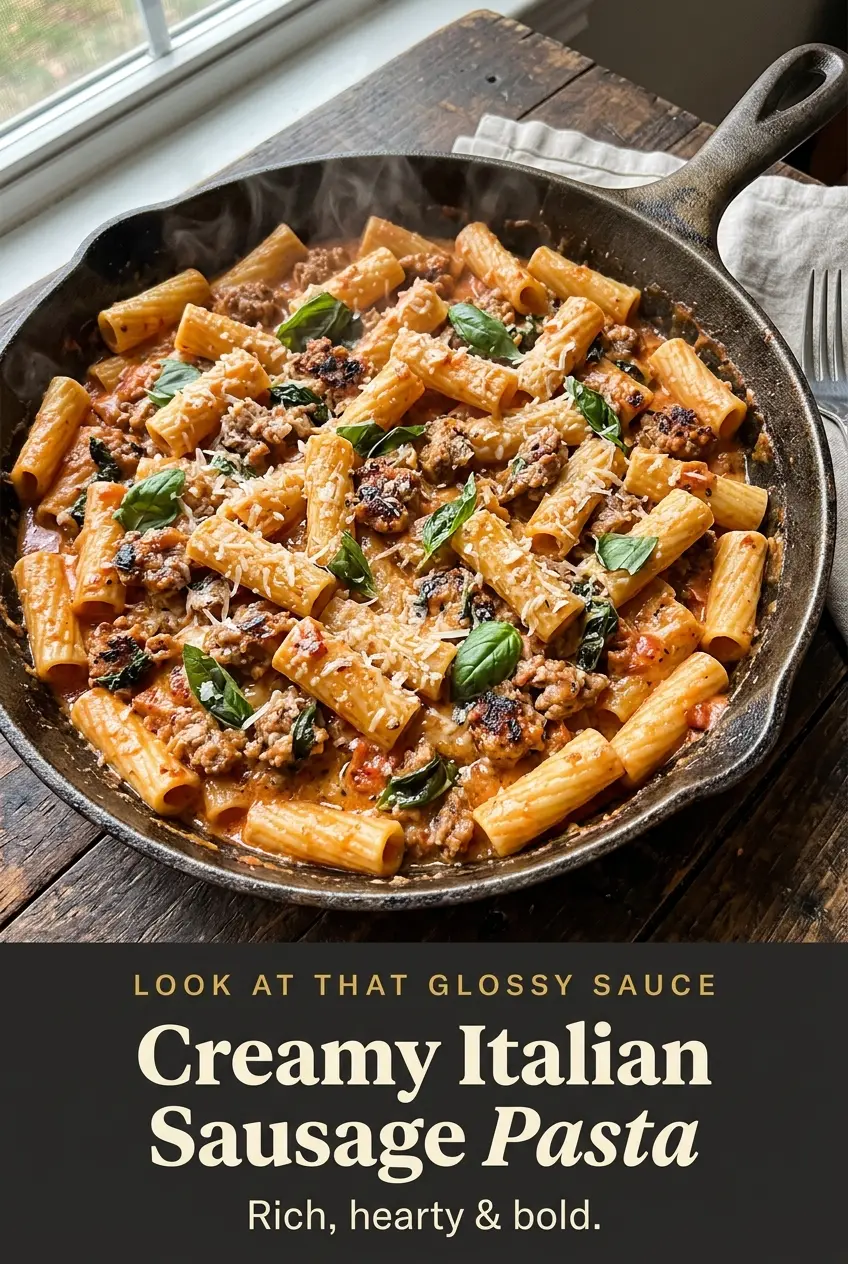
Creamy Italian Sausage Pasta
Ingredients
Equipment
Method
- Bring a pot of salted water to a rolling boil, then cook the rigatoni or penne until al dente, about 10-12 minutes. Reserve 1/2 cup pasta water before draining and set aside.
- Heat olive oil in a large skillet over medium-high heat until shimmering, then add the Italian sausage and break it apart with a spoon. Cook until browned, about 6-7 minutes, then remove and set aside while leaving drippings in the pan.
- Add the diced yellow onion to the skillet and cook until softened, about 4-5 minutes. Keep the heat at medium-high so the pan stays active.
- Add the minced garlic and tomato paste, stirring constantly, and cook until the paste darkens slightly, about 2 minutes. Scrape the bottom to prevent sticking.
- Pour in the chicken broth and scrape up the browned bits from the bottom of the pan. Stir in the crushed tomatoes, red pepper flakes, dried Italian seasoning, salt, and black pepper, then simmer for 8-10 minutes.
- Stir in the heavy cream and return the sausage to the skillet. Simmer for 2-3 minutes, until the sauce turns rosy and glossy.
- Stir in the Parmesan cheese until melted, then add the cooked pasta and toss until fully coated. Use the reserved pasta water as needed to loosen the sauce and coat every piece.
- Top with torn fresh basil and extra Parmesan before serving, so the herb stays bright. Serve warm from the skillet.
