
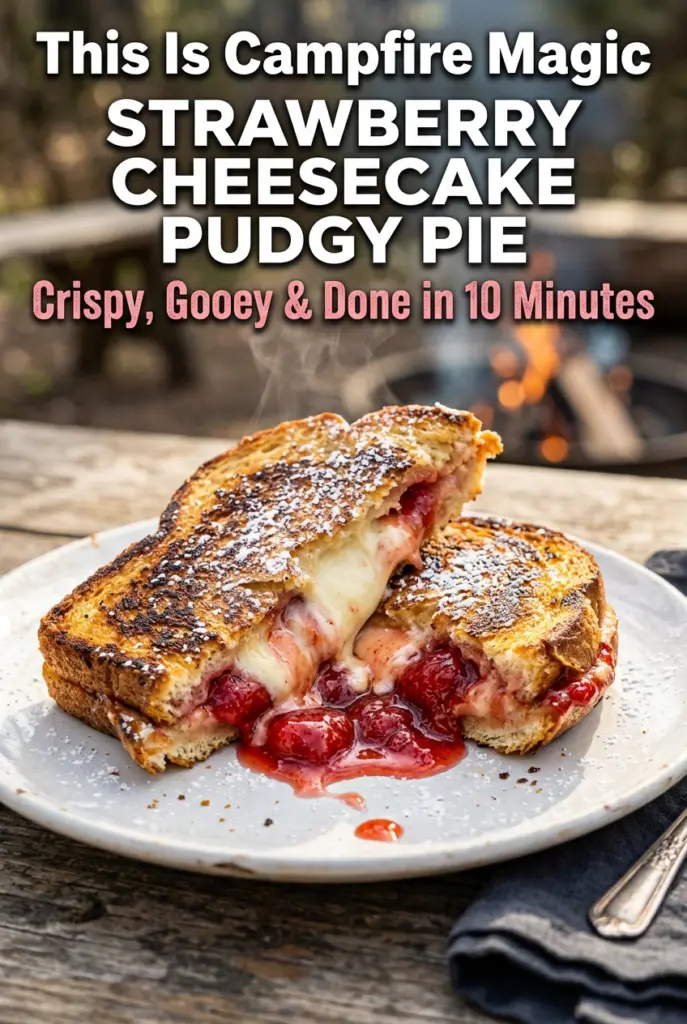
Strawberry Cheesecake Pudgy Pie
Crispy golden bread wrapped around a warm strawberry cheesecake filling is the kind of campfire dessert that disappears fast. The outside turns toasted and crackly in the pie iron while…
Tip: save now, cook later.Crispy golden bread wrapped around a warm strawberry cheesecake filling is the kind of campfire dessert that disappears fast. The outside turns toasted and crackly in the pie iron while the center melts into a creamy swirl of jammy berries and sweet cream cheese. It tastes like a cross between a grilled cheese and a cheesecake hand pie, which is exactly why people keep reaching for a second one before the coals even cool down.
The trick is keeping the filling thick enough that it stays inside the bread while the pie iron works its magic. Softened cream cheese blends smoothly with powdered sugar and vanilla, and the strawberry jam brings both sweetness and moisture without turning the center watery. Generous butter on the outside of the bread matters here too. It’s what gives you that deep golden crust instead of dry, pale toast.
Below, I’ll walk through the small details that keep a pudgy pie from leaking or burning, plus a few swaps if you want to use fresh strawberries or adapt it for a different kind of fire-cooked dessert.
The filling stayed creamy and didn’t leak out, and the bread got perfectly crisp on the outside. I used strawberry jam and the little bit of vanilla made it taste like cheesecake from a bakery.
Keep this strawberry cheesecake pudgy pie handy for your next campfire dessert night — the crisp bread and gooey filling are the part everyone asks for again.
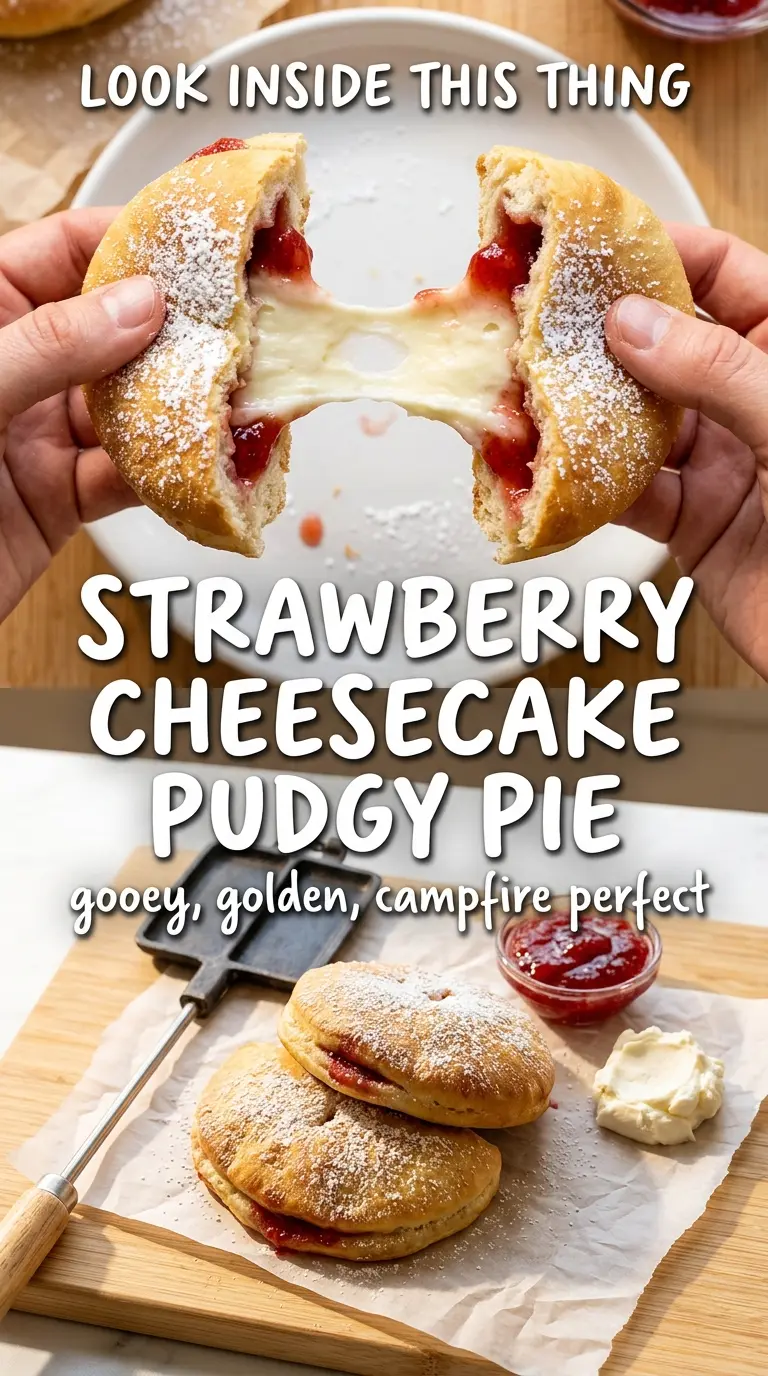
The part that keeps the filling inside the bread
Most pudgy pies fail for one of two reasons: the bread isn’t sealed well enough, or the filling is too loose and blows out the seam before the center heats through. This version works because the cream cheese mixture is thick, the jam stays in a small mound instead of being spread to the edges, and the buttered bread helps the outside set before the filling has a chance to escape. That border around the edge isn’t decoration. It’s the difference between a clean hand pie and a sticky pie iron cleanup.
Heat control matters just as much as filling control. A pie iron over roaring flame will brown the bread before the middle gets soft, which leaves you with a dark shell and a cold center. Medium heat or hot coals give you the slower, steadier melt that makes the cheesecake layer taste creamy instead of grainy.
- Cream cheese — Softened cream cheese gives the filling its cheesecake body. Cold cream cheese stays lumpy and makes it harder to spread without tearing the bread.
- Powdered sugar — This sweetens the filling without adding grit. Granulated sugar doesn’t dissolve as smoothly here and can leave the center sandy.
- Vanilla extract — A small amount rounds out the strawberry flavor and makes the filling taste like actual cheesecake instead of sweetened cream cheese.
- Strawberry jam — Jam is the easiest way to get a concentrated berry flavor that stays put. If you use fresh strawberries, dice them small and toss them with sugar first so they release some juices without flooding the bread.
- White sandwich bread — Soft, sturdy bread is the best choice because it seals tightly and toasts evenly. Thick artisan bread tends to crack at the edges and makes the pie harder to crimp shut.
- Butter — Softened butter coats the outside of the bread and gives you that deep golden crust. Oil won’t give the same flavor or even browning in a pie iron.
Building the pudgy pie so it browns before it bursts
Mixing the cheesecake filling
Stir the softened cream cheese, powdered sugar, and vanilla until the mixture is smooth and fluffy. If the cream cheese is still cold, it will drag and leave little lumps that don’t melt evenly. Stop mixing once it looks uniform; overworking it just makes it looser and harder to spoon cleanly onto the bread.
Buttering and loading the bread
Spread butter all the way to the edges on one side of each slice. That edge-to-edge coverage is what gives the finished pudgy pie its full golden crust. Place the first slice butter-side down in the pie iron, then spoon the filling into the center and leave a border so the seal can close without smearing filling into the seam.
Closing and cooking over the fire
Lay the second slice on top with the buttered side facing out, then close the pie iron firmly. Trim any bread that hangs over the edge so it doesn’t scorch before the center heats. Cook over medium coals or a moderate flame, rotating often, until both sides are deep golden and the filling feels hot when you carefully press the outside of the iron. If the bread is browning too fast, pull it farther from the flame; if nothing is happening after a couple of minutes, move it closer to the heat.
Opening and serving without losing the filling
Let the pudgy pie rest for a minute or two after opening the iron. That short pause lets the filling settle so it doesn’t run out the moment you cut into it. A dusting of powdered sugar is optional, but it does give the warm bread a little bakery finish.
How to adapt this for different fillings and different fires
Fresh Strawberry Version
Use diced strawberries tossed with 1 tablespoon sugar in place of jam. Let them sit long enough to get juicy, then spoon them on sparingly so the bread doesn’t soak through. This version tastes brighter and less sweet, but it needs a lighter hand with the fruit.
Dairy-Free Swap
Use a dairy-free cream cheese that spreads smoothly and plant-based butter for the bread. The filling will be a little softer, so keep the jam layer modest and cook a touch more gently. You’ll still get the same crisp shell and sweet berry center.
Different Bread, Different Texture
Soft white bread gives the most reliable seal, but brioche makes the finished pie richer and slightly sweeter. Just keep an eye on the heat, because brioche browns faster and can go from golden to too dark in a hurry.
Storage and Reheating
- Refrigerator: Store leftovers in an airtight container for up to 2 days. The bread softens as it sits, and the filling firms up once chilled.
- Freezer: I don’t recommend freezing finished pudgy pies. The bread loses its crisp texture and the filling can turn watery after thawing.
- Reheating: Warm in a skillet over low heat or in a pie iron over gentle coals until the center loosens again. High heat burns the bread before the filling softens, which is the fastest way to ruin the texture.
Questions I Get Asked About This Recipe
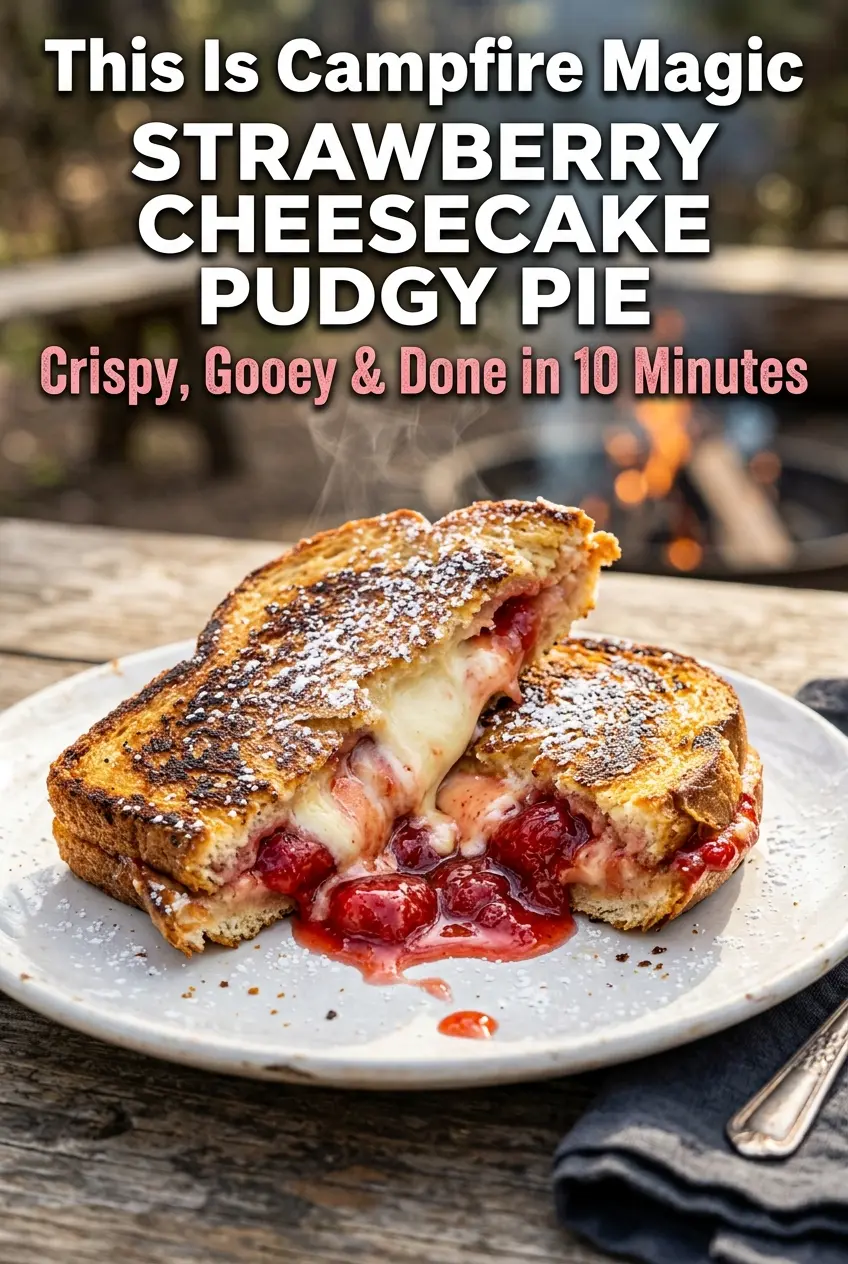
Strawberry Cheesecake Pudgy Pie
Ingredients
Equipment
Method
- Let the cream cheese soften at room temperature for 15–20 minutes so it blends easily.
- In a small bowl, mix cream cheese, powdered sugar, and vanilla extract until smooth and creamy.
- Butter one side of each bread slice generously so you get a crisp, golden exterior.
- Preheat the pie iron over hot campfire coals or a medium flame for 2–3 minutes, then spray lightly with cooking spray.
- Place one bread slice butter-side down into the pie iron.
- Spoon about 2 tablespoons of the cream cheese mixture onto the center and spread slightly, leaving a border around the edges.
- Add 1–2 tablespoons of strawberry jam over the cream cheese layer.
- Place the second bread slice on top, butter-side up toward the pie iron lid.
- Close the pie iron firmly and trim any excess bread sticking out around the edges.
- Cook over the fire for 3–5 minutes per side, rotating occasionally, until the outside is deep golden brown and the filling is hot and melted.
- Carefully open the pie iron, slide the pudgy pie onto a plate, and let it cool for 1–2 minutes before eating.
- Dust with extra powdered sugar if desired and serve warm.
