
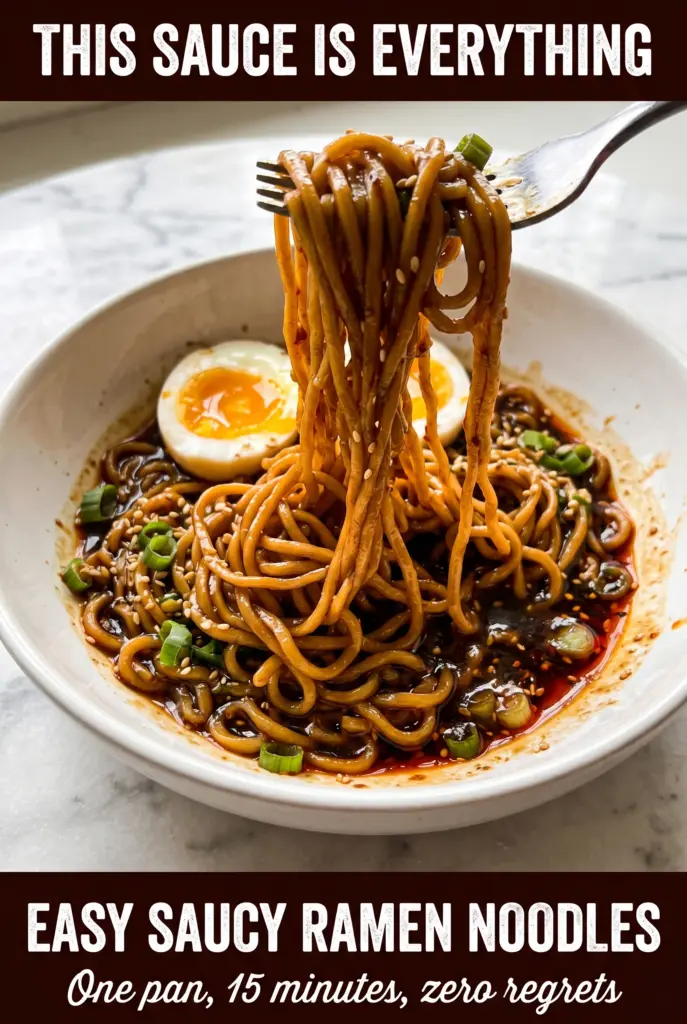
Easy Saucy Ramen Noodles
Glossy ramen noodles coated in a deeply savory sauce disappear fast, and this version gets the texture right without relying on the seasoning packet. The noodles stay springy, the sauce…
Tip: save now, cook later.Glossy ramen noodles coated in a deeply savory sauce disappear fast, and this version gets the texture right without relying on the seasoning packet. The noodles stay springy, the sauce clings instead of pooling at the bottom of the bowl, and the whole thing lands with the kind of salty, garlicky heat that makes takeout feel unnecessary.
The trick is building the sauce separately so the cornstarch can thicken it before the noodles go in. That gives you a shine that sticks to every strand instead of a watery stir-fry sauce that slides off the noodles. Garlic, ginger, and the white parts of the scallions go in first, just long enough to perfume the oil without burning. After that, the sauce only needs a short simmer before the noodles are tossed through.
Below, I’ve included the small details that matter most, from how to keep the noodles from going soft to the swaps that still taste good when you don’t have every bottle in the pantry. The short version: high heat, quick timing, and a little noodle water are what make this bowl work.
The sauce turned glossy in the skillet and coated the noodles instead of sinking to the bottom. I added the reserved water like you said and it came together in minutes — my son asked if I could make it again tomorrow.
Save these saucy ramen noodles for the nights when you want a glossy, garlicky bowl in under 20 minutes.
The Reason the Sauce Clings Instead of Slipping Off
Ramen noodles are thin and quick to overcook, which is why so many versions end up soft and slippery instead of coated and satisfying. The fix is to pull them from the water when they’re just tender, then finish them in the sauce for a minute or two. That final toss lets the starch on the noodles help the sauce grab on.
The other piece is the cornstarch slurry. If you add cornstarch straight into hot liquid, it clumps. Dissolving it first gives you a smooth, glossy sauce that thickens fast in the skillet. Once it bubbles, it should look lightly syrupy, not pasty.
- Undercook the noodles by a hair. They keep softening when they hit the pan, and that brief carryover keeps them from turning mushy.
- Use a quick boil, not a long simmer. Ramen needs only a couple of minutes. Waiting for a full tender texture in the pot leaves you with broken noodles later.
- Reserve a little noodle water. That starchy water loosens the sauce without thinning the flavor the way plain water can.
What Each Ingredient Is Actually Doing in This Bowl
- Ramen noodles — The fresh, springy texture is what makes this dish work. Discard the seasoning packets; they’re too one-note for the sauce here, and the noodles themselves are the important part.
- Soy sauce and oyster sauce — Soy sauce brings salt and deep savoriness, while oyster sauce adds body and a rounded, slightly sweet finish. If you don’t eat shellfish, use a vegetarian oyster-style sauce or mushroom stir-fry sauce for a similar effect.
- Sesame oil — Use it in the sauce, not for frying. It adds a nutty finish that reads immediately as ramen-style flavor.
- Cornstarch — This is what turns the sauce glossy and clingy. Arrowroot can work in a pinch, but it thickens a little differently, so whisk it in just before it hits the pan.
- Garlic, ginger, and scallion whites — These build the base flavor in the hot oil. Fresh ginger matters here; dried ginger won’t give you the same bright bite.
- Sriracha and chili garlic paste — One brings heat and tang, the other brings peppery depth and texture. If you only have one, use it and keep going.
Building the Sauce and Tossing the Noodles Fast Enough to Keep Them Springy
Mix the sauce before the pan gets hot
Whisk the soy sauce, oyster sauce, sesame oil, rice vinegar, sriracha, brown sugar, and chili garlic paste together first, then stir in the cornstarch slurry. That way the pan can stay focused on aromatics instead of forcing you to measure while the garlic threatens to burn. The sauce should look smooth and dark before it ever hits the skillet.
Wake up the garlic and ginger in hot oil
Heat the oil over medium-high, then add the garlic, ginger, and the white parts of the scallions. They should sizzle right away and smell fragrant within a minute. If the garlic turns brown too fast, the heat is too high and the whole dish will taste bitter, so pull the pan off the burner for a few seconds if needed.
Let the sauce bubble until it turns glossy
Pour the sauce into the skillet and stir constantly while it bubbles. It only needs about 30 seconds to go from thin to lightly thickened, and you’re looking for a shine that coats the spoon instead of a heavy paste. If it gets too thick before the noodles go in, loosen it with a splash of reserved noodle water.
Toss until every strand looks lacquered
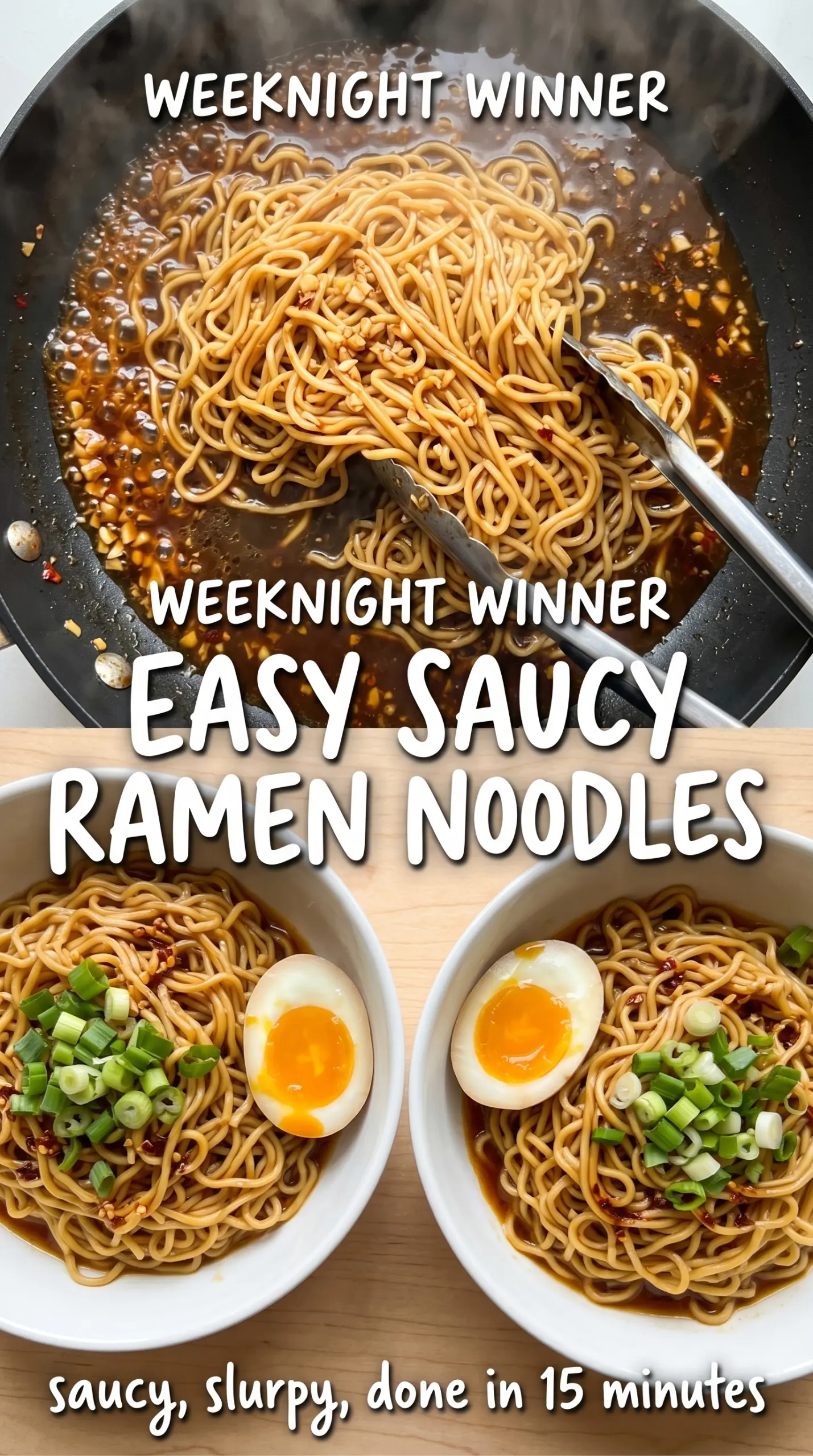
Add the drained noodles and use tongs to toss them through the sauce for 1 to 2 minutes. The noodles should go from pale and slippery to evenly coated and glossy, with no dry patches in the pan. Finish with the toppings while everything is hot so the egg warms through and the chili oil perfumes the bowl.
How to Adapt This for Different Pantry Situations
Make it vegetarian without losing the savory depth
Swap the oyster sauce for vegetarian oyster sauce or mushroom stir-fry sauce. That keeps the sauce dark, glossy, and savory instead of thin and soy-heavy, which is what gives the bowl its takeout-style depth.
Turn down the heat without losing the punch
Cut the sriracha in half and skip the chili garlic paste, then finish with just a small drizzle of chili oil at the table. You’ll keep the savory-sweet balance and lose the sharp burn that can overwhelm the sauce.
Use whatever noodles you have
Instant ramen works best because it’s fast and springy, but thin wheat noodles, yakisoba noodles, or even spaghetti can stand in. Just cook the substitute until barely tender, since the skillet finish is what gives the dish its final texture.
Storage and Reheating
- Refrigerator: Store leftovers in an airtight container for up to 3 days. The noodles will soak up some of the sauce, so they’ll look tighter the next day.
- Freezer: I don’t recommend freezing this. The noodles lose their spring and the sauce turns muddy after thawing.
- Reheating: Warm in a skillet over medium-low with a splash of water to loosen the sauce. Microwaving works in a pinch, but it can dry out the noodles fast if you heat them too long at once.
Questions I Get Asked About This Dish
Easy Saucy Ramen Noodles
Ingredients
Equipment
Method
- Bring 4 cups water to a boil in a large skillet or wok over medium-high heat. Add ramen noodles and cook for 2–3 minutes until just tender, then reserve 1/4 cup pasta water and drain.
- Set the drained ramen noodles aside while you prepare the sauce.
- Whisk soy sauce, oyster sauce, sesame oil, rice vinegar, sriracha, brown sugar, and chili garlic paste in a bowl until fully combined. In a separate bowl, dissolve cornstarch in 2 tbsp water and stir it into the sauce.
- Heat vegetable oil in the skillet over medium-high heat, then add garlic, ginger, and the white parts of green onions. Sauté for 60–90 seconds until fragrant and just golden, without letting it burn.
- Pour the sauce into the skillet and let it bubble for 30 seconds, stirring constantly, until it thickens slightly and turns glossy.
- Add the drained ramen noodles to the pan and toss vigorously with tongs for 1–2 minutes, coating every strand in the sauce. If the sauce is too thick, add a splash of reserved pasta water and toss again.
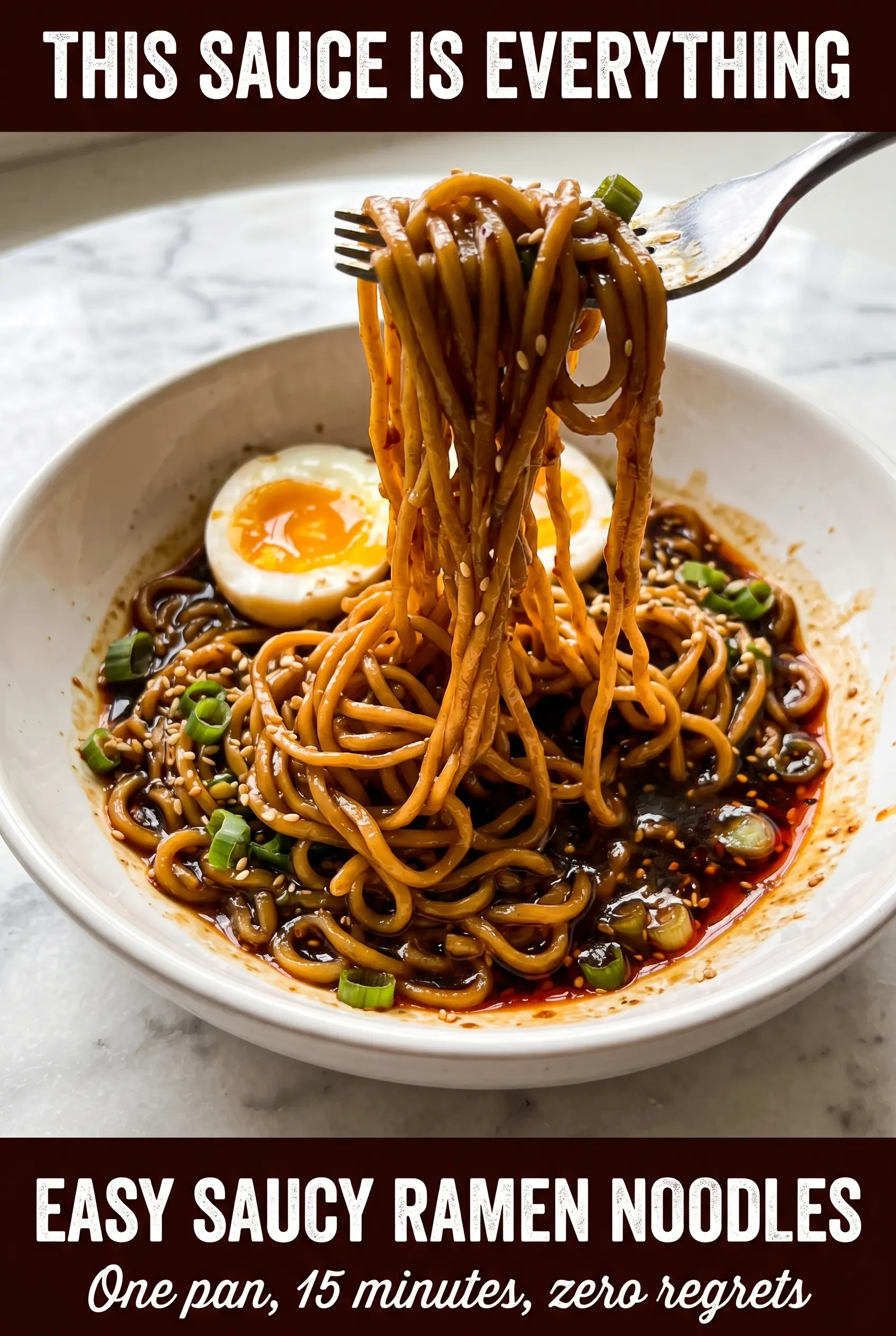
- Remove from the heat, divide into bowls, and top with a halved soft-boiled egg, sesame seeds, chili oil, and extra sliced green onion tops. Serve immediately.
