
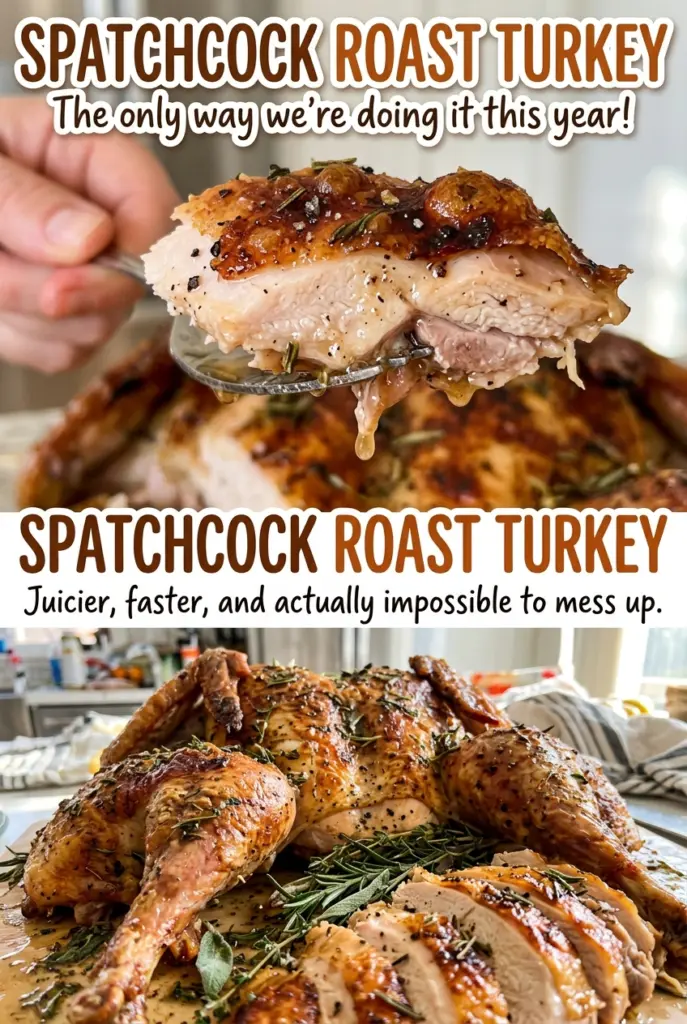
Spatchcock Roast Turkey
The backbone is the part that makes a big turkey suddenly lie low and wide across the pan. Once the bird is flat, the legs and breast sit in a…
Tip: save now, cook later.The backbone is the part that makes a big turkey suddenly lie low and wide across the pan. Once the bird is flat, the legs and breast sit in a much more even layer, and the skin has room to turn deeply golden instead of steaming against itself. That’s the detail that makes spatchcock roast turkey feel manageable, even when you’re starting with a 12- to 14-pound bird.
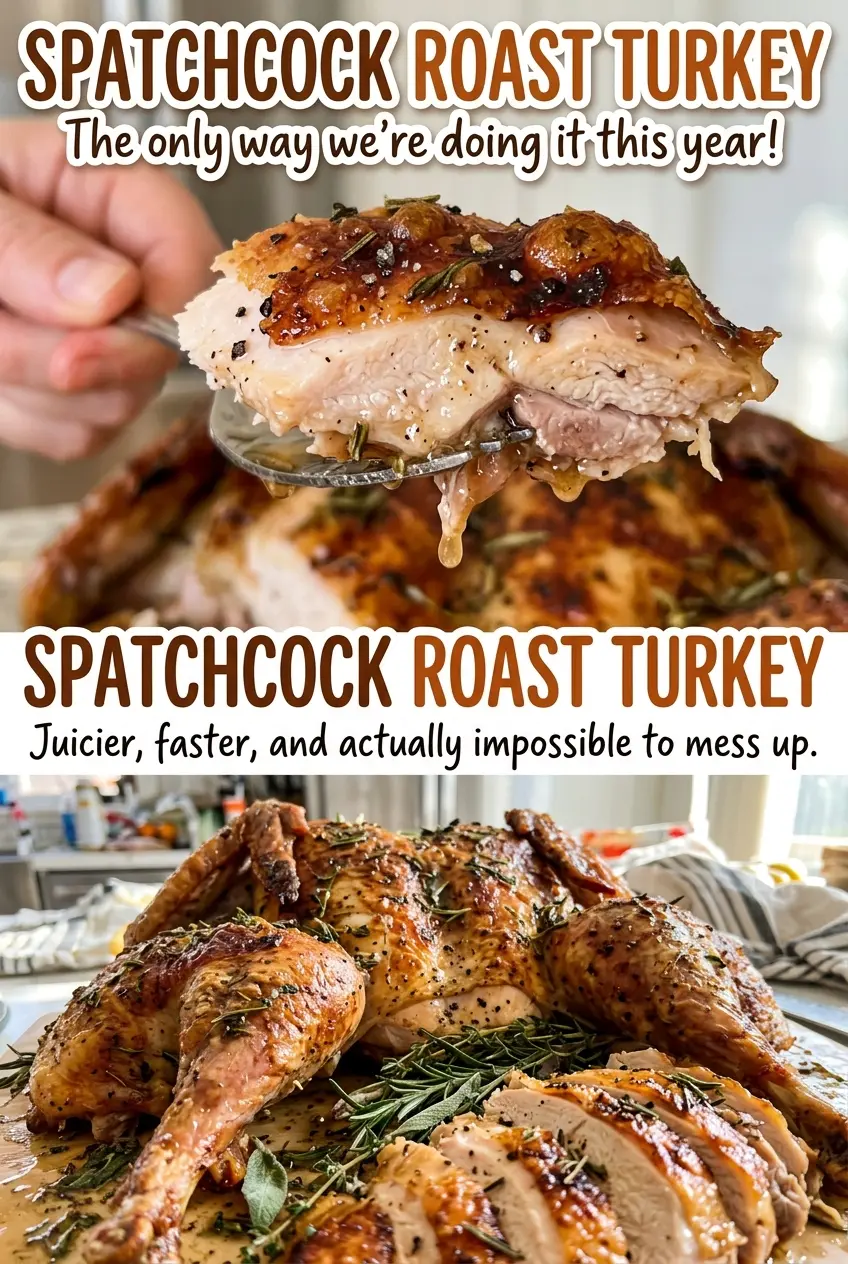
I salt the turkey well ahead of roasting, then spread a soft herb butter under the skin and over the outside. The dry time in the refrigerator gives the salt time to season the meat, while the butter carries fresh thyme, rosemary, and lemon zest right where you want them. After roasting, the skin is crisp and bronzed, and the meat is ready to carve after a proper rest.
Kitchen Note
I rub the salt under the loosened skin as well as over the outside. That puts seasoning against the meat itself, not just on the skin; use gentle fingers so you loosen the skin without tearing it.
Save this spatchcock roast turkey for a deeply golden bird with fresh thyme, rosemary, and lemon butter.
Why Spatchcocking Changes the Roast, Not Just the Shape
A whole turkey is tall in the middle, where the breast sits above the legs. In the oven, those parts don’t receive heat in quite the same way, so the breast can get ahead of the thighs. Cutting out the backbone and pressing the bird flat changes that geometry: the meat sits at a more even height, and more of the skin is exposed to the oven’s heat.
That flat shape also explains why the roasting time is shorter than many people expect for a bird this size. Rather than estimating by weight alone, use the skin color and thermometer readings together. The broad surface gives you plenty of golden skin, while checking the breast and thigh separately tells you what’s happening in each part of the bird. A spatchcocked turkey isn’t just a whole turkey with a different presentation; it cooks as a different shape, so the old whole-bird timing isn’t a reliable guide.
The Ingredients That Make This Turkey Taste Like More Than a Roast
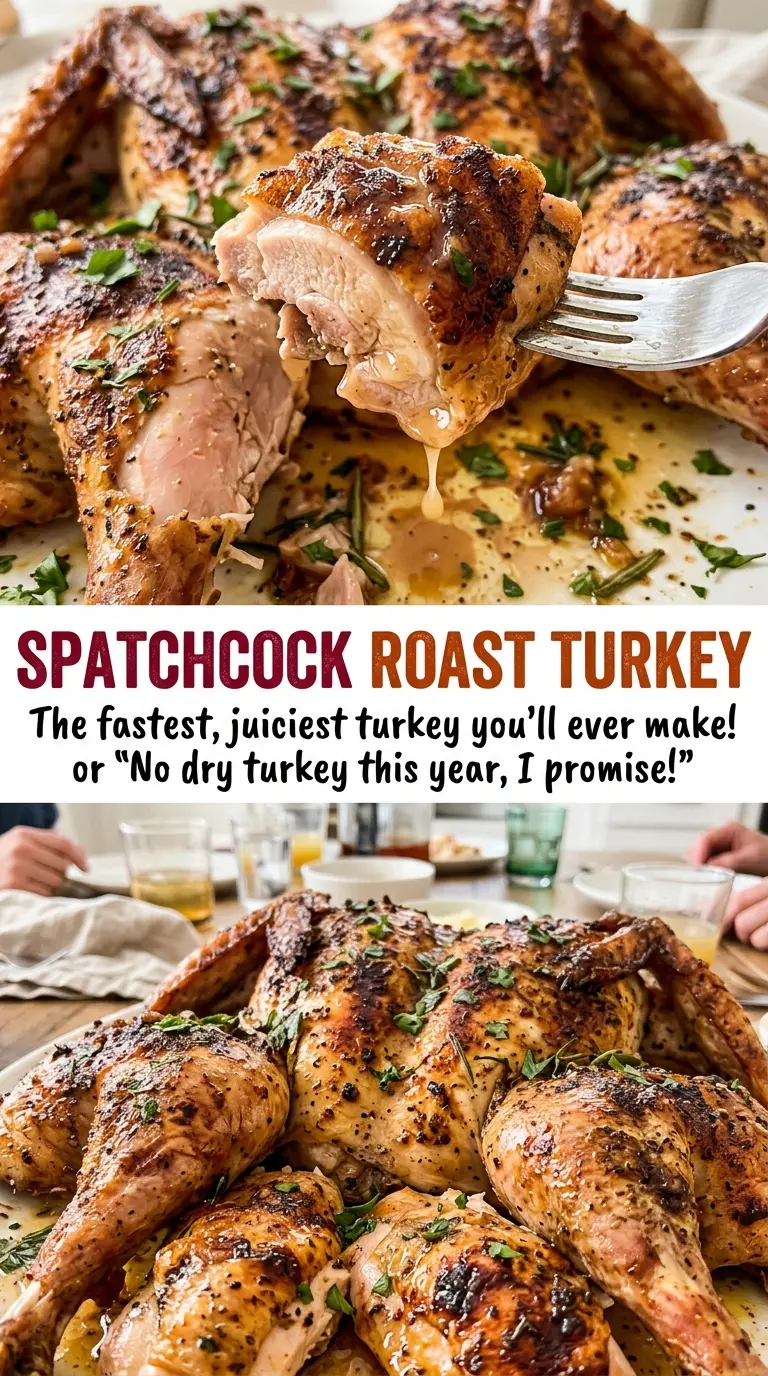
- Natural whole turkey — A bird in the 12- to 14-pound range fits the roasting approach here. Thaw it completely and remove the neck and giblets before you start. Quality matters less than choosing a fresh-tasting bird that hasn’t been seasoned or treated in advance.
- Diamond Crystal kosher salt — Its light, flaky crystals are part of how the measured amount is calibrated. Other salts have different crystal sizes, so don’t replace it by volume without a tested conversion; a denser salt can make the turkey too salty.
- Unsalted butter — Softened butter spreads easily beneath the skin and over the outside, carrying the herbs across the bird. Unsalted butter lets the measured kosher salt provide the seasoning without an extra, hard-to-control source of salt. Let it soften enough to stir smoothly, but don’t melt it.
- Fresh thyme and rosemary — Their chopped leaves give the butter a fragrant, savory character. Use fresh sprigs with green leaves and finely chop them so they spread through the butter instead of clumping. Dried herbs have a different concentration and texture, so they aren’t a like-for-like swap here.
- Finely grated lemon zest — Zest brings a bright citrus aroma without adding liquid to the butter. Grate only the yellow outer peel; the white pith underneath tastes bitter. Fresh zest has a livelier scent than bottled lemon juice, which would also change the butter’s consistency.
- Black pepper — Freshly ground pepper gives the herb butter a gentle warmth and small flecks across the skin. The specified ground form blends evenly, so there’s no need to use an expensive specialty pepper.
How to Get the Turkey Flat, Seasoned, and Deeply Golden
Cut Along the Backbone and Flatten the Bird
Set the turkey breast-side down on a stable cutting board. With sturdy poultry shears, cut along both sides of the backbone and remove it, then turn the bird breast-side up. Press firmly on the breastbone until the turkey lies flat; a raised center means it hasn’t opened fully, so press again rather than trying to roast it bowed upward.
Salt the Turkey and Let the Surface Dry
Pat the turkey dry, then rub the salt over both sides and beneath the loosened skin. Set it skin-side up on a wire rack in a 16-by-13-inch roasting pan. Refrigerate it uncovered for 12 to 24 hours; the exposed skin should feel dry rather than damp when it’s ready for the oven.
Spread the Herb Butter Under and Over the Skin
Take the turkey out of the refrigerator 30 minutes before roasting and heat the oven to 425°F. Stir the softened butter with the black pepper, finely chopped thyme and rosemary, and lemon zest until the mixture is evenly flecked with herbs. Spread it beneath the skin and over the skin, taking care to distribute it rather than leaving one thick patch.
Roast to Temperature, Then Rest Before Carving
Roast for 75 to 100 minutes, watching for skin that’s deeply golden. Check with an instant-read thermometer in the thickest part of the breast and the innermost part of the thigh; both spots need to register 165°F. If the skin looks ready before the readings do, keep roasting and rely on the thermometer rather than color alone. Transfer the turkey to a cutting board and let it rest for 30 minutes before carving.
Three Small Changes for a Different Herb Butter
A dairy-free herb-and-lemon turkey
Omit the butter and use the listed pepper, thyme, rosemary, and lemon zest directly under the loosened skin and over the turkey. The herbs won’t form a smooth paste, and you’ll lose the buttery richness, but the turkey’s own skin will still roast in the oven.
A softer, less citrusy herb butter
Leave out the lemon zest and keep the butter, thyme, rosemary, and black pepper. The roast will taste more savory and herb-forward, without the bright citrus note. This is a good adjustment if you want the herbs to lead rather than the lemon.
Rosemary without thyme
Skip the thyme and keep the rosemary, lemon zest, pepper, and butter together. The result is more piney and direct, with fewer herbal notes competing in the butter. Chop the rosemary finely so its firmer leaves don’t form long pieces.
Storage and Reheating
- Refrigerator: Refrigerate leftover turkey within 2 hours and use it within 3 to 4 days. The skin softens in storage, even when the meat stays moist.
- Freezer: Freeze carved turkey in a tightly sealed container or freezer bag for best quality within 2 to 6 months. Thaw it in the refrigerator before reheating.
- Reheating: Reheat only the amount you plan to eat, covered in the microwave, until steaming hot throughout. Short bursts help keep the meat from drying out; reheating the whole bird takes longer and warms less evenly.
Questions That Come Up Before the Turkey Goes in the Oven
Spatchcock Roast Turkey
Ingredients
Equipment
Method
- Set the turkey breast-side down on a cutting board and use sturdy poultry shears to cut along both sides of the backbone.
- Remove the backbone, turn the turkey breast-side up, and press firmly on the breastbone until the bird lies flat.
- Pat the turkey dry and rub the salt over both sides and under the loosened skin.
- Set it skin-side up on a wire rack in a 16x13-inch roasting pan and refrigerate uncovered for 12 to 24 hours.
- Take the turkey out of the refrigerator 30 minutes before roasting.
- Preheat the oven to 425°F.
- Stir together the butter, black pepper, thyme, rosemary, and lemon zest.
- Spread the mixture under the skin and over the skin.
- Roast for 75 to 100 minutes, until the skin is deeply golden and an instant-read thermometer registers 165°F in the thickest part of the breast and the innermost part of the thigh.
- Transfer the turkey to a cutting board and rest for 30 minutes before carving.
