
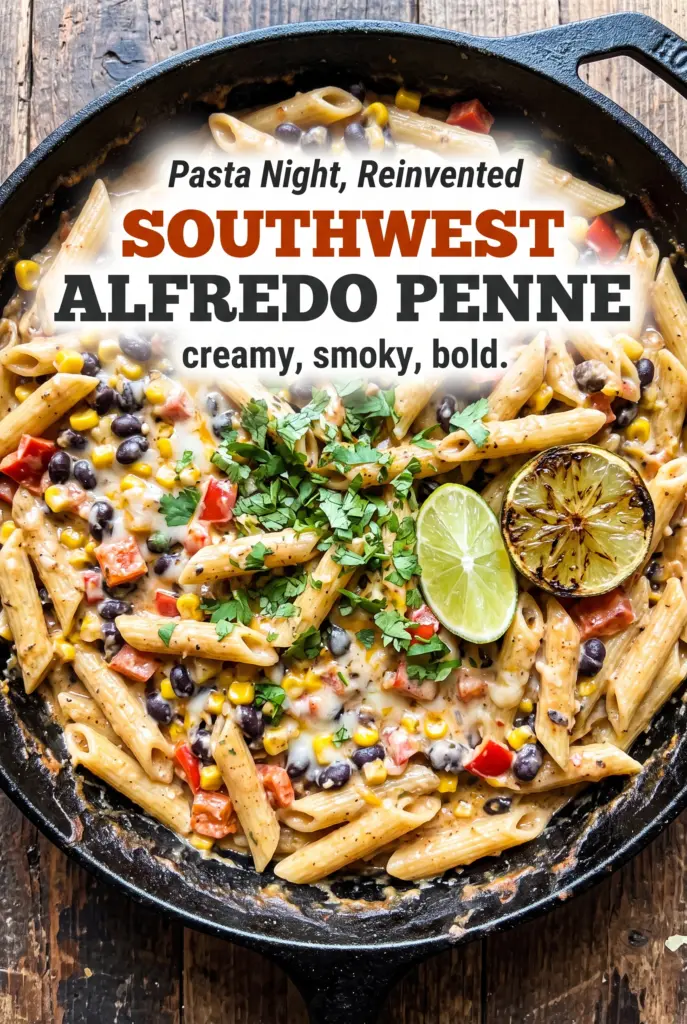
Southwest Alfredo Penne Pasta
Creamy Alfredo clings to every ridge of penne here, but the real draw is the contrast: sweet corn, tender black beans, and crisp bell pepper against a smoky, garlicky sauce…
Tip: save now, cook later.Creamy Alfredo clings to every ridge of penne here, but the real draw is the contrast: sweet corn, tender black beans, and crisp bell pepper against a smoky, garlicky sauce that still tastes rich enough to count as comfort food. The lime at the table matters just as much as the Parmesan in the pan. It cuts through the cream and keeps the whole bowl from feeling heavy.
What makes this version work is balance. Heavy cream gives the sauce body, chicken broth loosens it without watering it down, and the Parmesan thickens everything as it melts. The smoked paprika and cumin don’t turn this into chili pasta; they just push the Alfredo in a warmer direction so the beans and corn taste intentional instead of like add-ins.
Below, I’ll walk through the one part people usually get wrong with cream sauces like this, plus the easiest swaps if you want to make it vegetarian or adjust the heat. The method is straightforward, but a few small choices keep the sauce smooth and the pasta glossy instead of clumpy.
The sauce turned out silky and the smoked paprika gave it this deeper, almost restaurant-style taste. I added the lime at the end like you suggested and it kept the whole pan from tasting too heavy.
Save this Southwest Alfredo Penne Pasta for a creamy dinner with smoky spice, black beans, and sweet corn.
The reason the sauce stays smooth instead of turning grainy
Alfredo breaks when the heat is too aggressive or the cheese gets tossed in before the dairy has settled into a gentle simmer. In this pasta, the broth and cream go in first and the Parmesan goes in last, off a hard boil and into a low simmer. That keeps the fat and liquid from separating, and it gives the cheese time to melt into the sauce instead of clumping on contact.
The other thing that helps is the starch from the pasta. When you add the cooked penne to the skillet, a little starchy water clings to it and helps the sauce settle into a glossy coating. If the sauce looks thin at first, give it another minute over low heat before you decide to add more cheese. It thickens as it sits.
What each ingredient is doing in this skillet
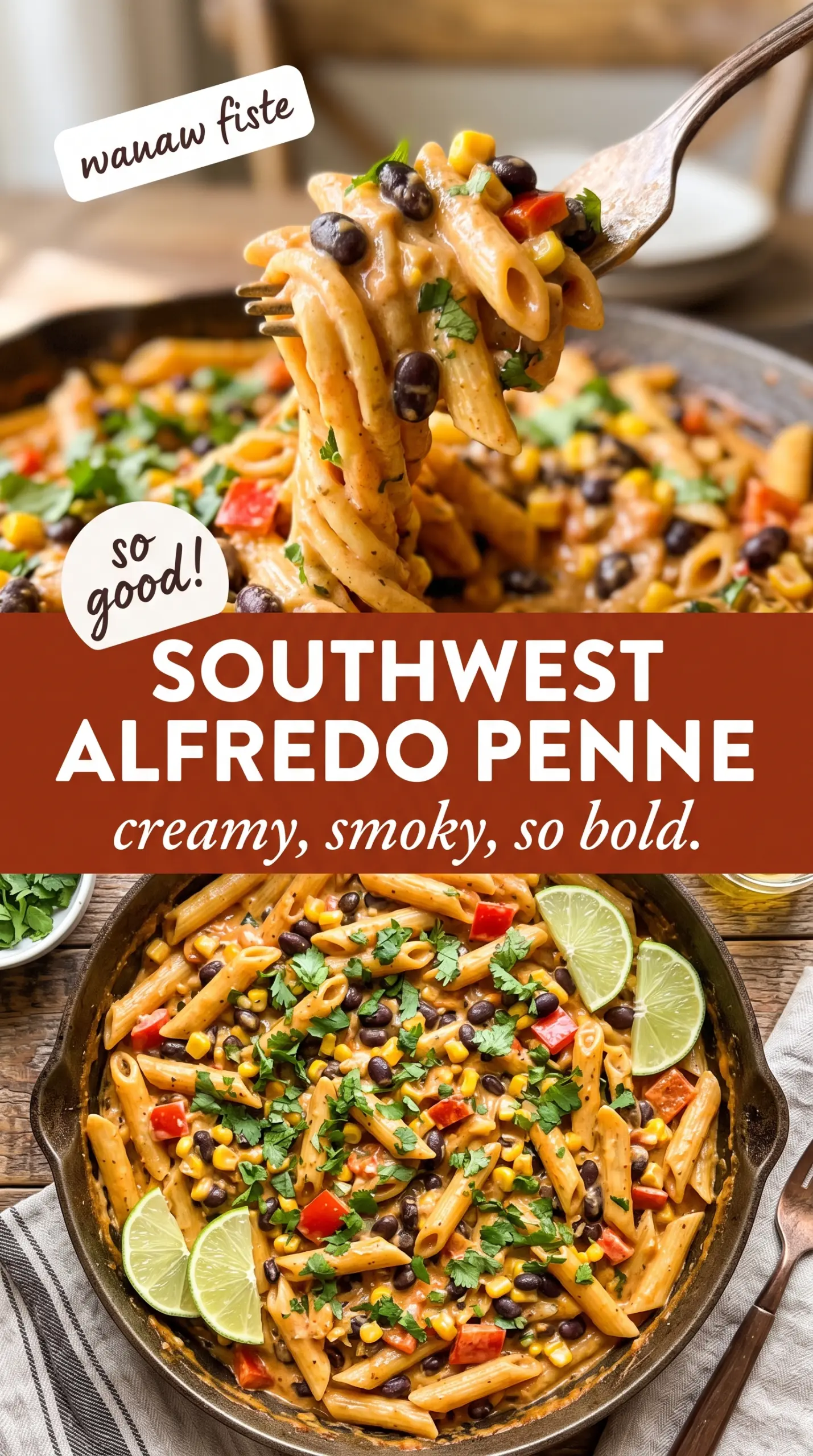
- Penne pasta — The ridges trap the sauce and the tube shape gives you a little bit of everything in each bite. Penne holds up better than delicate pasta here, which matters once the beans and corn get folded in.
- Heavy cream — This is the base that gives you the classic Alfredo feel. Half-and-half will work in a pinch, but the sauce will be looser and needs a little more simmer time.
- Chicken broth — It cuts the richness and gives the sauce enough flow to coat the pasta instead of sitting in a thick mound. If you want to keep it vegetarian, use vegetable broth and the flavor stays clean.
- Parmesan — Grated Parmesan melts into the sauce and helps it thicken. Buy a wedge and grate it yourself if you can; pre-grated cheese often contains anti-caking agents that can leave the sauce a little sandy.
- Smoked paprika and cumin — These are the Southwest backbone. They add warmth and depth without overpowering the cream, and they work best when they’re stirred into the sauce rather than sprinkled on at the end.
- Black beans and corn — The beans bring a soft, earthy bite, while the corn adds sweetness and texture. Drain the beans well so they don’t thin the sauce or make the skillet muddy.
- Bell pepper — It adds freshness and a little crunch if you stop cooking it while it still has some texture. Dice it small so it softens quickly and blends into the pasta instead of taking over.
Building the sauce before the pasta goes in
Waking up the garlic and pepper
Melt the butter over medium heat, then add the garlic and bell pepper. You’re looking for the garlic to smell fragrant, not brown, and the pepper to soften just enough to lose its raw edge. If the garlic starts taking on color early, the heat is too high and it will turn bitter before the sauce even begins.
Letting the beans and corn warm through
Stir in the corn and black beans and let them cook for a couple of minutes. This step does two things: it warms the fillings so the skillet doesn’t cool down when the dairy goes in, and it gives the corn a lightly toasted edge. If the beans are wet, the pan will steam instead of sauté, so drain them well first.
Thickening the cream without scorching it
Pour in the cream and broth and bring the pan to a gentle simmer, not a boil. Once it’s bubbling softly, whisk in the Parmesan, smoked paprika, cumin, and cayenne if you want heat. If the cheese looks stubborn, pull the skillet off the burner for a minute and whisk; high heat is what makes dairy go grainy.
Coating the pasta so it stays glossy
Add the cooked penne and toss until every piece is coated. The sauce should look creamy and cling to the pasta, not pool at the bottom of the pan. If it tightens up too much, loosen it with a splash of pasta water or broth, a little at a time, until it slides around the noodles with a glossy finish.
How to change the dish without losing what makes it work
Make it vegetarian without flattening the flavor
Swap the chicken broth for vegetable broth. The sauce still tastes full because the cream and Parmesan carry most of the body, and the smoked paprika keeps it from feeling plain. I’d keep the beans and corn as written; they give the dish enough substance that you won’t miss the meat.
Turn up the heat without wrecking the sauce
Use the cayenne and add a pinch of crushed red pepper with the garlic. That gives the heat a chance to bloom in the butter instead of landing harshly at the end. If you want even more bite, serve sliced jalapeños on top instead of stirring in more spice.
Make it gluten-free or a little lighter
Use your favorite gluten-free penne and cook it just to al dente, since it can go soft fast once it hits the sauce. For a lighter version, half-and-half can replace the heavy cream, but the sauce will need a slower simmer and a little extra Parmesan to reach the same body.
Storage and Reheating
- Refrigerator: Store leftovers in an airtight container for up to 4 days. The sauce will thicken as it chills.
- Freezer: It can be frozen, but the cream sauce may separate a bit when thawed. If you freeze it, cool it completely and use a freezer-safe container for up to 2 months.
- Reheating: Reheat gently on the stove over low heat with a splash of broth or milk, stirring often. The common mistake is blasting it in the microwave or over high heat, which tightens the cheese and makes the sauce look broken.
Answers to the questions worth asking
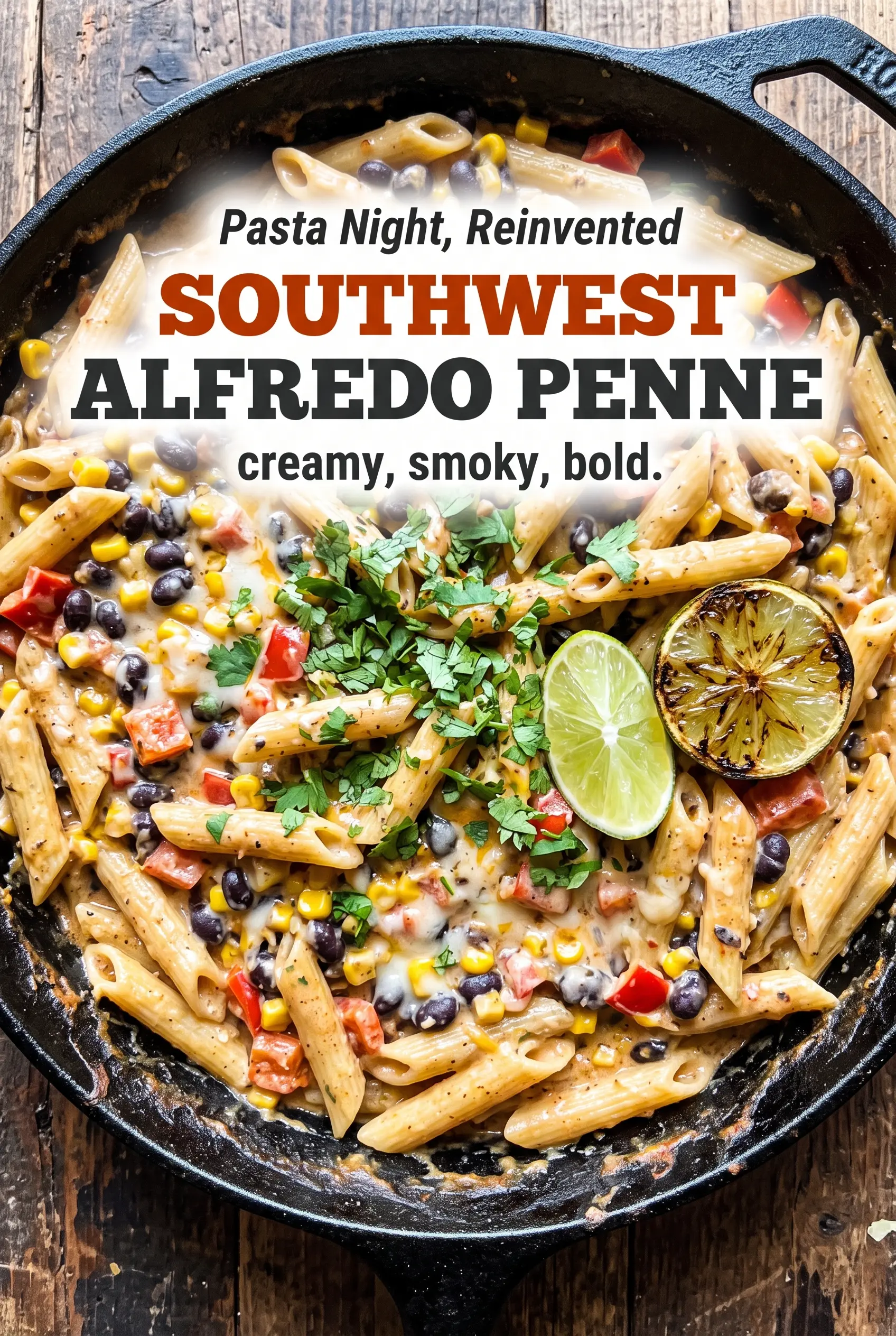
Southwest Alfredo Penne Pasta
Ingredients
Equipment
Method
- Cook the penne in salted boiling water until al dente, about 10 to 12 minutes. Drain and set aside so it’s ready to toss.
- Melt the butter in a large skillet over medium heat. Add the garlic and bell pepper, cooking until softened, about 3 minutes, until fragrant and glossy.
- Stir in the corn and black beans and cook for 2 minutes more. Heat through until the mixture is hot and slightly steamy.
- Pour in the heavy cream and chicken broth, then bring to a gentle simmer. Look for small bubbles around the edges, not a hard boil.
- Whisk in the Parmesan, smoked paprika, cumin, and cayenne until the sauce is smooth and slightly thickened. Continue whisking until the texture coats the back of a spoon.
- Toss in the cooked penne and stir until evenly coated in sauce. Season with salt and pepper to taste, then mix again so every piece is covered.
- Garnish with fresh cilantro and serve with lime wedges. Add cilantro last so it stays bright and fresh.
