
Sourdough Stuffing with Herbs and Butter
When the bread cubes come out of the oven, they should feel dry rather than toasted; that little distinction changes the whole pan. I learned not to rush past it.…
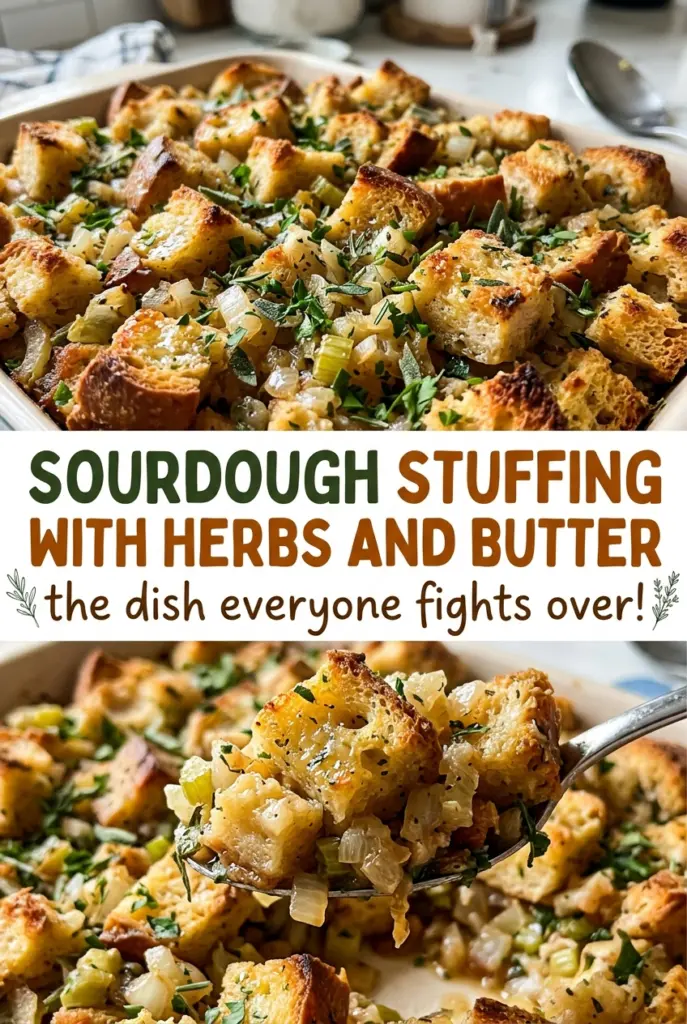
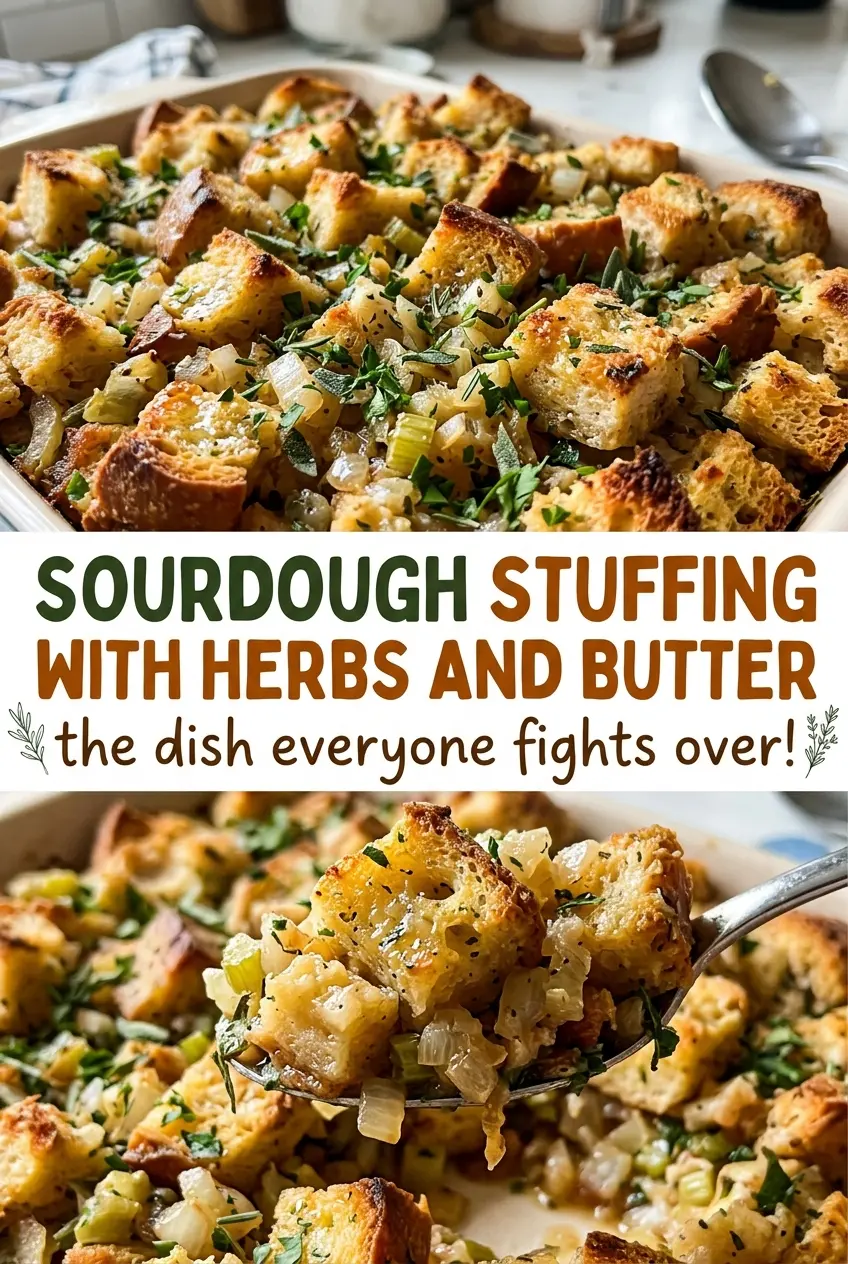
Tip: save now, cook later.When the bread cubes come out of the oven, they should feel dry rather than toasted; that little distinction changes the whole pan. I learned not to rush past it. Bread that still feels soft in the middle takes on broth unevenly, and the finished stuffing can turn heavy instead of tender. This sourdough stuffing with herbs and butter has a soft, savory center and a golden top, with enough tang from the bread to keep the butter and herbs in balance.
I cut the loaf into even cubes, dry them in a low oven, then let them cool before bringing everything together. The bread gets time to absorb the broth and eggs before it goes into the baking dish, so the center stays moist without losing its shape. Onion, celery, sage, and thyme cook gently in butter first; that gives the aromatics time to soften before they meet the bread. The result is a classic, casserole-baked stuffing with a crisp top and tender middle.
Kitchen Note
I keep the onion and celery dice small and even so they soften at the same pace in the skillet. Larger pieces can stay firmer, which makes each bite less consistent.
Save this sourdough stuffing with herbs and butter for its tender center, savory herbs, and golden top.
Why Sourdough Stuffing Needs Dry Bread, Not Stale Bread
Stuffing needs bread that can take in liquid without collapsing. Drying fresh sourdough in the oven gives the cubes that ability while keeping the flavor clean; leaving the loaf out until it goes stale isn’t necessary. The sourdough’s sturdy crumb holds its shape as it absorbs the broth and egg mixture, so the finished center feels soft and cohesive rather than pasty.
There is a useful balance here: the bread should be dry enough to absorb the seasoned liquid, but the finished dish shouldn’t be baked until every bit of moisture disappears. The eggs help the mixture set, while the broth brings moisture through the cubes. Butter-softened onion and celery add savory depth, and the herbs keep the bread from tasting heavy. The covered-then-uncovered bake gives the center time to set before the top browns. Each part has a job, and keeping that balance is what makes this more than a pan of soggy bread.
How the Bread, Herbs, and Broth Shape the Stuffing

- Sourdough bread — A firm, flavorful loaf gives the stuffing its tang and structure. Cut the cubes evenly so they dry at a similar rate. A sturdy country-style loaf can stand in, but the finished dish will lose sourdough’s characteristic tang.
- Butter and aromatics — Unsalted butter lets the seasoning stay in balance, while onion and celery bring sweetness and savory depth. Store-brand butter works well here; the more important prep detail is finely dicing the vegetables so they soften evenly.
- Fresh sage, thyme, and parsley — Fresh herbs give the stuffing a fragrant, green note that dried herbs won’t fully match. Choose leaves that look fresh and aren’t wilted, and chop the parsley before tossing it with the bread. If fresh sage or thyme isn’t available, dried herbs can work, but use less because their flavor is more concentrated.
- Low-sodium chicken broth and eggs — Low-sodium broth adds moisture without making the seasoned bread too salty, and the eggs help the mixture set into a cohesive casserole. A store-brand carton of low-sodium broth is fine. For a vegetarian version, use low-sodium vegetable broth; keep the eggs, since they provide structure.
Build the Stuffing in Four Stages, from Dry Cubes to Golden Top
Dry the cubes without browning them
Heat the oven to 300°F and spread the 1-inch bread cubes across a large rimmed baking sheet. Bake for 25–35 minutes, stirring halfway through, until the cubes are dry, then let them cool. Keep an eye on the edges as they dry; the goal is a dry cube, not deeply toasted bread. If the cubes are still soft in the center, give them more time within the stated range before moving on.
Soften the vegetables in butter
Raise the oven temperature to 350°F and coat a 9×13-inch baking dish with cooking spray. Melt the butter in a 12-inch skillet over medium heat, then add the onion, celery, sage, thyme, salt, and pepper. Cook for 8–10 minutes, stirring occasionally, until the vegetables are tender. If the butter starts browning quickly, lower the heat so the vegetables have time to soften without scorching.
Coat the bread evenly with the liquid
Transfer the vegetables to a large bowl with the cooled bread cubes and parsley, then toss to combine. Whisk the broth and eggs in a medium bowl before pouring them over the bread mixture; tossing thoroughly helps distribute the liquid instead of leaving wet pockets. Let the mixture stand for 5 minutes. The cubes should look evenly moistened, not submerged in liquid.
Bake covered first, then uncover for color
Transfer the mixture to the prepared baking dish and cover it tightly with foil. Bake for 25 minutes, then uncover and bake for another 20–25 minutes, until the center reaches 160°F and the top is golden. If the top still looks pale at the end of the bake, use the visual cues alongside the center temperature rather than serving it before the middle is set. Let the stuffing rest for 10 minutes before serving.
Three Swaps That Keep the Stuffing’s Texture on Track
Make it vegetarian with vegetable broth
Replace the low-sodium chicken broth with the same amount of low-sodium vegetable broth. The stuffing keeps its moist, set texture, though the savory flavor will be a little less chicken-forward; the eggs and butter remain in the dish.
Use a sturdy gluten-free loaf
Swap in a firm gluten-free bread and cut it into the same size cubes. Dry it until the pieces feel dry before combining; gluten-free bread can have a more delicate crumb, so toss gently. The flavor will differ from sourdough, but the casserole still gets a tender center and browned top.
Replace the butter for a dairy-free version
Use the same amount of plant-based butter in the skillet. Choose one that behaves like butter for cooking; the vegetables will still soften, but the stuffing will have less of butter’s familiar richness. The eggs and chicken broth aren’t dairy, but check that your chosen bread is dairy-free.
Storage and Reheating
- Refrigerator: Store covered in the refrigerator for 3–4 days. The top will soften as the stuffing chills.
- Freezer: Baked stuffing freezes well for up to 2–3 months in an airtight freezer-safe container. Thaw it in the refrigerator before reheating; the top may be less crisp after freezing.
- Reheating: Cover with foil and warm in a 350°F oven until the center reaches 165°F. Uncover near the end if you’d like to bring back some color; reheating uncovered the entire time can dry out the bread.
Questions That Come Up Before the Stuffing Goes in the Oven
Sourdough Stuffing with Herbs and Butter
Ingredients
Equipment
Method
- Heat the oven to 300°F and spread the bread cubes on a large rimmed baking sheet.
- Bake for 25–35 minutes, stirring halfway through, until dry.
- Let the bread cubes cool.
- Increase the oven temperature to 350°F and coat a 9x13-inch baking dish with cooking spray.
- Melt the butter in a 12-inch skillet over medium heat.
- Add the onion, celery, sage, thyme, salt, and pepper, and cook for 8–10 minutes, stirring occasionally, until the vegetables are tender.
- Transfer the vegetables to a large bowl with the bread cubes and parsley, then toss to combine.
- Whisk the broth and eggs in a medium bowl, pour over the bread mixture, and toss until evenly moistened.
- Let the mixture stand for 5 minutes.
- Transfer the mixture to the prepared baking dish and cover tightly with foil.
- Bake for 25 minutes, then uncover and bake for 20–25 minutes, until the center reaches 160°F and the top is golden.
- Let the stuffing rest for 10 minutes before serving.
