
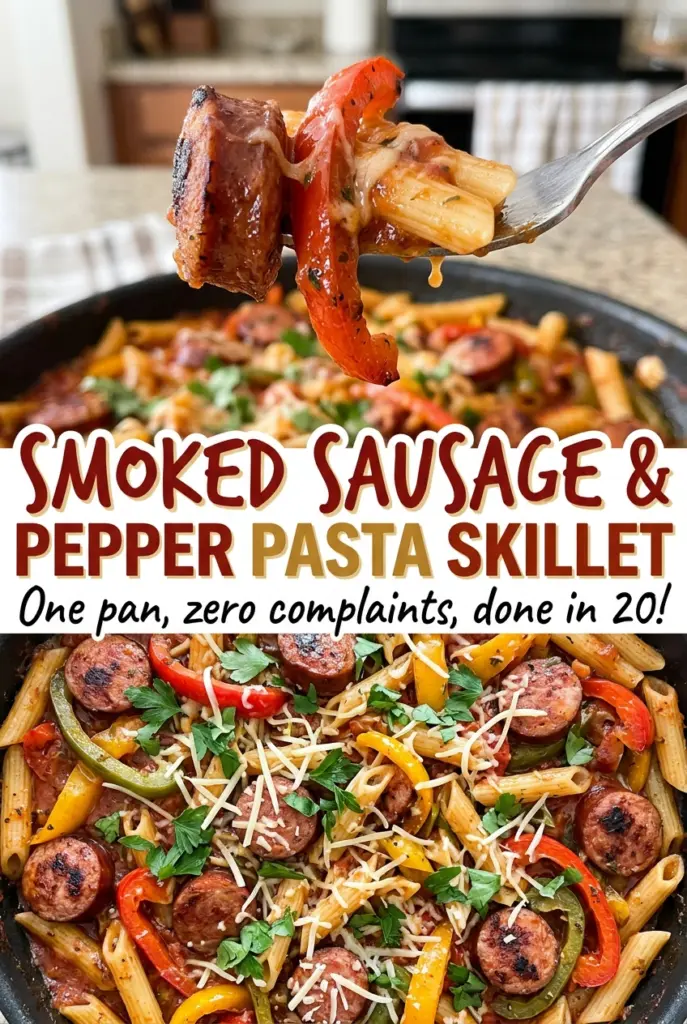
Smoked Sausage and Pepper Pasta Skillet
The sausage rounds should come out of the skillet with browned edges, not just warmed through. That quick sear gives this smoked sausage and pepper pasta skillet the savory base…
Tip: save now, cook later.The sausage rounds should come out of the skillet with browned edges, not just warmed through. That quick sear gives this smoked sausage and pepper pasta skillet the savory base that carries into the tomato-cream sauce, while the sausage stays out of the pan long enough for the peppers and onion to soften.
I like how the sauce comes together from ingredients that are already doing useful work: undrained tomatoes bring their juices, chicken broth loosens the base, and heavy cream rounds it out. Let the tomato mixture simmer before adding the cream so it has a little body instead of tasting watery.
Then the penne goes right into the skillet with the Parmesan, where every ridge catches sauce. You get smoky sausage, tender peppers, and a creamy coating without juggling a separate sauce pan.
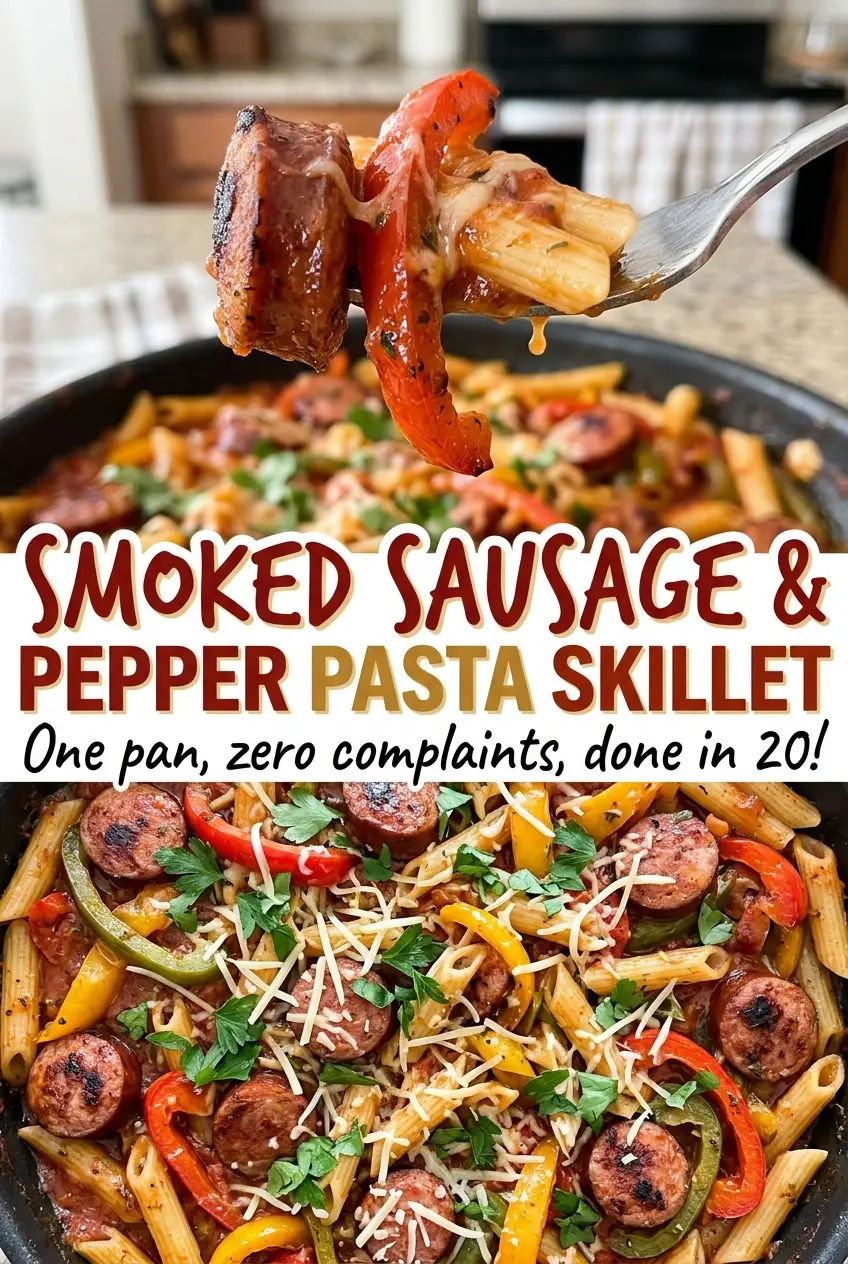
Kitchen Note
The 12-inch deep skillet gives you enough room to toss the penne through the sauce without crowding the pan. A shallow skillet makes that last step awkward, and the pasta is more likely to spill as you coat it.
Save this smoked sausage and pepper pasta skillet for a busy night when you want browned sausage and creamy tomato sauce in one pan.
Fully Cooked Sausage Still Needs a Good Sear
Smoked sausage is already cooked, so browning it here isn’t about cooking the center through. It’s about building color on the outside and giving the skillet a deeper, roasted sausage flavor before the vegetables and sauce go in. Without that sear, the sausage still tastes smoky, but the whole dish has less savory depth.
Give the rounds room to make contact with the hot skillet, then turn them occasionally rather than stirring constantly. You’re looking for browned patches on the cut sides, not a uniformly dark crust. Once they’re browned, transfer them to a plate; they’ll return near the end, so they don’t need to simmer through the entire sauce-making stage.
The sausage also brings salt and seasoning to the finished pasta. That’s one reason the low-sodium broth works well here: it adds liquid without making the sauce overly salty alongside the sausage and Parmesan. The tomato, pepper, and cream keep the skillet balanced, while the browned sausage remains easy to taste in every forkful.
Why the Tomatoes, Cream, and Parmesan Need Different Jobs
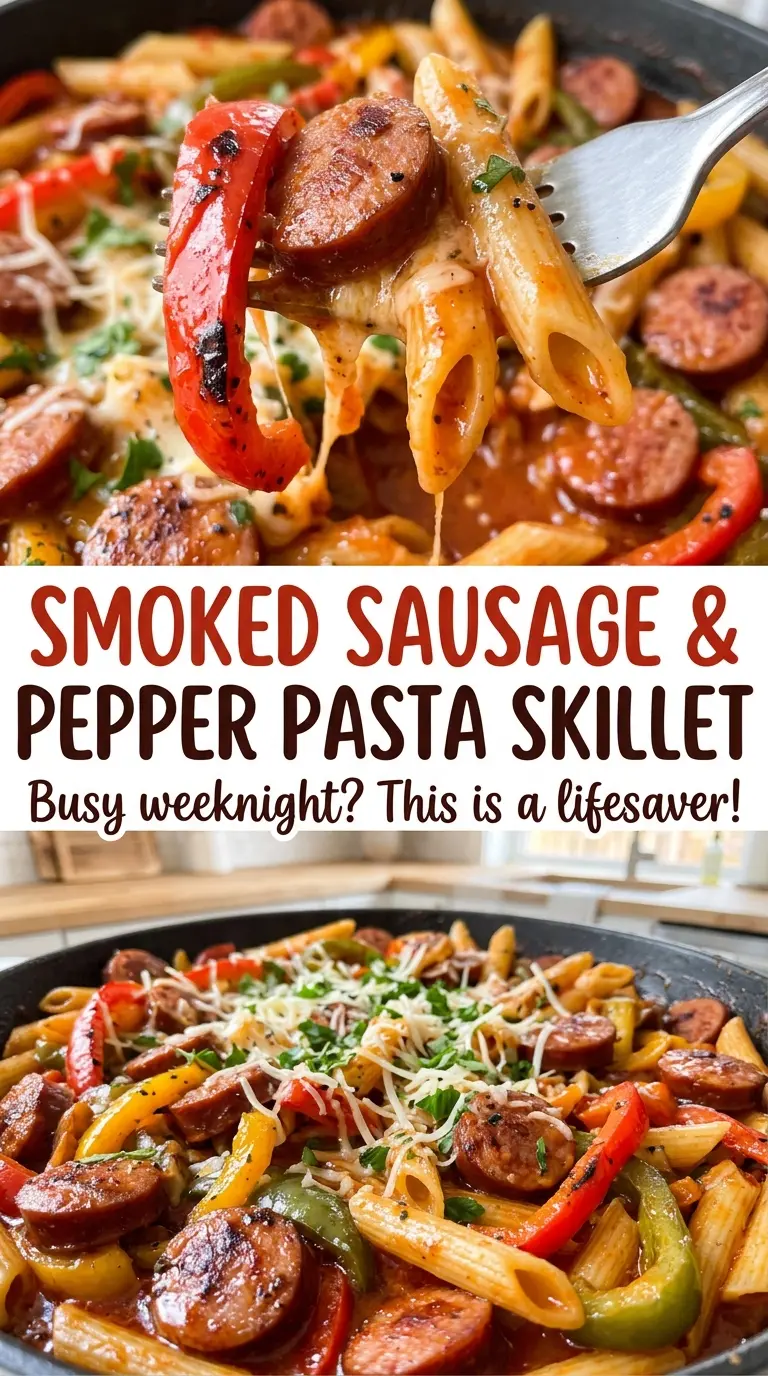
- Penne — Its hollow centers and ridged sides hold onto the sauce. Dried penne is dependable and inexpensive; another short pasta such as rigatoni or rotini works too, but use its package timing and cook it al dente before draining.
- Smoked sausage — Choose fully cooked smoked sausage so the rounds brown quickly and can be added back just long enough to heat through. A well-priced sausage works fine; the smoke level and seasoning vary by brand, so taste the finished dish before adding anything extra.
- Bell peppers and yellow onion — These soften into the tomato base and bring sweetness that balances the smoked sausage. Fresh, firm peppers are easiest to slice into even strips, but there’s no need to seek out a particular color or premium variety.
- Diced tomatoes and chicken broth — Keep the tomato juices in the can; they’re part of the liquid that becomes the sauce. Low-sodium broth gives the sauce savory depth while leaving room for the saltiness of the sausage and Parmesan.
- Italian seasoning, paprika, and black pepper — These season the tomato-broth base without taking over the sausage and peppers. Use spices that smell fragrant when you open the jar; old, faded seasoning won’t add as much character.
- Heavy cream — It softens the tomato’s sharp edge and gives the sauce a richer finish. Heavy cream is the best choice for a thick, smooth coating; lighter dairy can make the sauce thinner and less lush.
- Finely grated Parmesan — Fine shreds melt and cling to the pasta more evenly than thick shavings. A block grated at home has a fresh, nutty taste, though refrigerated finely grated Parmesan is a practical option when you’re short on time.
Build the Skillet in Stages, Then Toss the Pasta
Cook the Penne Until Al Dente
Bring the water to a boil in a 6-quart pot, add the kosher salt and penne, and cook according to the package directions, usually 10–12 minutes. Start checking near the lower end of the range; the pasta should be tender but still have a little firmness when you bite it. Drain it once it reaches that point, since it will be tossed with the hot sauce later.
Brown the Sausage Before the Vegetables
While the pasta cooks, heat the olive oil in a 12-inch deep skillet over medium-high heat. Add the sliced sausage and cook for 4–5 minutes, turning occasionally, until the rounds show browned patches. If the sausage looks pale, give it time against the hot pan rather than moving it constantly. Transfer the browned rounds to a plate.
Soften the Peppers and Onion
Add the sliced bell peppers and onion to the same skillet and cook for 5–7 minutes, stirring occasionally. They’re ready when softened and starting to lose their raw crunch, but they don’t need to collapse. Stir in the minced garlic and cook for 30 seconds, stirring constantly; garlic can scorch quickly, so keep it moving and don’t let it sit on the pan by itself.
Simmer the Tomato-Broth Base
Stir in the undrained diced tomatoes, chicken broth, Italian seasoning, paprika, and black pepper. Bring the mixture to a simmer, then cook for 5–7 minutes, stirring occasionally, until it looks slightly thickened rather than watery. Keep the heat at a steady simmer, not a hard boil, so the liquid reduces gradually and the vegetables stay in the sauce.
Finish with Cream, Sausage, and Parmesan
Stir in the heavy cream and return the browned sausage to the skillet. Simmer for 2–3 minutes, then add the drained penne and Parmesan. Toss until the pasta is evenly coated and heated through, scraping along the bottom as you go so the sauce and browned bits distribute throughout the skillet. Serve once the cheese has melted into the coating.
Simple Swaps for a Different Skillet
Make It Gluten-Free with Gluten-Free Penne
Use dried gluten-free penne in place of regular penne and cook it according to its package directions, stopping at al dente. Gluten-free pasta can soften faster once it sits in sauce, so drain it promptly and toss it with the skillet just before serving.
Choose Turkey Smoked Sausage for a Lighter Result
Swap in fully cooked turkey smoked sausage for the pork smoked sausage. It keeps the smoky character but makes the skillet leaner and a little less rich; watch the rounds as they brown because a leaner sausage may not develop the same amount of color.
Use Andouille for More Heat
Replace the smoked sausage with fully cooked andouille sausage for a spicier, more assertive skillet. Andouille can be saltier and hotter, so the finished pasta will have a bolder kick; choose it when you want the sausage to lead rather than stay mild.
Storage and Reheating
- Refrigerator: Refrigerate leftovers promptly in an airtight container and use within 3 to 4 days. The penne will absorb some sauce as it sits, so it won’t be quite as loose as it was fresh.
- Freezer: Freeze portions in airtight containers for up to 2 months. The pasta may soften and the cream sauce may separate slightly after thawing, so the texture won’t be as smooth as freshly made.
- Reheating: Warm gently in a saucepan over low heat, stirring often, or microwave in short intervals and stir between them. Add a small splash of chicken broth if the sauce has tightened; reheat leftovers to 165°F and avoid high heat, which can make the cream sauce greasy.
Questions That Come Up When Making This Pasta Skillet
Smoked Sausage and Pepper Pasta Skillet
Ingredients
Equipment
Method
- Bring the water to a boil in a 6-quart pot.
- Add the salt and penne, then cook until al dente according to the package directions, usually 10–12 minutes.
- Drain the penne.
- Meanwhile, heat the olive oil in a 12-inch deep skillet over medium-high heat.
- Add the sausage and cook for 4–5 minutes, turning occasionally, until browned.
- Transfer the sausage to a plate.
- Add the bell peppers and onion to the skillet and cook for 5–7 minutes, stirring occasionally, until softened.
- Add the garlic and cook for 30 seconds, stirring constantly.
- Stir in the diced tomatoes, chicken broth, Italian seasoning, paprika, and black pepper.
- Bring the mixture to a simmer and cook for 5–7 minutes, stirring occasionally, until slightly thickened.
- Stir in the heavy cream.
- Return the sausage to the skillet and simmer for 2–3 minutes.
- Add the drained penne and Parmesan, then toss until evenly coated and heated through.
