
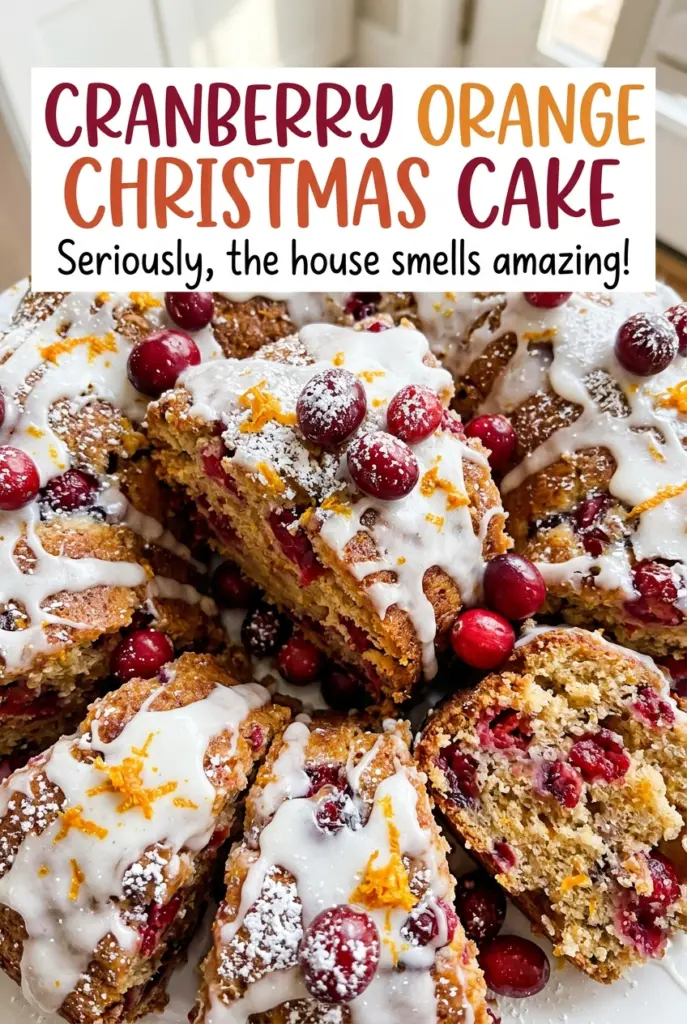
Cranberry Orange Christmas Cake
The cranberries soften in the oven but keep their sharp, bright bite, so each square has little tart pockets against a tender, buttery crumb. I make this Cranberry Orange Christmas…
Tip: save now, cook later.The cranberries soften in the oven but keep their sharp, bright bite, so each square has little tart pockets against a tender, buttery crumb. I make this Cranberry Orange Christmas Cake in a 9×13-inch pan, which gives it a good balance of golden edges and a soft center without needing to layer or frost anything.
Sour cream keeps the crumb moist, while orange zest carries its fragrance through the batter instead of leaving all the citrus flavor to the glaze. I fold the cranberries in at the end, then let the cake cool all the way before adding the thin orange glaze. The finished cake is easy to slice, gently citrusy, and dotted with berries from edge to edge.
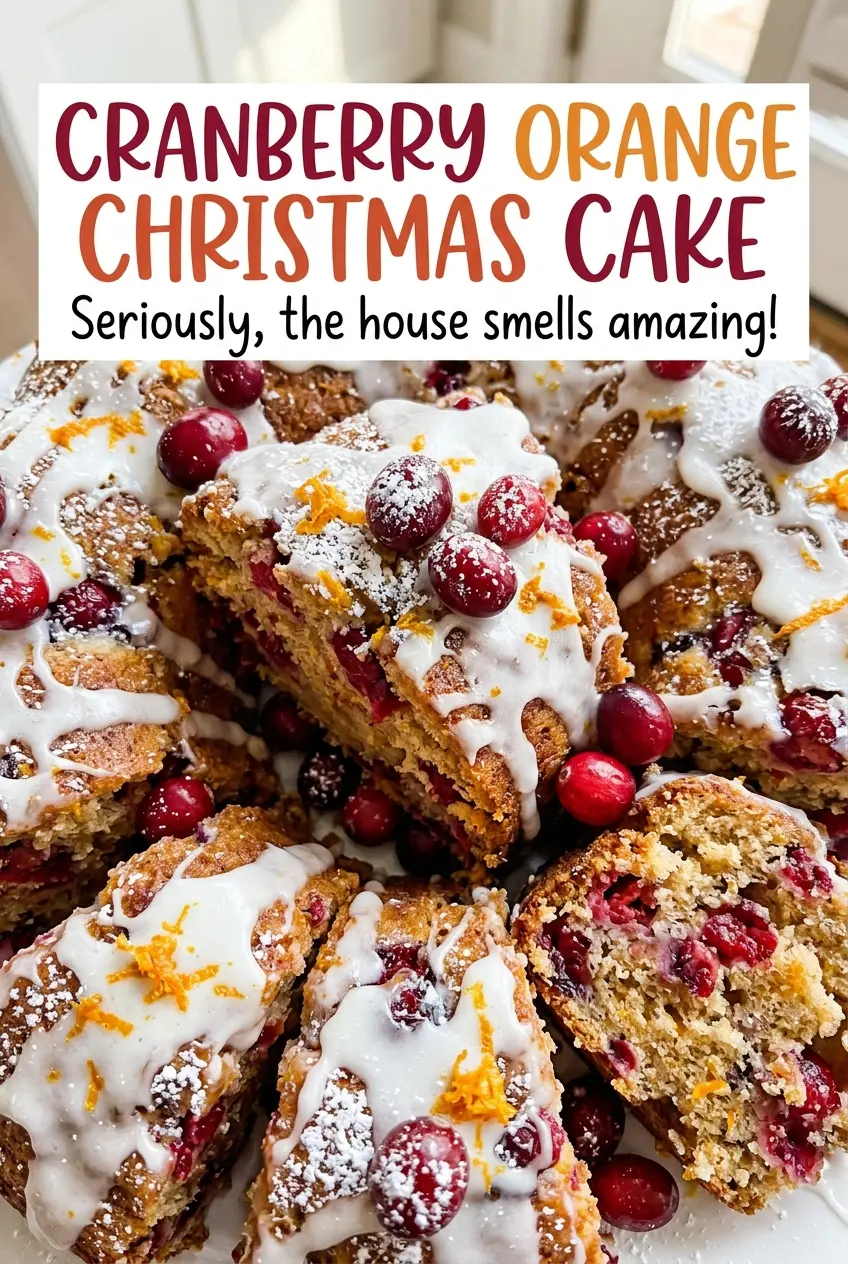
Kitchen Note
Let the cake cool completely in the pan before you drizzle on the glaze. If the cake is still warm, the glaze will run instead of settling into a neat finish.
Save this Cranberry Orange Christmas Cake for its tart berry bites, tender sour cream crumb, and bright orange glaze.
The Tart Cranberry Pockets Keep This Cake from Tasting Sugary
A buttery cake with a sweet glaze needs a sharp note to keep each bite lively. Fresh cranberries bring that contrast: they soften as they bake, but their tartness stays noticeable against the sweet crumb and orange-scented batter. The result is a cake that tastes balanced rather than candy-sweet, even with glaze on top.
That contrast is also why I fold the berries in at the end instead of beating them into the batter. They stay distinct, so the slices show bright cranberry pieces instead of taking on a uniformly pink color. Halving the berries gives you more manageable bites and spreads their tartness through the pan. If you cut one square and find a berry in nearly every forkful, that little burst is doing exactly what it should.
The cake itself is soft and rich, not a dry sponge meant to hold heavy frosting. A light drizzle gives the top a citrus finish without burying the fruit or weighing down the crumb. Keep the glaze smooth and pourable, and you’ll get a thin layer that sets cleanly over the cake.
Why Sour Cream and Orange Zest Set the Cake’s Character

- Sour cream — It gives the crumb moisture and a slight tang that suits the cranberries. Use it at room temperature so it blends into the butter mixture without leaving cold streaks or firming the butter.
- Orange zest — Finely grated zest brings the most direct orange aroma to the cake. Grate only the colored outer peel; the white pith underneath tastes bitter. A fresh orange gives the brightest fragrance, while the orange juice for the glaze can be fresh or bottled.
- Fresh cranberries — Their tartness is the counterpoint to the sweet cake, and their firm skins hold up during baking. Rinse them, dry them well, then halve them before folding them in; wet berries can bring extra moisture to the batter.
- Unsalted butter — Softened butter creams smoothly with the sugar and helps build the cake’s tender structure. It should give slightly when pressed, but it shouldn’t look shiny or melted.
- Eggs — Room-temperature eggs incorporate more evenly into the creamed butter and sugar. Add them one at a time, as that gives each egg a chance to blend in before the next goes into the bowl.
- Flour and leaveners — All-purpose flour gives the cake enough structure to hold the fruit, while baking powder and baking soda lift the sour-cream batter. Measure the flour without packing it into the cup; too much can make the finished cake heavy.
Build the Batter Gently, Then Let the Pan Do the Work
Get the Pan and Dry Ingredients Ready
Heat the oven to 350°F and grease a 9×13-inch baking pan. Whisk the flour, baking powder, baking soda, and salt together in a medium bowl so the leaveners are dispersed before they meet the wet ingredients. Set this bowl aside while you cream the butter and sugar. Starting with the dry mixture ready makes it easier to alternate additions without overworking the batter.
Cream the Butter, Sugar, and Eggs
Beat the softened butter and granulated sugar in a large bowl with an electric mixer on medium speed for 2 to 3 minutes, until the mixture looks light and fluffy. Scrape the bowl if butter is clinging to the sides, then beat in the eggs one at a time. Mix in the orange zest and vanilla after the eggs are incorporated. If the mixture looks a little uneven, keep mixing just until it comes together rather than beating it for several extra minutes.
Alternate the Dry Ingredients and Sour Cream
Add the dry ingredients in three additions, alternating with the sour cream in two additions; begin and end with the dry ingredients. Mix just until each addition disappears, and stop as soon as there are no obvious flour pockets. A few brief strokes by hand can bring the batter together if the mixer has left flour at the bottom of the bowl. Mixing past that point can make the crumb tighter than you want.
Fold in the Fruit and Bake Until Set
Fold in the rinsed, dried, halved cranberries, then spread the batter evenly in the prepared pan. Bake at 350°F for 38 to 45 minutes, until the top is golden and a toothpick inserted in the center comes out clean or with a few moist crumbs. If the toothpick has wet batter on it, the center needs more time. Let the cake cool completely in the pan, about 1 hour.
Whisk the Glaze and Finish the Cake
Whisk the powdered sugar and orange juice in a small bowl until the glaze is smooth, with no dry pockets of sugar. Drizzle it over the cooled cake in a light, even pattern. Leave it undisturbed until the glaze sets before slicing; cutting too soon smears the finish across the top. The orange glaze should add a delicate citrus layer, not cover the cranberry pieces entirely.
Two Simple Ways to Change the Cake’s Finish
Leave Off the Glaze for a Less-Sweet Slice
Skip the powdered sugar and orange juice glaze and serve the cooled cake plain. The orange zest still gives the crumb citrus aroma, while the cranberries stand out more sharply without a sweet finish. This is the simplest option if you prefer a less-sweet cake.
Glaze Each Slice at the Table
Whisk the glaze as usual, but drizzle it over individual slices instead of the whole pan. The cake stays easy to portion without disturbing a set glaze, and each person can have a lighter or heavier drizzle. The orange-sugar finish tastes freshest when added just before serving.
Storage and Reheating
- Refrigerator: Keep covered for up to 4 days. The chilled crumb will feel firmer; let slices sit at room temperature before serving.
- Freezer: Freeze unglazed slices, wrapped well, for up to 2 months. Thaw in the refrigerator and add the glaze after thawing.
- Reheating: This cake is best at room temperature, but you can warm an unglazed slice in the microwave for about 10 seconds. Longer heating can dry the crumb, and warming a glazed slice will soften the glaze.
Questions That Come Up Before the First Slice
Cranberry Orange Christmas Cake
Ingredients
Equipment
Method
- Heat the oven to 350°F.
- Grease a 9x13-inch baking pan.
- Whisk the flour, baking powder, baking soda, and salt together in a medium bowl.
- Beat the butter and granulated sugar in a large bowl with an electric mixer on medium speed until light and fluffy, about 2 to 3 minutes.
- Beat in the eggs one at a time.
- Mix in the orange zest and vanilla.
- Add the dry ingredients in 3 additions, alternating with the sour cream in 2 additions and beginning and ending with the dry ingredients; mix just until combined.
- Fold in the cranberries.
- Spread the batter evenly in the prepared pan.
- Bake at 350°F for 38 to 45 minutes, until golden and a toothpick inserted in the center comes out clean or with a few moist crumbs.
- Cool the cake completely in the pan, about 1 hour.
- Whisk the powdered sugar and orange juice in a small bowl until smooth.
- Drizzle the glaze over the cooled cake.
- Let the glaze set before serving.
