
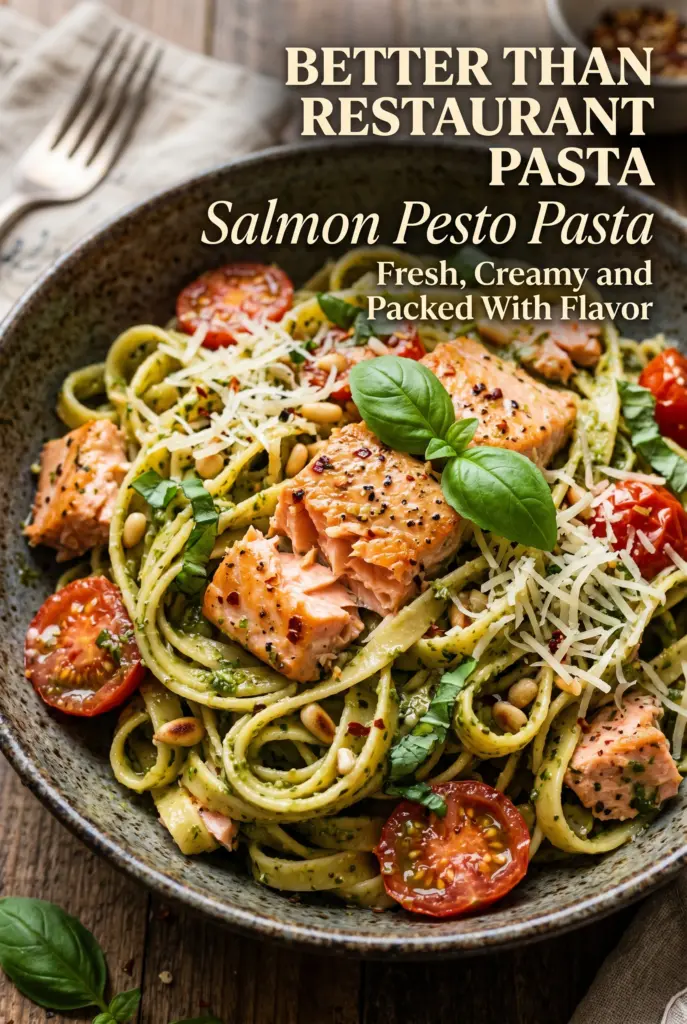
Salmon Pesto Pasta
Flaky salmon, glossy basil pesto, and tender pasta come together in a sauce that clings instead of pooling at the bottom of the bowl. That’s what makes this Salmon Pesto…
Tip: save now, cook later.Flaky salmon, glossy basil pesto, and tender pasta come together in a sauce that clings instead of pooling at the bottom of the bowl. That’s what makes this Salmon Pesto Pasta worth keeping in the regular rotation. It tastes polished enough for company, but it still lands on the table fast enough for a weeknight.
The trick is building the sauce in the same skillet you used for the salmon. Those browned bits add depth, while the cream smooths out the pesto and helps it coat the pasta without turning heavy. The salmon stays in larger chunks at the end so it doesn’t dry out or disappear into the sauce.
Below, I’ll walk through the small details that make the dish come together cleanly, including the moment to add the lemon juice and how to keep the sauce from getting too thick before everything is tossed together.
The salmon stayed flaky and the pesto sauce turned silky with just a splash of pasta water. I loved that the tomatoes softened without falling apart, and dinner felt special without taking all night.
Creamy Salmon Pesto Pasta with flaky salmon and fresh tomatoes is one to pin for an easy dinner that still feels a little special.
The Secret to Keeping the Salmon Flaky, Not Tough
Salmon cooks fast, and the biggest mistake here is treating it like it needs a long, aggressive sear. It doesn’t. A hot pan gives you color, but the fillets should still come off the heat when they’re just cooked through and starting to flake at the thickest part. If you leave them in the pan until they look fully dry, they’ll break into little bits and lose that rich, tender texture.
The other key is adding the salmon back only at the end. Once it’s chunked and folded through the sauce, it needs just enough heat to warm through. The sauce does the heavy lifting; the fish should stay intact and taste like salmon, not like filler.
What Each Ingredient Is Actually Doing in This Dish
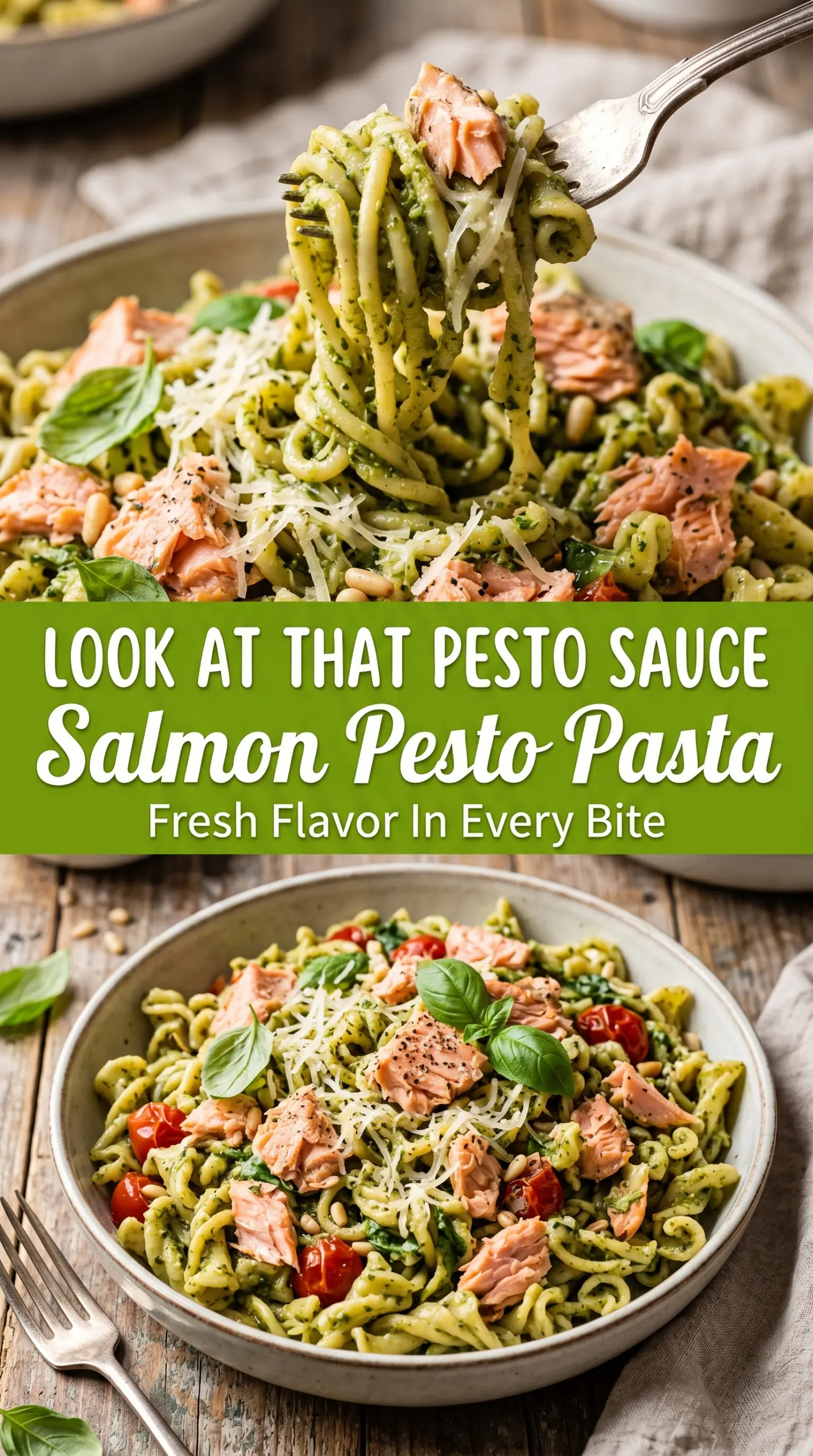
- Salmon fillets — Skinless fillets are easier to sear evenly and break into neat chunks later. Fresh or thawed frozen salmon both work; just pat it dry first so the surface browns instead of steaming.
- Basil pesto — This is the backbone of the sauce, so use one you actually like eating on its own. Jarred pesto is fine here, but if it tastes flat straight from the spoon, the finished dish will taste flat too.
- Heavy cream — Cream softens the pesto and gives it that silky, restaurant-style finish. Half-and-half can work in a pinch, but the sauce will be thinner and a little less stable.
- Parmesan cheese — Parmesan helps the sauce thicken and adds saltiness. Grate it fresh if you can, since pre-shredded cheese can melt a little grainy.
- Cherry tomatoes — They add sweetness and a little burst of freshness that cuts through the richness. Halve them so they soften quickly but still hold their shape.
- Lemon juice — A small splash at the end wakes up the pesto and keeps the sauce from tasting heavy. Add it after the pan comes off the strongest heat so the bright flavor stays clean.
- Pasta water — This is your adjustment tool. The starch helps loosen the sauce without making it watery, which matters if the pesto is thick or the pan starts tightening up before you toss everything together.
Building the Sauce in the Same Pan
Cooking the Pasta First
Boil the pasta until it’s just shy of fully tender, then drain it and save a little pasta water before you do anything else. The pasta finishes in the sauce, so you want it to keep some bite. If it goes fully soft in the pot, it’ll turn mushy once it soaks up the cream and pesto.
Seasoning and Searing the Salmon
Dust the salmon with garlic powder, paprika, salt, and pepper, then cook it in olive oil over medium-high heat. You’re looking for a golden surface and flesh that flakes easily when pressed with a fork. If the pan smokes hard or the seasoning scorches, the heat is too high and the outside will outpace the center.
Turning the Pan Drippings Into Sauce
Lower the heat and add the pesto, cream, and Parmesan to the same skillet. Stir until the sauce turns smooth and glossy, scraping up the browned bits from the bottom as you go. If the cheese clumps or the sauce looks greasy, the pan was too hot when the dairy went in, so pull it off the burner for a minute and stir until it comes together.
Bringing It All Together
Add the tomatoes and let them soften just enough to release a little juice, then toss in the pasta until every piece is coated. Fold in the salmon gently so the chunks stay big, then finish with lemon juice and a splash of pasta water if the sauce feels tight. The finished dish should look creamy and loose, not thick like paste.
How to Adapt This for a Different Pantry or a Lighter Plate
Dairy-Free Version
Use a dairy-free pesto and swap the cream for unsweetened cashew cream or full-fat coconut milk. Cashew cream keeps the sauce closer to the original flavor, while coconut milk adds a faint sweetness that changes the profile a little. Leave the Parmesan out or replace it with a dairy-free hard-style cheese if you like a saltier finish.
Gluten-Free Pasta Swap
Use your favorite gluten-free short pasta and cook it just until al dente. Gluten-free pasta can soften fast once it hits the sauce, so pull it from the water a touch early and toss it right away. Save the pasta water, since it still helps the sauce coat more evenly.
Lighter, Less Creamy Finish
Cut the cream in half and use more pasta water to loosen the pesto instead. The sauce won’t be as rich, but the basil flavor comes through more clearly and the dish feels lighter on the plate. This works best if your pesto is already well seasoned and not too oily.
Leftover Salmon Rescue
If you have cooked salmon from another meal, fold it in at the very end just long enough to warm through. That keeps it from drying out, which is the main risk with leftover fish. Break it into large pieces instead of shredding it so it still feels like part of the dish.
Storage and Reheating
- Refrigerator: Store in an airtight container for up to 3 days. The pasta will absorb some of the sauce, so it gets a little thicker by day two.
- Freezer: I don’t recommend freezing this one. Cream sauces and cooked salmon both change texture after thawing, and the pasta tends to go soft.
- Reheating: Warm it gently on the stove over low heat with a splash of water or cream. High heat is the mistake here — it tightens the sauce and dries out the salmon before the center is hot.
Questions I Get Asked About This Recipe
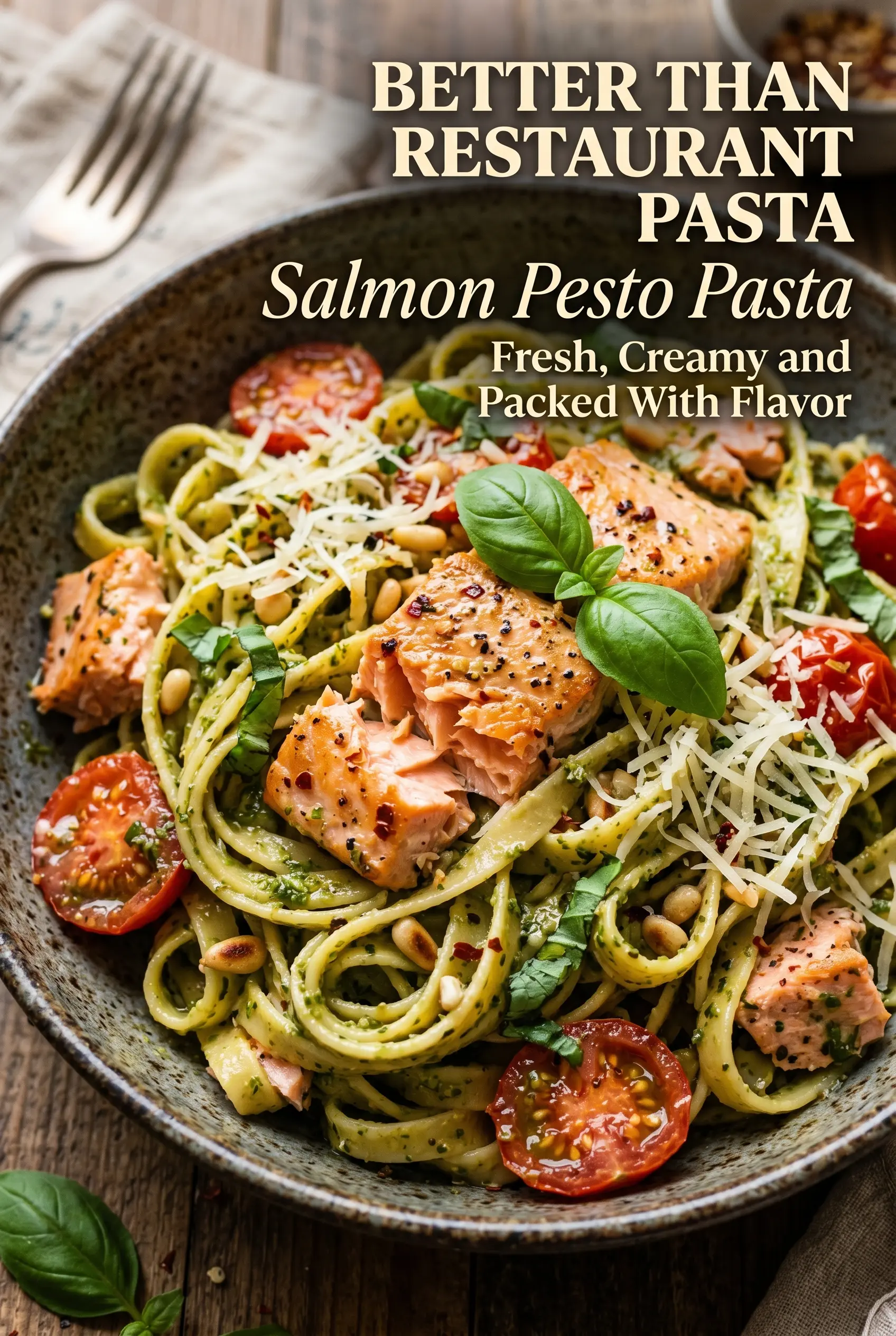
Salmon Pesto Pasta
Ingredients
Equipment
Method
- Cook the penne pasta according to package directions until tender. Drain and reserve 1/2 cup pasta water.
- Season the salmon fillets with garlic powder, paprika, salt, and black pepper. Pat the coating evenly over all sides for uniform flavor.
- Heat the olive oil in a large skillet over medium-high heat until shimmering. Add the salmon and cook for 3–4 minutes per side until flaky.
- Transfer the salmon to a plate and break into large chunks. Keep any juices near the salmon pieces.
- In the same skillet, add the basil pesto, heavy cream, and grated Parmesan cheese. Stir until smooth and creamy over medium heat.
- Add the cherry tomatoes and cook for 2 minutes. Let them soften slightly while keeping some shape.
- Add the cooked pasta and toss to coat in the sauce. Add reserved pasta water if needed to loosen into a silky finish.
- Stir in the lemon juice. Taste and adjust seasoning if desired.
- Gently fold in the salmon pieces until just combined. Avoid over-stirring so the salmon stays tender and chunky.
- Garnish with fresh basil and extra Parmesan cheese. Serve immediately.
- Serve immediately while the sauce is creamy and the salmon flakes are intact. Enjoy hot with extra Parmesan on top if desired.
- Ensure the pasta is evenly coated and the sauce clings lightly to the noodles. If too thick, add a splash more reserved pasta water and toss once more.
