
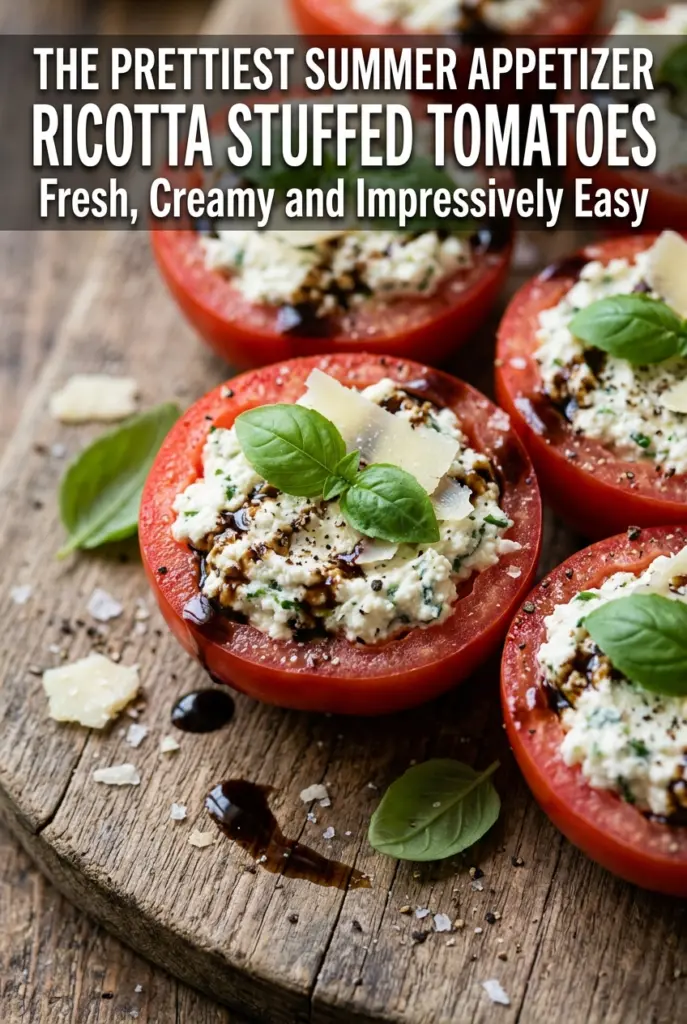
Ricotta Stuffed Tomatoes
Juicy tomatoes turn into something far more interesting when they’re hollowed out and filled with a ricotta mixture that stays creamy instead of watery. The contrast is what makes this…
Tip: save now, cook later.Juicy tomatoes turn into something far more interesting when they’re hollowed out and filled with a ricotta mixture that stays creamy instead of watery. The contrast is what makes this dish work: cool, lush filling against bright tomato flesh, with enough Parmesan, garlic, and herbs to keep every bite sharp and savory. It lands somewhere between a simple appetizer and a light lunch, and it disappears fast when the tomatoes are ripe enough to taste like something on their own.
The trick is treating the tomatoes like little edible bowls, not just containers. Scooping out the seeds gives you space for the filling, but the real step people skip is letting the tomatoes drain cut-side down on paper towels. That short rest keeps the filling from slipping into a puddle. The ricotta mixture also needs enough structure to hold its shape, so the cream cheese and Parmesan aren’t just there for flavor — they tighten the filling and help it spoon cleanly into the tomatoes.
Below, I’ll walk through the one detail that keeps these from going soggy, plus the best way to adjust the filling if your tomatoes are smaller or your ricotta is on the loose side.
I was worried the tomatoes would turn watery, but draining them first made a huge difference. The ricotta filling held its shape beautifully, and the lemon zest with basil gave it that fresh, bright finish. My husband ate three before dinner was even on the table.
Ricotta Stuffed Tomatoes with a creamy herb filling are the kind of appetizer that disappears before the platter hits the table.
The Reason These Tomatoes Stay Fresh Instead of Watery
Tomatoes give off a lot of liquid once they’re cut, and ricotta will pick up that moisture fast. That’s why this recipe works best when the tomatoes are salted lightly, drained, and filled only after the cut surfaces have had time to dry. If you skip that rest, the filling starts off creamy and ends up thinning out underneath the tomatoes.
The other thing that matters is choosing tomatoes with enough structure to hold the filling. Ripe is good. Overripe is not. You want tomatoes that yield slightly when pressed but still stand up straight once the tops are removed. Soft tomatoes collapse once you scoop them, and then the filling has nowhere to sit.
- Salted tomatoes: The light salt on the tomato shells pulls out surface moisture and seasons the fruit from the inside out.
- Whole milk ricotta: This gives you the creamiest texture. Part-skim ricotta works, but it can taste drier and less cohesive.
- Cream cheese: It adds body and helps the filling pipe or spoon cleanly into the tomatoes. If you don’t have it, a spoonful of mascarpone does a similar job.
- Parmesan: This is the salty backbone of the filling. Freshly grated Parmesan melts into the mixture better than the shelf-stable stuff.
What the Filling Needs Before It Goes Into the Tomatoes
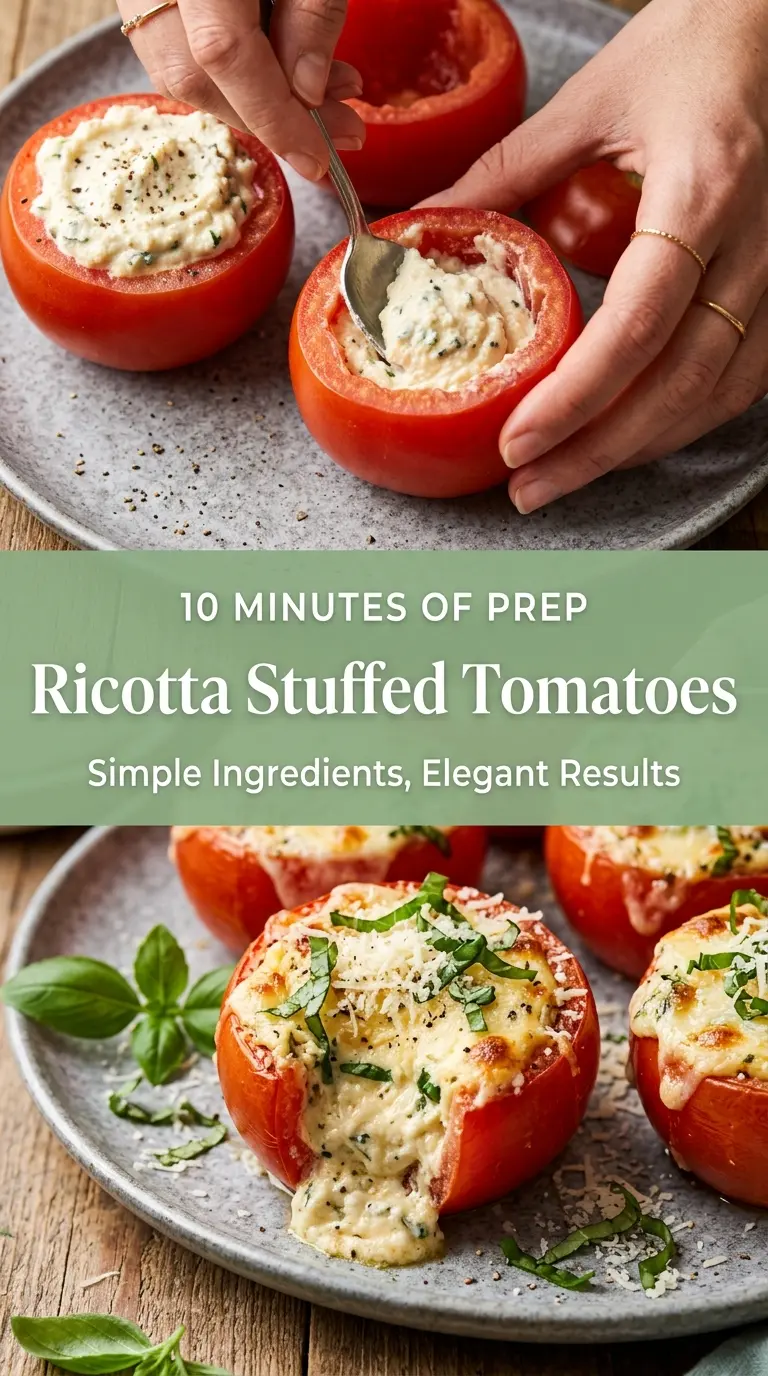
The filling should taste slightly saltier than you expect on its own because the tomatoes will mellow it. Mix until the ricotta turns smooth and the herbs are evenly distributed, but don’t beat it so long that it turns loose. If the mixture looks wet, add a little more Parmesan before you start filling the tomatoes.
Basil and parsley do different jobs here. Basil gives the filling its sweet, familiar Mediterranean note, while parsley keeps it from tasting heavy. Lemon zest matters more than it looks like it should; it lifts the ricotta and keeps the whole dish from reading as flat dairy on a tomato base.
How to Build the Tomatoes So They Hold Their Shape
Preparing the Shells
Slice the tops off cleanly, then use a spoon to scoop out the seeds and pulp without tearing the sides. Leave enough flesh around the rim so the tomato still stands upright. Turn them cut-side down on paper towels for about 10 minutes, and don’t rush that part — it’s the difference between a neat appetizer and a soggy plate.
Mixing the Ricotta Filling
Stir the ricotta, Parmesan, cream cheese, herbs, garlic, lemon zest, salt, and pepper until the mixture looks smooth and cohesive. The goal is creamy but stable. If the ricotta is very loose, drain it in a fine sieve for a few minutes first; that small step saves you from a filling that won’t mound inside the tomatoes.
Filling and Finishing
Spoon the mixture into each tomato generously, letting it mound slightly above the top. A light drizzle of olive oil gives the dish a softer finish, and balsamic glaze adds sweetness that plays well against the acid in the tomato. Chill for about 20 minutes before serving if you want a firmer texture, or serve right away if you prefer the filling looser and more spoonable.
Three Ways to Adjust These Tomatoes Without Losing What Makes Them Good
Make Them Dairy-Free
Use a thick, unsweetened dairy-free ricotta and add a little extra nutritional yeast or dairy-free Parmesan-style shreds for depth. The texture will be a touch looser than the original, so chill the filled tomatoes before serving to help the mixture set.
Make Them Ahead for a Party
You can hollow the tomatoes and mix the filling a few hours ahead, but keep them separate until close to serving. Once filled, the tomatoes start releasing moisture back into the ricotta, and the texture softens faster than most people expect.
Use Smaller Tomatoes for Bite-Sized Appetizers
Cherry or plum tomatoes work if you want a more cocktail-party style appetizer. Cut them cleanly, scoop them carefully, and use a small spoon or piping bag to fill them. They’ll be sweeter and more concentrated, which makes the herb filling taste brighter.
Storage and Reheating
- Refrigerator: Store filled tomatoes in a single layer, covered, for up to 2 days. The tomatoes soften as they sit, so the best texture is on day one.
- Freezer: Don’t freeze them. The tomatoes turn mushy and the ricotta filling separates once thawed.
- Reheating: These are best served cold or at cool room temperature, not reheated. If they’ve been chilled, let them sit out for 10 to 15 minutes so the filling loses its chill and the tomato flavor comes forward.
Questions I Get Asked About This Recipe
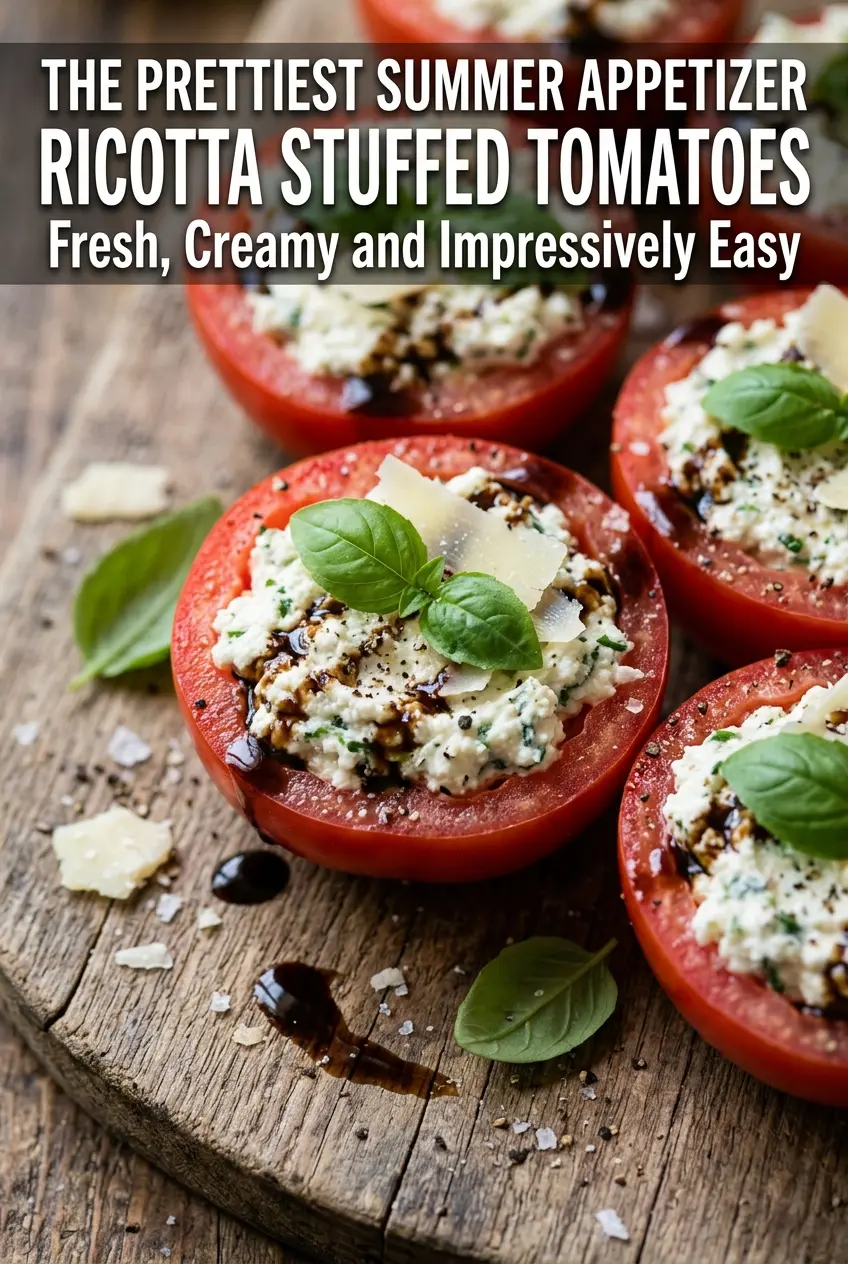
Ricotta Stuffed Tomatoes
Ingredients
Method
- Slice the tops off the tomatoes, keeping the tops intact. Save a little of the pulp if needed for discard-level cleanup.
- Carefully scoop out the seeds and pulp using a gentle scraping motion. Keep the tomato walls thick so they hold the filling.
- Turn the tomatoes upside down on paper towels for 10 minutes to remove excess moisture. They should look slightly drier inside before filling.
- In a bowl, combine whole milk ricotta cheese, grated Parmesan cheese, softened cream cheese, chopped basil, chopped parsley, minced garlic, lemon zest, salt, and black pepper. Mix until the mixture becomes smooth and creamy.
- Fill each tomato generously with the ricotta mixture. Press lightly so the filling mounds slightly above the rim.
- Arrange the stuffed tomatoes on a serving platter. Space them so they stay upright and don’t tip.
- Drizzle lightly with olive oil and balsamic glaze. Use a light hand so the filling stays creamy, not runny.
- Garnish with fresh basil and extra Parmesan cheese. Finish with a few basil leaves on top of each tomato.
- Chill the stuffed tomatoes for 20 minutes before serving. Serve cold for the best creamy texture and clean flavor.
