
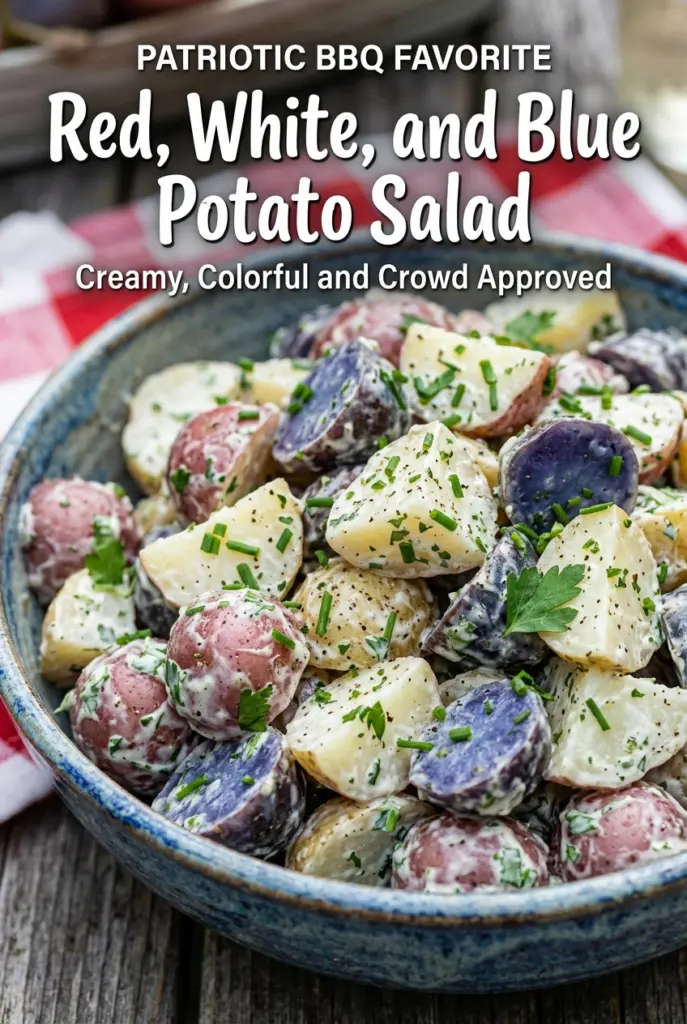
Red, White, and Blue Potato Salad
Red, white, and blue potatoes turn an ordinary potato salad into the kind of side dish people notice before the main course even hits the table. The colors stay distinct,…
Tip: save now, cook later.Red, white, and blue potatoes turn an ordinary potato salad into the kind of side dish people notice before the main course even hits the table. The colors stay distinct, the dressing clings to every piece, and the mix of creamy potatoes, herbs, and a little tang gives each bite enough interest that it never feels flat or heavy. It’s the sort of bowl that disappears fast at cookouts because it tastes familiar, but there’s enough texture and contrast to keep people going back for another spoonful.
The trick here is handling the three potatoes with a little care. They all cook at a similar pace, but they should be boiled separately so the blue potatoes don’t tint everything muddy and the red skins stay visually clean. Cooling the potatoes fully before dressing them matters too, because warm potatoes soak up the mayonnaise and sour cream too aggressively and the salad turns dense instead of creamy. The Dijon and apple cider vinegar keep the dressing from tasting one-note, while the celery and herbs add the crunch and freshness this style of potato salad needs.
Below, you’ll find the timing that keeps the potatoes tender instead of crumbly, plus a few smart swaps if you need to adjust for what’s in your kitchen.
The potatoes held their color beautifully, and chilling it for an hour made the dressing settle into the salad instead of sliding off. The celery still had a nice crunch the next day.
Red, white, and blue potato salad deserves a spot in your Fourth of July spread, especially for that creamy herb dressing and three-color finish.
The Reason the Colors Stay Clean Instead of Turning Muddy
Most potato salads lose the visual payoff as soon as the potatoes hit the pot together. Blue potatoes are the biggest culprit. Their color can bleed just enough to tint the dressing and make the whole bowl look gray instead of festive. Boiling each variety separately keeps the colors sharp and also lets you pull each pot at the exact moment it turns fork-tender, which matters because overcooked potatoes fall apart the second you stir in the dressing.
Cooling the potatoes all the way before mixing is the other part people skip. Warm potatoes absorb the dressing unevenly, and the salad can turn greasy on the bottom while the top looks dry. The goal is a coated salad where the potatoes still hold their shape. If you want clean, distinct pieces instead of mashed edges, give them time to cool and fold them together gently at the end.
What Each Ingredient Is Actually Doing in This Dish
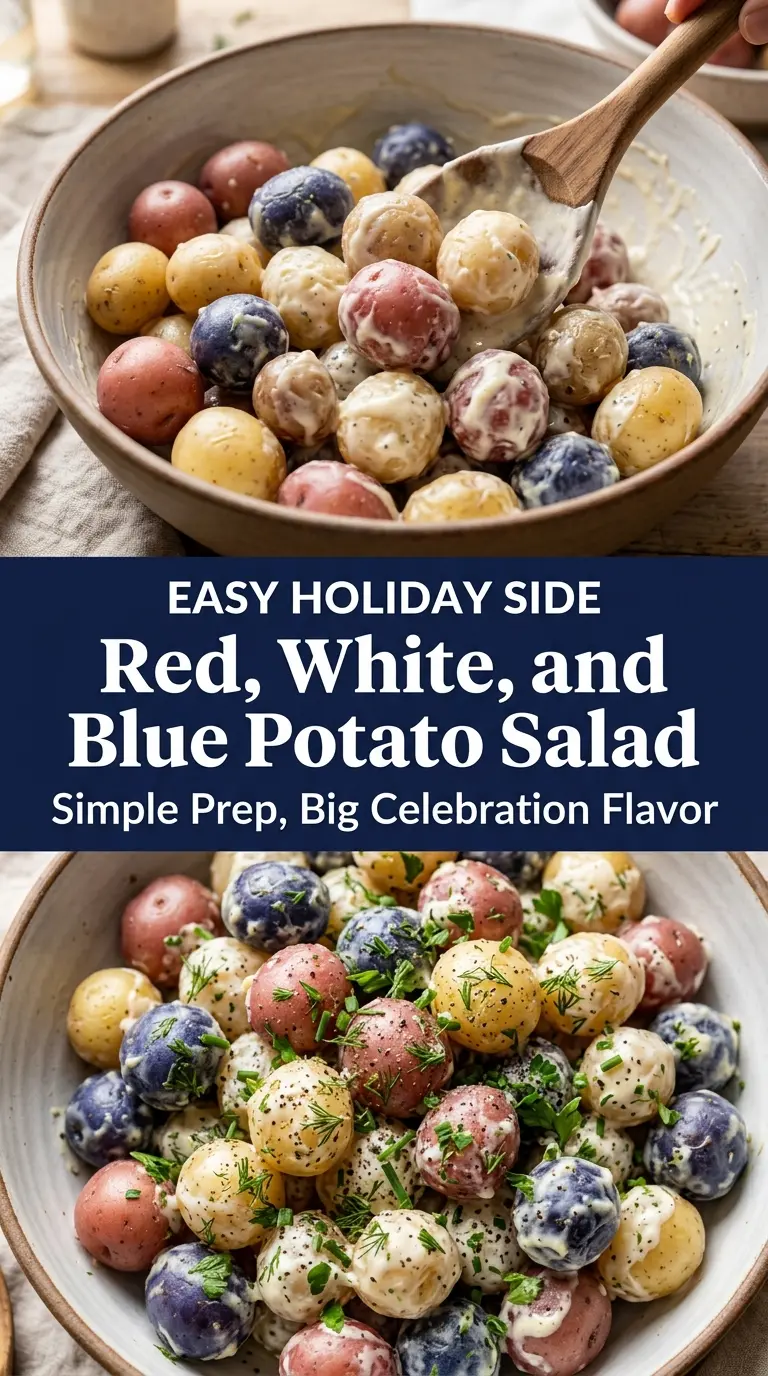
- Red potatoes — These hold their shape well and bring a little waxy bite. Their skins also add color and texture, so don’t peel them.
- White potatoes — These balance the salad with a softer, creamier interior. They soak up the dressing without turning heavy as long as they’re not overboiled.
- Blue potatoes — These are here for the color and a slightly earthy flavor. Separate boiling matters most with these, because they’re the ones most likely to dull the salad if they’re cooked with the others.
- Mayonnaise and sour cream — Mayo gives the salad body while sour cream lightens the texture and adds tang. If you swap in all mayo, the salad will taste richer but less bright.
- Dijon mustard and apple cider vinegar — These keep the dressing from tasting flat. The vinegar sharpens the potatoes, and the mustard gives the dressing enough backbone to stand up to the eggs and celery.
- Chives, parsley, celery, and eggs — The herbs make the salad taste fresh instead of heavy, the celery adds crunch, and the eggs make it feel more substantial. Chop everything small so the salad stays spoonable rather than chunky.
Building the Salad So the Texture Stays Creamy, Not Heavy
Cooking Each Potato at the Right Point
Bring each pot of salted water to a steady boil and cook the potatoes until a fork slides in with just a little resistance, usually 10 to 12 minutes depending on the size of the cubes. If the potato falls off the fork before you lift it, it’s gone too far. Drain them right away so they stop cooking from residual heat. Leaving them in the hot water for even a few extra minutes is how the salad turns soft and pasty.
Mixing the Dressing Before the Potatoes Go In
Whisk the mayonnaise, sour cream, Dijon, vinegar, garlic powder, onion powder, salt, and pepper in a large bowl before adding anything else. That gives the seasonings a chance to distribute evenly, which is what keeps one bite from tasting bland and the next one sharp. The dressing should look smooth and loose enough to coat; if it seems too thick, a teaspoon of water or extra vinegar loosens it without changing the flavor much.
Folding, Not Beating, the Finished Salad
Add the cooled potatoes, eggs, celery, chives, and parsley to the bowl and fold with a wide spatula. Sharp stirring breaks the potatoes and turns the bottom of the bowl into mash. You want the ingredients coated, not crushed. The salad tastes best after at least an hour in the fridge, once the dressing has settled into the potatoes and the herbs have had time to perfume the whole bowl.
How to Adapt This for Different Tables and Different Pantries
Dairy-Free Version
Swap the sour cream for a plain, unsweetened dairy-free alternative and keep the mayonnaise. The texture stays close to the original, though the tang will be a little softer. Add an extra teaspoon of vinegar if the dressing tastes flat after mixing.
Egg-Free Potato Salad
Leave out the hard-boiled eggs and add a little extra celery or a handful of finely chopped pickles if you want more texture. The salad will be a touch lighter and less rich, but the dressing still carries the flavor.
No Blue Potatoes on Hand
Use all red and white potatoes if that’s what’s available. You’ll lose the color contrast, but the salad will still have the same creamy herb dressing and balanced texture. A sprinkle of extra chives on top helps the bowl look fresh and finished.
Storage and Reheating
- Refrigerator: Store covered for up to 4 days. The herbs soften a little, but the salad stays creamy and scoopable.
- Freezer: Don’t freeze this one. The mayonnaise and sour cream separate, and the potatoes turn grainy after thawing.
- Reheating: This salad is meant to be served cold. If it’s been chilled hard, let it sit at room temperature for 15 to 20 minutes before serving so the dressing loosens and the flavors wake up.
Questions I Get Asked About This Recipe
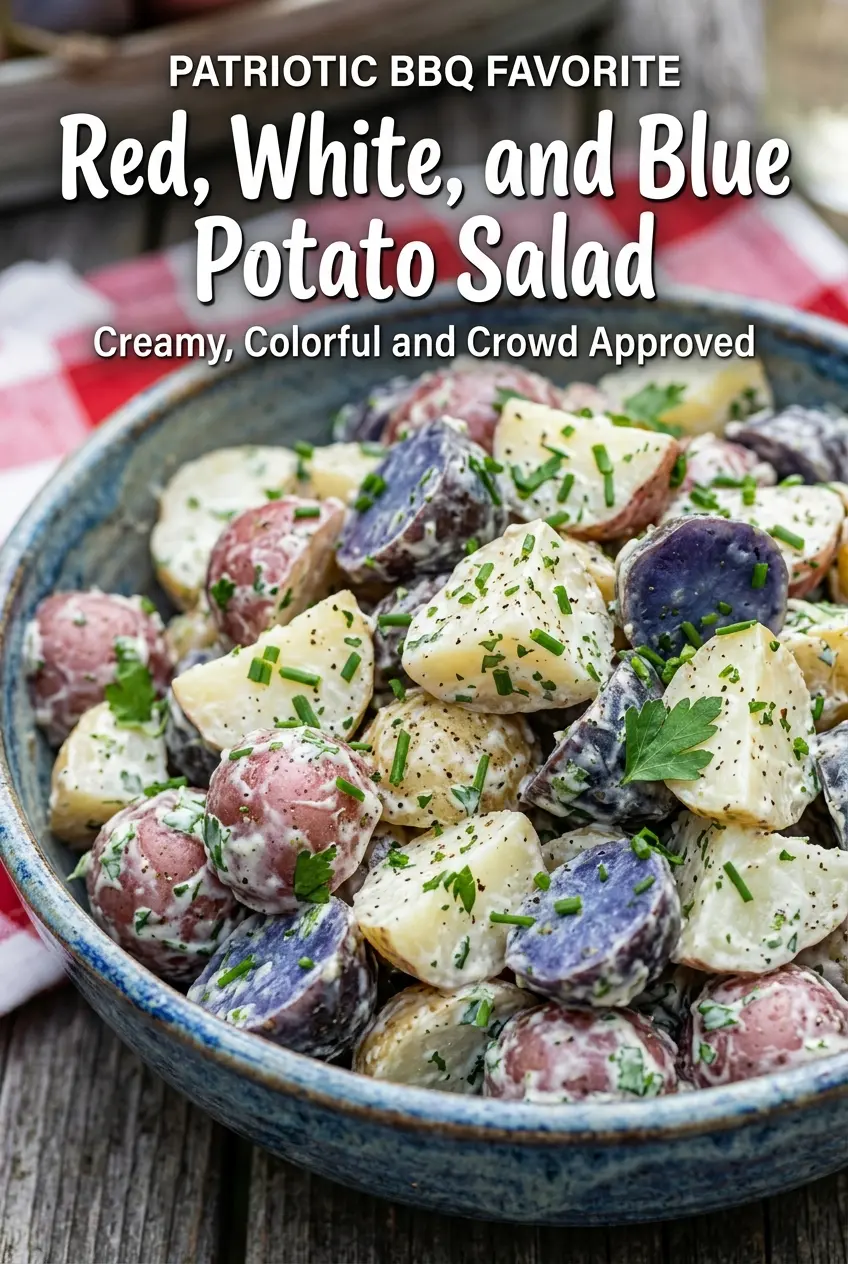
Red, White, and Blue Potato Salad
Ingredients
Equipment
Method
- Wash and cube the red potatoes, white potatoes, and blue potatoes into bite-sized pieces.
- Place the red potatoes, white potatoes, and blue potatoes in separate Dutch ovens and bring to a boil until fork tender, about 10-12 minutes.
- Drain the potatoes and let them cool completely before dressing.
- In a large bowl whisk together mayonnaise, sour cream, Dijon mustard, apple cider vinegar, garlic powder, onion powder, kosher salt, and black pepper until smooth.
- Add the cooled potatoes to the dressing and fold gently to coat evenly.
- Fold in the chopped hard-boiled eggs, finely diced celery, chopped chives, and chopped parsley.
- Cover and refrigerate for at least 1 hour.
- Before serving, garnish with additional herbs.
