
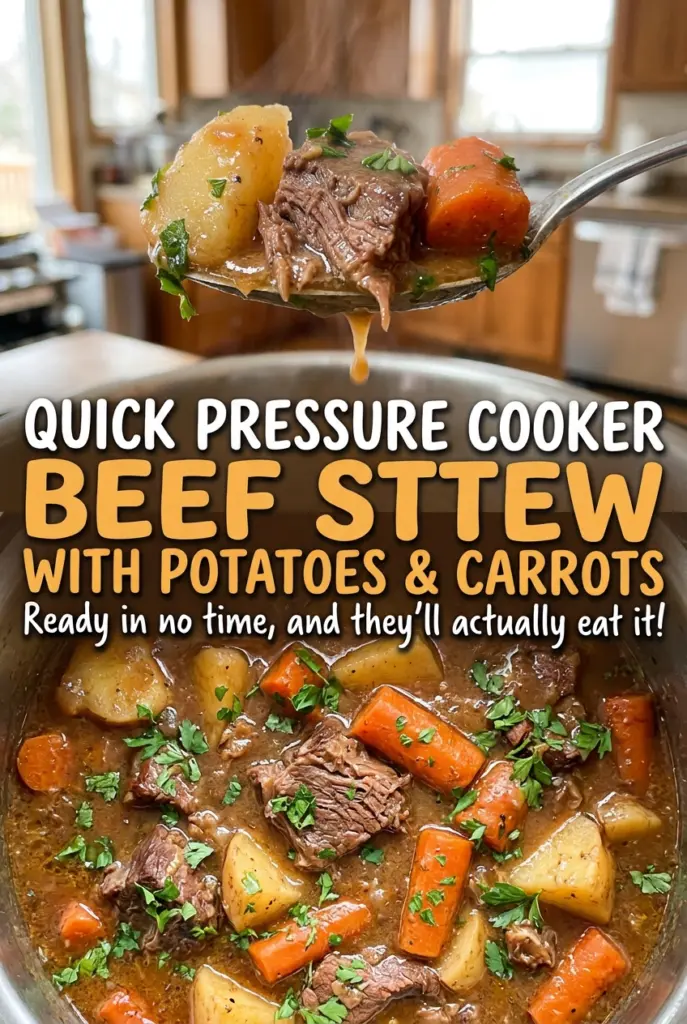
Quick Pressure Cooker Beef Stew with Potatoes and Carrots
When the lid comes off, the beef is tender and the potatoes still hold their shape. The first time I tried pressure cooker beef stew, I cooked everything together for…
Tip: save now, cook later.When the lid comes off, the beef is tender and the potatoes still hold their shape. The first time I tried pressure cooker beef stew, I cooked everything together for the full beef-cooking time; the vegetables turned soft before the chuck was ready. In this version, the beef gets its own first round, and the potatoes and carrots go in afterward. That simple timing change gives you a stew with distinct, spoon-tender pieces instead of a pot of mush.
I brown the beef in batches before building the broth in the same cooker. It takes a few extra minutes, but those browned bits get scraped into the broth with the tomato paste, Worcestershire, and thyme, adding depth without another pan. After the vegetables cook, a quick cornstarch slurry gives the broth enough body to cling to the beef and potatoes. The finished stew is rich, hearty, and ready for the table without an afternoon of simmering.
Kitchen Note
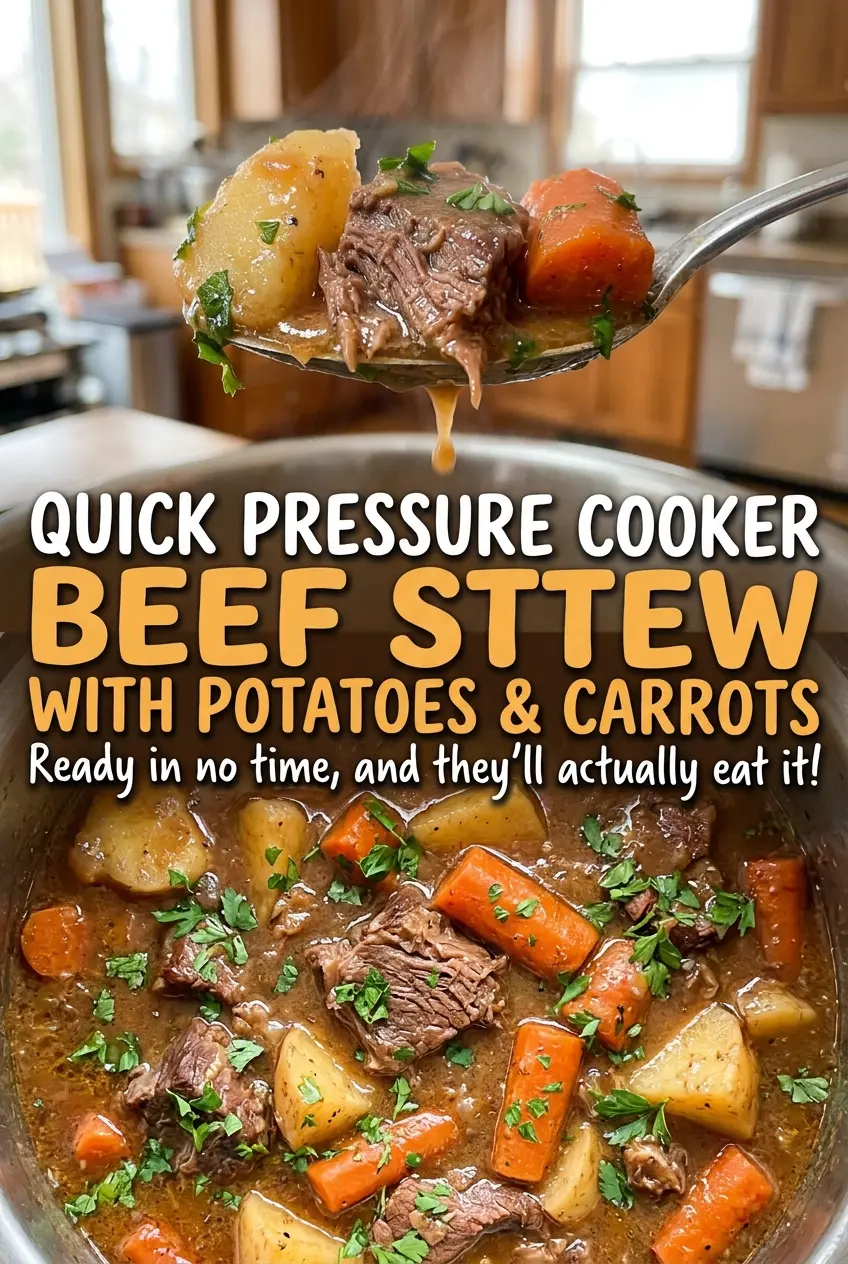
After you turn off the cooker, give the stew the full 5-minute stand before serving. The broth settles around the potatoes and beef, so each spoonful is easier to serve neatly.
Save this pressure cooker beef stew for a night when you want tender chuck, potatoes, and carrots without a long stovetop simmer.
Why the Potatoes Wait Until the Beef Is Tender
Beef chuck needs a longer pressure-cooker round than potatoes and carrots do. If you put all three in together, the vegetables have to endure the beef’s full cooking time and are likely to lose their shape. Cooking the beef first gives it the time it needs, while the vegetables get a shorter second round once the meat is tender.
The sequence matters just as much as the timing. The beef cooks at HIGH pressure for 25 minutes, followed by a 10-minute natural release. Only then do the potatoes and carrots go into the pot for 4 minutes at HIGH pressure, with a quick release afterward. Cutting the beef and potatoes into 1 1/2-inch pieces and the carrots into 1-inch pieces keeps the pieces substantial enough for a stew. You get tender beef and soft vegetables that still look like themselves in the bowl.
What Chuck, Yukon Golds, and Tomato Paste Bring to This Pot
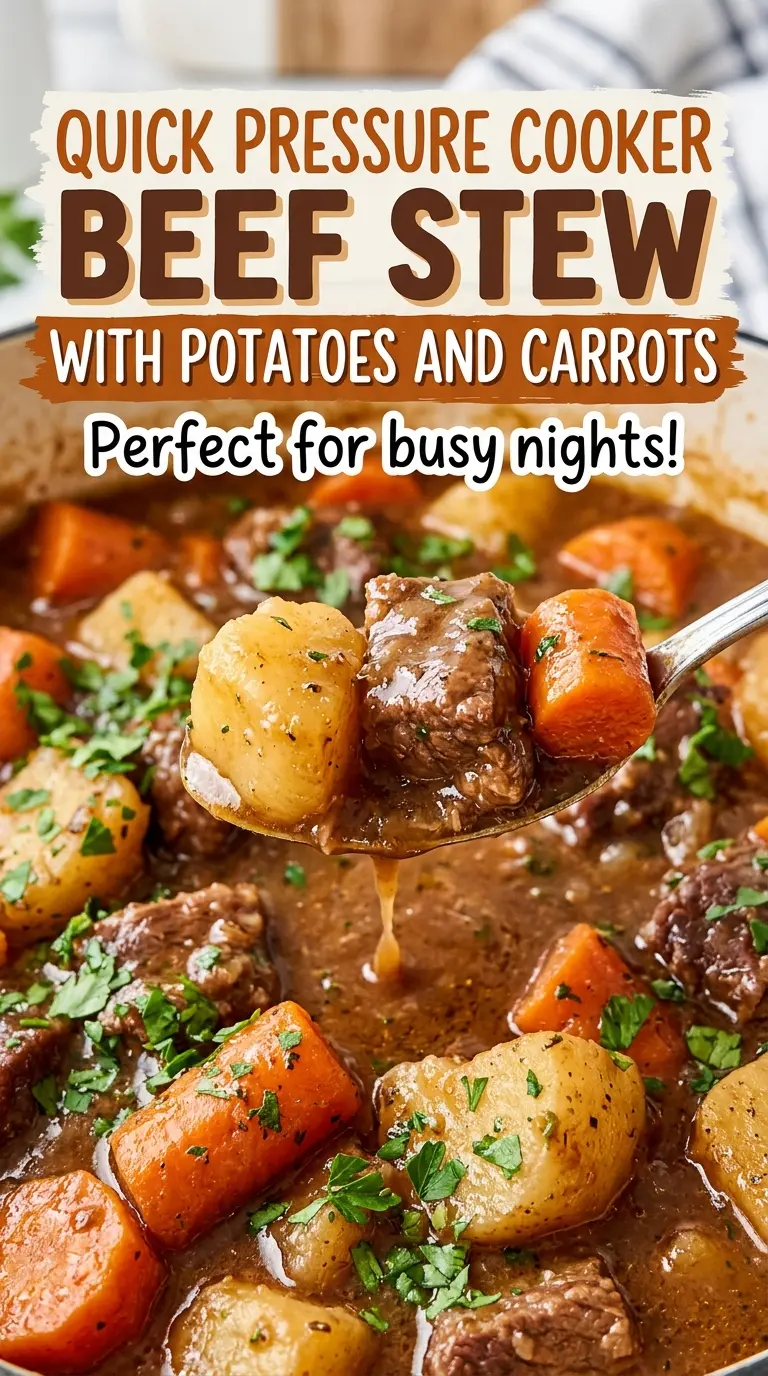
- Beef chuck — This cut has the connective tissue that turns tender during pressure cooking and gives the broth a fuller, beefier character. Choose a roast with some marbling and trim it before cutting; very lean beef won’t give the same succulent result.
- Yukon Gold potatoes — Their creamy texture suits a stew, and they hold together better than floury potatoes during the short pressure-cooking round. Cut them into even 1 1/2-inch pieces so they soften at a similar pace.
- Carrots — Peeling and cutting them into 1-inch pieces gives you sturdy bites that cook alongside the potatoes. Keep the pieces close in size; thin slices soften faster under pressure.
- Tomato paste — A brief sauté after the garlic concentrates its savory, slightly tangy taste and helps give the broth a deeper color. Stir it as it cooks so it coats the onion rather than scorching on the bottom.
- Low-sodium beef broth and Worcestershire sauce — The broth supplies the stew’s cooking liquid, while Worcestershire brings a savory, tangy note. Low-sodium broth leaves room for the measured kosher salt to season the beef without making the finished broth taste overly salty.
- Cornstarch — Whisked with cold water, it thickens the broth at the end without needing a long reduction. Keep the water cold and whisk until the mixture is smooth before it goes into the hot stew.
Two Pressure-Cooker Rounds Keep the Beef Tender and the Vegetables Intact
Brown the Beef in Uncrowded Batches
Season the beef with kosher salt and black pepper, then set a 6-quart electric pressure cooker to SAUTÉ and heat 1 tablespoon of the oil. Brown half the beef in a single layer, turning as needed, for 5 to 6 minutes, then transfer it to a plate. Repeat with the remaining beef and oil. If the pieces are packed tightly together, they’ll steam instead of developing browned surfaces, so give each batch room.
Build the Broth in the Same Pot
Add the remaining oil and chopped onion to the cooker, then sauté for 3 minutes, stirring occasionally. Stir in the minced garlic and tomato paste and cook for 1 minute; keep the mixture moving so the garlic doesn’t scorch. Pour in the beef broth and Worcestershire sauce, then stir in the thyme while scraping the browned bits from the bottom. Return the beef and any juices on the plate to the cooker, and add the bay leaf.
Pressure-Cook the Beef First
Lock the lid and set the valve to sealing. Cook at HIGH pressure for 25 minutes, then let the pressure release naturally for 10 minutes before carefully venting what remains. The natural-release pause is part of this first round, so don’t switch straight to a quick release. Open the lid carefully once the pressure is fully released.
Add the Vegetables, Thicken, and Finish
Add the potatoes and carrots, lock the lid, and set the valve to sealing again. Cook at HIGH pressure for 4 minutes, then quick-release the pressure. Whisk the cornstarch and cold water in a small bowl, set the cooker to SAUTÉ, and stir the slurry into the stew. Simmer for 1 to 2 minutes until the broth thickens, turn off the cooker, discard the bay leaf, and let the stew stand for 5 minutes before serving.
Small Changes That Keep This Stew’s Texture on Track
Make It Gluten-Free
Use beef broth and Worcestershire sauce labeled gluten-free. The rest of the ingredients in this stew are naturally gluten-free, and the cornstarch slurry thickens the broth without wheat flour.
Keep the Broth Lighter
Leave out the cornstarch and cold water if you prefer a thinner, more broth-forward stew. The beef and vegetables cook the same way, but the liquid won’t cling as thickly to each bite.
Storage and Reheating
- Refrigerator: Refrigerate within 2 hours and keep leftovers for 3 to 4 days. The broth will thicken as it chills, and the potatoes may soften slightly.
- Freezer: The stew freezes well in airtight containers for up to 3 months, though the potatoes can turn a little softer after thawing. Leave room at the top of each container for expansion.
- Reheating: Warm gently in a saucepan over medium-low heat, stirring now and then, until the stew reaches 165°F. Avoid a hard boil, which can break up the potatoes; add a small splash of broth if the chilled gravy is thicker than you like.
Questions That Come Up With Pressure Cooker Beef Stew
Quick Pressure Cooker Beef Stew with Potatoes and Carrots
Ingredients
Equipment
Method
- Season the beef with the salt and pepper.
- Set a 6-quart electric pressure cooker to SAUTÉ. Heat 1 tablespoon oil and brown half the beef in a single layer, turning as needed, for 5 to 6 minutes; transfer to a plate and repeat with the remaining beef.
- Add the remaining oil and onion to the cooker and sauté for 3 minutes, stirring occasionally.
- Add the garlic and tomato paste and cook for 1 minute, stirring.
- Pour in the broth and Worcestershire sauce, then stir in the thyme and scrape up any browned bits.
- Return the beef and any accumulated juices to the cooker and add the bay leaf.
- Lock the lid and set the valve to sealing. Cook at HIGH pressure for 25 minutes, then let the pressure release naturally for 10 minutes before carefully venting the remaining pressure.
- Add the potatoes and carrots, lock the lid, and set the valve to sealing. Cook at HIGH pressure for 4 minutes, then quick-release the pressure.
- Whisk the cornstarch with the cold water in a small bowl.
- Set the cooker to SAUTÉ, stir the slurry into the stew, and simmer for 1 to 2 minutes, until the broth thickens.
- Turn off the cooker and discard the bay leaf. Let the stew stand for 5 minutes before serving.
