
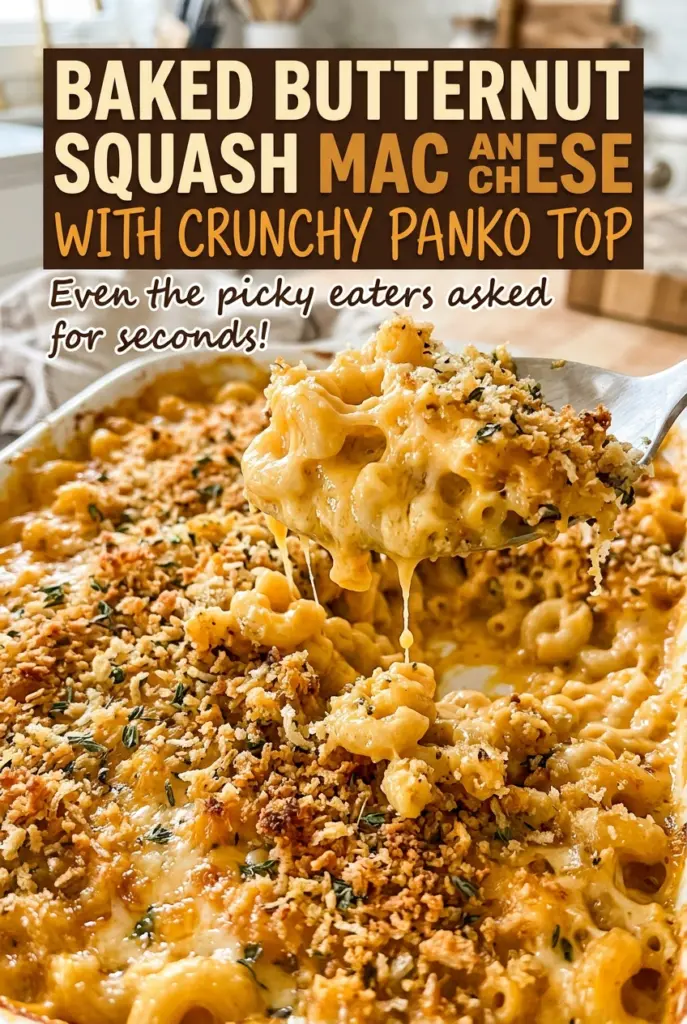
Baked Butternut Squash Mac and Cheese with Crunchy Panko Top
The squash comes out of the oven soft enough to collapse under a fork, and that’s when this baked mac and cheese starts to come together. Roasting gives the butternut…
Tip: save now, cook later.The squash comes out of the oven soft enough to collapse under a fork, and that’s when this baked mac and cheese starts to come together. Roasting gives the butternut a deeper, sweeter flavor than boiling it, and blending it into the sauce makes each bite creamy without leaving big pieces of squash scattered through the pasta. The panko turns golden while the edges bubble, so you get a crisp top over a tender, cheesy center.
I keep the squash puree smooth and cook the pasta just shy of al dente before it goes into the baking dish. Both details matter: the puree blends evenly into the cheddar sauce, and the macaroni has enough structure left to finish baking without turning soft. This is a generous 9×13-inch pan of baked butternut squash mac and cheese, finished with a crunchy panko top and a little Parmesan.
Kitchen Note
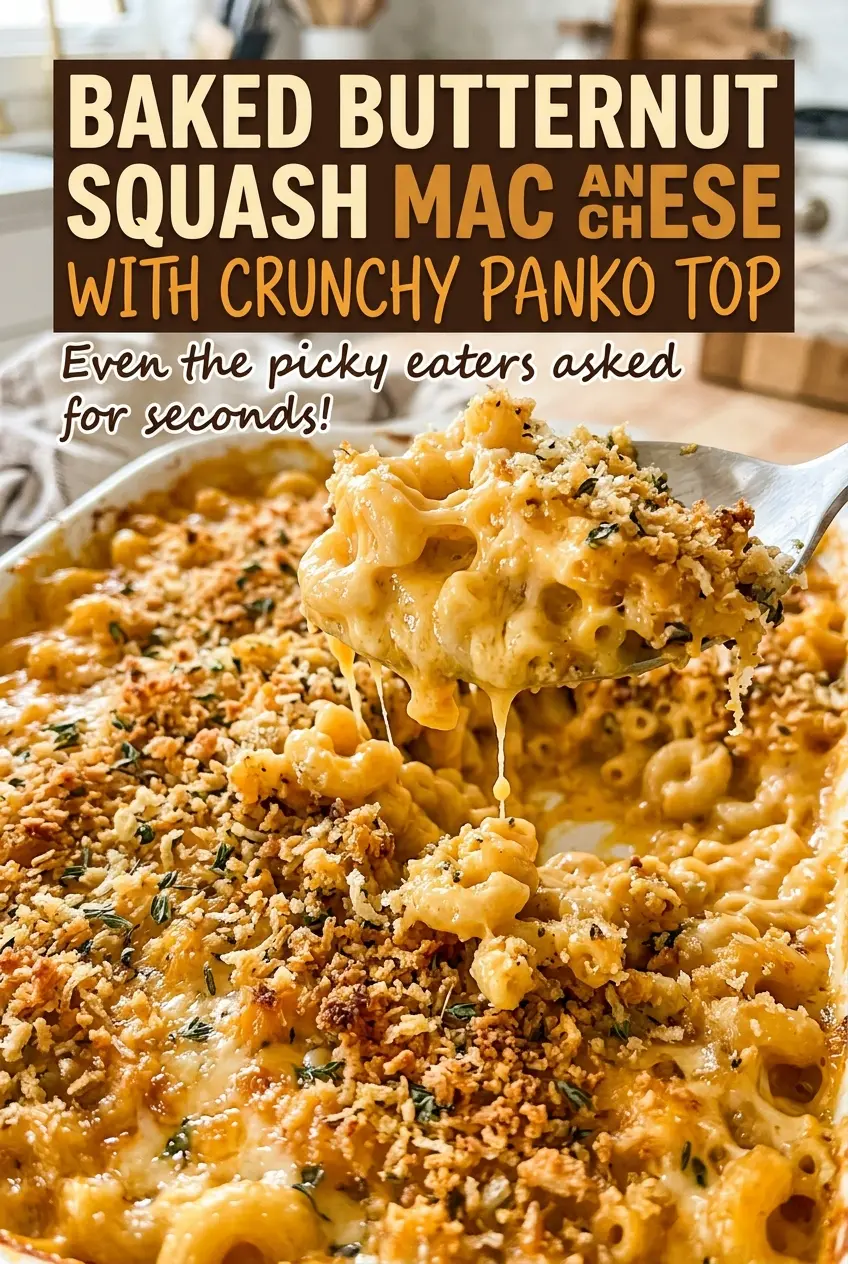
Give the baked mac and cheese its full 10-minute rest before serving. The sauce settles as it cools slightly, so scoops hold together instead of running across the plate.
Save this baked butternut squash mac and cheese for its creamy cheddar sauce and crisp, golden panko top.
Why the Macaroni Needs to Go Into the Oven Just Shy of Done
Macaroni that’s fully tender before baking has nowhere to go but softer. In this pan, the pasta sits in warm cheese sauce and then spends another 20 to 25 minutes in the oven. Cooking it for one minute less than the package’s al dente time leaves a little firmness for that second stretch of cooking.
There’s another reason to avoid waiting until the pasta feels completely ready in the pot: drained macaroni keeps softening as it holds heat. A piece that still has a slight bite when you drain it is right where you want it. Don’t take that as a cue to leave it crunchy, though; it should be nearly al dente, not hard in the center.
This small adjustment helps the finished bake stay creamy rather than pasty. The squash and cheddar sauce coats the elbows, and the pasta keeps enough shape to scoop cleanly beneath the crisp topping.
What the Squash, Cheddar, and Panko Each Bring to the Pan

- Butternut squash — Roasting concentrates its sweetness and makes it tender enough to puree into the sauce. Choose squash that feels firm and heavy for its size; if you can’t find butternut, peeled sweet potato roasts and purees in a similar way, with a sweeter, denser result.
- Sharp cheddar — Its tang stands up to the squash, while its melt gives the sauce its familiar mac-and-cheese richness. A block of sharp cheddar is a dependable choice; a milder cheddar works too, but the finished sauce will taste less sharp.
- Whole milk and flour — Together they make the roux-based sauce that carries the squash and cheese. Whole milk gives it a fuller texture; the flour needs to be cooked briefly in the butter before the milk goes in, so the sauce thickens without a raw flour taste.
- Panko and Parmesan — Panko makes a lighter, more craggy crust than fine breadcrumbs, and Parmesan adds a salty, savory edge. Regular breadcrumbs can stand in, though the topping will be finer and less crunchy.
- Dry mustard and nutmeg — These seasonings add quiet depth behind the cheddar rather than making the sauce taste strongly of spice. Freshly ground nutmeg is nice if you have it, but the ground kind works well here.
Roast, Puree, and Build the Sauce in the Right Order
Roast the squash until it gives easily
Heat the oven to 425°F and line a rimmed baking sheet with parchment paper. Toss the cubed squash with 1 tablespoon of olive oil and 1/2 teaspoon of kosher salt, then spread it out in a single layer. Roast for 25 to 30 minutes, until a fork slides into the cubes without resistance. Take the squash out and lower the oven temperature to 375°F.
Cook the elbows and puree the squash
Bring a large pot of water to a boil, add the remaining 1 tablespoon of kosher salt and the macaroni, and cook it for 1 minute less than the package directions for al dente. Drain the pasta. Process the roasted squash with 1/2 cup of the milk until the puree looks smooth, with no firm pieces left.
Thicken the milk before adding the cheese
Melt the butter in a large saucepan over medium heat, whisk in the flour, and cook for 1 minute. Gradually whisk in the remaining 3 cups of milk so the flour mixture stays smooth. Cook for 4 to 6 minutes, whisking, until the sauce thickens and just begins to bubble. Stir in the squash puree, cheddar, dry mustard, nutmeg, black pepper, and remaining 1/2 teaspoon of salt; once the cheese has melted and the sauce is smooth, fold in the drained macaroni.
Top the macaroni and bake until golden
Coat a 9×13-inch baking dish with cooking spray and spread the macaroni mixture evenly in it. Toss the panko with the remaining 1 tablespoon of olive oil and the finely grated Parmesan, then scatter the crumbs evenly over the top. Bake at 375°F for 20 to 25 minutes. Look for bubbling around the edges and a golden-brown panko crust.
Three Practical Ways to Adapt This Butternut Squash Mac
Make a gluten-free pan
Replace the elbow macaroni with 1 pound of gluten-free elbow pasta, the all-purpose flour with a gluten-free 1:1 flour blend, and the panko with gluten-free panko. Cook the pasta according to its package directions, stopping 1 minute before its al dente time; the exact timing varies by brand. The topping and sauce keep their familiar roles, though gluten-free pasta can soften more quickly, so watch the bake closely.
Swap elbows for small shells
Use the same amount of small pasta shells in place of the elbows, following the package’s al dente timing and draining them 1 minute early. The shells catch sauce in their curves, so each serving has a slightly different pasta-to-sauce feel while keeping the same cheddar and squash base.
Serve it straight from the saucepan
For a stovetop-style version, fold the drained pasta into the finished squash-cheddar sauce and serve it without transferring it to the baking dish. Leave off the panko-Parmesan topping, too. You’ll have a softer, saucier bowl of mac and cheese without the baked crust.
Storage and Reheating
- Refrigerator: Store covered for 3 to 4 days. The panko will soften as it sits.
- Freezer: Freeze portions in airtight containers for up to 2 months. Thaw overnight in the refrigerator; the topping won’t be as crisp after freezing.
- Reheating: Warm covered in a 350°F oven until the center reaches 165°F. Leaving it uncovered can dry out the pasta before the middle is hot.
Questions That Come Up When Making Squash Mac and Cheese
Baked Butternut Squash Mac and Cheese with Crunchy Panko Top
Ingredients
Equipment
Method
- Heat the oven to 425°F.
- Line a rimmed baking sheet with parchment paper.
- Toss the squash with 1 tablespoon of the olive oil and 1/2 teaspoon of the salt, then spread it on the baking sheet.
- Roast for 25 to 30 minutes, until very tender; remove the squash and reduce the oven temperature to 375°F.
- Bring a large pot of water to a boil, add the remaining 1 tablespoon of salt and the macaroni, and cook for 1 minute less than the package directions for al dente; drain.
- Process the roasted squash with 1/2 cup of the milk until smooth.
- Melt the butter in a large saucepan over medium heat.
- Whisk in the flour and cook for 1 minute.
- Gradually whisk in the remaining 3 cups of milk and cook for 4 to 6 minutes, whisking, until thickened and just bubbling.
- Stir in the squash puree, cheddar, dry mustard, nutmeg, black pepper, and remaining 1/2 teaspoon of salt until the cheese melts and the sauce is smooth.
- Fold in the drained macaroni.
- Coat a 9x13-inch baking dish with cooking spray and spread the macaroni mixture evenly in the dish.
- Toss the panko with the remaining 1 tablespoon of olive oil and the Parmesan, then scatter it evenly over the macaroni.
- Bake at 375°F for 20 to 25 minutes, until the edges are bubbling and the panko is golden brown.
- Rest for 10 minutes before serving.
