
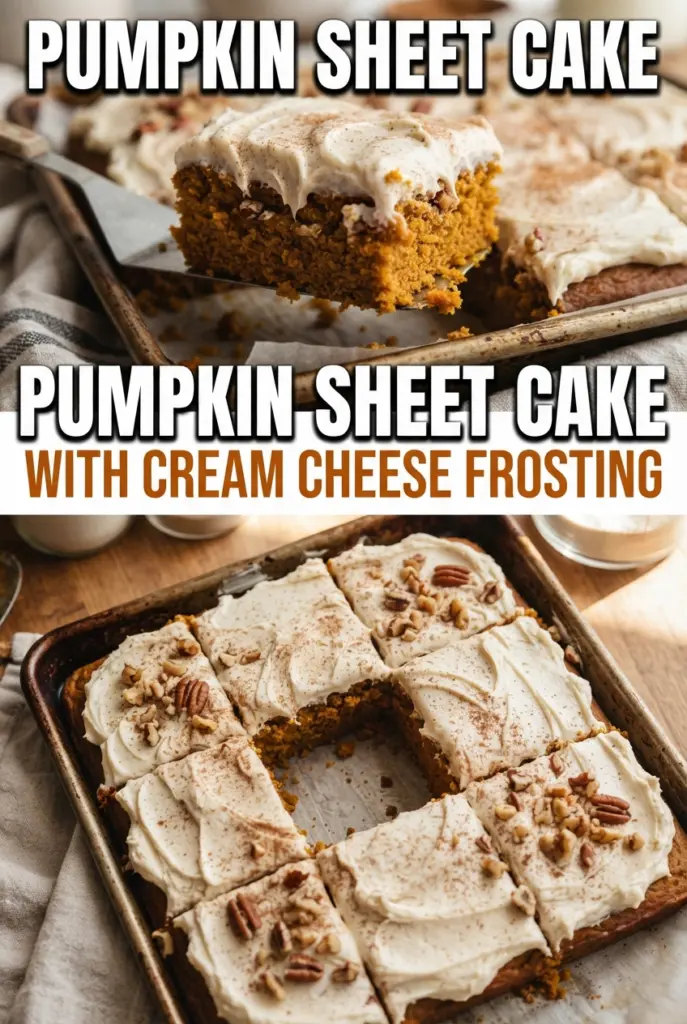
Pumpkin Sheet Cake with Cream Cheese Frosting
Pumpkin sheet cake lands in that sweet spot between effortless and crowd-pleasing: tender, warmly spiced, and sturdy enough to slice cleanly for a table full of people. The crumb stays…
Tip: save now, cook later.Pumpkin sheet cake lands in that sweet spot between effortless and crowd-pleasing: tender, warmly spiced, and sturdy enough to slice cleanly for a table full of people. The crumb stays moist for days because pumpkin puree and oil do the heavy lifting, while the cream cheese frosting brings just enough tang to keep every bite from feeling heavy. It’s the kind of cake that disappears fast at potlucks because it tastes like you spent more time on it than you did.
What makes this version work is restraint. The batter is mixed just until the dry ingredients disappear, which keeps the cake soft instead of tight. Baking it in a sheet pan gives you more edges, faster baking, and a thinner layer that cools quickly enough for frosting without waiting around half the day. The frosting is whipped with butter first, then finished with powdered sugar, so it spreads in a thick, fluffy layer instead of sliding off the cake.
Below, you’ll find the small timing detail that keeps the cake from turning gummy, plus a few smart swaps if you need to adapt it for a different pan size or a dairy-free version.
The cake came out unbelievably moist and the frosting set up thick enough to slice cleanly after chilling. I used the full 30 minutes and it had that perfect pumpkin spice flavor without being dense.
Save this pumpkin sheet cake for the kind of dessert that feeds a crowd, slices neatly, and stays moist under a thick cream cheese frosting.
The Trick to Keeping Pumpkin Cake Tender Instead of Dense
Pumpkin puree adds a lot of moisture, but it also adds weight. That’s where many pumpkin cakes go wrong: too much mixing develops gluten, and too long in the oven dries out the edges before the center has finished setting. The goal is a batter that looks just combined, not perfectly smooth.
The other common problem is underbaking the middle because the top looks done too soon. In a sheet pan, the cake should spring back lightly when touched in the center, and a toothpick should come out clean or with a few moist crumbs. If it comes out coated with wet batter, give it a few more minutes; if it’s completely dry, you’ve gone past the point of best texture.
Letting the cake cool all the way before frosting matters too. Warm cake turns cream cheese frosting soft and slippery, and the whole top layer loses its structure. Patience here pays off in neat slices and a frosting layer that stays fluffy.
What Each Ingredient Is Actually Doing in This Cake
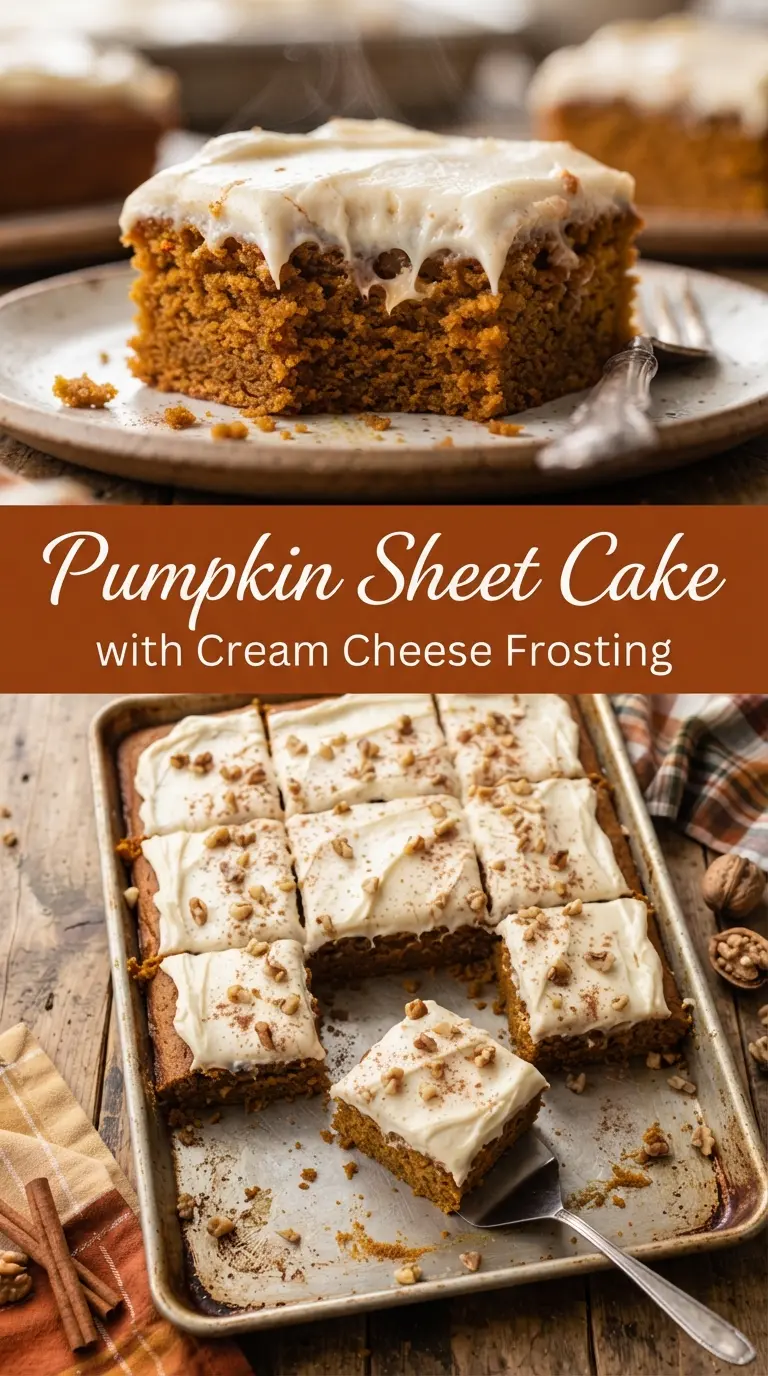
- Pumpkin puree — This is the main source of moisture and that deep pumpkin flavor. Use pure pumpkin puree, not pumpkin pie filling, which already contains sugar and spices and will throw off the balance.
- Vegetable oil — Oil keeps the cake tender at room temperature, even after a day or two. Butter would add flavor, but it firms up as it cools and gives a drier bite here.
- Brown sugar and granulated sugar — The brown sugar adds a little molasses depth and extra moisture, while granulated sugar keeps the crumb light. Using both gives you a cake that tastes rich without turning heavy.
- Cream cheese and butter — The frosting needs both. Cream cheese brings tang, but butter helps it whip up fluffy and stable enough to spread in a thick layer.
- Cinnamon and pumpkin pie spice — These do the flavor work, so use fresh spices if you can. If your pumpkin pie spice has been sitting around for years, the cake will still bake fine, but the spice will taste flat.
Getting the Batter Mixed and the Frosting Spread Before the Cake Cools
Whisk the wet ingredients until smooth
Start with the pumpkin, eggs, both sugars, oil, and vanilla in one large bowl. Whisk until the mixture looks glossy and even, with no streaks of egg white left behind. That smooth base helps the batter come together quickly, which matters because overmixing after the flour goes in is what tightens the crumb.
Add the dry ingredients just until the flour disappears
Stir the flour, baking powder, baking soda, salt, cinnamon, and pumpkin pie spice into the wet mixture with a spatula or spoon. Stop as soon as you stop seeing dry flour pockets. If you beat it until perfectly smooth, the cake bakes up tougher and can dip in the middle instead of staying plush.
Bake until the center springs back
Spread the batter evenly in a greased 15×10-inch sheet pan and bake at 350°F until a toothpick inserted in the center comes out clean, usually 25 to 30 minutes. The edges should pull just slightly from the pan and the top should look set with a soft matte finish. If the middle still looks shiny, it needs more time.
Frost only after complete cooling
Beat the cream cheese and butter until creamy before adding the powdered sugar, vanilla, and salt. The frosting should be fluffy and thick enough to hold ridges from the spatula. If the cake is even a little warm, the frosting softens too much and slides, so let the cake cool completely before you spread it on.
How to Adapt It for a Different Crowd or a Different Pantry
Dairy-Free Version
Swap the cream cheese and butter in the frosting for dairy-free cream cheese and a plant-based butter block, not a soft tub spread. The texture will be a little softer and less tangy, but it will still pipe and spread well if you chill it briefly before frosting the cake.
Gluten-Free Sheet Cake
Use a good 1:1 gluten-free flour blend that already includes xanthan gum. The cake will still be tender, but it may need a few extra minutes in the oven and a full cool-down before slicing so the crumb can set.
Cupcake or Layer Cake Conversion
The batter can be divided into cupcakes or two round pans, but the bake time changes fast. Cupcakes usually finish sooner, while round layers need closer watching in the center so they don’t bake dry before the middle sets.
Storage and Reheating
- Refrigerator: Store covered for up to 5 days. The frosting stays neat, and the crumb actually gets a little more settled by day two.
- Freezer: Freeze unfrosted cake tightly wrapped for up to 2 months. Frosting can be frozen separately, but the texture is best when made fresh.
- Reheating: This cake is best served chilled or at cool room temperature, not rewarmed. If it’s been refrigerated, let slices sit out for 20 to 30 minutes so the frosting softens and the cake loses its cold, dense texture.
Answers to the Questions Worth Asking
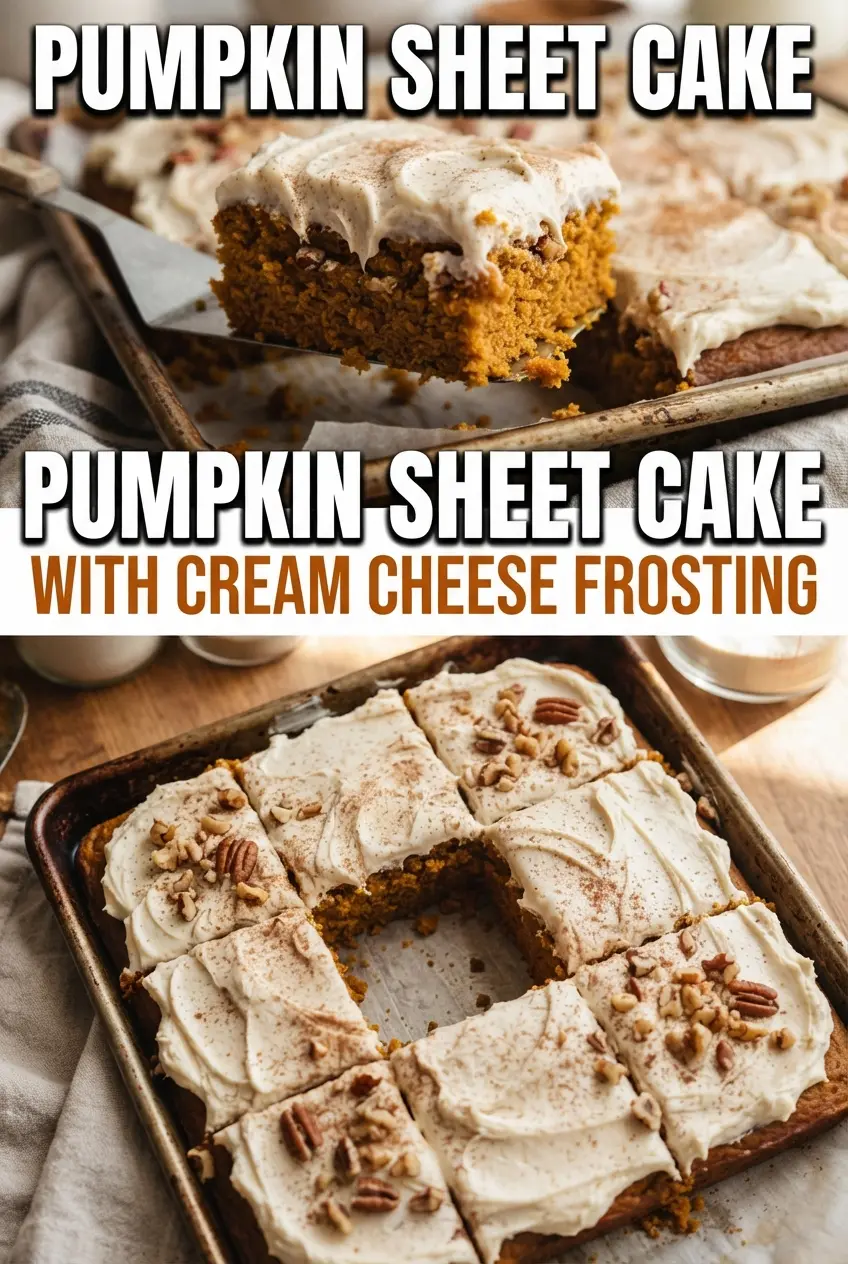
Pumpkin Sheet Cake with Cream Cheese Frosting
Ingredients
Equipment
Method
- Preheat the oven to 350 F (175 C) and grease a 15x10-inch sheet pan, ensuring the bottom and sides are fully coated for easy release.
- Whisk the all-purpose flour, baking powder, baking soda, salt, ground cinnamon, and pumpkin pie spice in a bowl until evenly combined and no streaks of spice remain.
- Whisk the pumpkin puree, large eggs, granulated sugar, packed light brown sugar, vegetable oil, and vanilla extract in a large bowl until smooth and glossy.
- Stir the dry ingredients into the wet ingredients until just combined, stopping as soon as no dry flour pockets are visible to keep the cake tender.
- Spread the batter evenly in the sheet pan, smoothing the top so it bakes uniformly.
- Bake for 25 to 30 minutes, until a toothpick inserted in the center comes out clean, then remove and let the cake cool.
- Cool completely on a wire rack so the frosting won’t melt or slide.
- Beat the cream cheese and unsalted butter until creamy, using a smooth, consistent motion so no lumps remain.
- Add the powdered sugar, vanilla extract, and salt and beat until fluffy, stopping when the frosting looks thick and spreadable.
- Spread the frosting over the cooled cake and dust with ground cinnamon for a spiced finish.
- Chill for 30 minutes before slicing so the frosting sets and the pieces hold their shape.
