
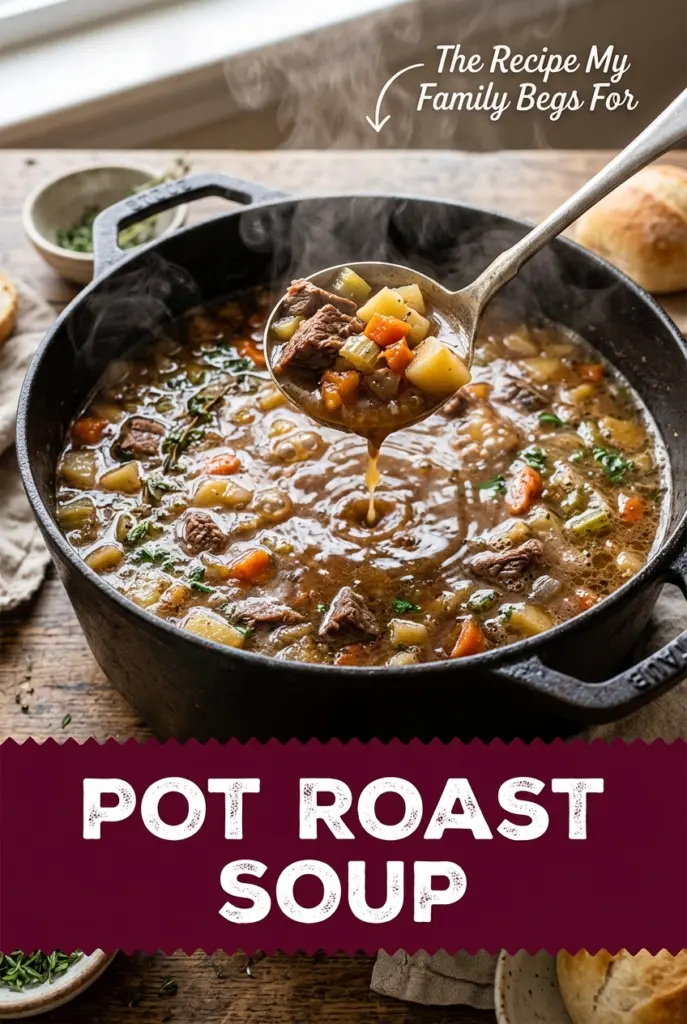
Pot Roast Soup
Pot Roast Soup takes everything people love about a Sunday roast and turns it into a bowl you can eat with a spoon. The beef gets seared until it picks…
Tip: save now, cook later.Pot Roast Soup takes everything people love about a Sunday roast and turns it into a bowl you can eat with a spoon. The beef gets seared until it picks up a dark crust, then it simmers low enough that the chunks turn fork-tender without falling apart into stringy bits. The potatoes soften just enough to thicken the broth a little, and the carrots and peas keep each spoonful tasting like a full meal, not just beef in liquid.
The part that makes this version work is the same thing that makes a great pot roast work: browning first, simmering second. That crust on the beef is where a lot of the deep savory flavor comes from, and the tomato paste cooks briefly with the vegetables so it loses that raw edge and blends into the broth. Using chuck roast matters here because it has enough connective tissue to turn rich and tender instead of dry and lean. If you’ve ever had a beef soup taste flat, this approach fixes that problem without needing anything fussy.
Below, I’ve included the small details that keep the broth balanced, plus a few swaps that still give you a hearty, pot-roast style soup when you need to work with what’s in the kitchen.
The broth had that deep pot-roast taste, and the beef was tender enough to cut with a spoon. I also liked that the potatoes held their shape instead of turning mushy.
Love the deep beefy broth and tender chunks in this Pot Roast Soup? Save it to Pinterest for the nights when you want a hearty bowl that tastes like it simmered all afternoon.
The Browning Step Is What Gives Pot Roast Soup Its Real Depth
If the beef goes straight into broth without a proper sear, the soup still cooks fine, but it tastes thinner and a little one-note. Browning the cubes in batches builds the savory base before a single drop of broth goes in. That browned layer on the bottom of the pot is not a mess to clean up later — it is the flavor source.
The other place people lose flavor is rushing the aromatics. Onion, carrots, and celery need enough time to soften and pick up a little color before the broth goes in. Tomato paste needs that brief toast in the pot too, or it tastes sharp instead of round and rich. The goal here is layered flavor, not just a long simmer.
What Each Ingredient Is Actually Doing in This Pot Roast Soup
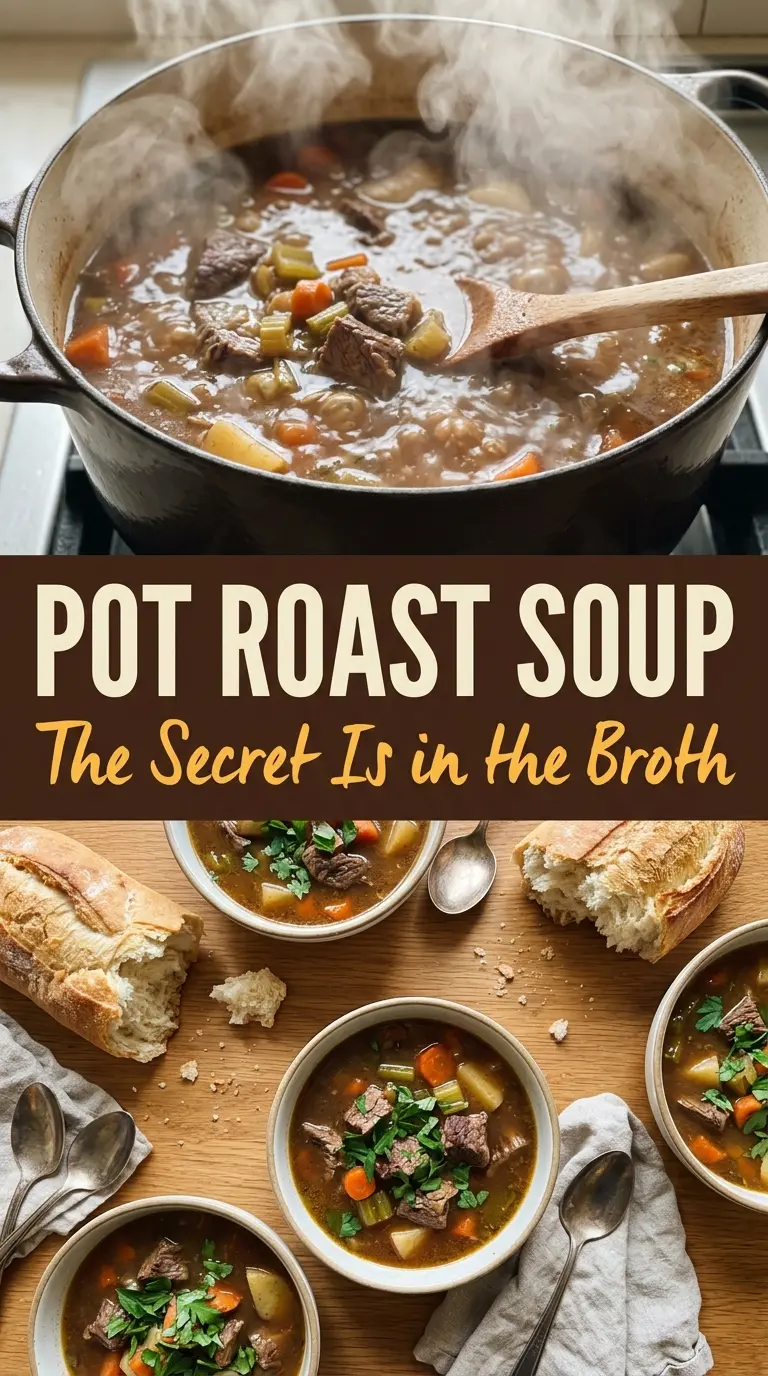
- Beef chuck roast — This is the right cut because the connective tissue melts during the long simmer and gives the broth body. Leaner beef turns dry and tight before the soup has time to develop that pot-roast texture.
- Flour — The light coating helps the beef brown and gives the broth a little natural thickness. It does not make the soup feel heavy, but it keeps the liquid from tasting watery.
- Tomato paste — This adds a deep, savory base and a touch of acidity that wakes up the broth. Let it cook for a minute with the vegetables so it loses the raw tomato taste.
- Beef broth — The broth matters here because it carries the whole dish. Use the best-tasting broth you have; if yours is very salty, hold back a little seasoning until the end.
- Baby potatoes — They hold their shape better than large russets and keep the soup hearty. Halving them gives you soft edges without turning the pot starchy.
Building the Broth Without Overcooking the Beef
Coating and Searing the Chuck
Toss the beef with the flour, salt, and pepper until every piece looks lightly dusted, not clumped. Sear in batches so the pot stays hot enough to brown the meat instead of steaming it. You want a dark, even crust on several sides, and if the pan starts looking dry, that is the moment to add the next batch, not more oil.
Softening the Vegetables
Add the onion, carrots, and celery to the same pot and cook them until the onion turns translucent and the carrots lose their raw edge. The browned bits will start loosening as the vegetables release moisture. If the tomato paste goes in before the vegetables soften, it can scorch and turn bitter, so let them do their work first.
The Long Simmer That Makes It Taste Like Pot Roast
Once the broth, Worcestershire, herbs, and seared beef go in, bring the pot just to a simmer and then lower the heat. The surface should have a few lazy bubbles, not a rolling boil. A hard boil tightens beef and makes the broth cloudy, while a slow simmer gives you tender meat and a cleaner, richer finish.
Adding the Potatoes and Peas at the End
Potatoes go in after the beef is already tender so they don’t collapse before the rest of the soup is ready. Keep them uncovered for the last stretch so the broth can reduce a little and cling to the vegetables. Stir in the peas at the very end; they only need enough heat to turn bright green and sweet.
How to Adapt This for Different Diets and Busy Nights
Gluten-Free Version
Skip the all-purpose flour and use a gluten-free flour blend or leave the beef uncoated. You’ll lose a little thickening power, but the soup still develops plenty of body from the potatoes and long simmer. If you want a slightly fuller broth, mash a few potato pieces against the side of the pot near the end.
Lower-Carb Swap
Replace the potatoes with turnips or cauliflower florets added near the end of cooking. Turnips keep a sturdier bite and taste closer to a rustic stew, while cauliflower softens faster and gives you a lighter broth. The soup will still taste beefy and rich, just less starchy.
Using a Different Cut of Beef
Beef stew meat works if that’s what you have, but it can be a mix of cuts, so the texture may be less even. If you use it, keep the simmer gentle and test early for tenderness. Chuck roast still gives the most reliable, silky result.
Storage and Reheating
- Refrigerator: Store covered for up to 4 days. The broth thickens a little as it chills, and the potatoes continue to absorb flavor.
- Freezer: It freezes well for up to 3 months, though the potatoes soften a bit after thawing. Cool it completely first, then freeze in portions for easier reheating.
- Reheating: Rewarm gently on the stovetop over medium-low heat until steaming. A hard boil can break down the potatoes and make the beef stringy, so keep it at a low simmer and add a splash of broth if it has tightened up.
Answers to the Questions Worth Asking
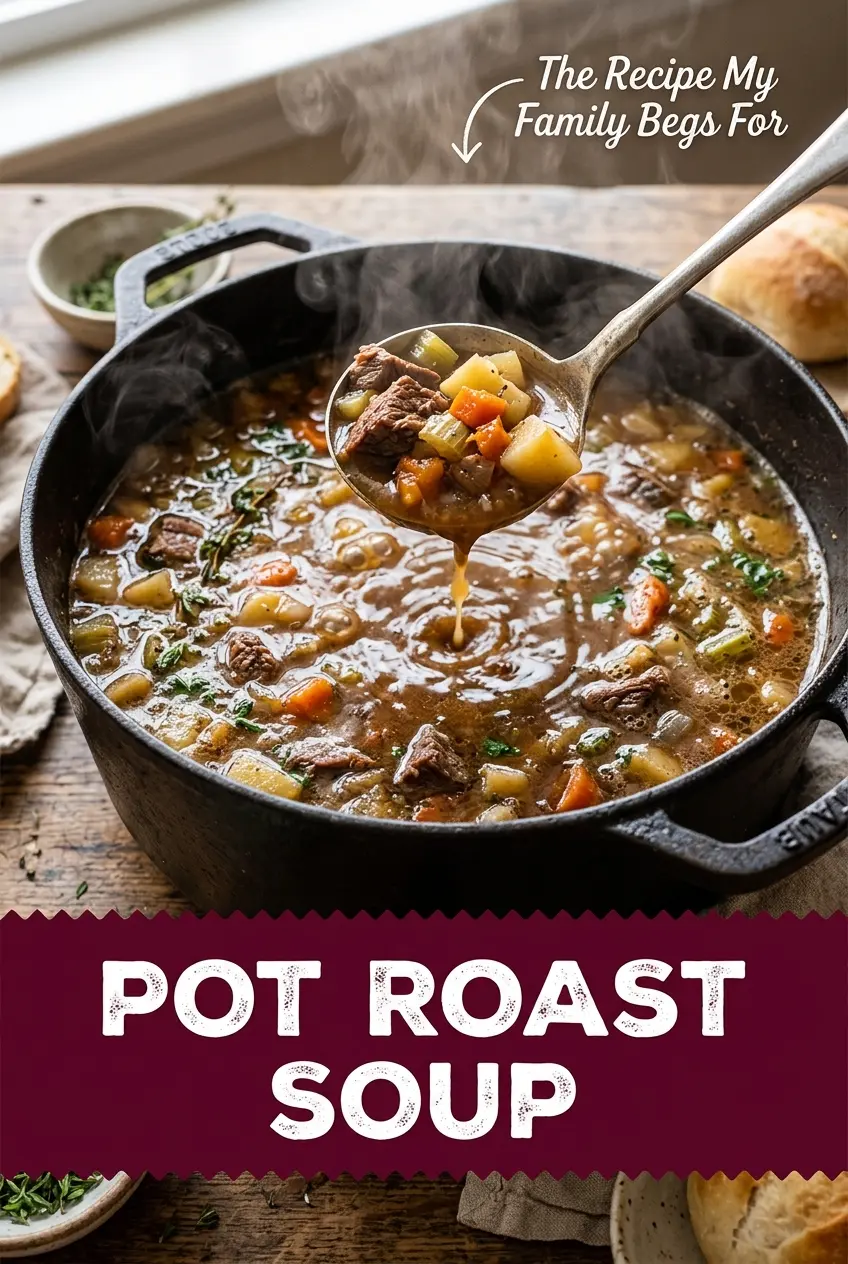
Pot Roast Soup
Ingredients
Equipment
Method
- Season the beef cubes with salt and black pepper, then toss with the flour until lightly coated (no streaks of dry flour).
- Heat the olive oil in a large pot over medium-high heat until shimmering, about 375°F (190°C), then sear the beef in batches until deeply browned on all sides, about 6-7 minutes per batch, using a steady sizzling sound as your visual cue.
- Remove the browned beef and set aside while you cook the vegetables.
- In the same pot, add the diced onion, sliced carrots, and sliced celery and cook until softened, about 5-6 minutes, stirring until the onion looks translucent.
- Add the minced garlic and tomato paste and cook until fragrant, about 1 minute, scraping the bottom so the paste darkens slightly.
- Pour in the beef broth and Worcestershire sauce and scrape up any browned bits from the bottom of the pot, cooking until the liquid is smooth and bubbling.
- Add the dried thyme, dried rosemary, bay leaves, and the seared beef, then bring to a simmer, where the surface gently bubbles.
- Cover and cook on low for 1.5-2 hours, until the beef is fork-tender and breaks apart easily when pressed.
- Add the halved baby potatoes and simmer, uncovered, for 20 minutes until tender, indicated by a knife sliding through them.
- Stir in the frozen peas and simmer for 5 more minutes until bright green, then remove the bay leaves.
- Ladle into bowls and top with chopped fresh parsley for a fresh green finish.
